Story audio is generated using AI
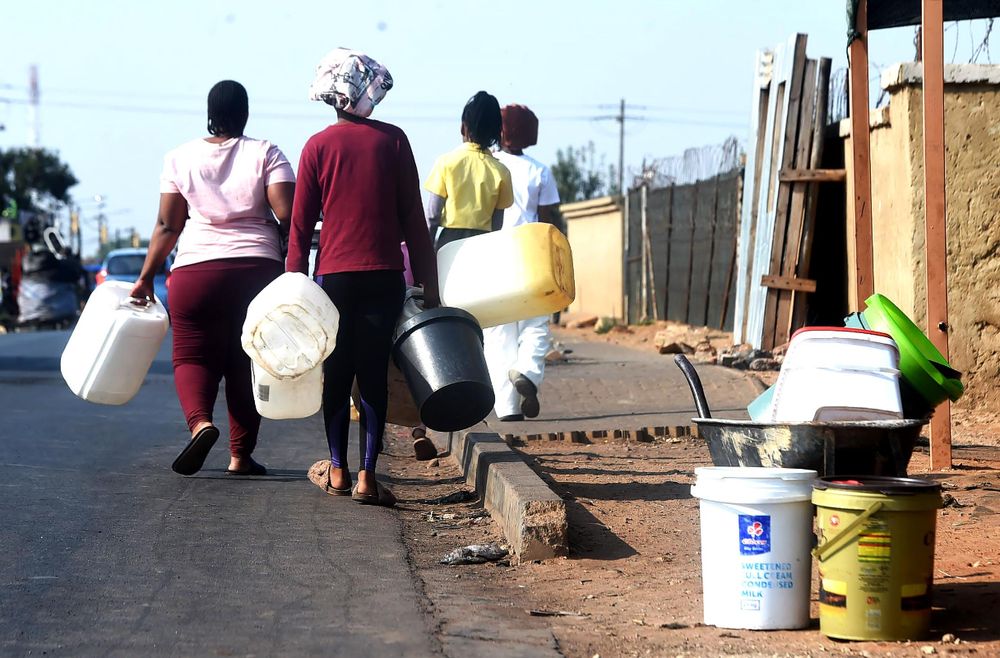
Business Leadership South Africa (BLSA) CEO Busi Mavuso says the country is on the brink of municipal collapse after more than a decade of ignored auditor-general warnings as the National Treasury withheld equitable share transfers from 69 municipalities, including Johannesburg.Mavuso said the financial situation of Johannesburg, which had R3.6bn in equitable share allocation withheld by Treasury, was particularly alarming, saying “if it fails, the consequences ripple through the entire economy, and it has only 12 days of cash cover against a required 32″. “We have finally come to the brink of widespread municipal collapse. The National Treasury’s decision to withhold the July equitable share transfer from 69 municipalities follows auditor-general reports going back more than 10 years, where irregular expenditure (a strong indicator of corruption) increased year after year, with no effective measures taken to stop the rot,” Mavuso said in her weekly newsletter. “Municipal collapse — now hitting three of South Africa’s eight metros, Johannesburg, Mangaung and Nelson Mandela Bay — directly reflects a failure of leadership and accountability. Local government politicians, unfortunately, have largely proven themselves to be a serious part of the problem rather than making any sort of progress in finding solutions.” Finance minister Enoch Godongwana on Friday rallied behind the Treasury’s decision to withhold R13.5bn from 69 municipalities, saying the move was not punitive but corrective. Godongwana said the Treasury had taken a decision for funds to be redirected in tranches directly to Eskom, water boards and statutory bodies to safeguard electricity, water and pensions. Municipalities that demonstrated compliance would see their transfers reinstated. The R13.5bn was part of the July tranche of the Treasury’s equitable share transfers to local government. The municipalities, spanning all nine provinces and including major metros such as Buffalo City, Nelson Mandela Bay, Mangaung and Johannesburg, were informed of the decision in advance and given an opportunity to explain why their transfers should not be withheld before the Treasury acted. Godongwana said municipalities were entrusted with delivering civic, social, and economic infrastructure services: water, electricity, sanitation, housing and roads. “They are the custodians of community welfare, the engines of local economies, and the guardians of social stability. As such, the financial conduct of municipalities has far-reaching socioeconomic importance,” he said. “While public expectations rise, the fragility of municipal finances and services has been exposed. The mismatch between municipal revenue authority and expenditure responsibilities has become a worrying factor, and the consequences are felt daily by households and businesses through service delivery challenges.” Godongwana said: Since 2021–2022, municipalities have incurred R24.12bn in fruitless and wasteful expenditure. They have accumulated R145.21bn in irregular expenditure, with R40.14bn in 2024–2025 alone. They have disclosed R118.13bn in unauthorised expenditure, more than half of which was on non-cash budget items. Budget credibility has deteriorated: in 2024–2025, 116 municipalities, or nearly half, adopted unfunded budgets. By year-end, municipalities owed R3.4bn in interest to Eskom and R1.21bn to water boards, while 48 municipalities had overdue third-party deductions. Mavuso said business has repeatedly made the point that Johannesburg is a national problem: “If Johannesburg fails, the consequences ripple through the entire economy. Johannesburg’s historical backlog of unauthorised, irregular, fruitless and wasteful expenditure stands at about R23bn. That is an emergency situation, especially in the face of the city’s arrears of about R3.7bn to Eskom and R1.2bn to Rand Water, according to National Treasury’s figures,” she said. South African Local Government Association (Salga) president Bheki Stofile said: “Regarding the City of Johannesburg, it is important to acknowledge its leadership is making a strenuous effort under extremely challenging circumstances. They are tasked with developing and implementing plans to deliver services to residents amid conditions that reflect failures at the national government level.” Stofile said Johannesburg mayor Dada Morero and the council as a whole were contending with an influx of nearly 20,000 people due to internal migration and immigration and “this places immense strain on essential municipal infrastructure, including water, electricity, road networks, informal settlements and backyard dwellings”. “A closer examination reveals these challenges are intrinsically linked to the functions and shortcomings of national government, and broader governance and leadership issues across the continent,” Stofile said. “The government as a whole has not formulated an effective response to this reality to alleviate the burden on Dada and other municipal leaders. My perspective is that municipalities require genuine support, and national government leaders must cease politicking. They must provide support as mandated by the constitution of the Republic of South Africa, specifically Section 154, which obliges national and provincial government to support and strengthen the capacity of municipalities. “Leaders must stop attributing blame and instead collaborate with the municipal system. The public is no longer interested in blame-shifting, which threatens democracy as many have lost confidence in the electoral process.” Mavuso said the cost of municipal failure “falls hardest on those least able to carry it. Larger businesses can install generators, sink boreholes and buy insurance against the risk of state failure. This is costly but often necessary”. “Smaller businesses often cannot carry such costs, and some have had to close or are at risk of doing so simply because of interrupted electricity or water supplies, on top of the fast-rising costs of electricity, water and other municipal services,” she said. “But, as is so often the case with state failure and misgovernance, it is poor households and rural communities that suffer the most. They are the ones queuing for water tankers, with their children falling ill from failing sanitation or unable to complete schoolwork for lack of electricity. We have allowed this to become normal and it should not be.” Mavuso said South Africa cannot build a competitive economy on the back of collapsing municipalities.“The auditor-general has told us where the failure sits and National Treasury is showing what the consequences are for failing to address the problems.” Business Day