Story audio is generated using AI
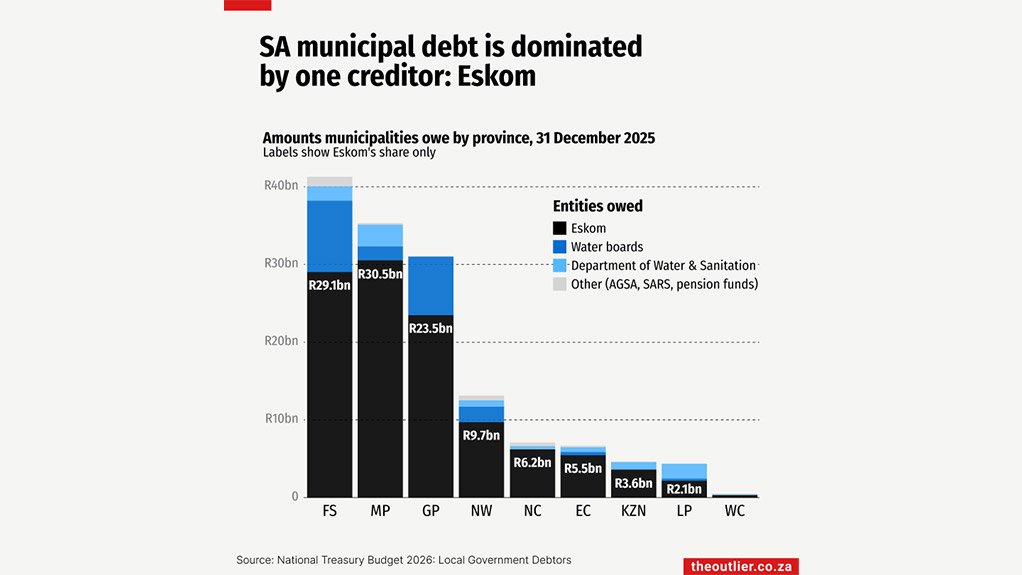
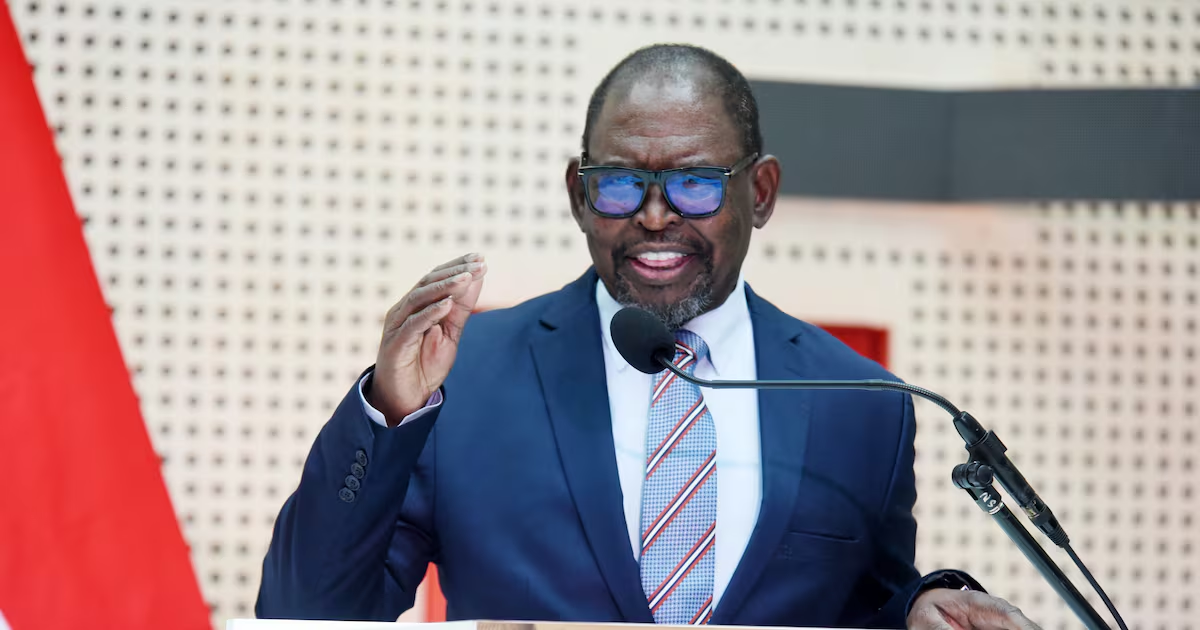
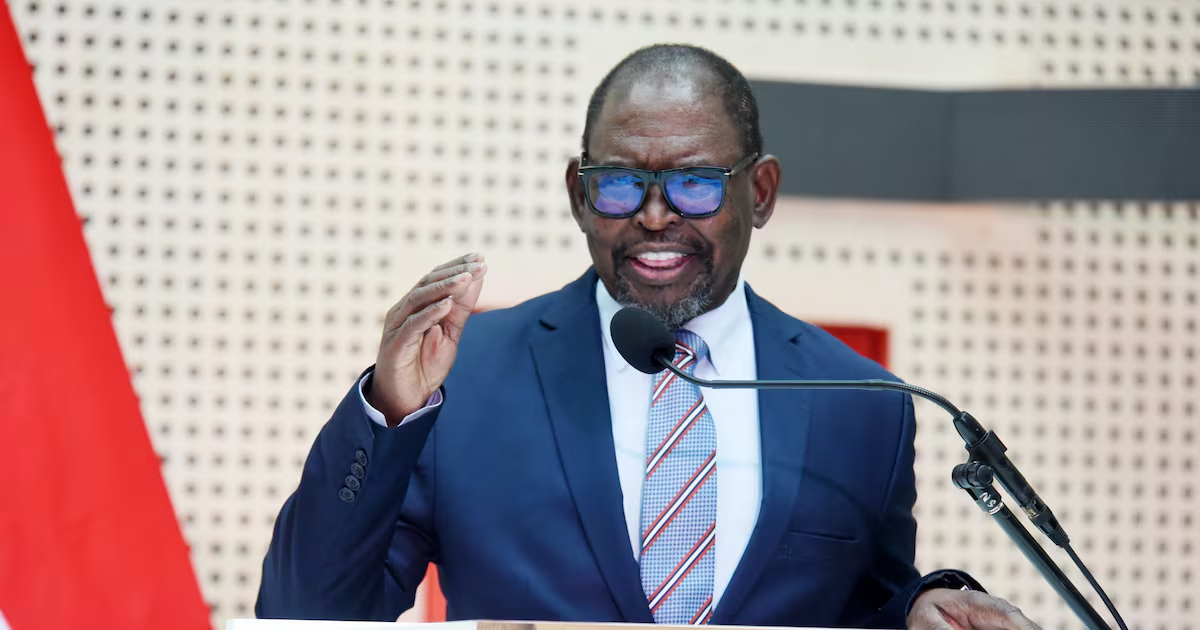
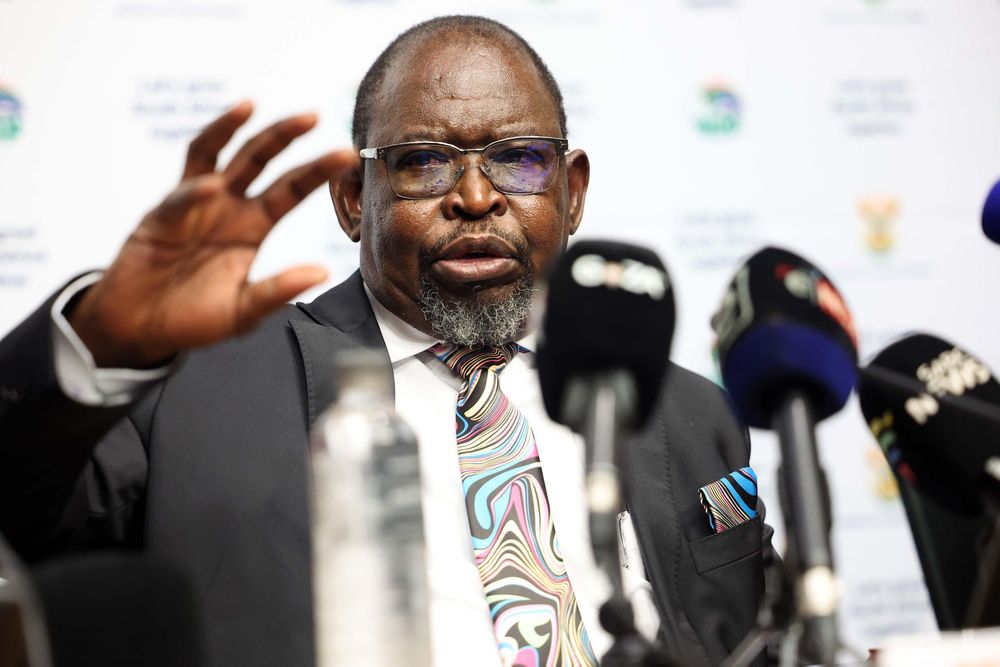
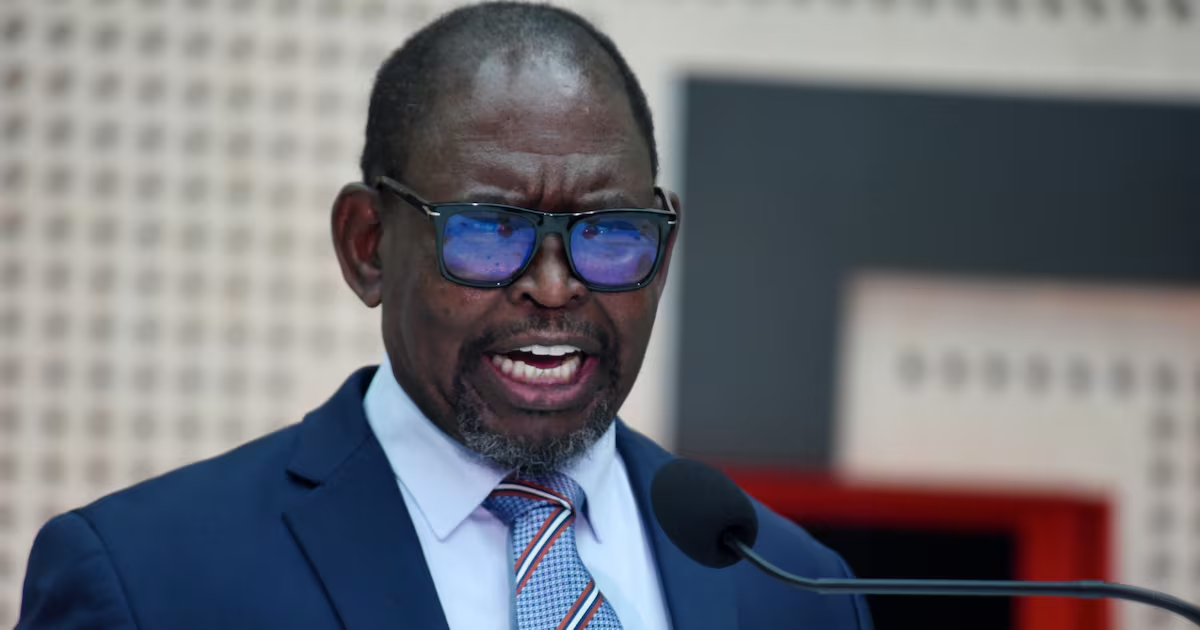
Financial mismanagement in local government not only imperils service delivery in towns and cities but also risks causing the financial collapse of water boards, minister of finance Enoch Godongwana told parliament on Friday.Addressing MPs on the temporary withholding of the equitable share for 69 municipalities, including Johannesburg, he said the National Treasury was working with the department of co-operative governance & traditional affairs (Cogta) to resolve the challenges.“Co-ordination exists, not only between us and Cogta, but also with the affected departments. [We are working with] the department of water [& sanitation], as water boards are likely to collapse if no action is taken.“And secondly, [working with] the department of electricity [& energy], we’ve done a couple of things. [We’ve introduced] a debt relief programme. They’re also intervening in terms of the distribution agency agreement. We’re working together to assist these municipalities.”Parliament’s portfolio committee on Cogta, the standing committees on finance and on appropriations and the standing committee on public accounts called the meeting to discuss the Treasury’s decision to withhold equitable share transfers for July “to instil fiscal discipline and ensure that public money is properly managed”.National Treasury director-general Duncan Pieterse told MPs that some municipalities are unable to service bulk water accounts, which had almost led to the collapse of Magalies Water and Vaal Central last year. If the Treasury had not intervened, water supply to the provinces they serve — Gauteng, North West, Limpopo, the Northern Cape and Free State — would have been jeopardised.He said service delivery in the 69 municipalities targeted by the equitable share freeze this month should not be harmed. In such cases, the money was seldom withheld for more than 30 days.The executive has borrowed its power from one part of the law and its vocabulary from another, and it cannot have both— Nombeko Mbava, FFCNombeko Mbava, chair of the Financial & Fiscal Commission, told the committee that while the Municipal Financial Management Act (MFMA) empowered the National Treasury to withhold conditional grants, the equitable share was guaranteed and could not be unilaterally withheld without parliament’s say.“The executive has borrowed its power from one part of the law and its vocabulary from another, and it cannot have both. The word ‘withhold’ lives only in the Division of Revenue Act, where it governs conditional grants,” she said.“The word ‘stop’ is the constitutional verb used in section 216 of the constitution and the MFMA, and that verb carries its safeguards with it. The decision may be enforced immediately, but lapses retrospectively, unless parliament approves it within 30 days. The stopping itself lapses after 120 days unless parliament renews it. Renewal is capped at 120 days at a time, and only parliament can grant it.”Read: Too little oversight and consequence — SA’s food safety system is ailingMbava said the equitable share was unconditional and could only be withheld or stopped, by parliament, for persistent and serious constitutional breaches. Even then, it should be employed as a last resort. She took issue with the Treasury on its assertion that the impact on service delivery would be limited.“The equitable share is not an abstraction. It is a funding line for free basic services; 3.7-million indigent households across these 69 municipalities depend on it for free basic water, electricity, sanitation and refuse removal, and the interruption lands hardest where there is no cushion. Fifteen of these municipalities already have zero months of cash coverage.”She said when these transfers are stopped, the first casualties are not councils and staff salaries but residents, water treatment chemicals, bulk electricity, and provision of basic service subsidies for indigent households, who were not responsible for the failures of councils. The minister of Cogta, Velenkosi Hlabisa, told MPS that his department and the National Treasury had a common view on municipalities adopting unfunded budgets, debts to water boards, debts to Eskom and adverse audit outcomes.“When it comes to the activation of section 216, which brought this meeting into existence, we had a meeting on Tuesday… and ironed out our different approaches, because while we understand it is a constitutional prerogative to activate section 216, Cogta was of the view that a different approach could have been used.”He said that national and provincial governments also owe municipalities, and the activation did not address the entire value chain of local government financial flows.Business Times