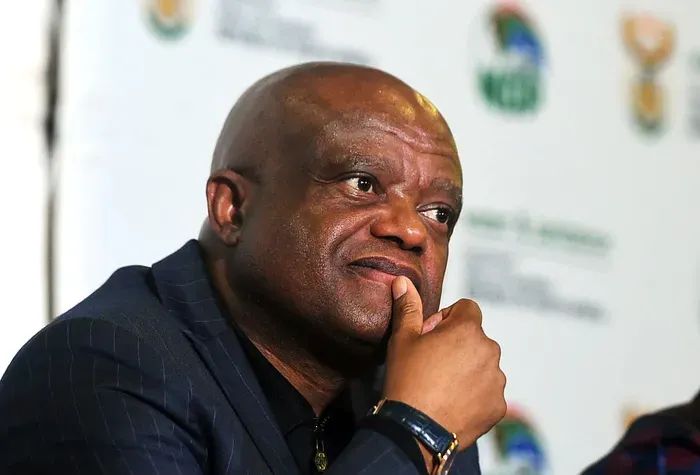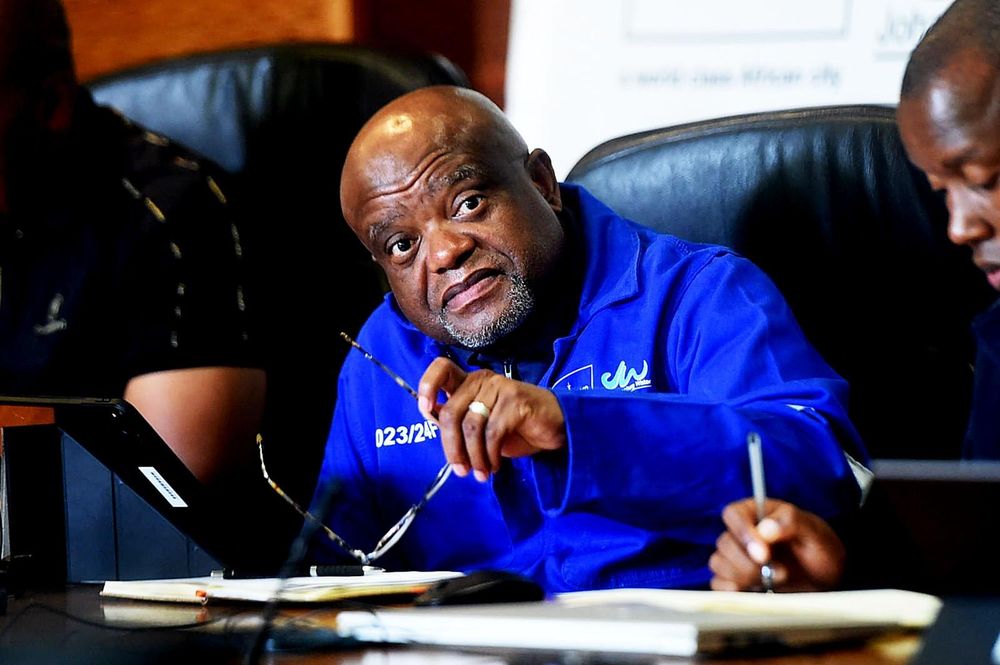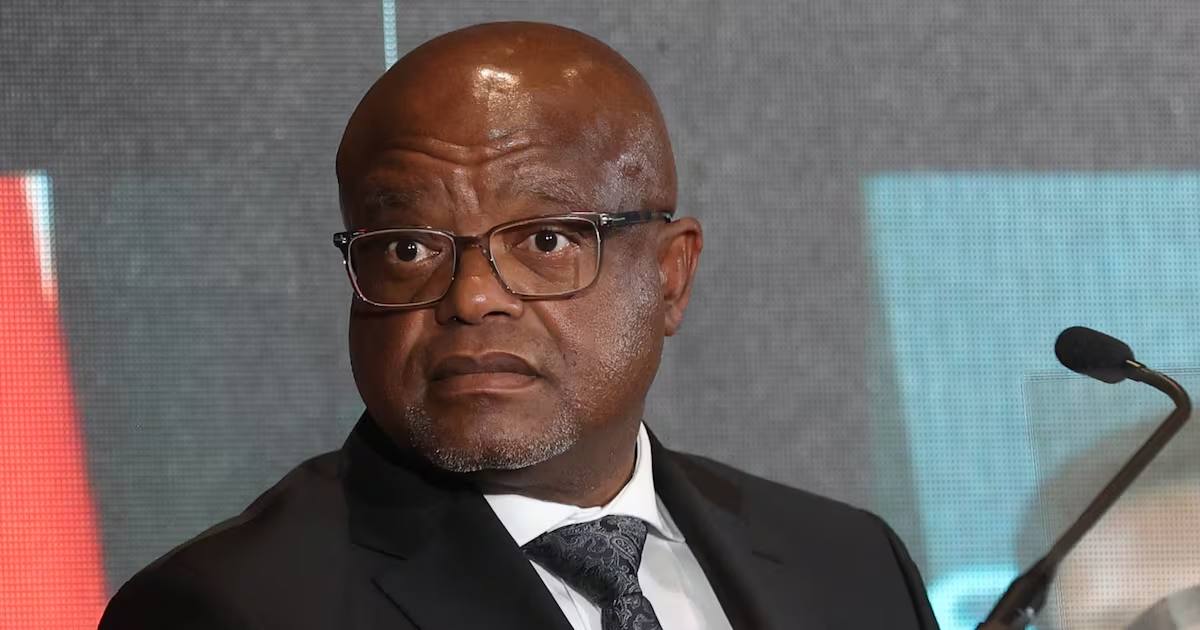
Johannesburg’s crisis is no longer merely a municipal embarrassment. It is becoming a national economic risk. That was the uncomfortable reality hanging over mayor Dada Morero’s state of the city address earlier in the week. Yet anyone listening to the speech could have been forgiven for believing South Africa’s economic capital was steadily stabilising under capable leadership. Morero spoke of a city on a “strong foundation”, of progress, recovery and momentum. The problem is almost every major indicator points in the opposite direction. Johannesburg today faces worsening financial stress, deteriorating infrastructure, collapsing service reliability, escalating Eskom debt and direct intervention threats from the National Treasury. The gap between the mayor’s rhetoric and the metro’s lived reality has become so wide that it raises a deeper question: is Johannesburg being governed through evidence and realism, or through political denialism? This matters because municipalities do not collapse overnight. Decline is usually incremental. Maintenance is deferred year after year. Revenue systems weaken quietly. Governance standards erode gradually. Political leaders increasingly rely on optimistic messaging to compensate for declining administrative capability. By the time the crisis becomes undeniable, much of the institutional damage has been done. Johannesburg increasingly exhibits many of these warning signs. The most alarming feature of the current crisis is not simply the metro’s deteriorating finances, but the apparent unwillingness of the political leadership to acknowledge the seriousness of the problem. Morero has repeatedly rejected claims that Johannesburg is broke, at one point arguing the city cannot be bankrupt because “the lights are still on”. That may work as a political soundbite, but it is not a meaningful measure of municipal financial health. The National Treasury clearly does not share the mayor’s confidence. Finance minister Enoch Godongwana’s recent intervention was extraordinary in tone and implication. The Treasury warned of weak revenue collection, underestimated expenditure, an unfunded budget and worsening governance failures. Reports indicate Johannesburg’s creditor obligations have ballooned to about R25.2bn, while available cash reserves have fallen to about R3.9bn — an extraordinarily weak cash position for a metro of Johannesburg’s scale. The Treasury even raised the possibility of withholding portions of the metro’s equitable share allocation, an unprecedented step that reflects the depth of the disagreement between the metro and national government, and the Treasury’s growing exasperation with Johannesburg’s leadership. These are not routine warnings. In local government terms an “unfunded budget” is synonymous with fiscal distress, if not outright fantasy budgeting. It means the metro is cynically projecting revenue it is unlikely to collect while understating the real cost of operations. Put simply, the books are being made to work politically rather than financially. That problem becomes especially dangerous in Johannesburg because of the scale and importance of the metro. Johannesburg is not a secondary municipality. It is South Africa’s financial and commercial centre, home to the JSE, major banks, large corporates and critical economic infrastructure. Failure in Johannesburg will reverberate across the national economy. This is why the Treasury’s alarm matters. Sustained dysfunction in Johannesburg affects investor confidence, infrastructure reliability and economic growth, and broader perceptions of state capability in South Africa. The current Eskom crisis in the metro illustrates this clearly. Last week Eskom warned it could interrupt supply to certain Johannesburg bulk electricity points because of billions in arrears owed by the metro and City Power. Electricity minister Kgosientsho Ramokgopa has suggested Eskom should assume control over Johannesburg’s failing electricity revenue management system. That proposal would once have been politically unthinkable. It is now being openly discussed because confidence in the metro’s ability to manage one of its most important revenue streams is collapsing. Electricity revenue is the financial backbone of most municipalities. When electricity billing and collection systems fail, the consequences spread rapidly. Bulk suppliers remain unpaid, infrastructure maintenance weakens further, service reliability deteriorates, and municipalities become increasingly dependent on tariff hikes to compensate for inefficiency and revenue leakage. Residents then experience the consequences directly: rising bills alongside declining reliability. This is already visible across Johannesburg. Residents and businesses confront potholes, broken traffic lights, sewage leaks, water interruptions, unreliable billing, cable theft, electricity disruptions and visible urban decay. These are no longer isolated failures confined to poorer areas. The deterioration is increasingly visible across much of the metro. The danger is not only operational decline, but the normalisation of decline. Johannesburg’s governance crisis has unfolded over years of coalition instability, revolving-door administrations and administrative disruption. Political volatility has weakened long-term planning and institutional continuity. The metro increasingly appears trapped in permanent crisis management, with leadership focused on surviving political battles rather than administrative stability, recovery and service delivery. Under these conditions, performative governance begins to replace substantive governance. Leaders prioritise narrative management over operational transparency. Speeches become detached from administrative reality. Criticism is dismissed as political opportunism rather than treated as an early warning system. This is what made Morero’s state of the city address so troubling. South Africans can tolerate difficult truths from political leaders if they believe there is honesty and a credible recovery strategy behind them. What becomes corrosive is the perception that leadership is attempting to govern through denial. At its core, Johannesburg’s crisis is becoming a crisis of credibility. Residents, investors, lenders, businesses and national government increasingly appear to be operating from a fundamentally different assessment of the metro’s condition than the mayor himself. That gap is politically corrosive and financially dangerous. Municipal recovery requires trust. Creditors need confidence obligations will be honoured. Residents need confidence tariffs are funding actual service delivery. Investors need confidence infrastructure systems will remain functional. That confidence is steadily eroding. None of this means Johannesburg is beyond recovery. The metro possesses enormous economic depth, valuable infrastructure networks and significant pockets of institutional capability. But recovery will require honesty before optimism. Johannesburg needs credible cash-backed budgeting, stronger financial controls, protected payment systems for bulk services, aggressive repair of billing and revenue systems, infrastructure-led investment and visible consequence management where governance failures occur. Most importantly, it requires political leadership willing to confront reality rather than attempting to out-message it. Morero had an opportunity last week to level with the public about the scale of Johannesburg’s difficulties and present a credible roadmap for stabilisation. Instead, he offered reassurance unsupported by the evidence. At some point, political accountability must accompany the administrative failure evident to everyone except the mayor. Johannesburg’s decline cannot endlessly be explained away as the product of history, coalition politics or hostile media coverage while the metro’s finances deteriorate, creditors remain unpaid, and residents experience worsening urban conditions. For that reason, Morero’s position is becoming increasingly untenable. A mayor who no longer appears willing or able to acknowledge the depth of a city’s crisis risks becoming part of the crisis itself. Johannesburg requires leadership grounded in realism, credibility, and urgency. Morero has shown little evidence he can provide that leadership and should therefore resign. • Allan, a former special adviser to a local government minister, is MD of data and intelligence organisation Municipal IQ.
KEVIN ALLAN | A city in crisis, a mayor in denial
Treasury intervention looms as city leaders deny growing crisis
1,158 words~5 min read