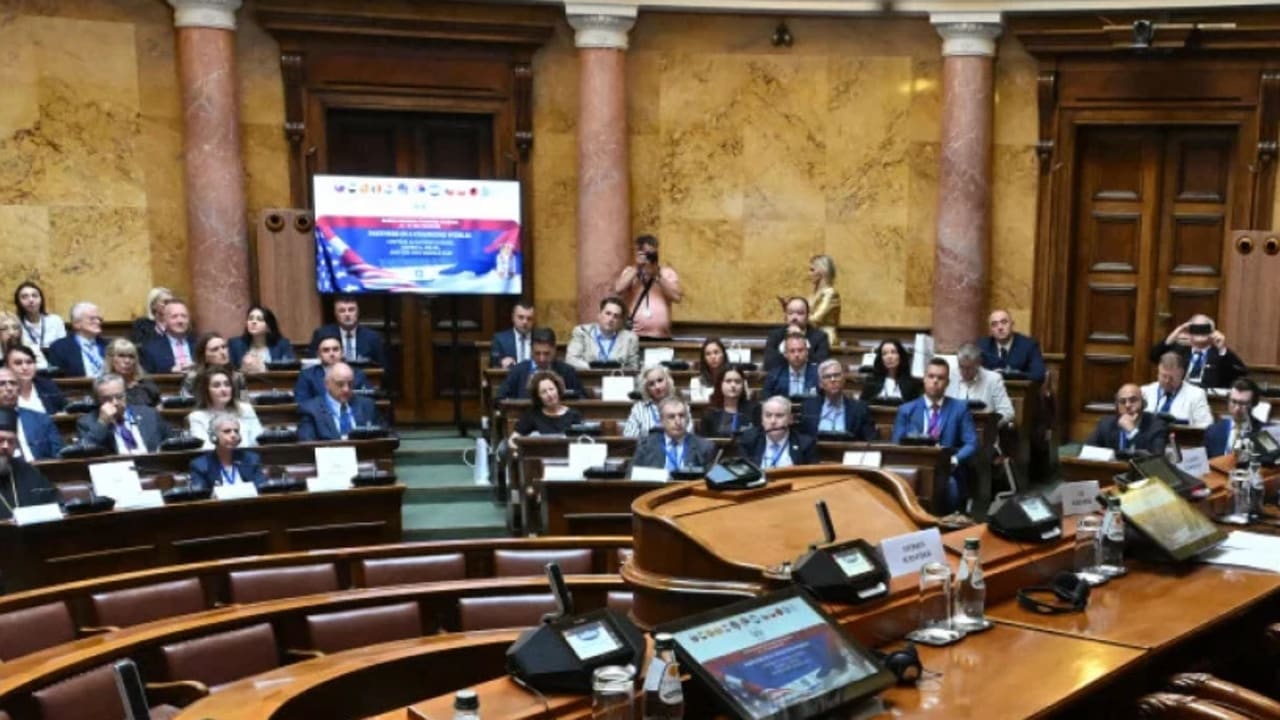
A Kosovo Albanian and Kosovo Serb delegation traveled to Washington together, invited by the Europe Center as part of its Balkans Forward Initiative. Over several days they met officials at the State Department and on Capitol Hill. Their ask was the same: a functioning multiethnic state and the security guarantee that US troops in KFOR underwrite. What did they hear back?
Ilva Tare speaks with Tatjana Lazarević, Editor in Chief of KoSSev, and Ramadan Ilazi, Head of Research at the Kosovar Centre for Security Studies, about what was said in those rooms, and what it means for a community whose future is being negotiated around it.
With institutional channels between the communities largely closed, civil society is what remains. Is that a sign of resilience, or a warning about how much else has failed?
Health and education came up as red lines, services Kosovo Serbs depend on, which cannot operate outside Kosovo’s system but cannot be switched off either. Officials agreed the status quo can’t last, and that any change must come through consensus. What does a solution that doesn’t leave the community behind actually look like?
For Pristina, integrating those institutions is simply what a functioning state does. But where does legitimate state authority end, and where does what the Serb community experiences as erasure begin — and does Kosovo see that line clearly enough?