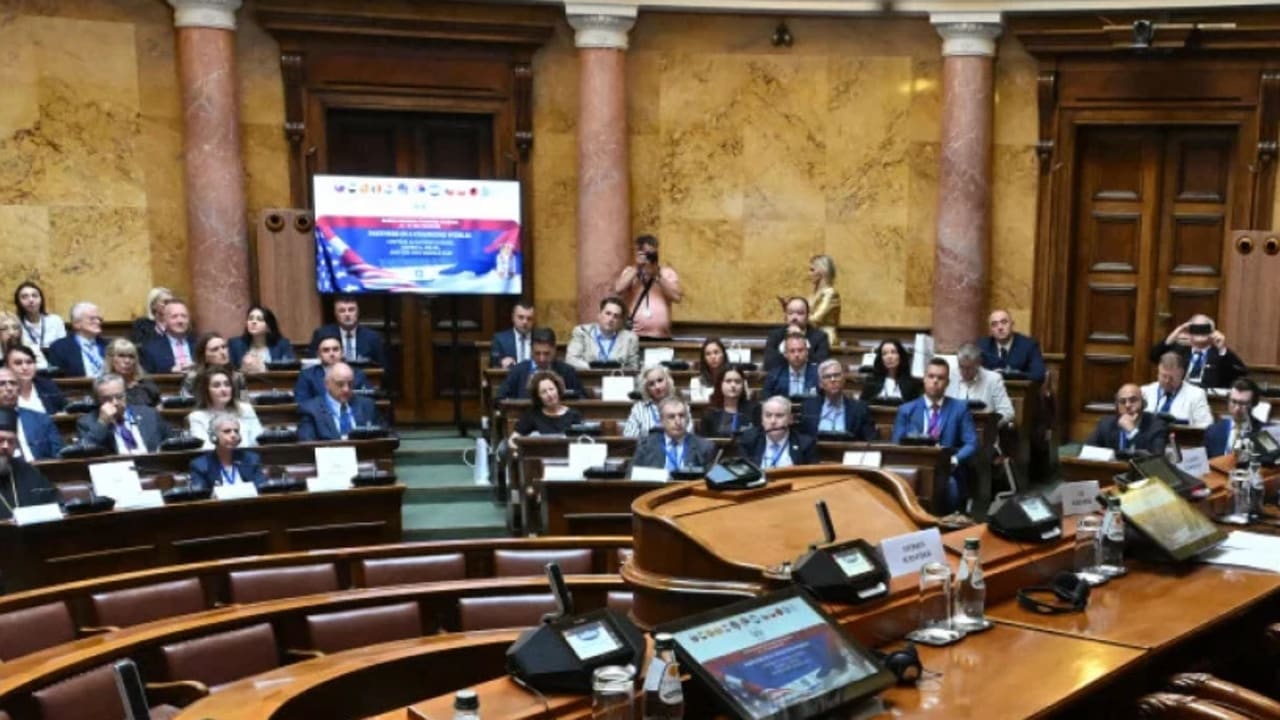
On July 17, the United States and Serbia jointly announced a strategic dialogue—a formal, permanent architecture of diplomatic engagement between the two states. The move is hardly earth-shattering; the United States maintains the same posture with dozens of other countries, and even does the same in the Western Balkans with Slovenia, Croatia, Albania, and North Macedonia.
Yet the shift suggests worrying things about the direction of U.S. foreign policy and its impact on the security and stability of a highly volatile region. It is especially strange in the context of Serbia’s growing closeness with China and its leaders’ aspirations to autocracy.
On July 17, the United States and Serbia jointly announced a strategic dialogue—a formal, permanent architecture of diplomatic engagement between the two states. The move is hardly earth-shattering; the United States maintains the same posture with dozens of other countries, and even does the same in the Western Balkans with Slovenia, Croatia, Albania, and North Macedonia.
Yet the shift suggests worrying things about the direction of U.S. foreign policy and its impact on the security and stability of a highly volatile region. It is especially strange in the context of Serbia’s growing closeness with China and its leaders’ aspirations to autocracy.