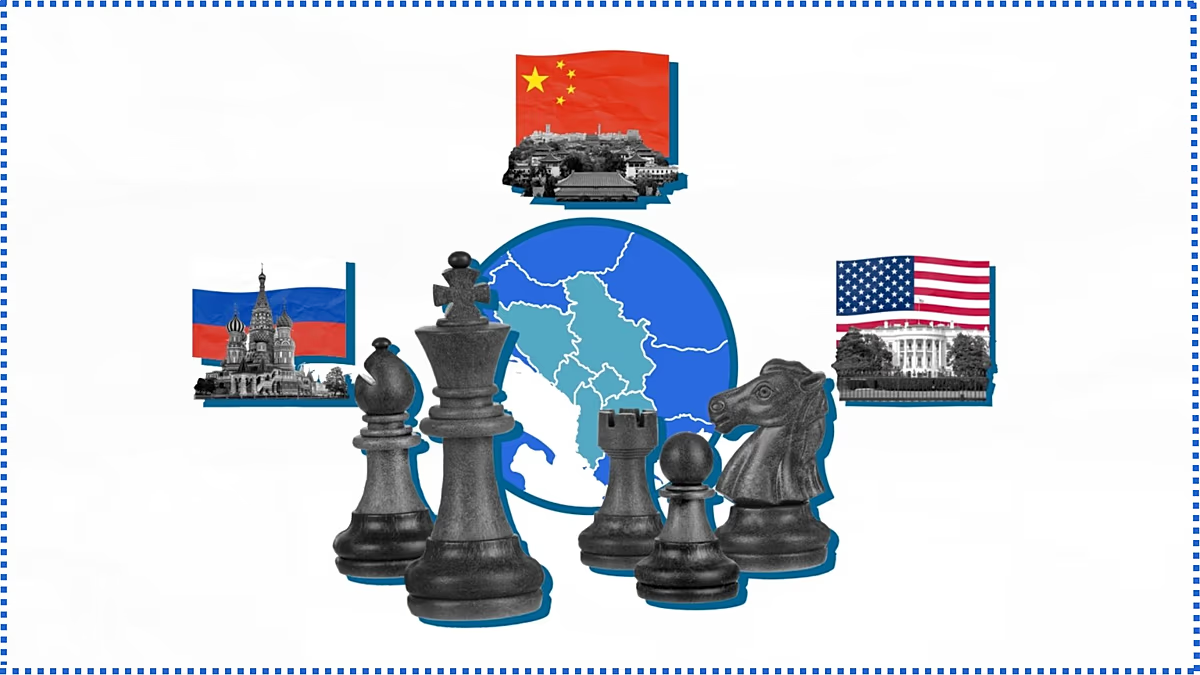
“Promoting stability and advancing U.S. economic interests in the Western Balkans makes the United States safer, stronger, and more prosperous.” That is how the Trump administration’s recently released report on US policy toward this Southeastern European region begins. At just seven pages, its brevity belies both its complexity and its importance for Albania, Bosnia and Herzegovina, Kosovo, Montenegro, North Macedonia, and Serbia. The report argues for continuing many aspects of US engagement in the region while also signaling a shift in perspective—expecting these countries to do more for themselves. It addresses local issues, such as organized crime, while also outlining a larger geopolitical vision involving Russia and China. Reading between the lines of the administration’s new report, Atlantic Council experts explain below what it means and why it matters.
1. How does this policy compare to past US approaches to the region?
In some areas, the Trump administration is charting a new and different course in the US approach toward the Western Balkans. But is also notable how much of the report calls for continuity in US foreign policy toward the region. For example, it furthers several long-standing US policy positions, including support for Bosnia and Herzegovina’s territorial integrity, universal recognition for Kosovo, the stabilizing influence of transparent institutions, and continued US partnership to dismantle transnational criminal networks.