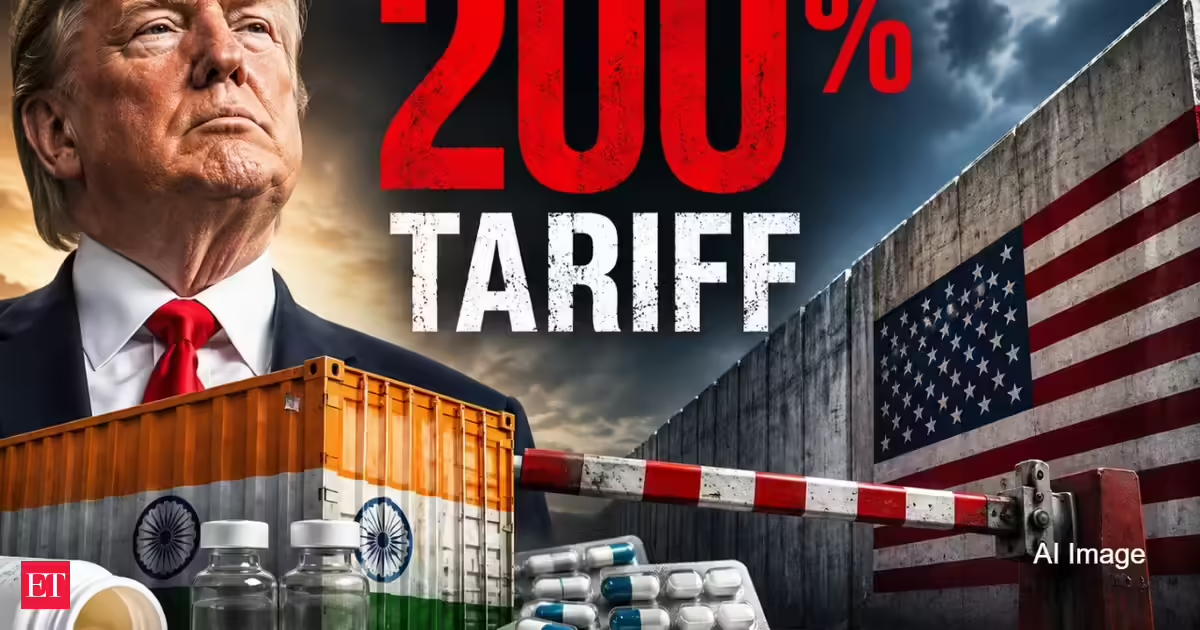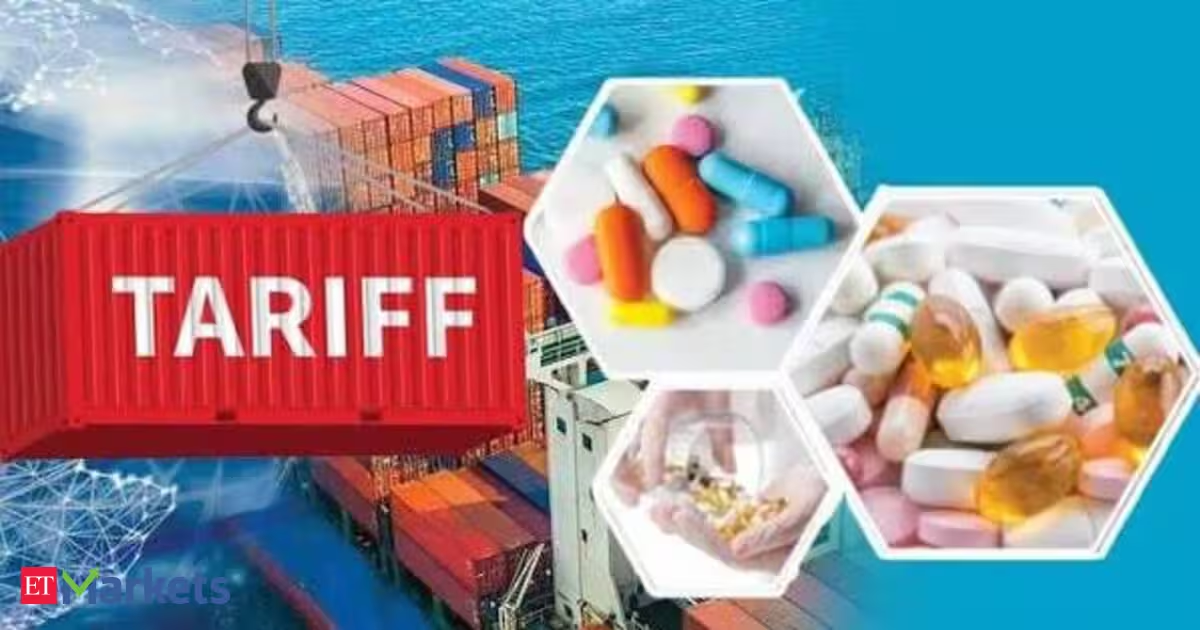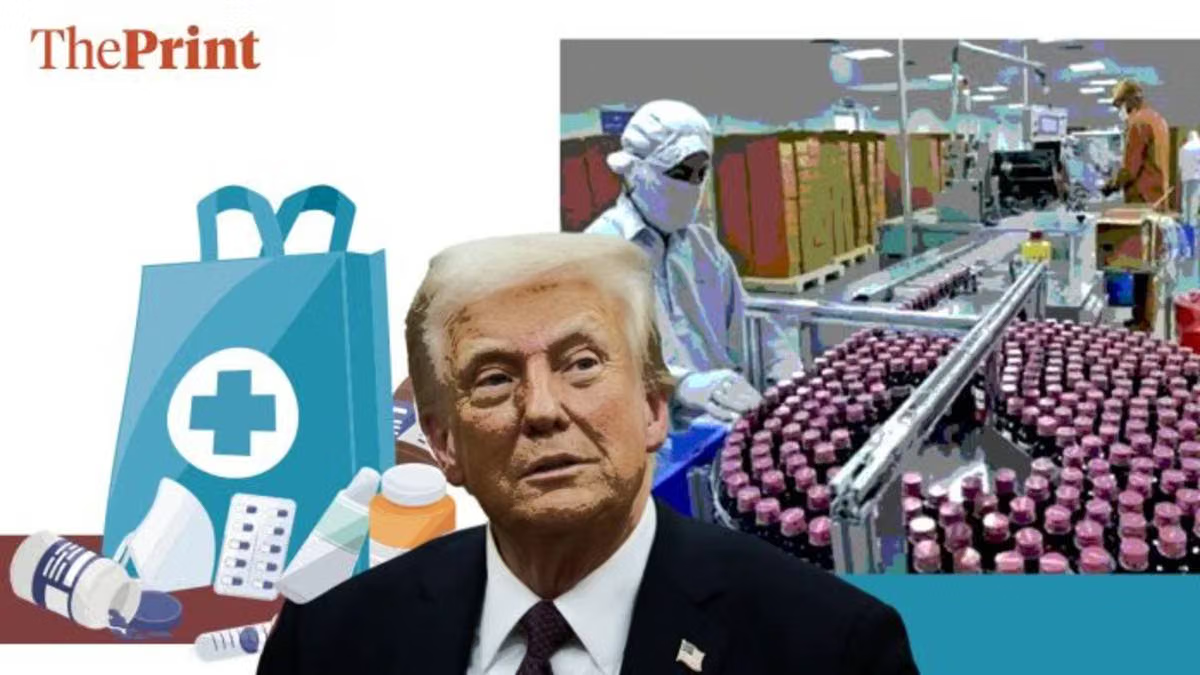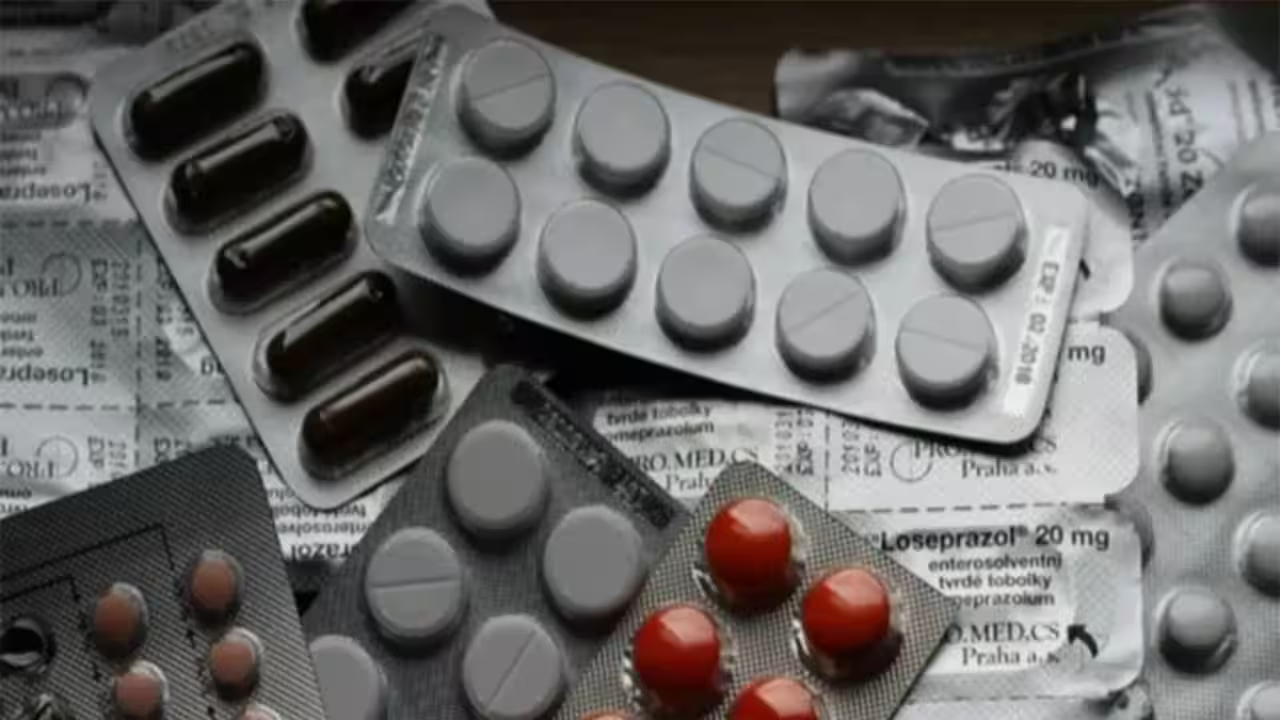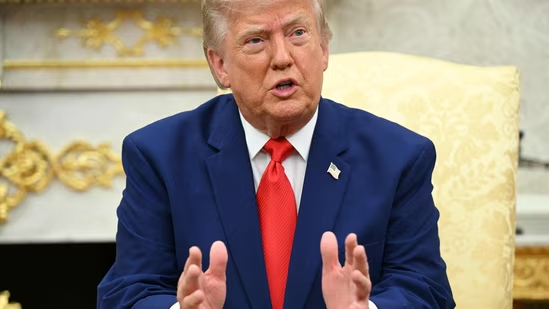
US President Donald Trump's latest tariff announcement has bought India's pharmaceutical industry time, but not certainty.The US President on Wednesday unveiled a phased tariff plan for imported generic medicines that gives manufacturers a two-year window before imposing sharply higher duties. Under the proposal, generic medicines will continue to enter the US duty-free for two years from August 1, after which imports will attract a 100% tariff for one year before the levy doubles to 200%.For Indian drugmakers, the announcement offers temporary relief. But it also starts the clock on what could become one of the biggest strategic shifts for the country's pharmaceutical exporters in decades.The proposal is aimed at encouraging companies to manufacture medicines within the United States instead of relying on overseas production, reinforcing the Trump administration's broader push to rebuild domestic manufacturing.While the immediate impact on exports is expected to be limited, the longer-term implications could be far-reaching for Indian companies that have built their businesses around supplying affordable generic medicines to the world's largest pharmaceutical market.Also read: Trump announces new generic drugs tariff plan: No tariffs for 2 years, then 100%, and then 200%Why US matters for India so much?According to the Department of Commerce, the United States remains India's largest pharmaceutical export market, accounting for around 34% of the country's pharma exports. India exports medicines to more than 200 countries, with over 60% of shipments destined for highly regulated markets such as the US and Europe.India's pharmaceutical exports rose 9.4% year-on-year to $30.47 billion in 2024-25, supported by a manufacturing ecosystem comprising more than 3,000 companies and 10,500 manufacturing units, according to Commerce Secretary Rajesh Agrawal.Separately, according to the US Food and Drug Administration (USFDA), generic medicines account for more than 90% of prescriptions dispensed in the US, underscoring the importance of the market for Indian drugmakers.What has Trump proposed?The proposed tariff roadmap is designed to encourage pharmaceutical companies to establish manufacturing facilities in the United States.Under the plan, imported generic medicines will continue to attract zero tariffs for two years from August 1. Thereafter, imports will face a 100% tariff for one year, followed by a 200% levy.The policy on patented and innovative medicines, however, remains unchanged.A two-year breathing space, but difficult decisions aheadFor Indian pharmaceutical companies, the transition period offers valuable time to reassess manufacturing strategies, supply chains and capital allocation.The immediate impact on exports is likely to be limited because Trump has not imposed tariffs immediately. However, the proposed escalation to 100% and eventually 200% duties could fundamentally alter the economics of exporting generic medicines to the US if companies continue to manufacture primarily from India.According to an ET report, industry executives have maintained that while India's cost-efficient manufacturing ecosystem remains globally competitive, prolonged tariff barriers could encourage companies to expand manufacturing capacity in the US or increase contract manufacturing partnerships to retain market access.The policy therefore shifts the conversation from tariffs alone to long-term manufacturing strategy.Which Indian companies may get impacted?Several leading Indian drugmakers already have manufacturing operations in the United States. These include Aurobindo Pharma, Dr. Reddy's Laboratories, Lupin, Cipla and Zydus Lifesciences, all of which have established manufacturing footprints or operations in the country.Companies with existing US facilities could potentially have greater flexibility if the tariff proposal is implemented as announced.On the other hand, companies such as Alkem Laboratories and Torrent Pharmaceuticals remain largely dependent on manufacturing in India and generate relatively lower revenues from US manufacturing operations.Biocon continues to depend on manufacturing facilities in India and Malaysia for biosimilars and generic medicines, while Senores Pharma could potentially benefit from its local manufacturing presence catering to the US generic market.Also read: Sun Pharma, Cipla & other pharma stocks shed over 2% as Trump announces up to 200% tariffs on generic drugs from 2028The road aheadTrump's announcement now offers India's pharmaceutical industry something it did not have until Tuesday, a defined transition period.The two-year tariff-free window reduces the immediate threat to exports while giving companies time to rethink manufacturing footprints and investment strategies.Whether that proves sufficient will depend on how quickly companies adapt and whether manufacturing economics justify a larger presence in the United States.For an industry that has spent decades building India into the world's pharmacy for affordable generic medicines, the next two years could determine how it serves its biggest overseas market in the decade ahead.
Trump's Generic Drug Tariffs Explained: What it means for Indian pharma before the 200% storm
Trump's generic drug tariffs plan provides Indian drugmakers a two-year duty-free window. This allows companies time to reassess manufacturing and supply chain strategies. After this period, tariffs will escalate significantly, impacting export economics. Several Indian firms already have US manufacturing operations for flexibility. The next two years will shape how India serves its largest overseas pharmaceutical market.
717 words~3 min read