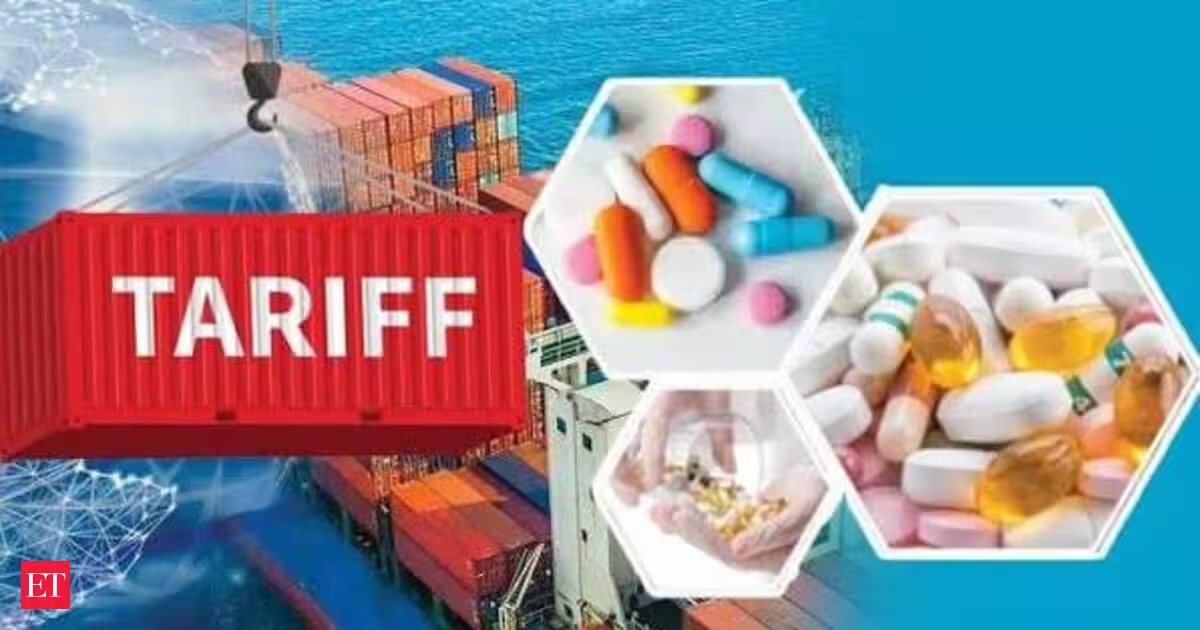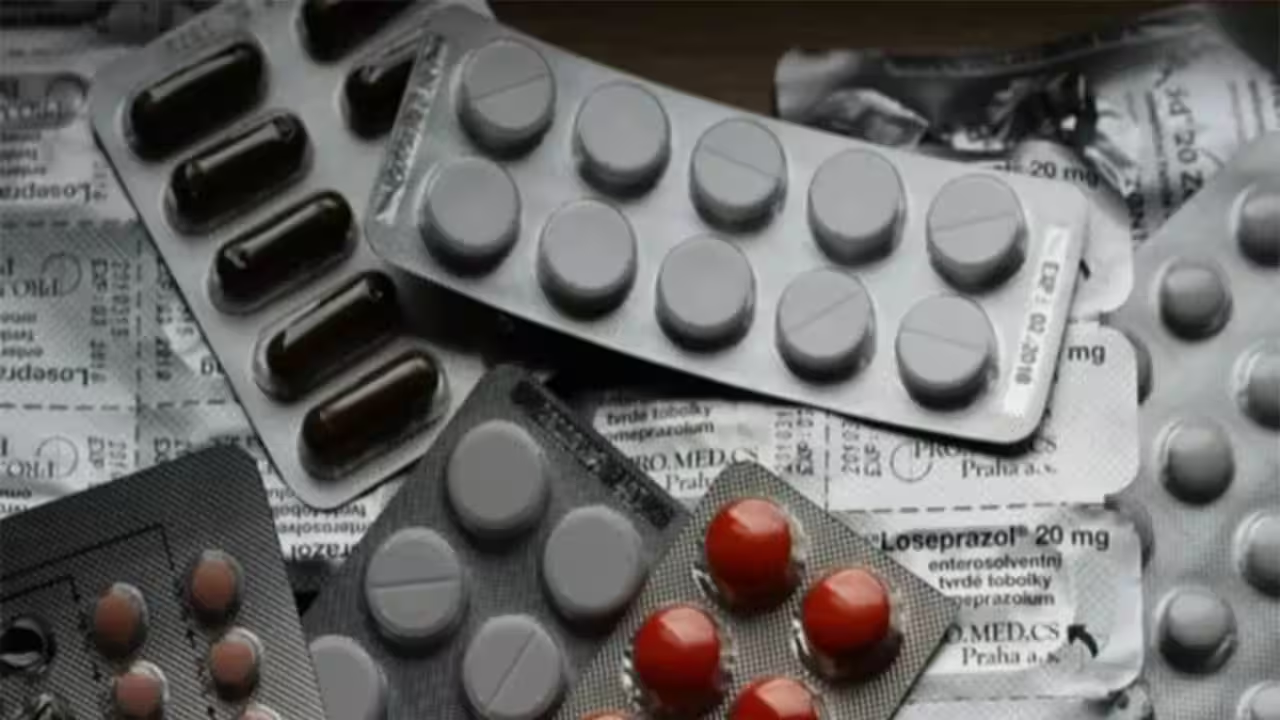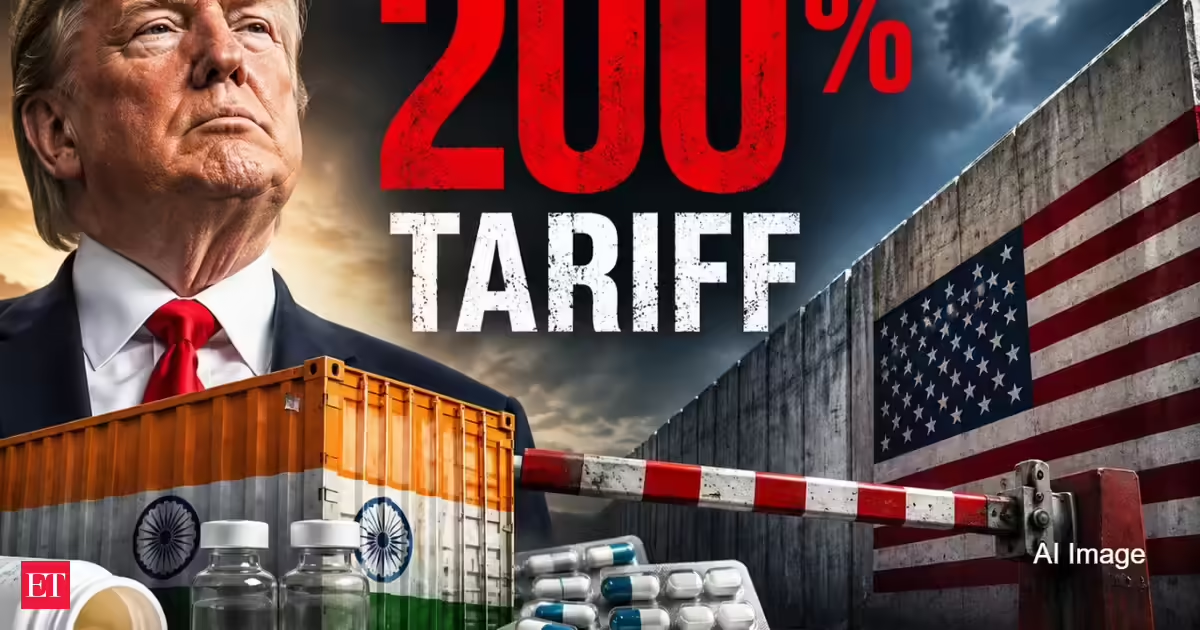
For the first time, generic drugs have been actively brought into the tariff conversation by United States President Donald Trump, who outlined a graded timeline starting at zero from August 1, 2026, and increasing to 200 per cent from August 2029.While the road ahead remains unclear, Indian pharmaceutical industry representatives said, the proposed tariffs cannot be absorbed and would be passed on to the US consumer.In a social media post, the US President said that generic drugs would attract zero tariffs for two years, followed by a 100 per cent tariff next year and 200 per cent after that – to get companies to “reshore” or set up manufacturing facilities in the US. Until now, the US President’s attention had been on expensive patented drugs, getting innovative drugmakers to manufacture in the US, and pricing drugs on par with other developed countries.Namit Joshi, Chairman, Pharmaceuticals Export Promotion Council of India (Pharmexcil), told businessline that Indian drugmakers would not be able to absorb the proposed tariffs of over 100 per cent, and that setting up a generic ecosystem in the US is a “remote possibility”. The prevailing uncertainty has dented exports to the US – at $9.7 billion (2025-26), compared to $10.5 billion (2024-25), he said. Indian drugs account for about 40 per cent of the generic drugs prescribed in the US.President Trump’s post comes amid bilateral trade talks between the two countries and ahead of the US midterm elections in November.“Not practical”“We have been through these cycles. It is not practical to move production to the US. We have to raise prices in the US,” Erez Israeli, CEO, Dr Reddy’s, said, on the development.Priyanka Chigurupati, Executive Director, Granules India, added, “Generic medicines account for nearly 90 per cent of US prescriptions, representing only 13 per cent of prescription drug spending.” Any increase in the cost of generic medicines could increase costs across the healthcare system, affecting affordability, she said.Indian drugmakers present in the US include Aurobindo Pharma, Lupin, Dr Reddy’s Laboratories, Sun Pharma, Granules, Glenmark, Senores Pharma, and Piramal Pharma, among others.Manufacturing in the US would push up costs by 5 to 6 times, and companies would not find it viable to invest in facilities to make generics, which account for a small part of US spending, said Joshi. Contract manufacturing organisations will also be impacted, he said, as India would be the country of origin. India is home to over 650 facilities approved by the US Food and Drug Administration.Sudarshan Jain, Secretary General with the Indian Pharmaceutical Alliance (IPA), said that India has been a trusted partner in supplying affordable medicines to American patients. “Leading Indian pharmaceutical companies have US presence (over 40 facilities), supporting American jobs, investing in manufacturing, research and resilient supply chain,” he said, adding that they would continue to engage with the US administration to build medicine security for both countries.Companies with a presence in the US will have to map products they want to prioritise and advance, said Chandrachur Datta, Partner at Vector Consulting, as several patented drugs are set to lose exclusivity. Indian generic companies sell drugs ranging from cancer products to paracetamol, he said, and setting up a base in the US involves challenges, including procuring active pharmaceutical ingredients, excipients and packaging materials.“Negotiating tool”Bharat Celly, equity research analyst at Equirus Securities, further added, “relocating manufacturing is not a two-year exercise. Transferring an approved product to a US facility requires site transfer filings, process validation, stability data, and FDA approval for each ANDA (abbreviated new drug application). For Indian generic manufacturers with large approved portfolios, the cost and timeline of re-registering products significantly exceed the proposed transition period, while the economics of many products do not support such a move.”Further, he adds, the proposal runs counter to the intent of the Hatch-Waxman framework - designed to reduce drug prices through greater generic competition. “Imposing 100–200 percent tariffs on imported generics could instead raise the cost of low-priced medicines and, in shortage-prone categories, increase the risk of supply disruptions rather than drive reshoring.”At this stage, he said, the proposal seems “primarily as a negotiating tool, given that implementation is deferred until August 2028, beyond the next US election cycle. Accordingly, we do not expect any near-term earnings impact, although the announcement could weigh on investor sentiment and valuation multiples.”Case for affordable drugsThe IPA, a platform for large drugmakers, has been making the case for affordable Indian drugs in the US, including through visits by industry representatives to outline the savings due to Indian generics.According to an IQVIA report commissioned by the IPA, the Indian pharma industry contributed an estimated $219 billion in savings for the US healthcare system in 2022, $1.3 trillion over the last decade, and another $1.3 trillion in projected savings over the next five years.Published on July 22, 2026
Trump’s proposed generic drug tariffs ‘not practical’, says Indian pharma; US consumers will pay the price
Trump announces a tariff timeline for generic drugs, starting with zero tariffs for a year, then escalating to 200%.
798 words~4 min read