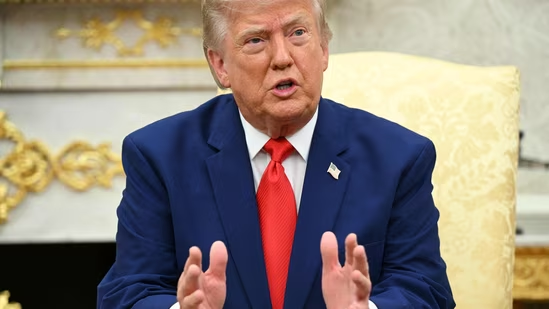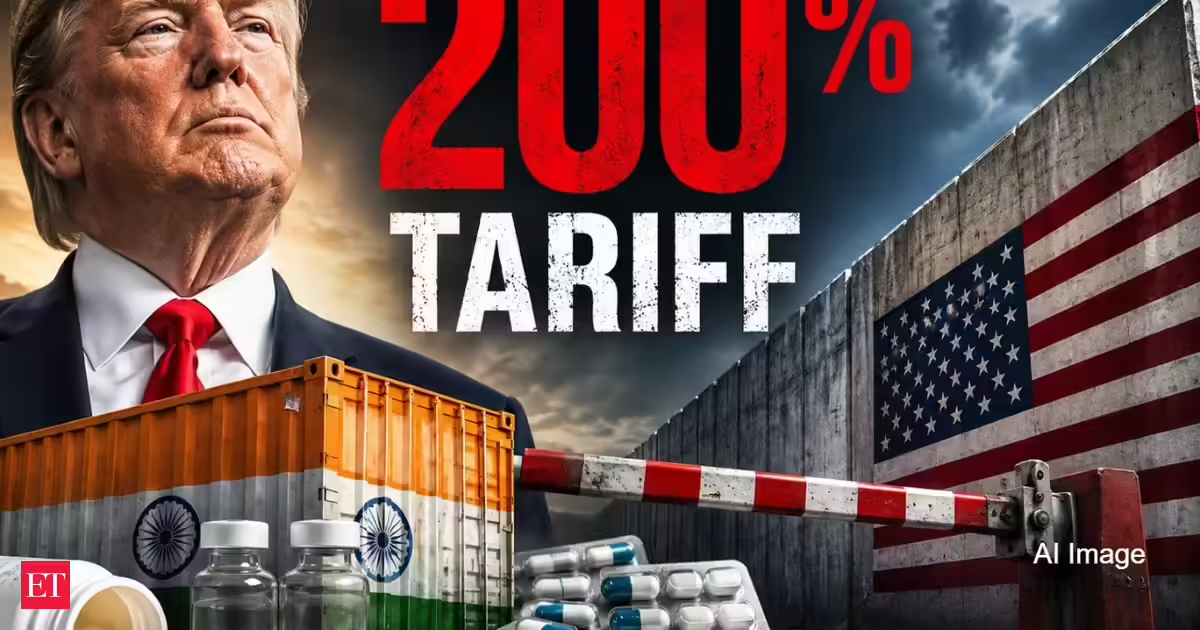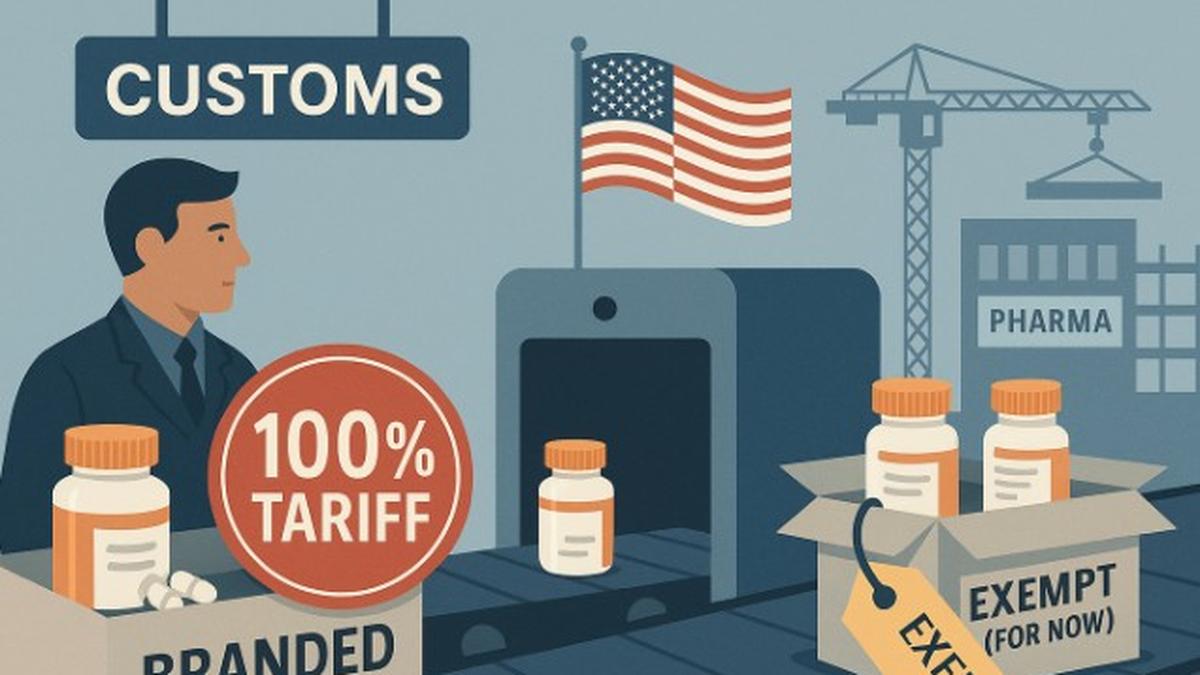
US President Donald Trump’s announcement of a phased tariff regime on generic drug imports starting at zero per cent but climbing to 100 per cent and eventually 200 per cent by 2028 has put India’s pharmaceutical industry on alert.Trump said that the tariff plan would come into effect from August 1, with the US continuing to have zero per cent tariffs on all generic drugs for the first two years. From the third year, the tariff will rise to 100 per cent, and 200 per cent thereafter, he said, describing the move as aimed at onshoring the manufacturing of such pharmaceutical products.Also Read: Trump announces new generic drugs tariff planThe announcement is likely to affect India, the largest supplier of generic medicines to the US, with Indian companies accounting for nearly 50 per cent of all generic medicines consumed in America.India exported $9.7 billion worth of pharmaceuticals to the US in 2025, accounting for 38 per cent of its total global pharma exports of $25.8 billion.While the tariffs won’t bite for two years, giving companies a window to relocate production, the scale of the eventual levies has raised fresh concerns for an industry central to India’s export economy and to affordable healthcare in the US alike.Also Read: What Trump's generic drugs tariff plan means for Indian pharma before the 200% stormTushar Manudhane, Senior Vice President, Institutional Research Analyst Healthcare at Motilal Oswal Financial Services Ltd said multiple Indian companies operate through US subsidiaries and there is a considerable difference between the price at which goods are transferred into the US and the price at which they are eventually sold there, with the tariff presumably applying at the point of entry, cushioning its actual impact.He further pointed out that the US imports around 90 per cent of its generic drug prescriptions meaning any tariff would effectively raise costs for everyone supplying the US market, not India specifically.According to Manudhane, the rationale for outsourcing to India rests on a 40-60 per cent manufacturing cost advantage over the US and even with tariffs in place, this gap is unlikely to be fully offset.He added that setting up a manufacturing plant in the US takes at least two years, followed by a plant inspection and product approval cycle of another 12-15 months, which means that any real competition from onshored production is still years away. “These factors raise questions about the economic viability of setting up generic drug manufacturing in the US,” he said.Sudarshan Jain, Secretary General of the IPA, said India has been a trusted partner in ensuring the supply of affordable and quality-assured medicines for American patients, noting that leading Indian pharmaceutical companies have a US presence spanning over 40 facilities, supporting American jobs and investing in manufacturing, research and a resilient supply chain.He said the IPA would continue to engage with the US Administration to build a stronger partnership and further strengthen health and medicine security for both countries.
Trump's 200% drug tariff plan: Is India's pharma industry about to face an economic storm?
The United States is set to implement a phased approach to tariffs on generic drug imports, beginning at zero percent and escalating to one hundred percent, eventually reaching two hundred percent by 2028. This strategy is designed to foster the onshoring of pharmaceutical manufacturing. India, a significant supplier, could experience considerable repercussions, though it will benefit from a grace period of two years.
488 words~2 min read