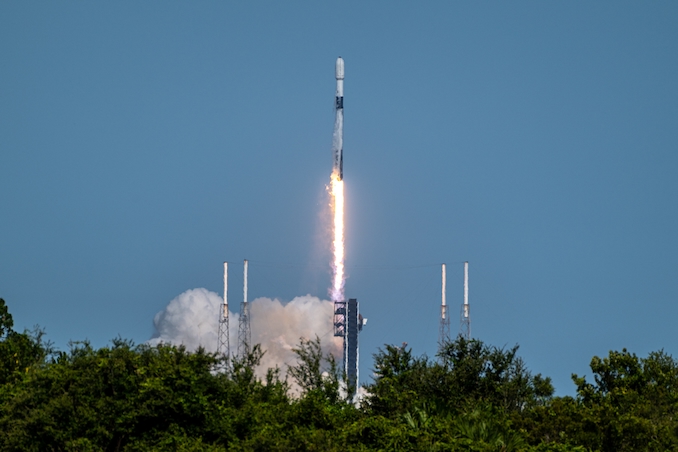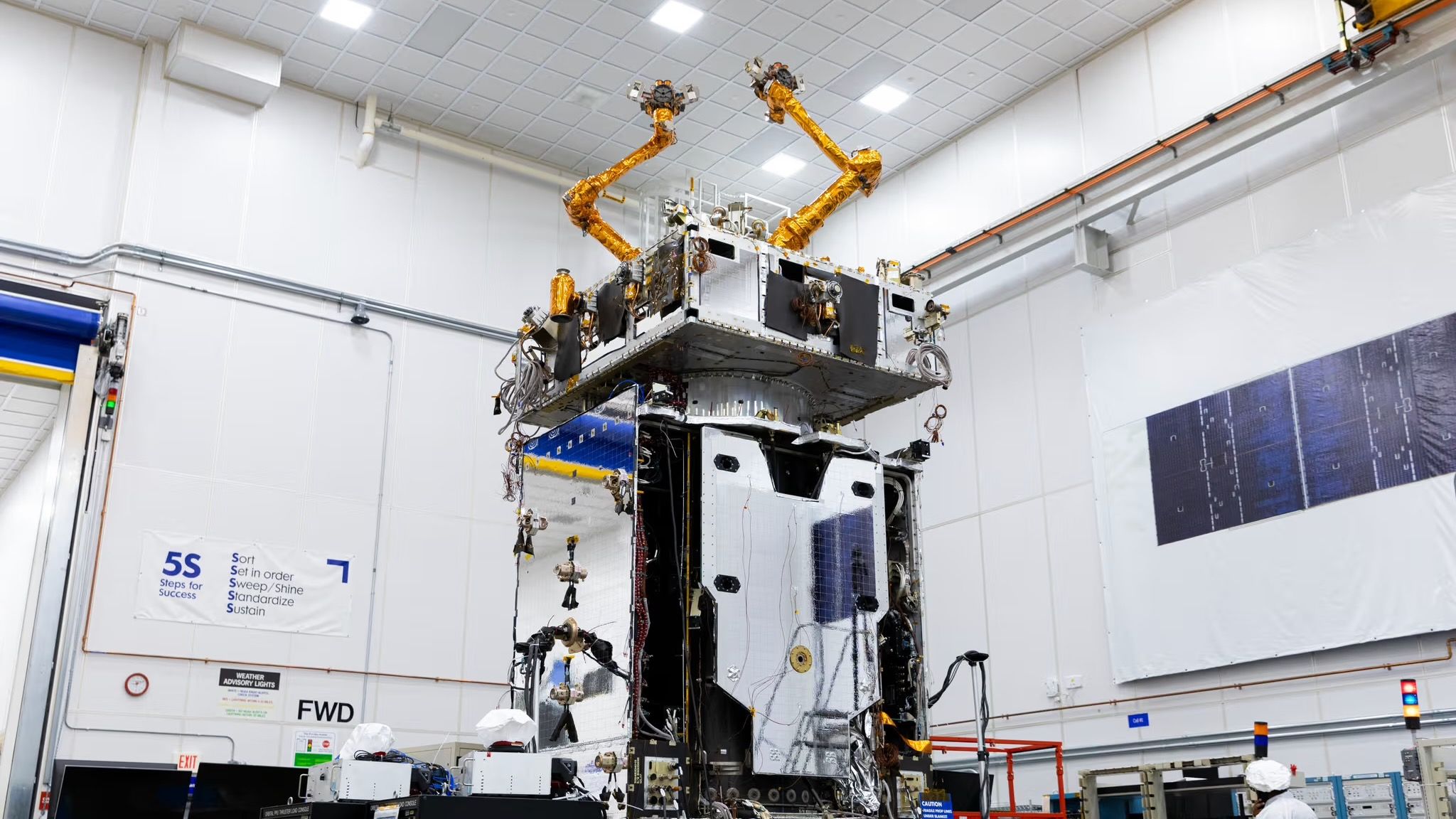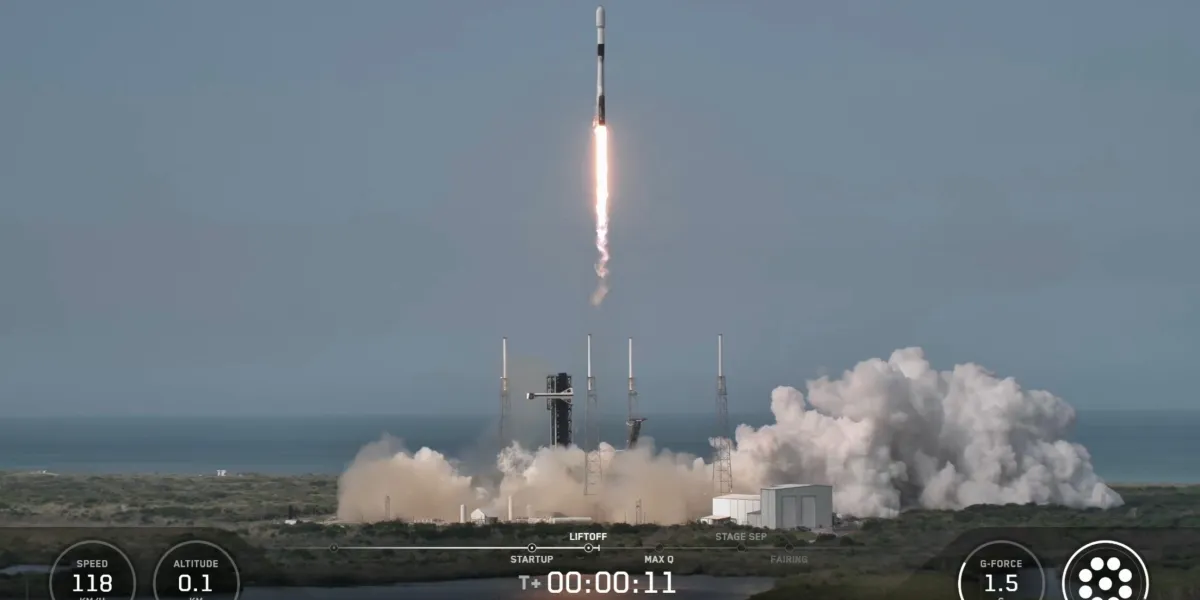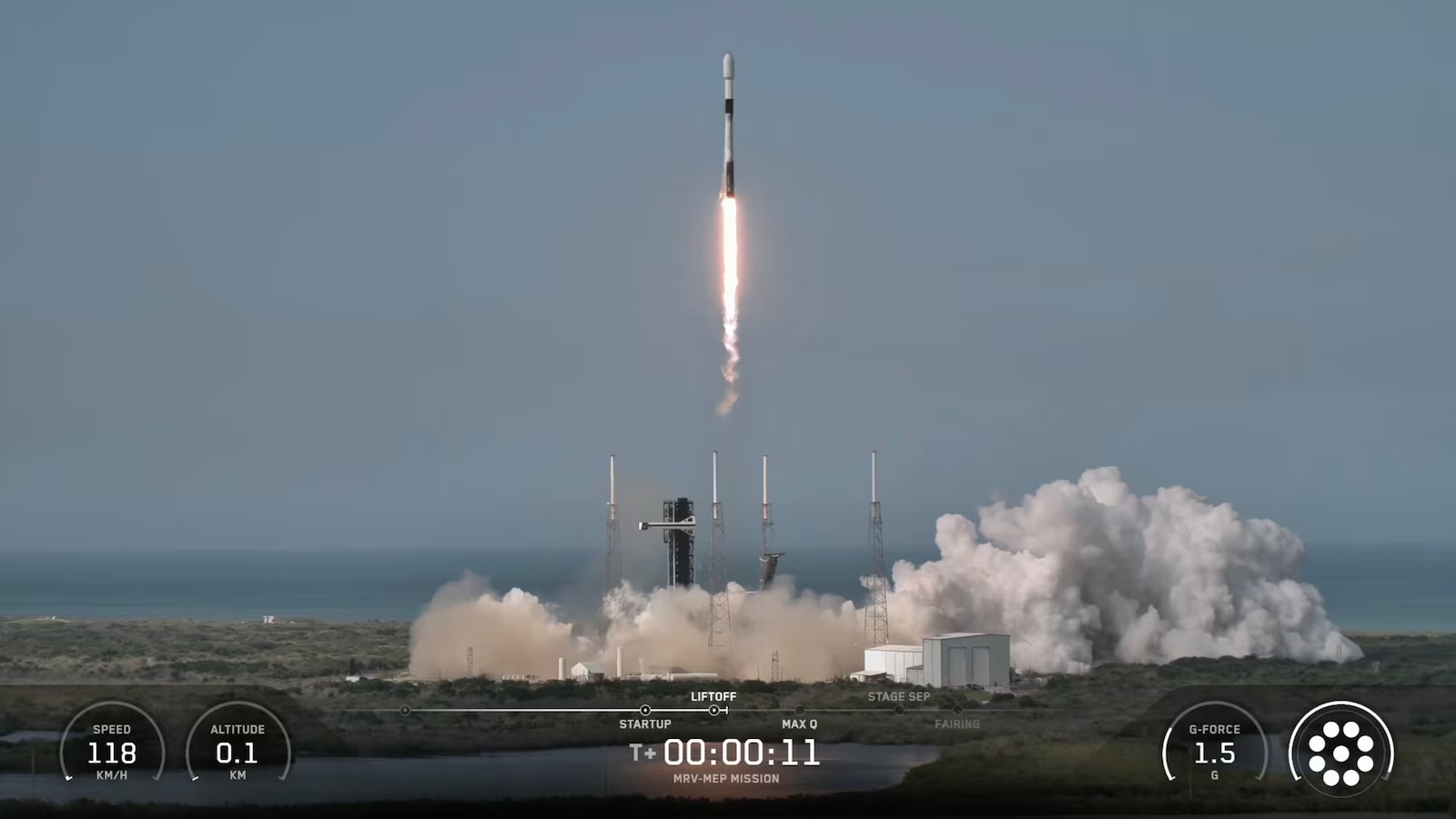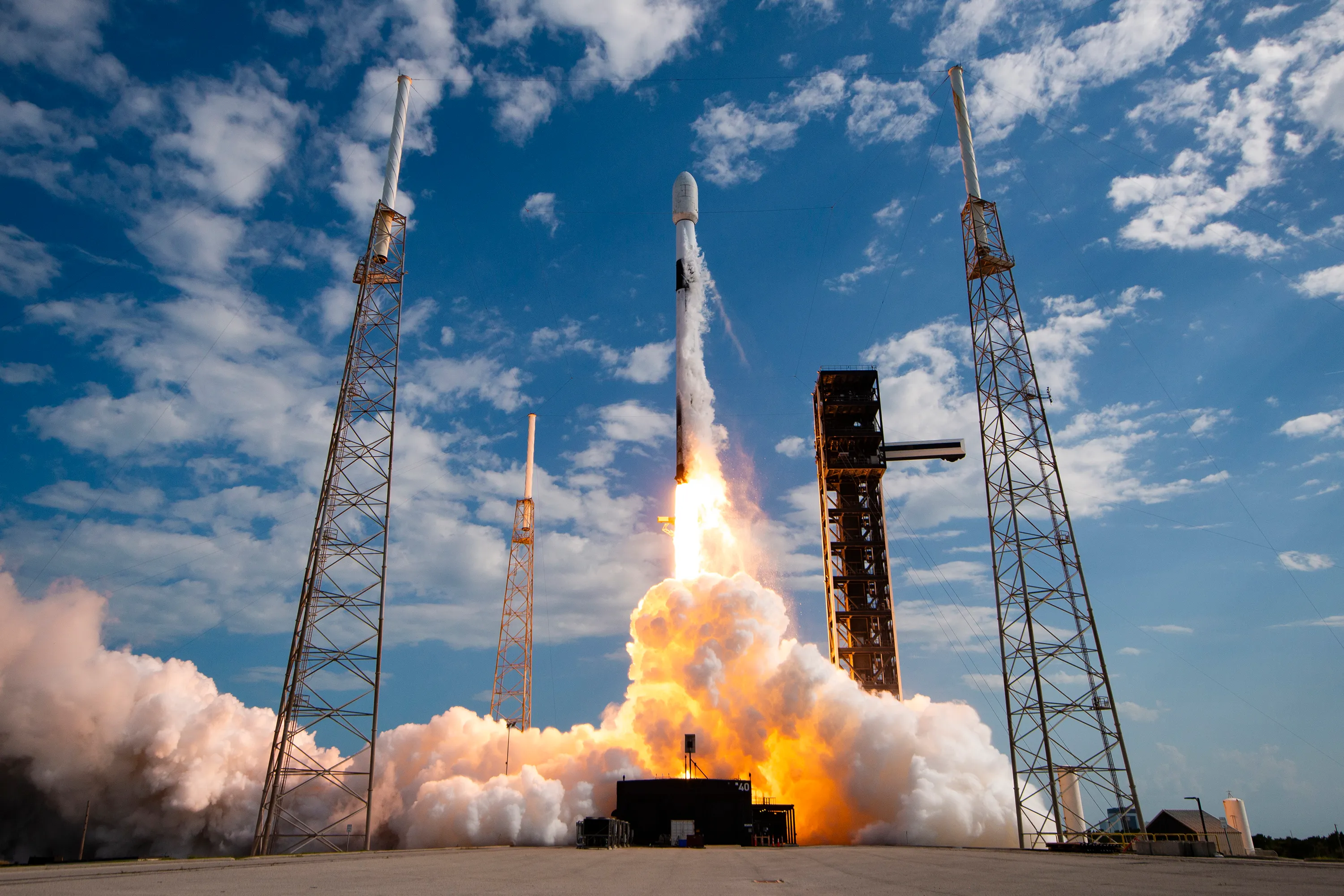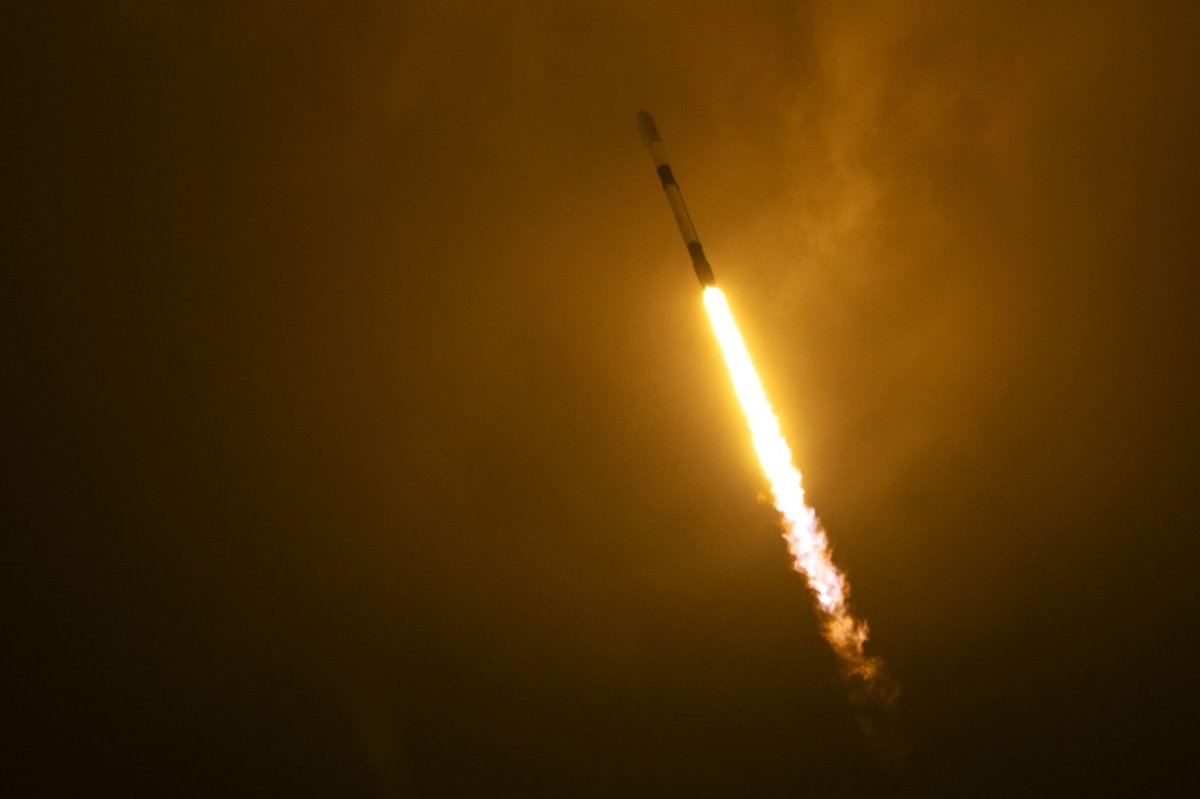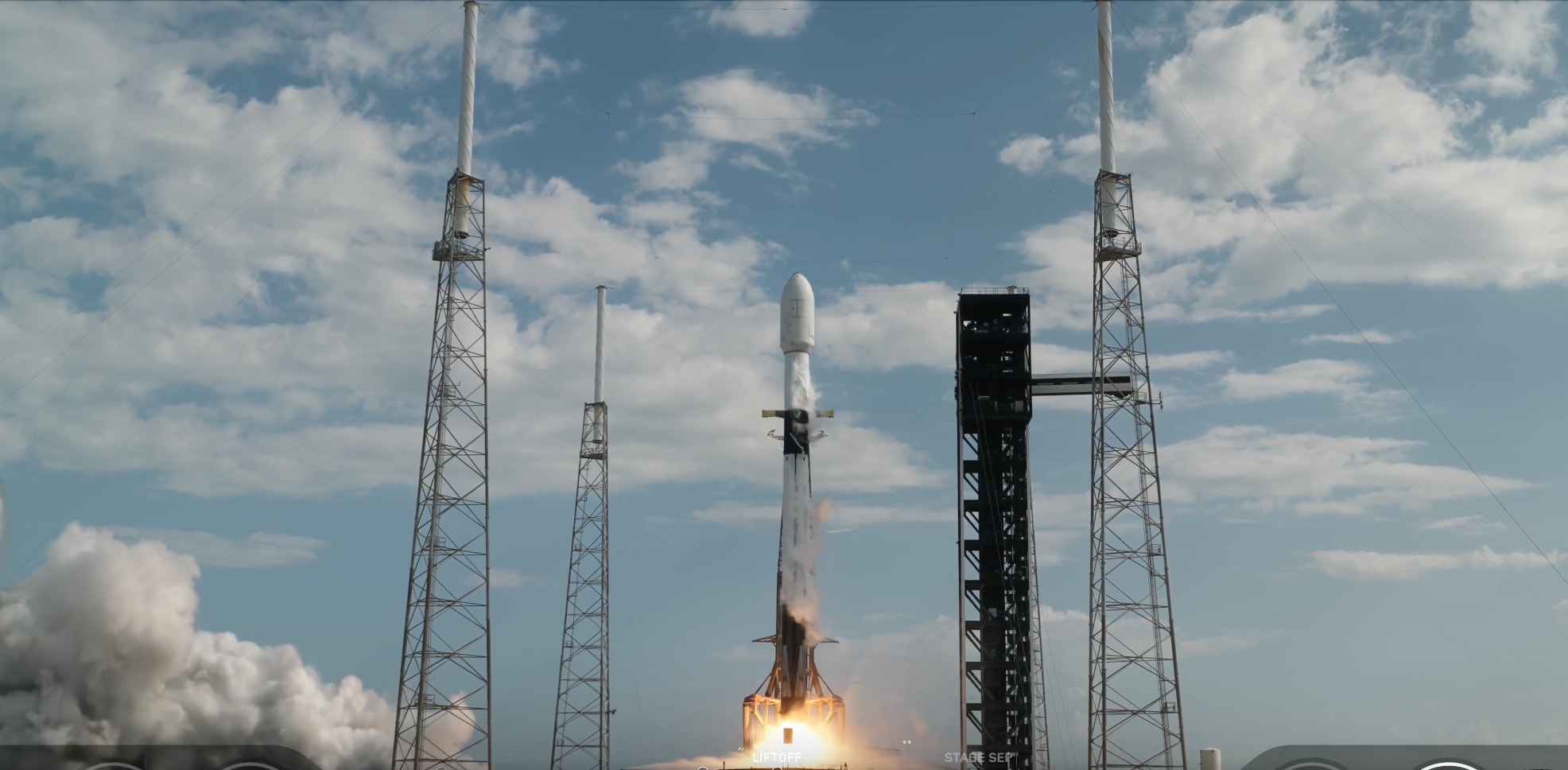
A SpaceX Falcon 9 rocket on July 21 launched a Northrop Grumman satellite-servicing spacecraft known as Mission Robotic Vehicle. Credit: SpaceX livestream
WASHINGTON — SpaceX on July 21 launched a Northrop Grumman robotic spacecraft designed to extend the lives of multiple satellites by installing propulsion modules in geostationary orbit.
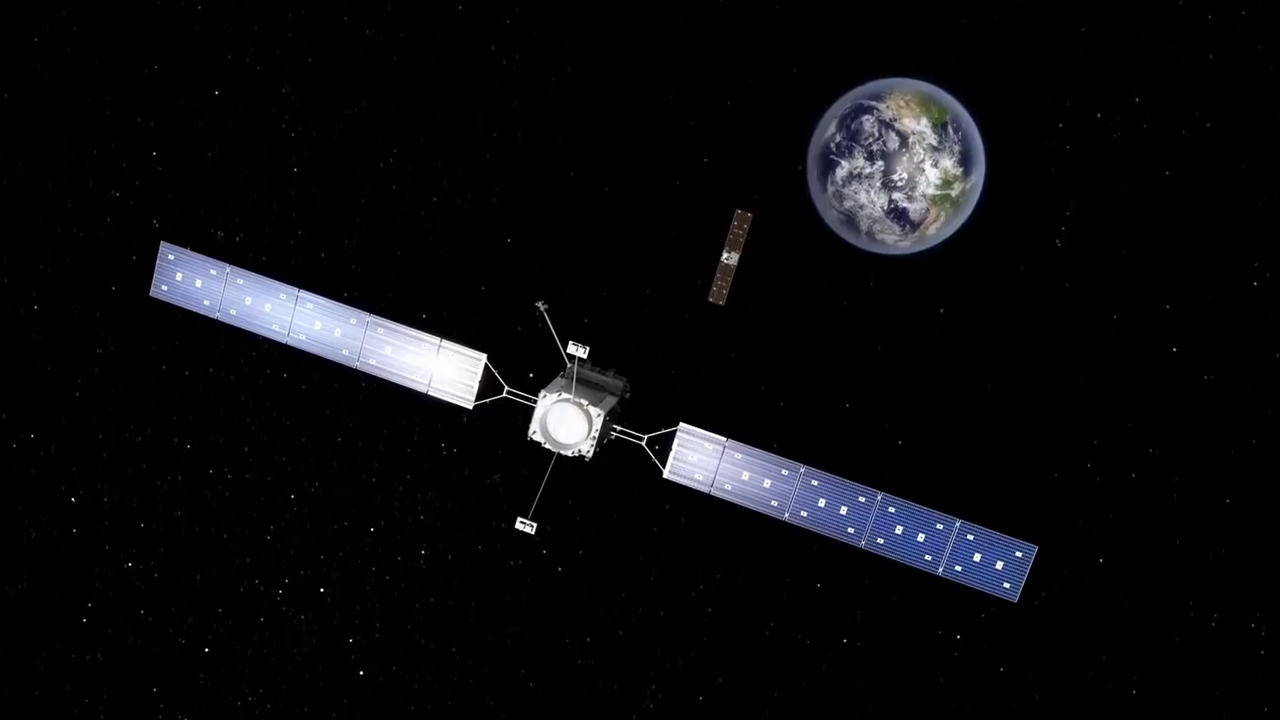
A Falcon 9 rocket carrying a Mission Robotic Vehicle, or MRV, and three Mission Extension Pods lifted off at 5:15 p.m. Eastern from Cape Canaveral Space Force Station in Florida. The four spacecraft, developed by Northrop Grumman’s SpaceLogistics subsidiary, were launched toward geosynchronous transfer orbit and will use their own propulsion systems to reach geostationary orbit, about 22,000 miles above Earth.
Because the mission required the booster’s full performance to send the MRV and three pods toward geostationary orbit, SpaceX did not attempt to recover the first stage, ending its service after a record 32 flights.
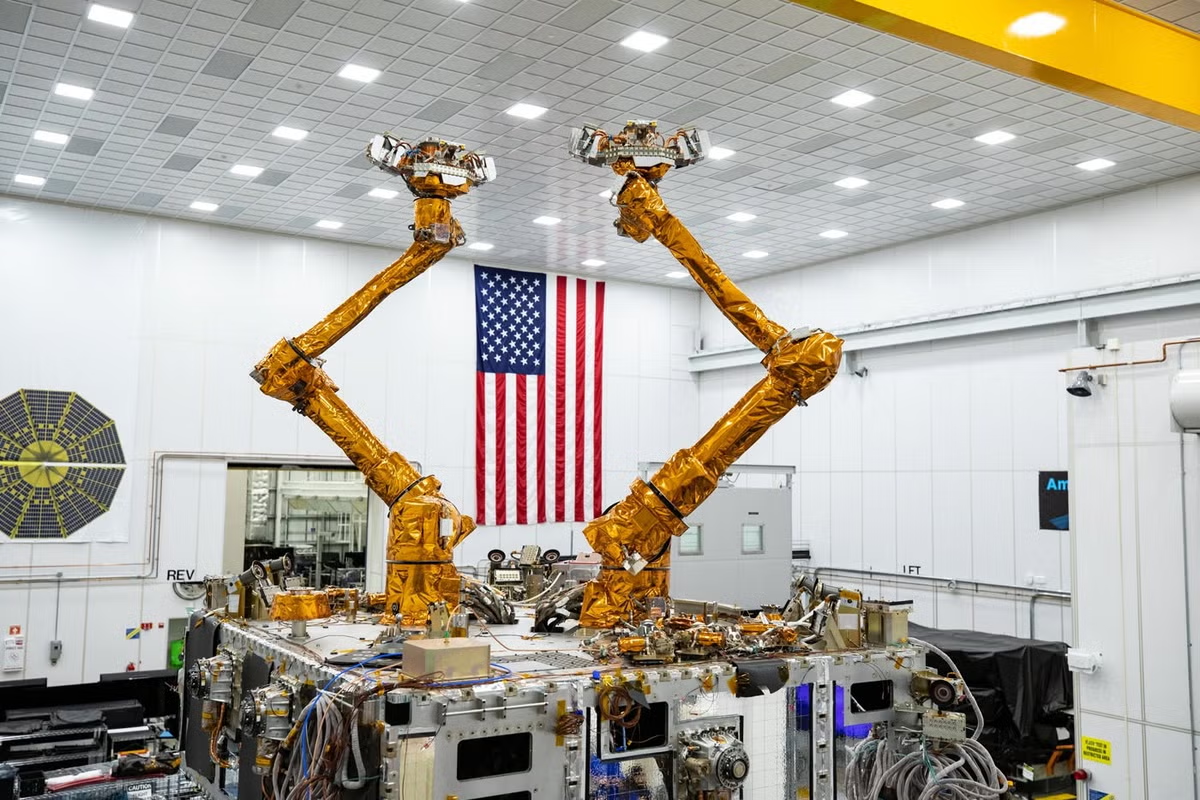
Once they reach GEO, the three pods will position themselves near the satellites they are intended to service. MRV will retrieve each pod in turn, approach a customer satellite and use its two robotic arms to install the pod on the spacecraft. It will then back away and repeat the process for the other two customers.