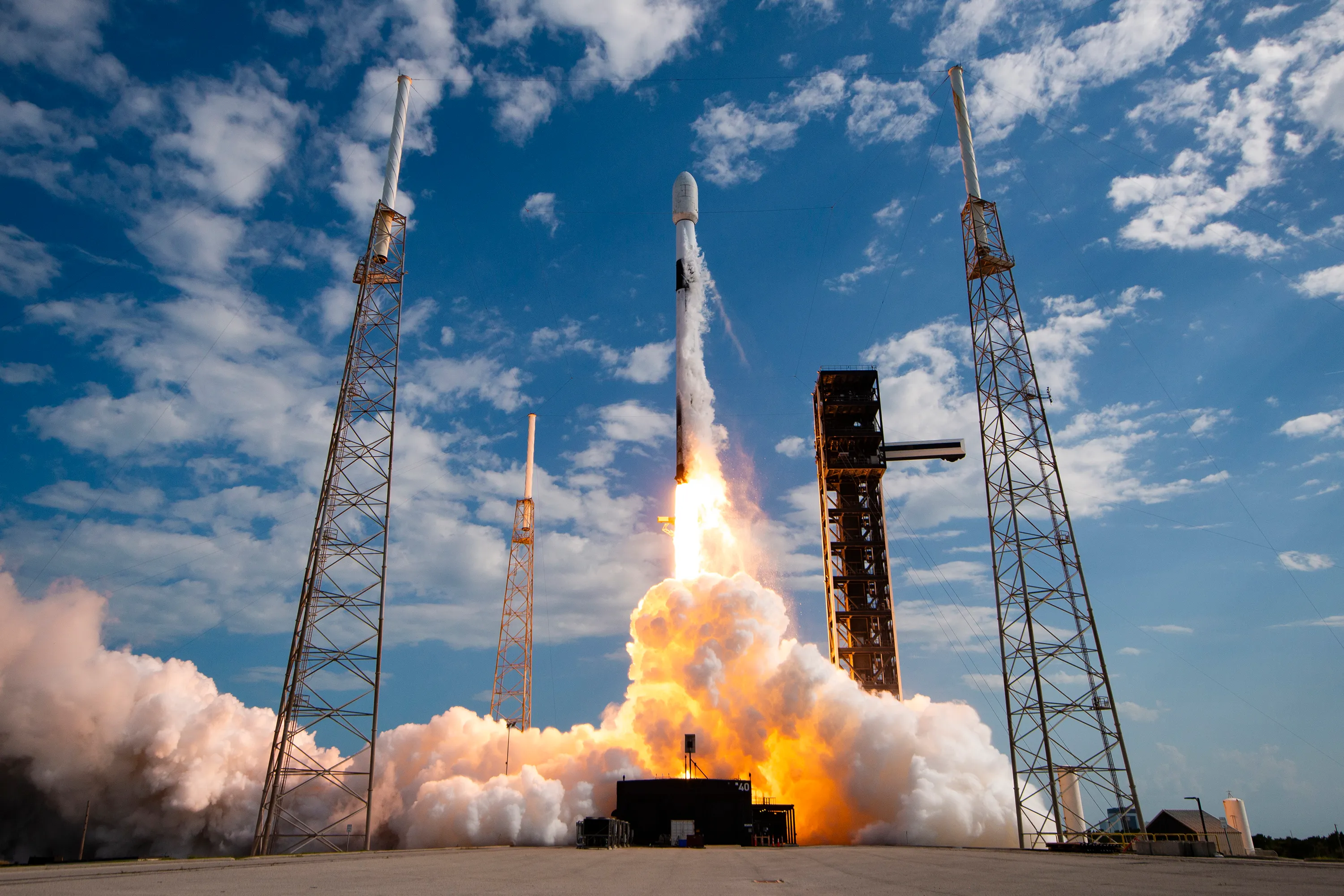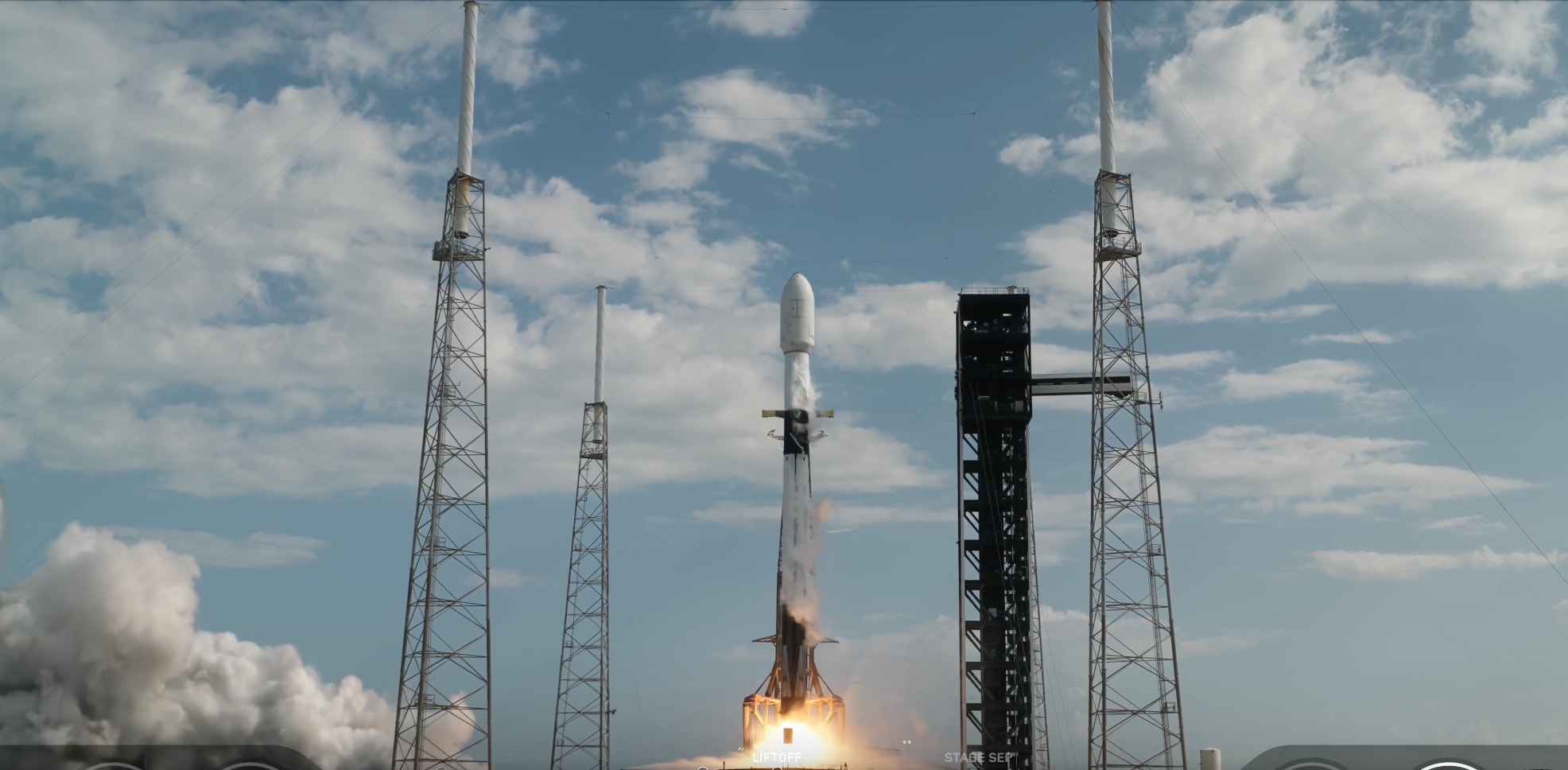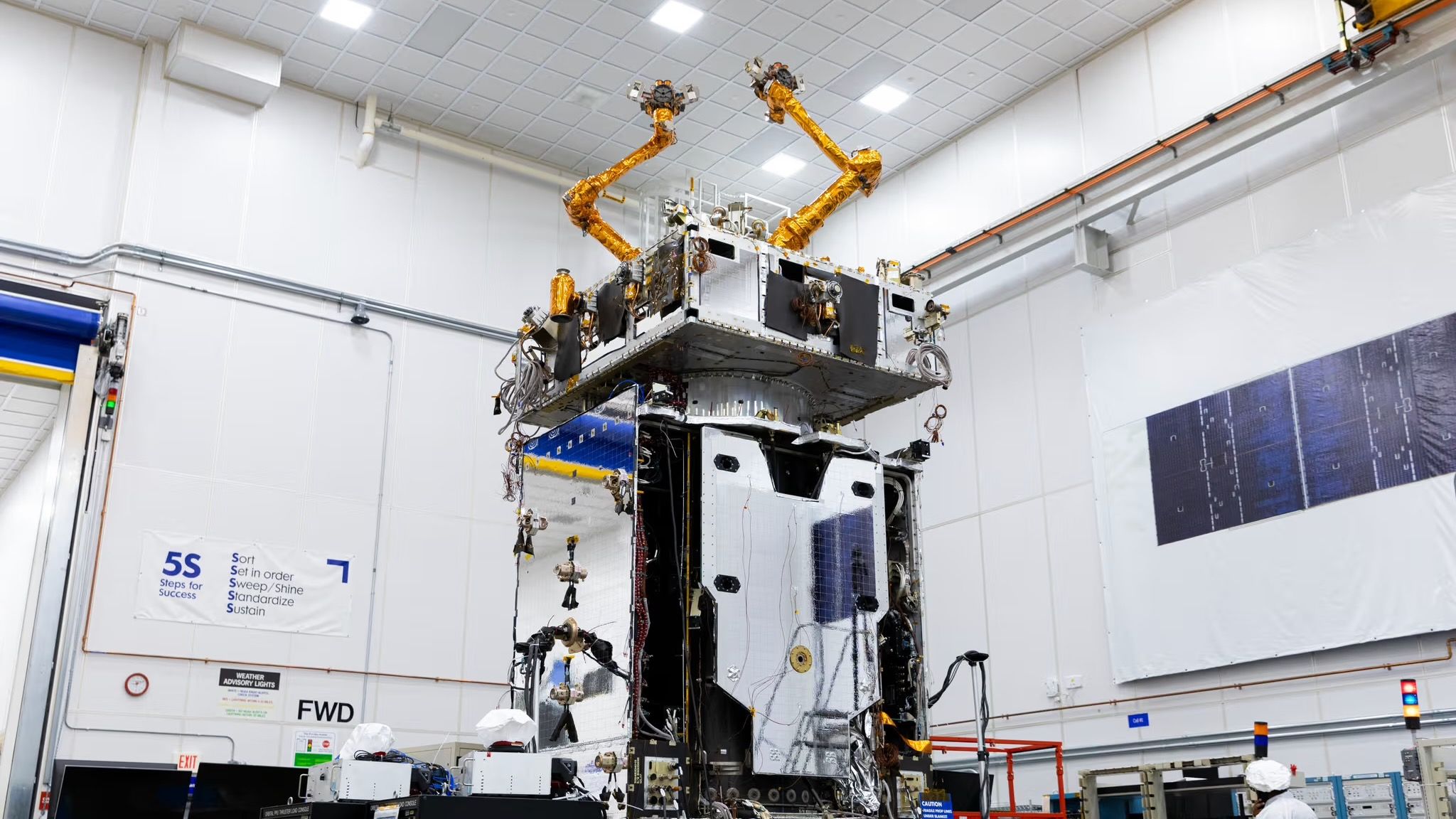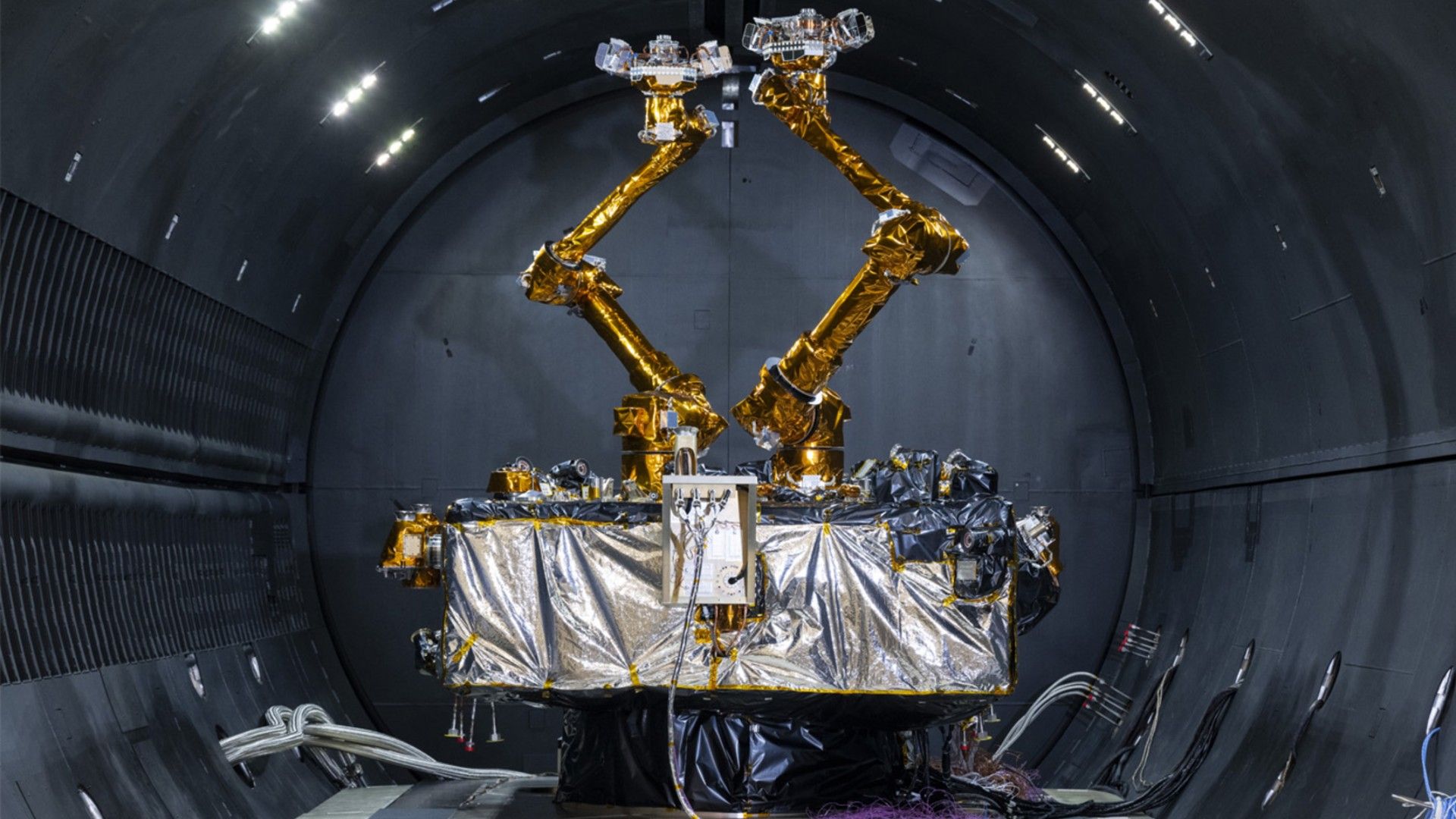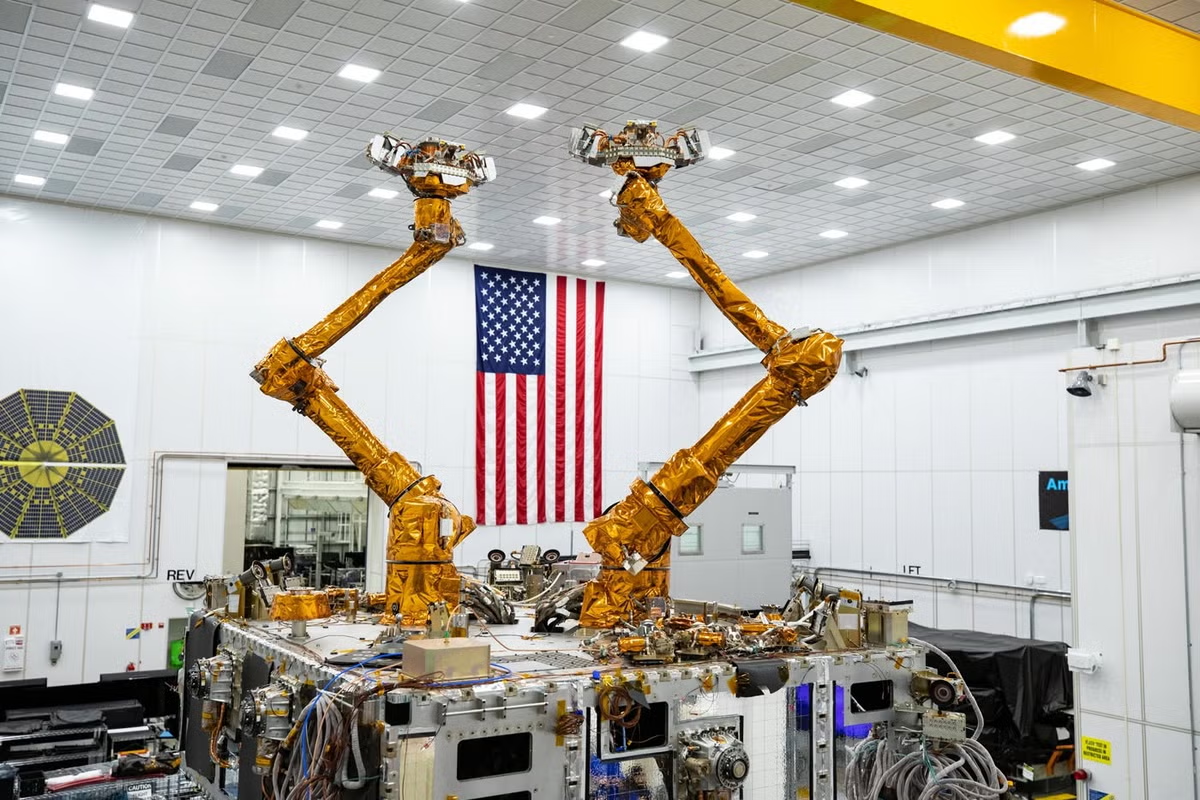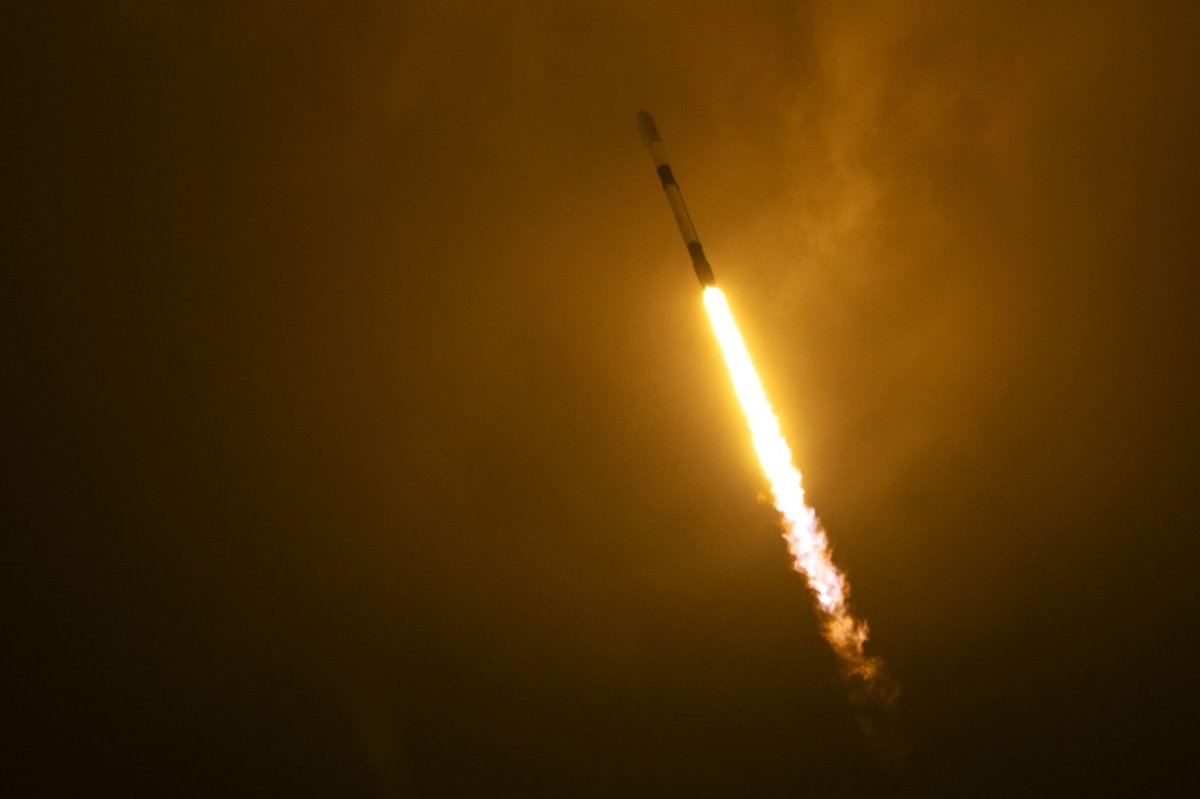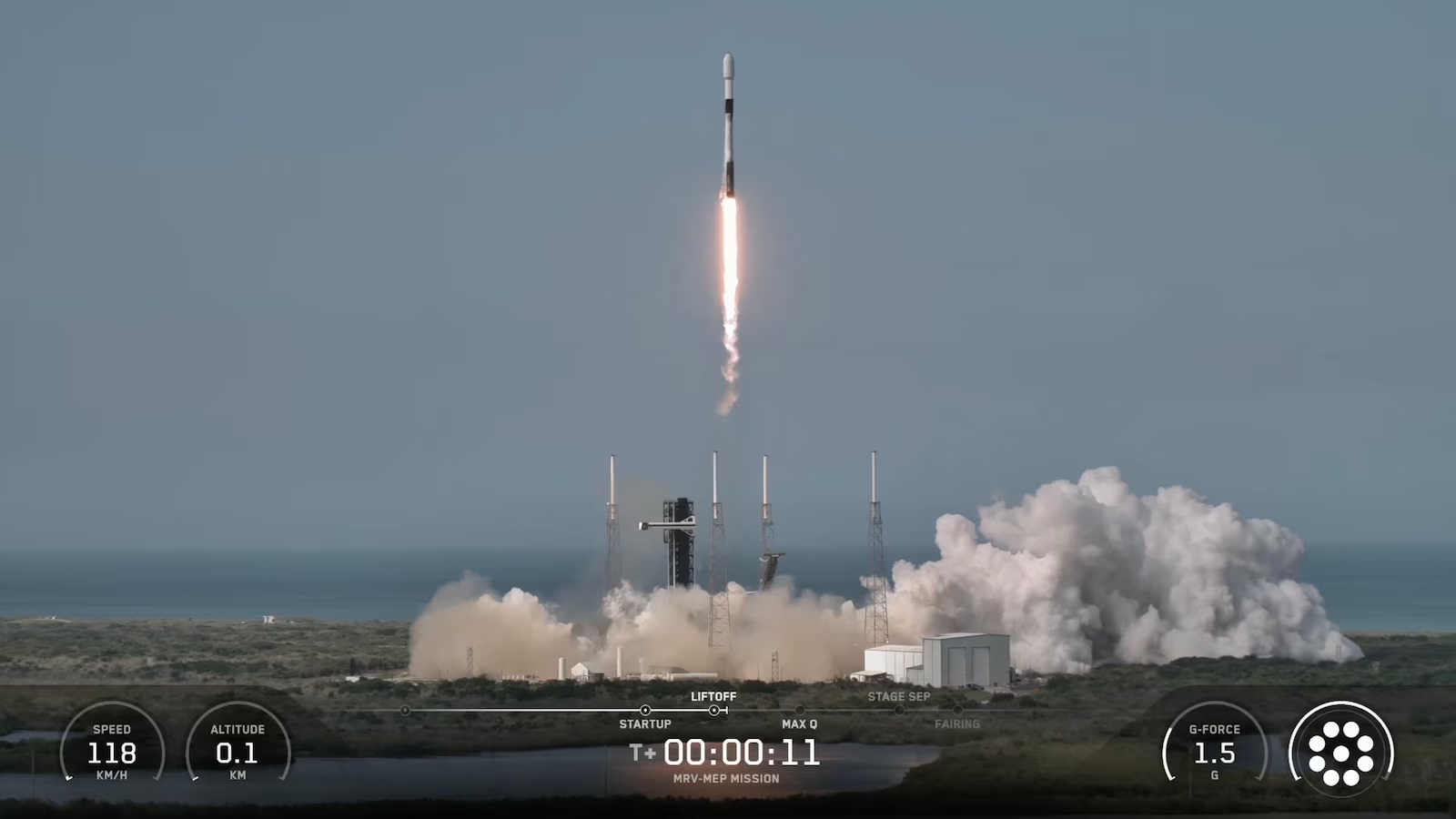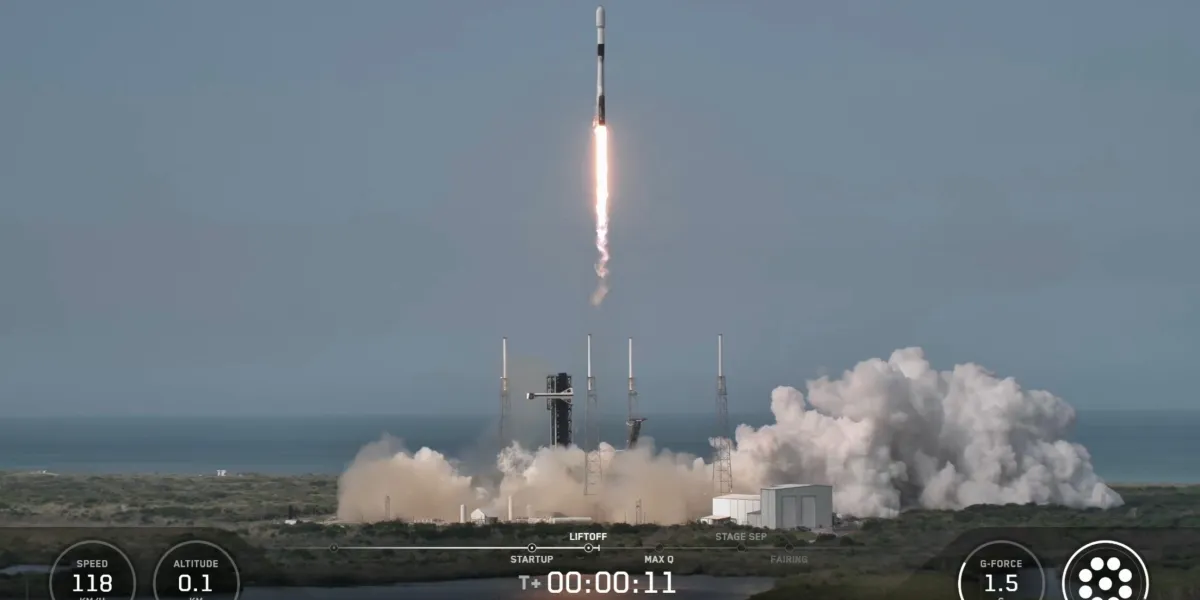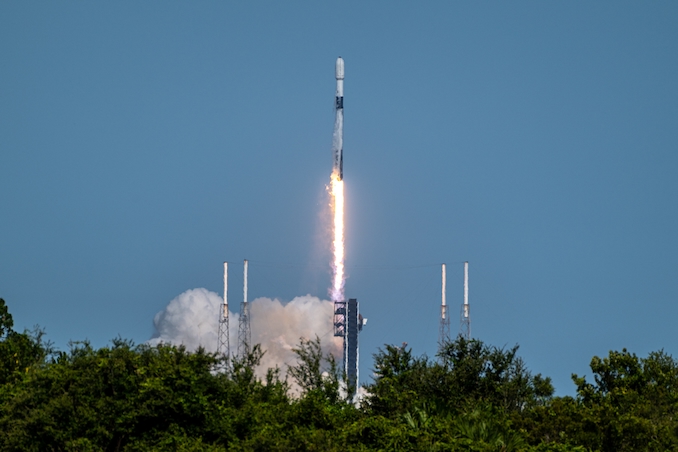
A SpaceX Falcon 9 rocket lifts off from Space Launch Complex 40 at Cape Canaveral Space Force Station on July 21, 2026. Onboard was the U.S. Naval Research Laboratory’s Robotic Servicing of Geosynchronous Satellites (RSGS), the main payload on Northrop Grumman’s Mission Robotic Vehicle spacecraft. There were also three Mission Extension Pods from Northrop Grumman onboard. Image: John Pisani/Spaceflight Now
A SpaceX Falcon 9 rocket launched from Cape Canaveral Tuesday carrying Northrop Grumman’s Mission Robotic Vehicle (MRV) and three Mission Extension Pods (MEPs), a novel mission designed to prolog the lifespans of multiple satellites.
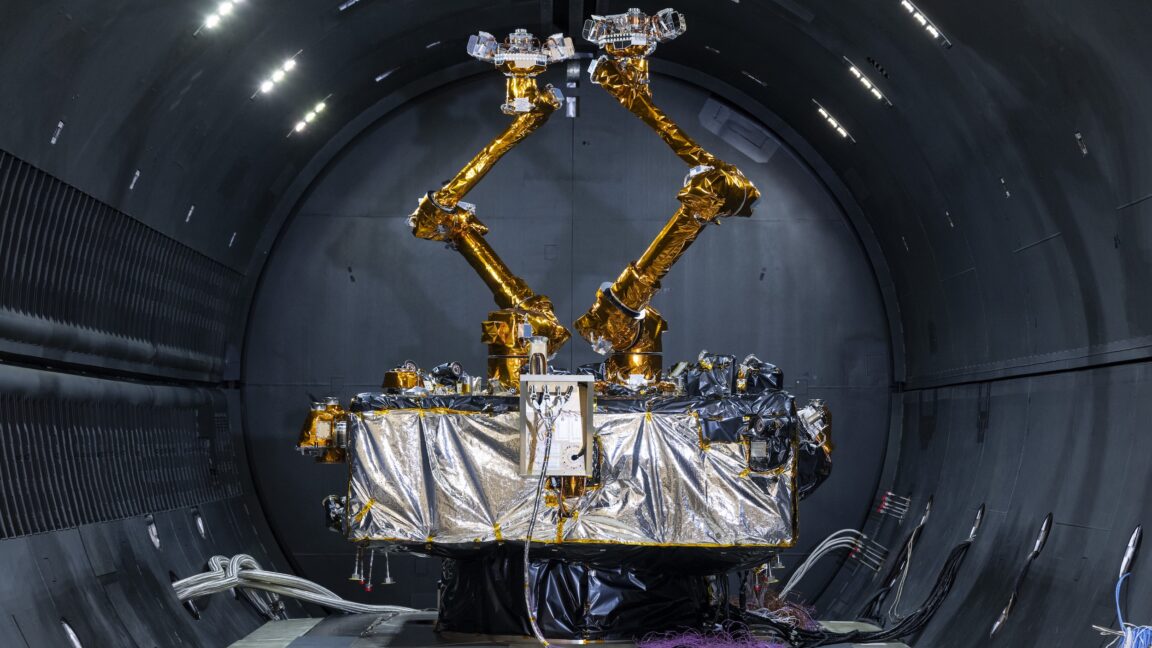
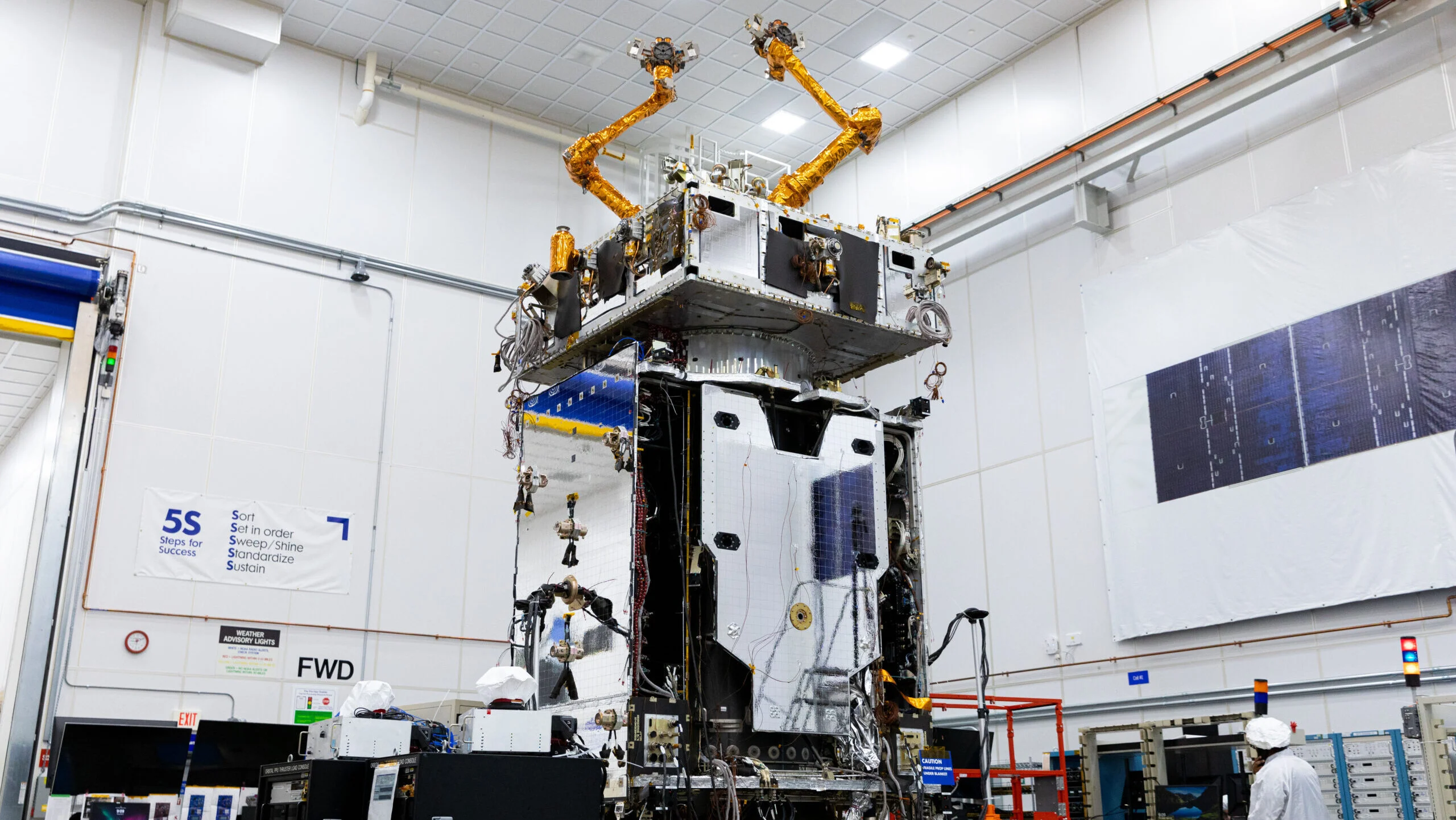
The MRV is equipped with the Robotic Servicing of Geosynchronous Satellites (RSGS) payload, a pair of robotic arms with an array of tool attachments developed at the U.S. Naval Research Laboratory with financial backing from the Defense Advanced Research Projects Agency (DARPA).
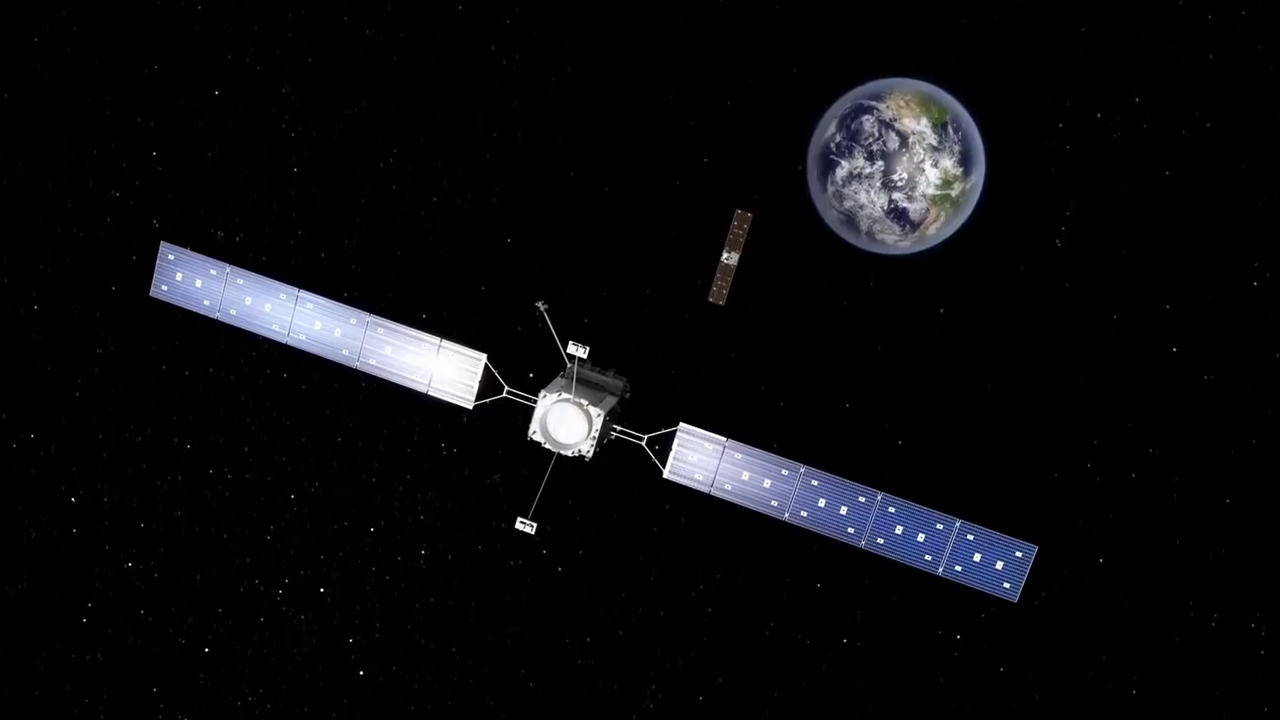
Following its launch in summer 2026, Northrop Grumman’s Mission Robotic Vehicle (left) will install Mission Extension Pod (right) jetpacks to extend the lives of client satellites in geosynchronous orbit. MRV also can perform inspection, relocation, repairs, upgrades, and other missions yet to be imagined. Illustration credit: Northrop Grumman