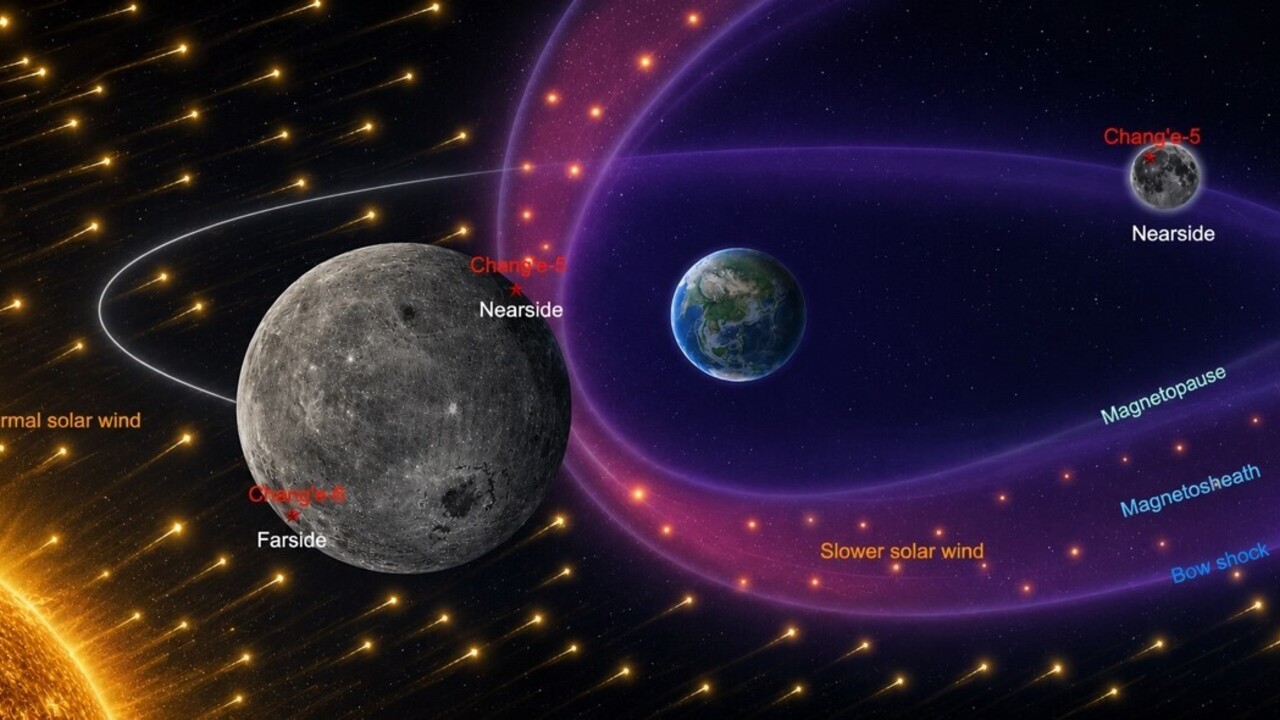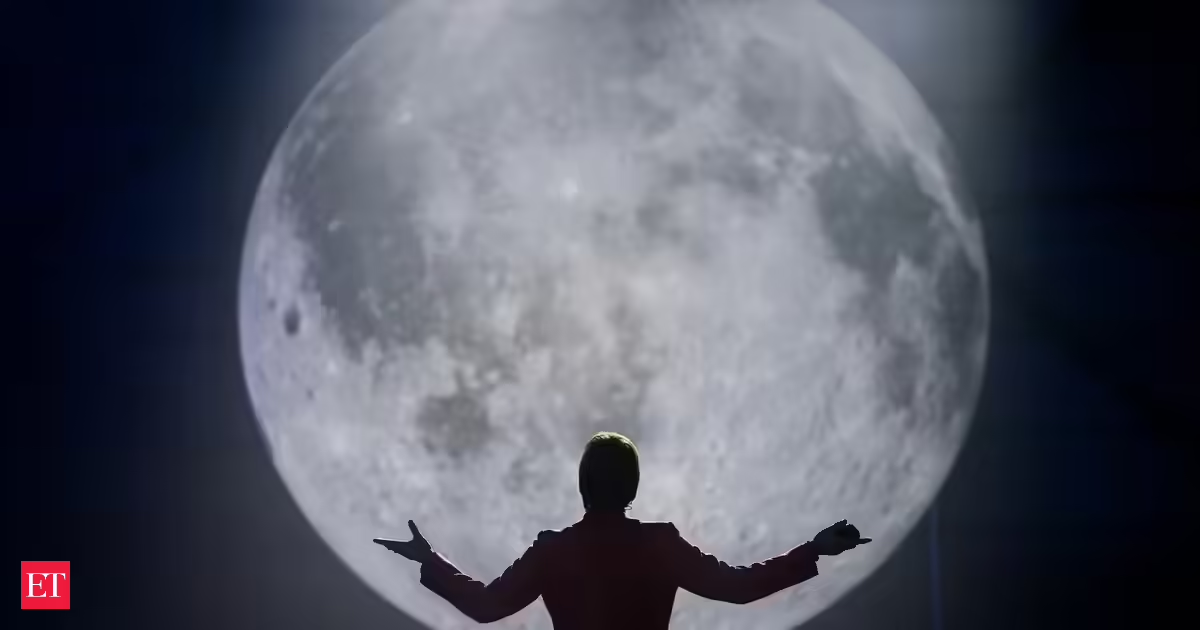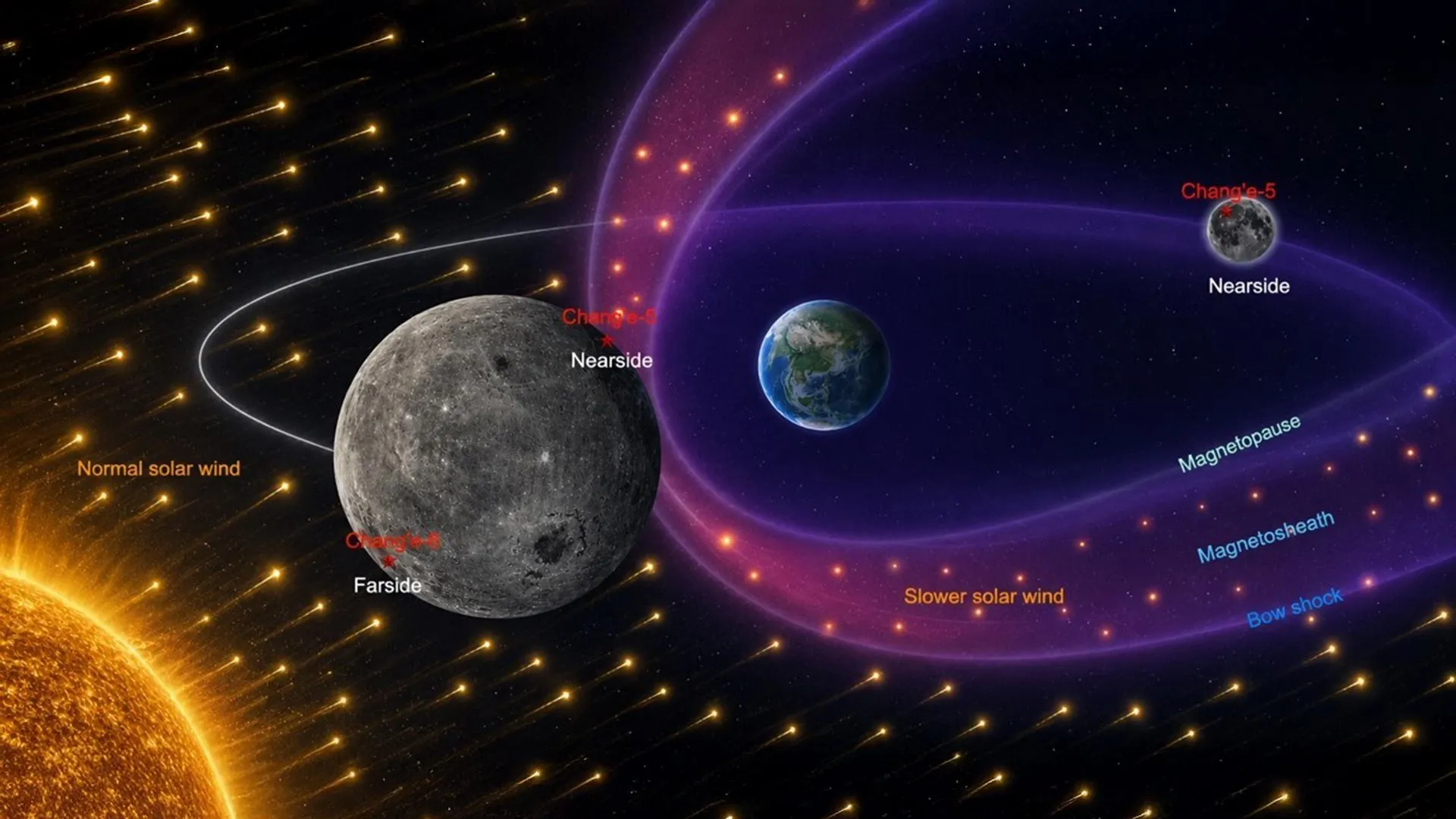
The Moon has been exposed to the solar wind for billions of years. However, new evidence shows that its two hemispheres have not experienced that bombardment in the same way. Particles striking the near side and far side arrive at different speeds and carry different amounts of energy.
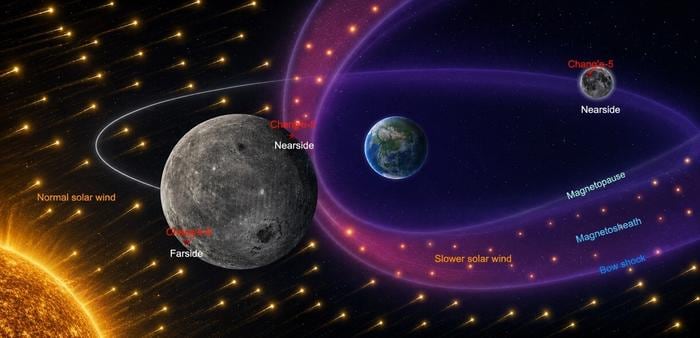
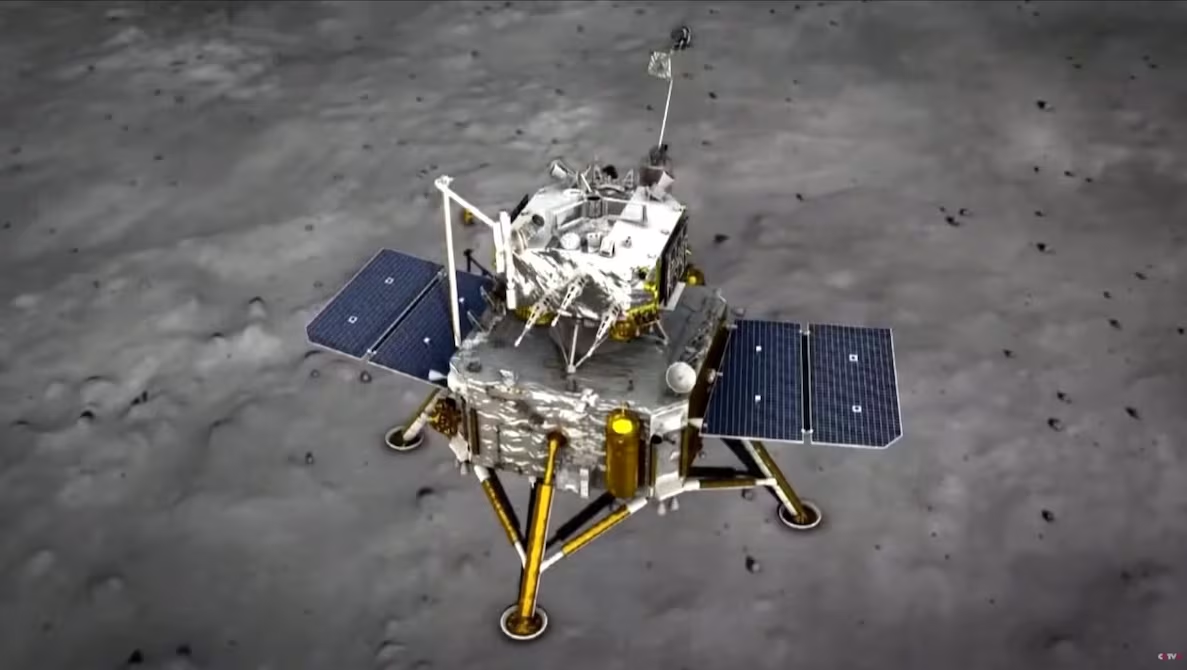
An analysis of material collected by China's Chang'e 6 mission now suggests that Earth's magnetosphere is responsible for much of this contrast. The findings were published in Nature Geoscience.
Moon Dust Preserves a Solar Wind Record
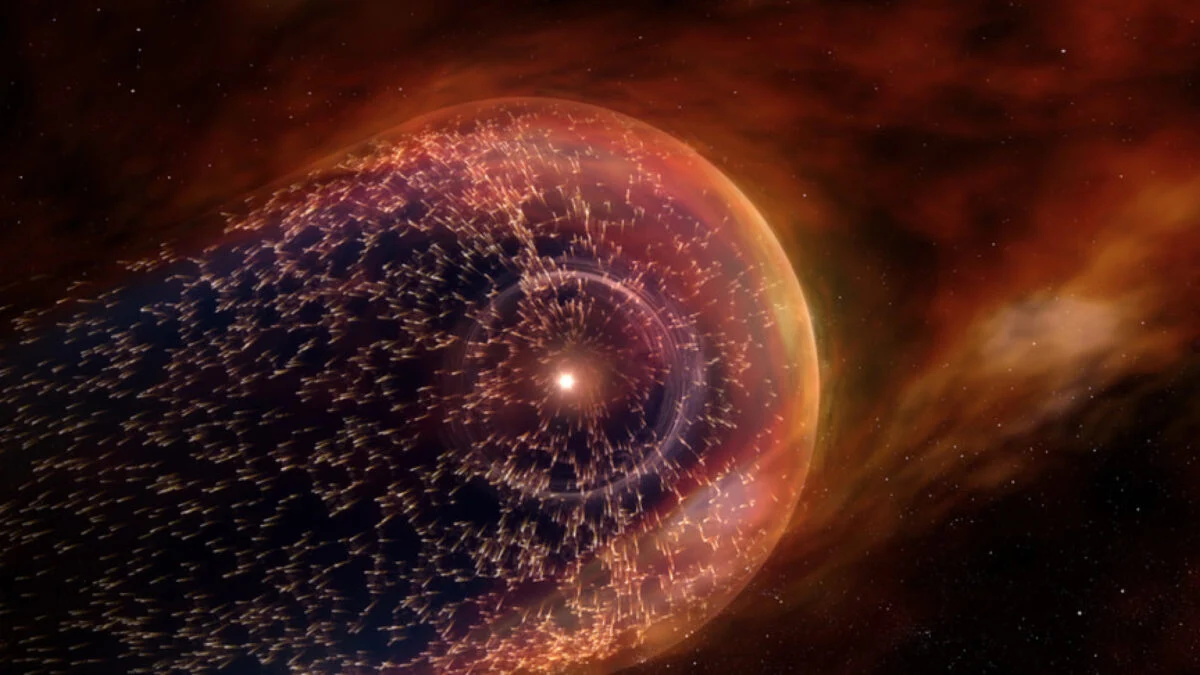
The solar wind is a constant flow of fast-moving charged particles released by the Sun. Because the Moon lacks a thick atmosphere and a global magnetic field, these particles strike its surface directly.
Over time, the lunar regolith has stored evidence of this exposure. It acts as a natural archive of volatile materials delivered by the solar wind, including the noble gases (He, Ne, Ar, Kr, Xe). Because these elements rarely react chemically with other materials, scientists can use them as reliable markers of how solar wind particles entered and accumulated in lunar soil.