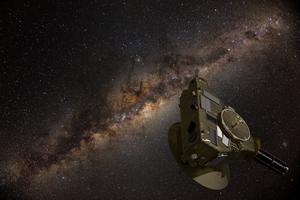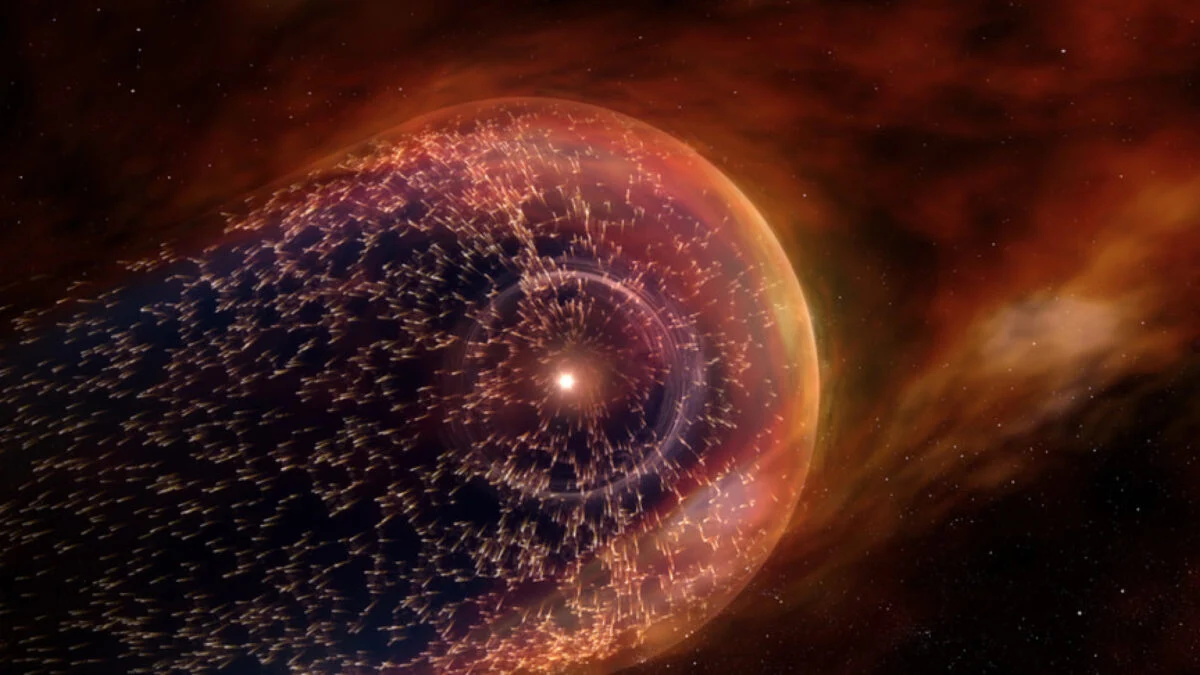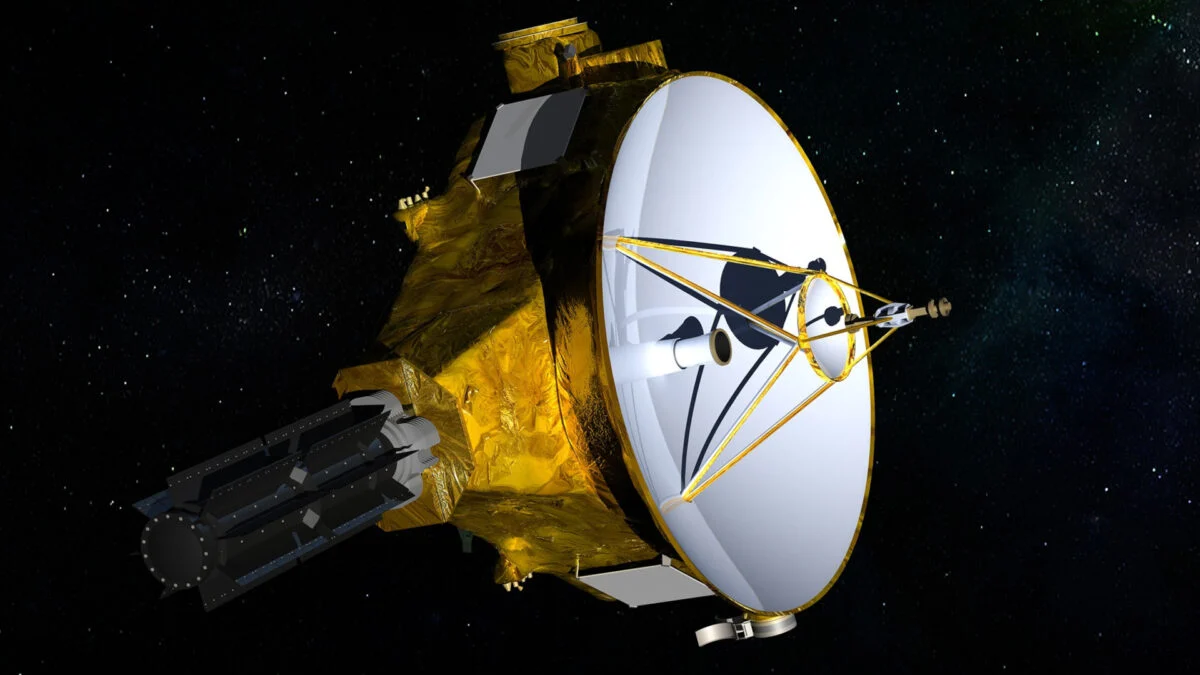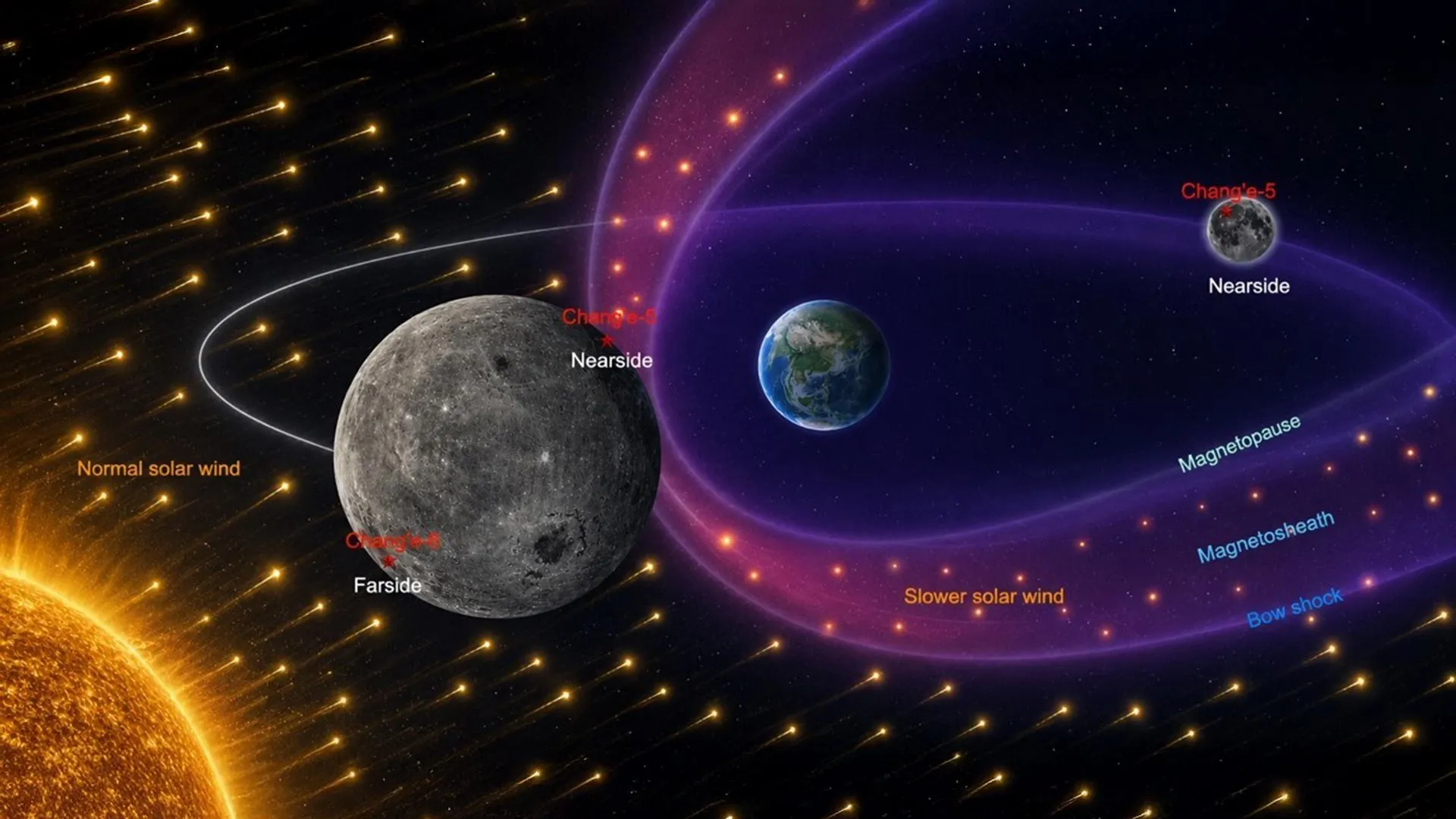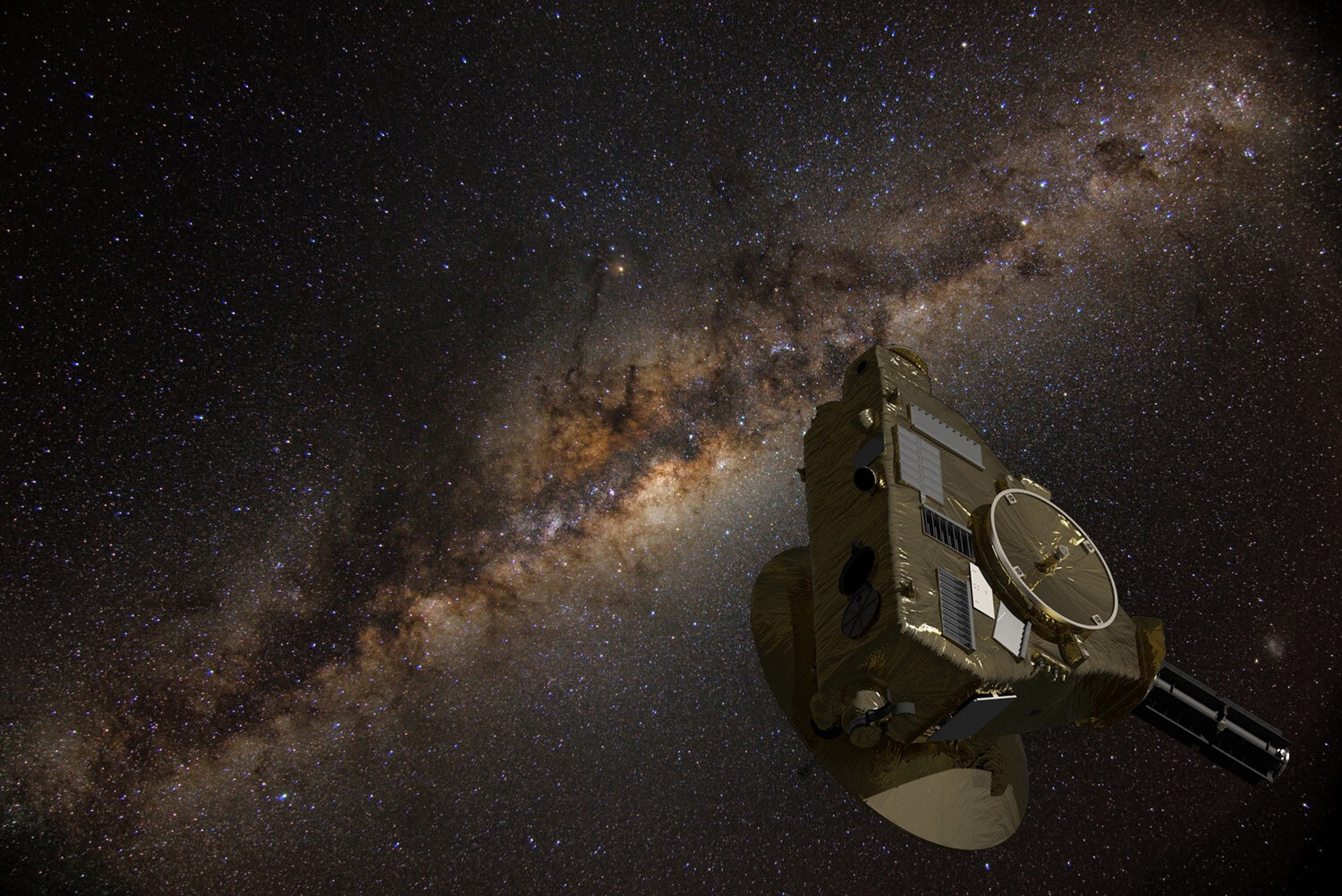
An SwRI-led study sheds light on the deceleration of the solar wind as it journeys away from the Sun and interacts with and picks up interstellar material. NASA's New Horizons spacecraft measured the solar wind as it traveled from just beyond Uranus' orbit into the outer Kuiper Belt (red shaded region), detailing the gradual slowdown caused by interactions with interstellar materials (red line). Credit: Southwest Research Institute
A new Southwest Research Institute (SwRI) study based on data from NASA's New Horizons spacecraft has uncovered insights into why the solar wind gradually slows as it moves toward the edge of the solar system and the boundary with interstellar space. The study "The Gradual Slowing of the Solar Wind in the Outer Heliosphere" is published in The Astrophysical Journal.
New Horizons is currently roughly 66 AU from the sun. One AU, the distance from Earth to the sun, is roughly 93 million miles. The researchers, led by SwRI's Dr. Heather Elliott, studied how the solar wind's speed, measured by the Solar Wind Around Pluto (SWAP) instrument on New Horizons, changed between 21 and 58 AU compared with measurements taken nearer the sun.
How interstellar gas slows the wind