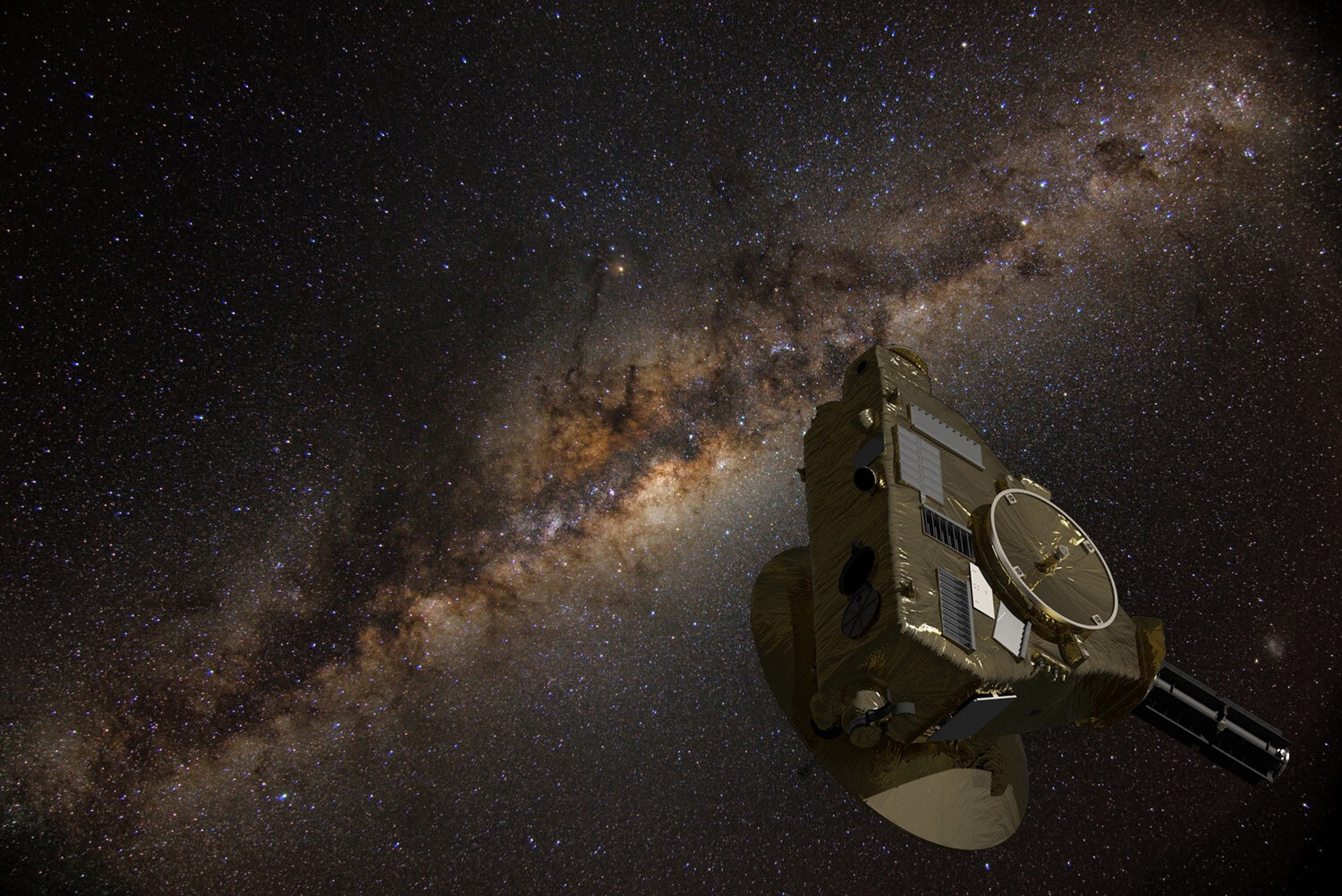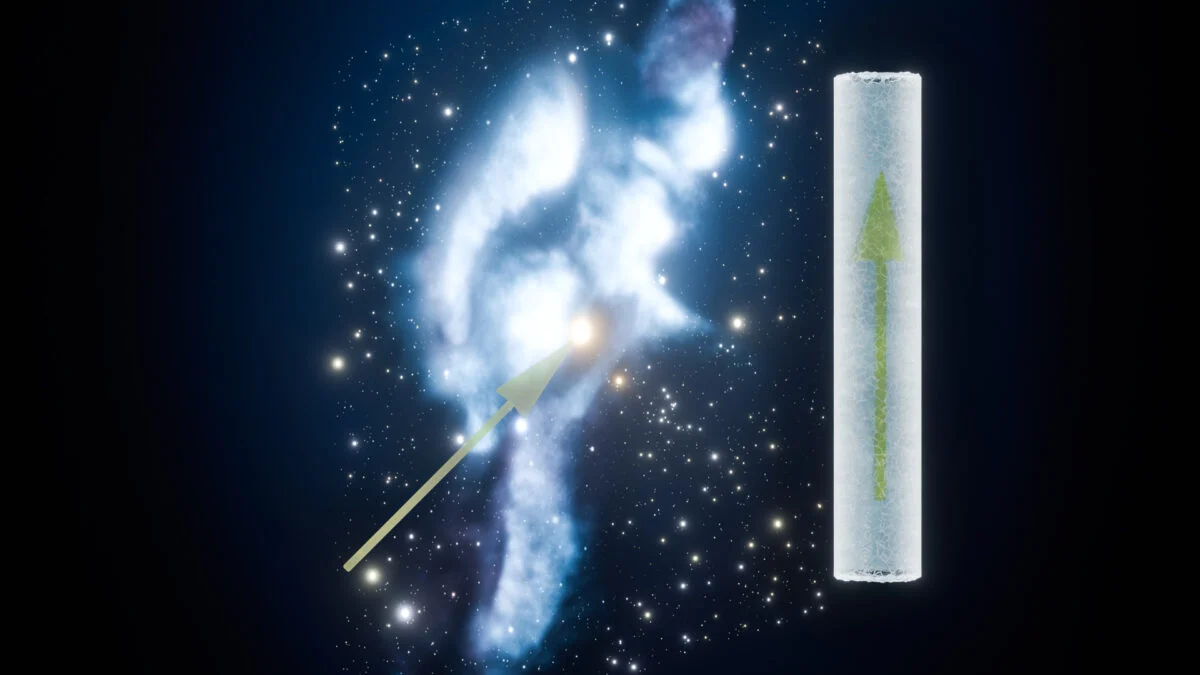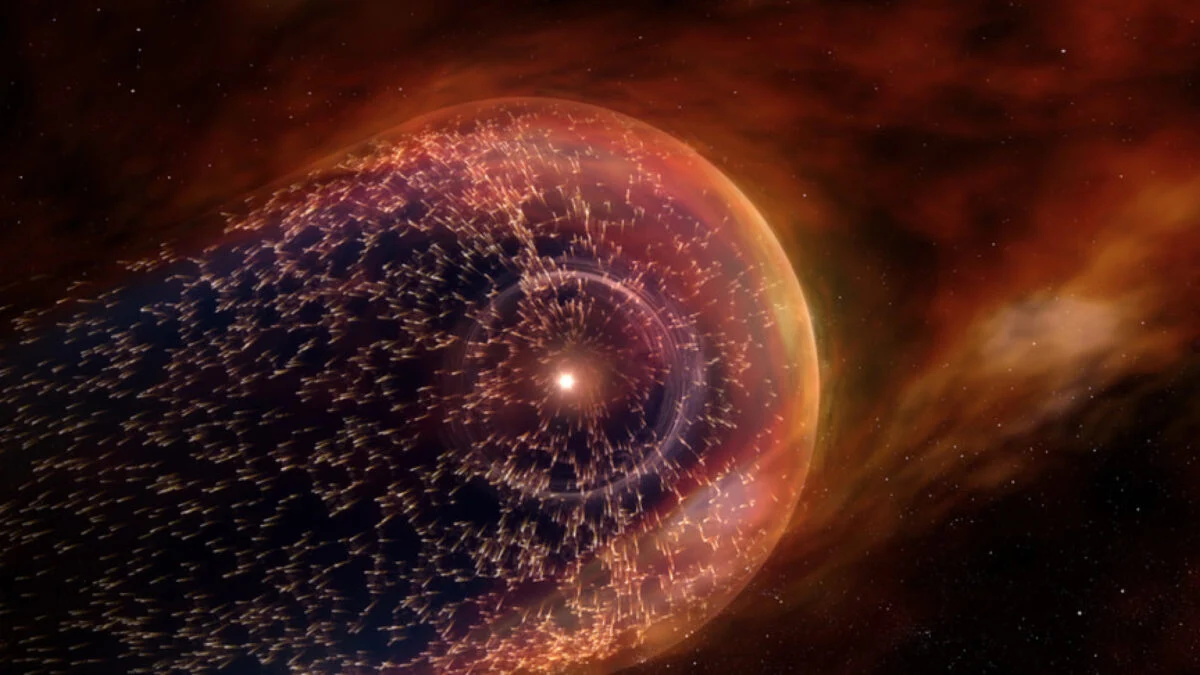
For obvious reasons, the Sun’s influence weakens as you get closer to the edge of the solar system. But things might be a lot more complicated than we previously thought, according to a new study. Specifically, interstellar atoms bleeding into our solar system’s peripheral regions place an additional “break” on supersonic solar particles. In a recent study published in The Astrophysical Journal, scientists examined data from NASA’s New Horizons spacecraft to get a better understanding of how such events shape the environment at the edge of the heliosphere. According to the paper, the gradual decrease in solar wind speeds prior to termination shock is caused by the steady accumulation of ionized interstellar material as it travels through the outer heliosphere. NASA’s New Horizons spacecraft measured the solar wind as it traveled from just beyond Uranus’ orbit into the outer Kuiper Belt (red shaded region), detailing the gradual slowdown caused by interactions with interstellar materials (red line). © SwRI “Studying the heliosphere is like solving a cosmic puzzle,” Heather Elliott, the study’s first author and an astrophysicist at Southwest Research Institute, said in a statement. “Not only do we learn more about how the Sun’s influence ends, but we also gain a deeper understanding of the boundary between our solar system and interstellar space—a critical step toward planning future interstellar travel.” Interstellar explorers So far, the only human spacecraft to have traveled beyond the heliosphere are Voyager 1 and 2, which crossed that boundary in 2012 and 2018, respectively. This was when scientists first observed termination shock, a boundary of the Sun’s influence during which solar wind abruptly drops from supersonic speed to less than the speed of sound, according to NASA. In terms of distance, Voyager 1’s entry into interstellar space occurred at about 122 AU, or roughly 11 billion miles (18 billion kilometers) from the Sun.
NASA’s New Horizons Reveals a Hidden Interstellar Slowdown at the Solar System’s Edge
“Studying the heliosphere is like solving a cosmic puzzle.”
697 words~3 min read