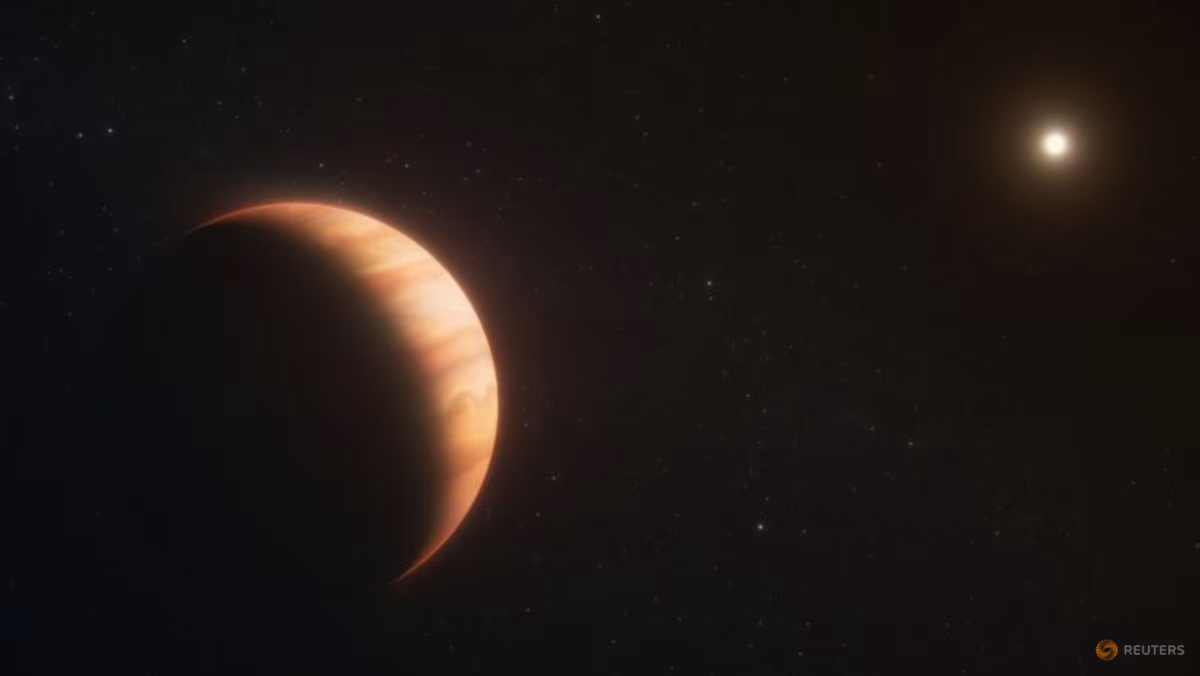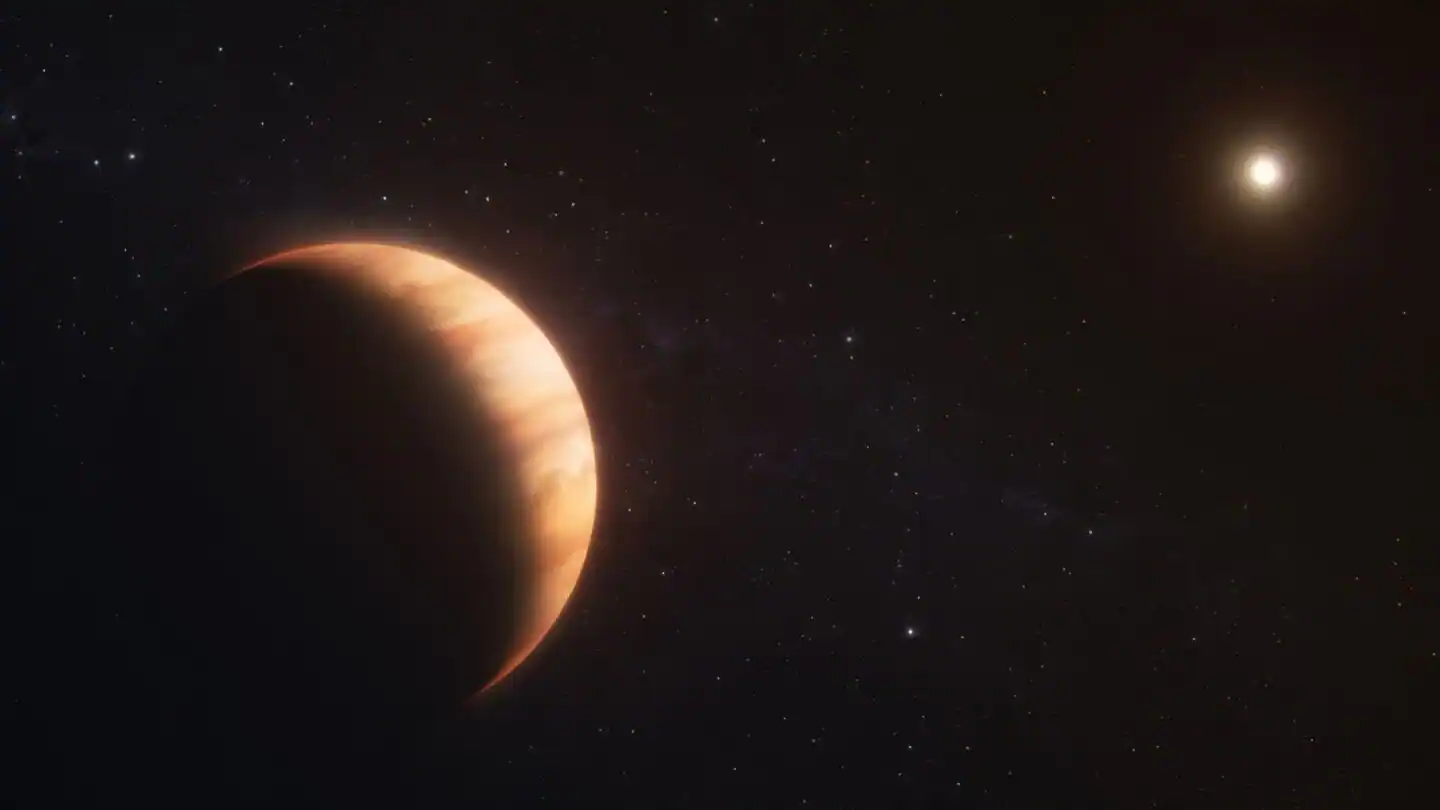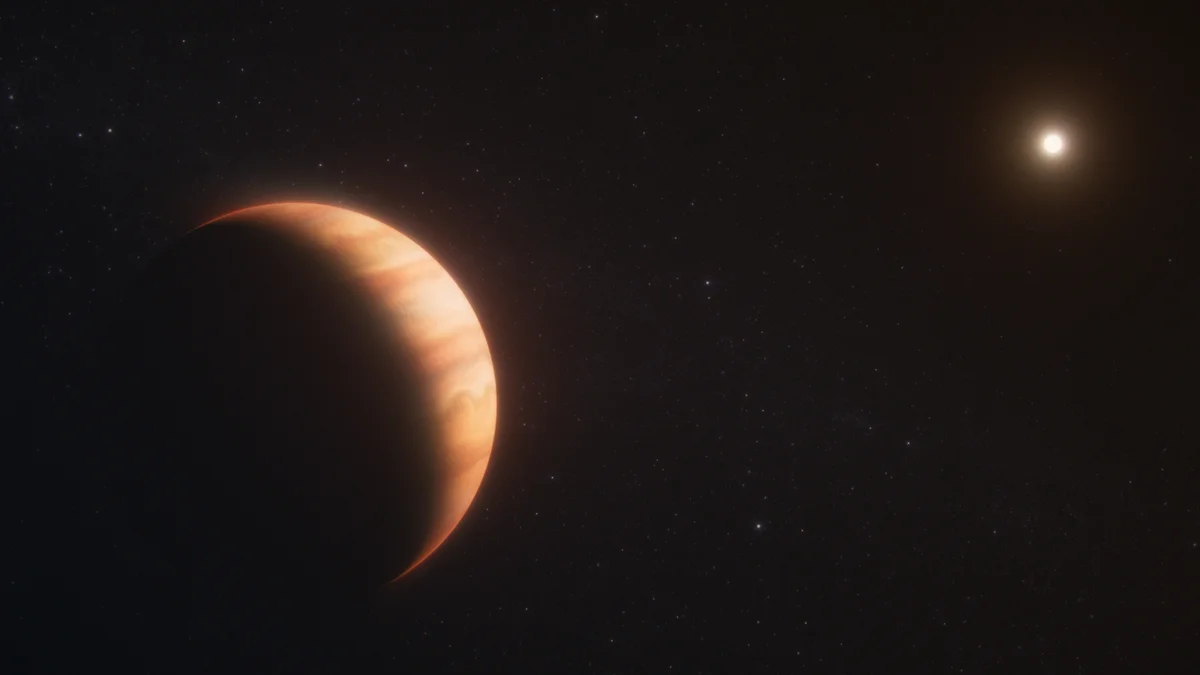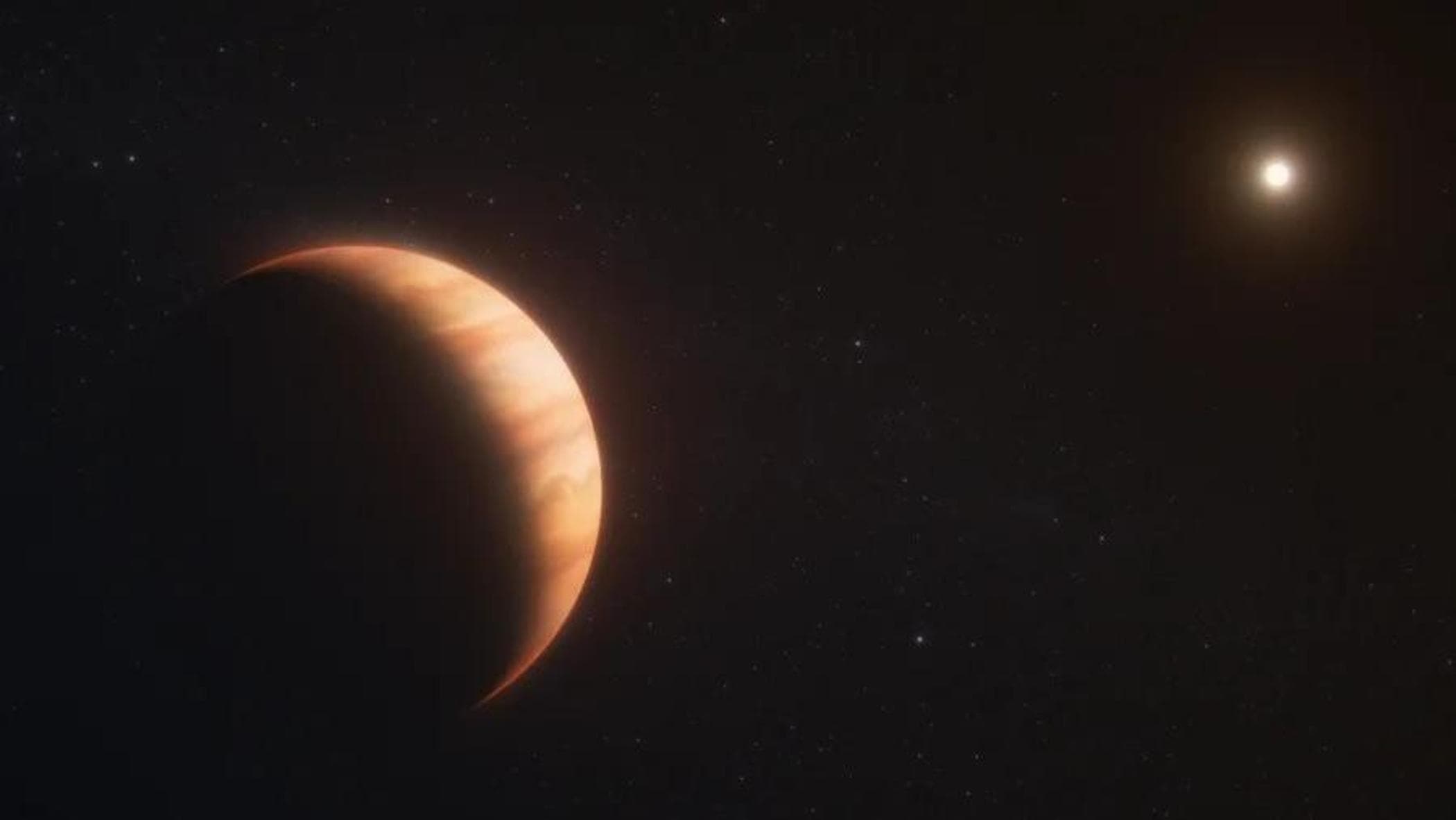
An artist's impression of an exoplanet transiting a main-sequence star. (ESA/Hubble/NASA/M. Kornmesser)
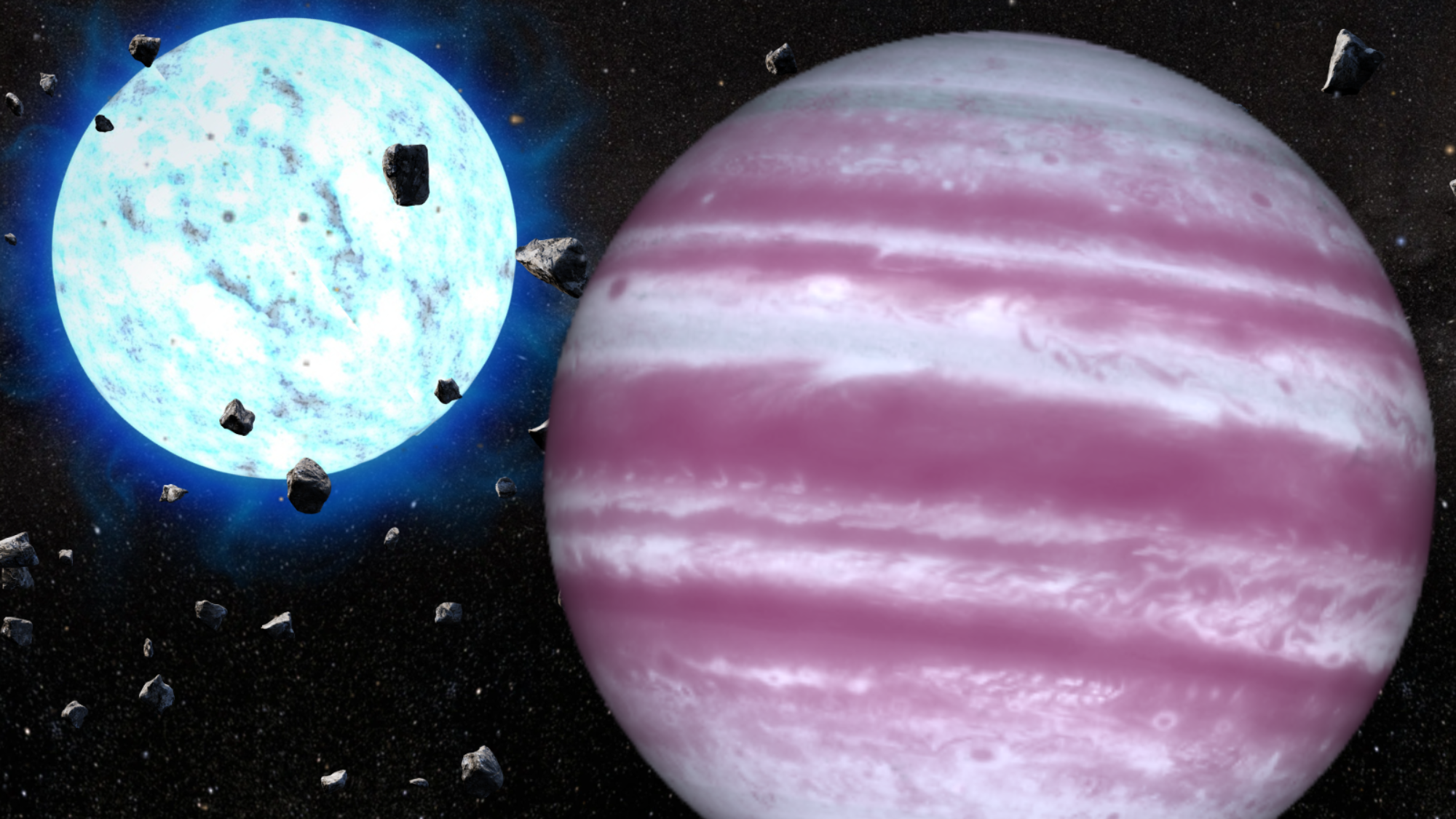
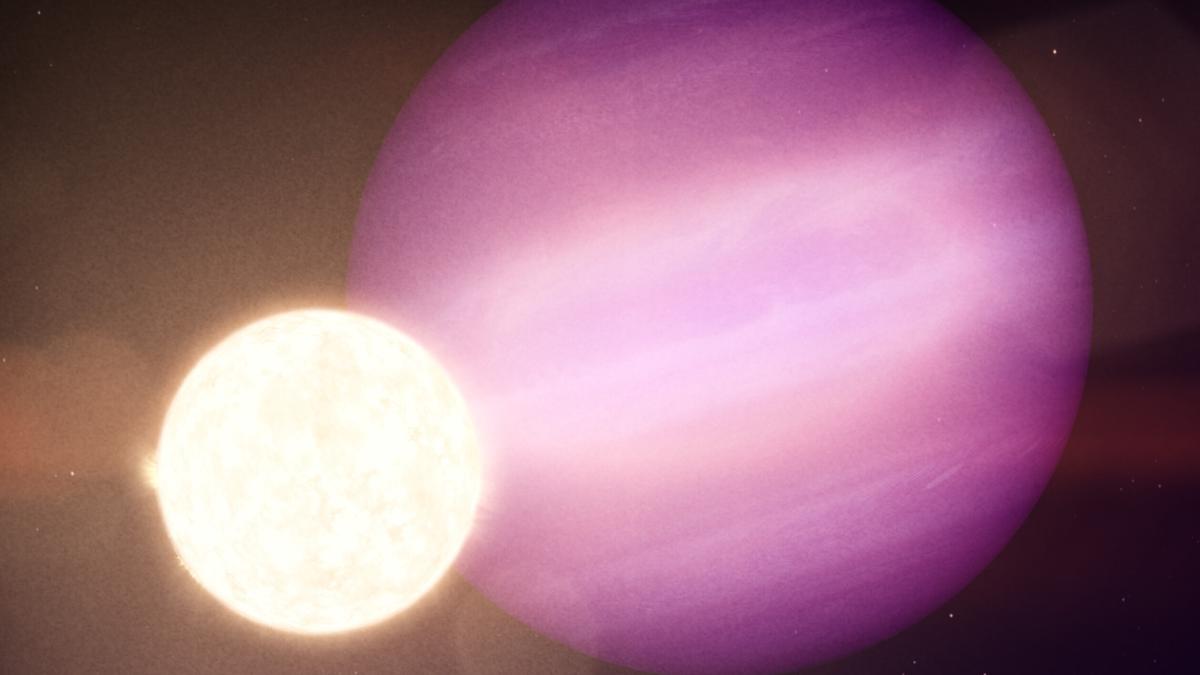
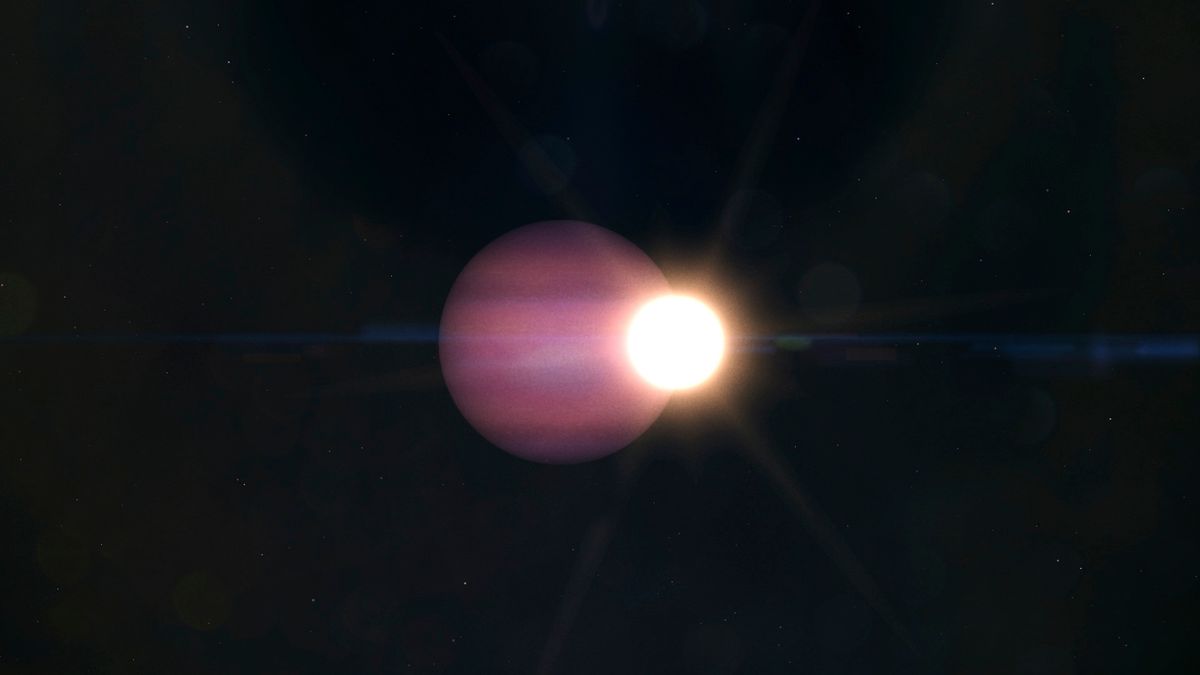
Of all the strange worlds in our Milky Way galaxy, some of the most mysterious are those hanging around white dwarf stars.These are not regular stars busy smashing atoms in their cores, but the ultra-dense remains of Sun-like stars that have undergone their death sequences – puffing up into enormous red giants before shedding their outer layers and collapsing into dense stellar cores.This is what is going to happen to the Sun in about 5 billion years, so obviously any exoplanets in white dwarf orbit are of intense interest to scientists hoping to scry into the eventual fate of the Solar System.Now, using JWST, astronomers have just obtained humanity's first glimpse inside the atmosphere of the giant planet WD 1856b, which orbits a white dwarf – and found it far hotter than anyone expected. Their findings have been published in Nature.An artist's impression of WD 1856b. (NASA, ESA, CSA, Ralf Crawford/STScI)"The instant we saw WD 1856b's spectrum, which shows a colossal drop in the effective size of the planet at longer infrared wavelengths, we were like 'Wow! What the heck is going on here?'" astronomer Ryan MacDonald, of the University of St Andrews in the UK, told ScienceAlert."The JWST transit spectrum of WD 1856b is unlike any other planet we'd seen before."White dwarf stars are among the most extreme objects in the Universe. They're what's left when a star up to eight times the mass of the Sun shuffles off the main-sequence coil, a dead lump that shines only with residual heat for trillions of years.