Academia
How Indonesia can move from celebrating a flagship anti-poverty program to actually finding out whether it works.
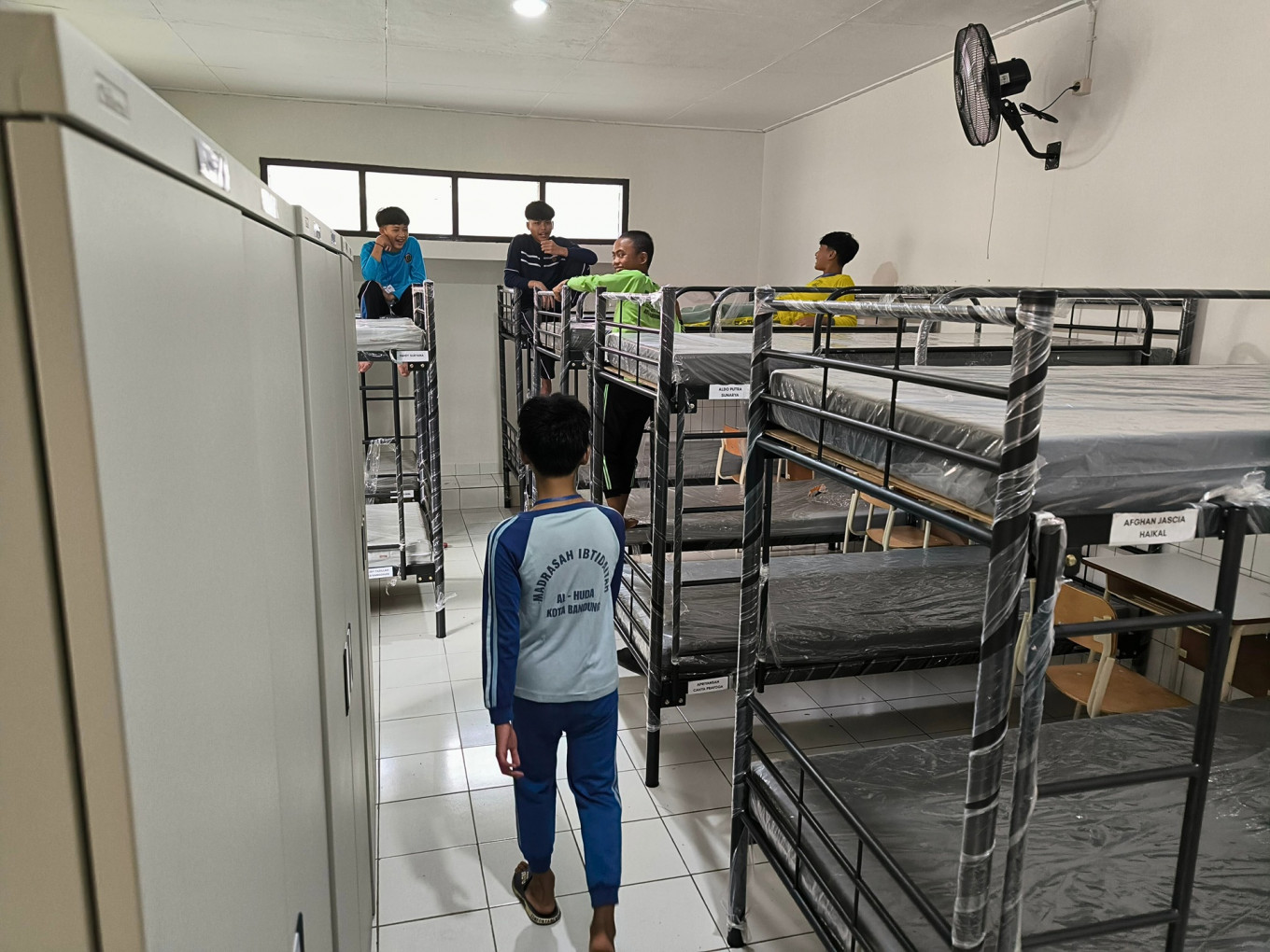
Students of SRMP 9 Sekolah Rakyat junior high school at the Wyata Guna center in Bandung, West Java, try out their bunk beds after attending the opening of Sekolah Rakyat's orientation program on July 14, 2025. (JP/Adi Marsiela)
Last month, the Sekolah Rakyat (Community School) program turned a year old, and the government marked it the way it marks most things: with a ceremony. Ministers called it a historic milestone and announced 453 students set to graduate in its first year, without anyone having checked whether the model producing those graduates actually works. In 2025, the government opened Sekolah Rakyat at 63 locations, offering free, boarding-based education to children from the poorest fifth of Indonesian households. Sekolah Rakyat is meant to reduce the poverty rate, which has stalled at around 8.5 percent, or roughly 24 million people, even as the economy grows. Months in, it remains almost entirely unevaluated.
The only peer-reviewed study of Sekolah Rakyat looked at a single school: SRMA 10 in South Jakarta. It found staff communication functioning reasonably well, but budget autonomy, facilities and coordination across four ministries and the Indonesian Military (TNI) were weak, and more than 140 teachers nationwide resigned in the first month, citing unclear incentives.