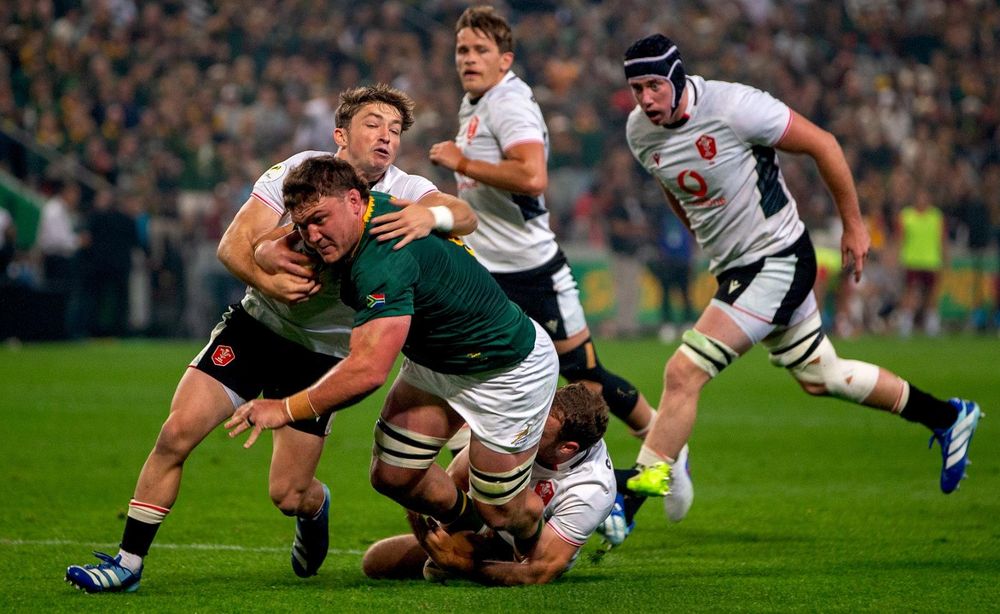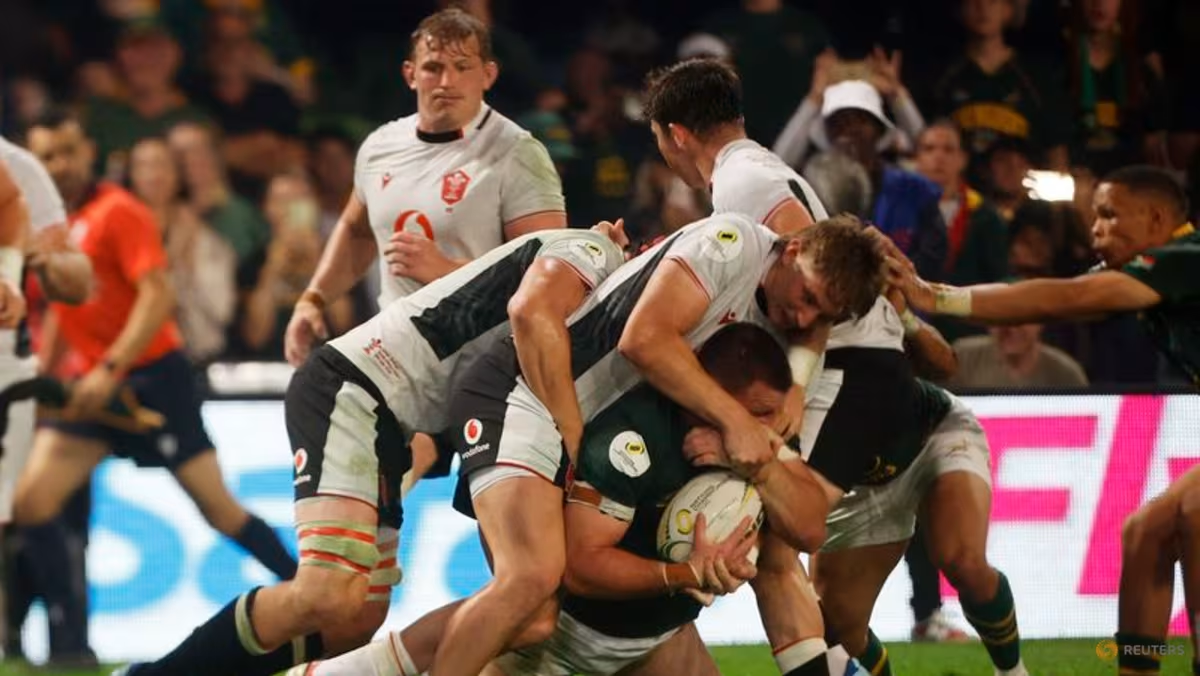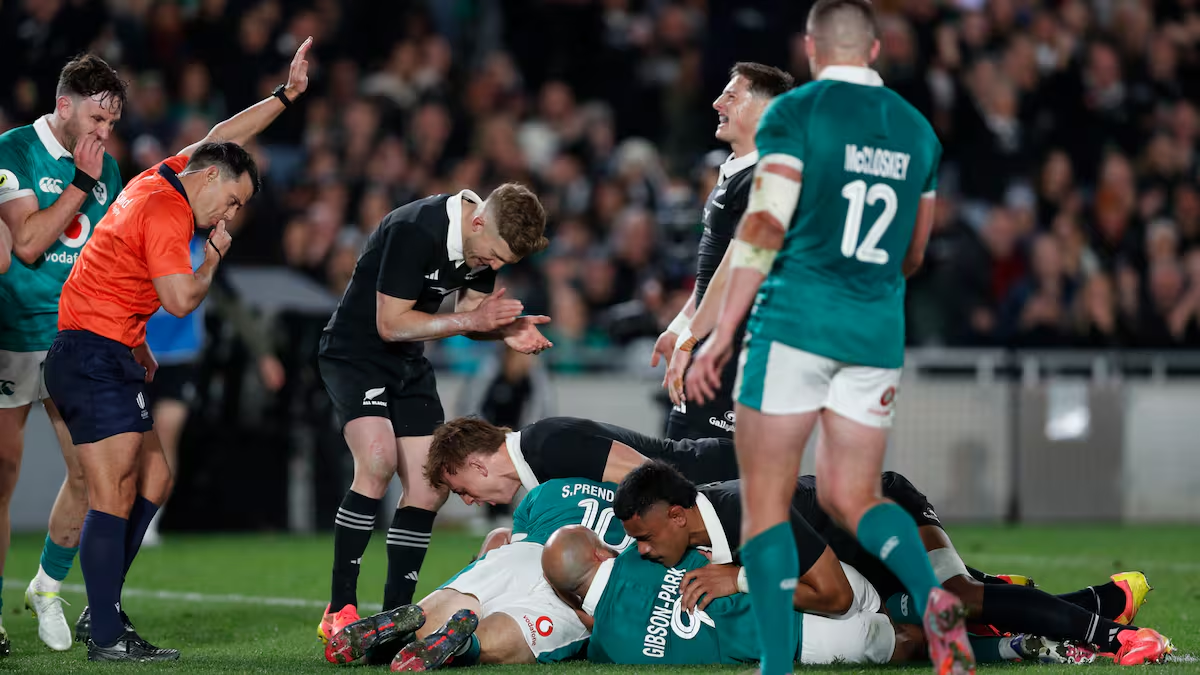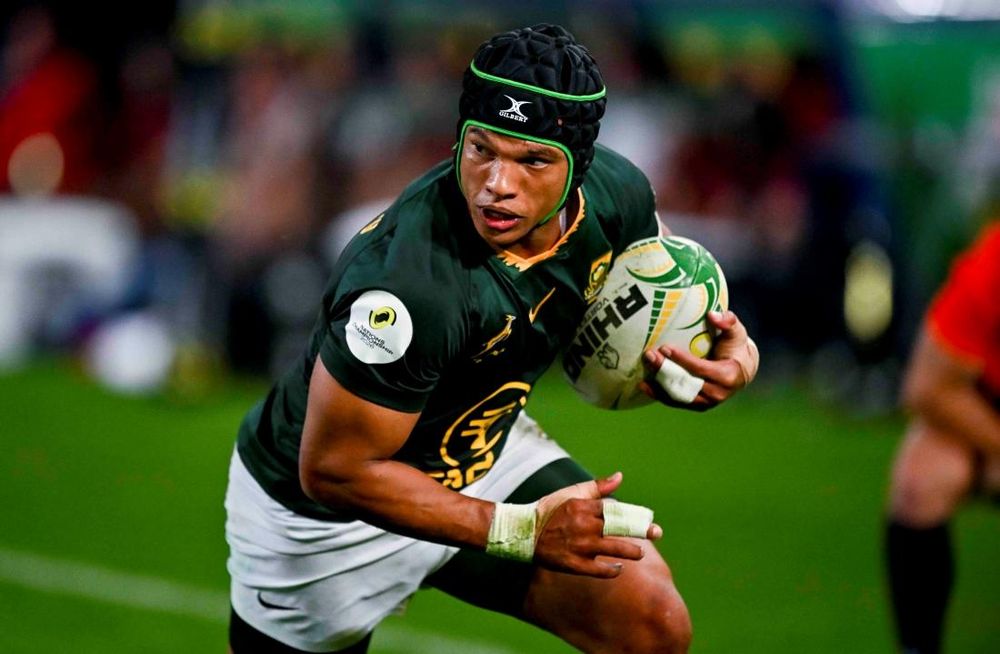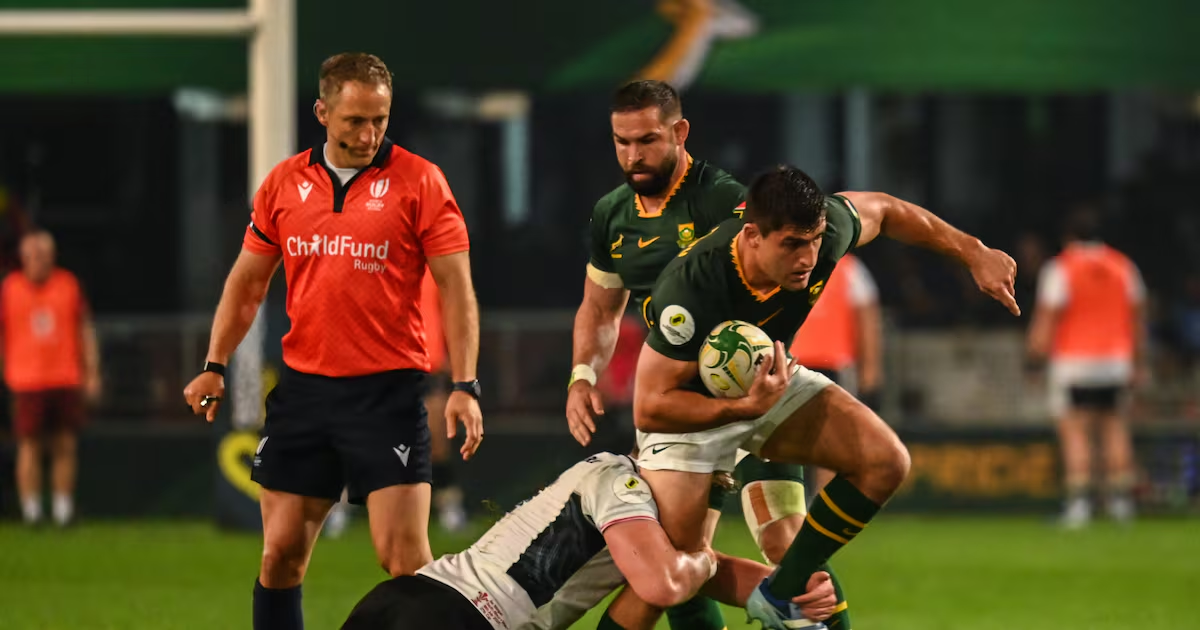
You know you have seen tremendous growth in performance and huge change in expectation when your team wins 43-0 and you still aren’t completely happy with it. Which was the case for the Springboks in Durban at the weekend.Perhaps because the game was juxtaposed with the clinical performance turned in by the All Blacks against Ireland in Auckland earlier in the day, there was quite a bit of negativity around the Bok win over Wales. And probably rightly so given the high error rate on a night where the hosts had enough physical and territorial dominance against Wales to post a score closer to the 73 they scored in their previous game against Wales in Cardiff last November.But there were mitigating factors. The extent of the dew became apparent a few hours after the match when a colleague and I returned to our car, parked on an outer field at Kings Park. It was covered in moisture, and clearing the windscreen took several minutes — a reminder of just how slippery conditions had become.Wales also did not bring the same mindset that Ireland showed when they were so comprehensively beaten by the All Blacks. It was clear from the opening stages that Wales would struggle to make any inroads against the Springboks’ defensive system. They were driven backwards at the breakdown, never came close to parity in the gain-line battle, and it soon became apparent they would struggle to score at all. From then on, it was simply a case of damage limitation.It has been two consecutive games now that Wales have failed to score against the Boks, meaning that over the past 160 minutes of rugby between the two nations, South Africa has scored 116 points and Wales have scored nil. That is a far cry, certainly, from the mood that followed my last visit to Cardiff in the Allister Coetzee era, when in queuing for my train back to London I had to listen to Welsh people being almost patronising about a Bok team that had lost by 20 points.Much has changed since then, the arrival of Rassie Erasmus being a huge part of it, but there have also been massive strides when it comes to the systems that have been put in place. Stand-in skipper Pieter-Steph du Toit keeps saying it, and he’s right — it doesn’t really matter who plays for the Boks on a given day as the systems are so good.That means within the team but also the system on a macro level, referencing the feeder levels and the so-called pipeline of talent, all of which are functioning now like never before. While England have struggled through this leg of the Nations Championship with pretty much the same team and therefore have learnt nothing new under a coach who is coaching for his own survival, the Boks had used 39 different players across the first two games and called up four debutants for the Durban game.Flanker Paul de Villiers has been the standout success story. He was excellent against both England and Scotland and went a step further by being man of the match against Wales. There is now no doubt he has it at an international level, which leaves Erasmus in a predicament when it comes to the return of regular captain Siya Kolisi.They are different players; De Villiers brings something that Kolisi doesn’t. How is Erasmus going to accommodate both? It is a better problem to have, though, than that faced by Steve Borthwick, and the evidence of a system that works wasn’t drummed out just by the Boks.After the Wales game the television monitors at Kings Park showed us the Junior Boks winning their second successive World Junior Championship. On a day when 20-year-old Vusi Moyo made his debut for the Boks, 19-year-old Yaqeen Ahmed was the standout performer for the junior team, which, by the way, is so like the senior side in the manner it goes about achieving success. It was a system that works writ large and a recipe for sustained success for South African rugby.
GAVIN RICH | Boks’ 43-0 win shows standards have risen — and the system keeps delivering
Victory over Wales underlines depth and systems driving South African rugby success
678 words~3 min read