Story audio is generated using AI
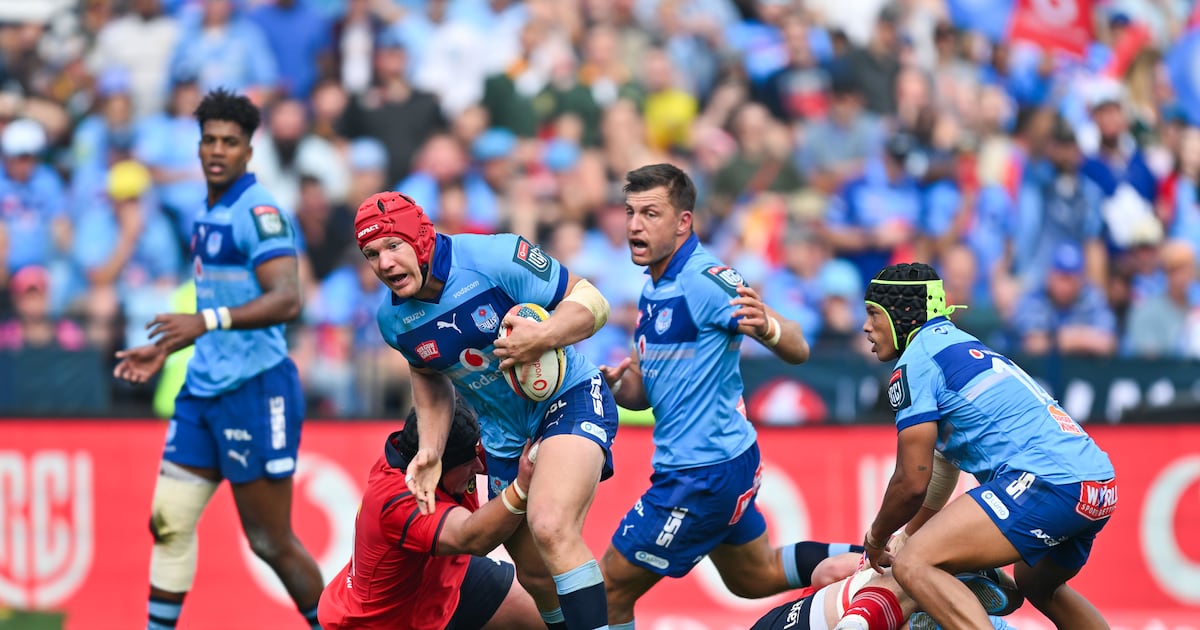
The Springbok double-header in Gqeberha that kicked off the international season provided an overwhelmingly positive start, but what happened the night before in Dublin should be a major concern for national coach Rassie Erasmus.It is not that the Bulls were outplayed by Leinster in the United Ruby Championship (URC) final. Leinster are a strong side, and few would argue that the result came as a major surprise. Rather, it is the form — or lack of impact — of one specific player that should be giving Erasmus a headache as he begins his preparations in earnest for England’s arrival in a fortnight and the start of the Nations Championship in Joburg.Although Erasmus defended Handré Pollard, his double World Cup-winning flyhalf, in the post-match press conference following his team’s 80-31 win at the Nelson Mandela Bay Stadium, he may have advertised what he was really thinking when he made his selection for the game.Given that Manie Libbok has played only second-division Japanese club rugby since his last involvement with the Boks in November, you’d have thought Erasmus would have given him the good hit-out that the Barbarians game afforded. And despite the apparent one-sided scoreline, it was a good hit-out, as the Barbarians were far more competitive for most of the game than the Barbarians side that lost 54-7 in the Cape Town wet 12 months ago.He explained Libbok’s omission by saying he was afraid of repeating a mistake he believed he made last year when he played Ox Nché against the Barbarians and he ended up getting injured. But Nché did play in Saturday’s game against the Barbarians. As did other important players such as Pieter-Steph du Toit, skipper Siya Kolisi and No 8 Jasper Wiese. They did risk injury by playing, and they are important to the cause.Perhaps not quite as much as Libbok. With Sacha Feinberg-Mngomezulu sidelined through injury, the Springboks are short of experienced flyhalves. Erasmus was impressed by the composure shown by Sharks under-20 flyhalf Vusi Moyo when he came off the bench in Gqeberha, and the youngster has been rewarded with inclusion in the extended 46-man squad for the Nations Championship.Yet he’d want an experienced player fronting England in the all-important pivot position, and an injury to Libbok would leave him with only Pollard as an option. That Pollard’s star may be on the wane in the national set-up was underlined by how rarely he played for the Boks in the last international season. In truth, even when he is in form, he brings a different dynamic to the flyhalf channel than Libbok or Feinberg-Mngomezulu, who thrive on the gain line.When Pollard arrived on the senior international scene as a 19-year-old, he was a big attacking threat too, as the All Blacks who faced him in the 2014 Tri-Nations game will attest. Although it was replacement Patrick Lambie who kicked the winning penalty for Heyneke Meyer’s Boks in that game, it was Pollard’s first-half performance, scoring a try and being unlucky to be denied another, that won it for the hosts.Since the 2015 World Cup season, he has played further back from the gain line, a problem that was clearly pinpointed by Tony Brown when he arrived to take up the attack coach position. When the Kiwi spoke about wanting to bring the best out of Pollard, it was implicit that he thought some degree of reinvention was necessary.It hasn’t been a good season for Pollard at the Bulls, and while he is one of the star senior players in the group and a proven match winner, he looked like a liability during the knock-out phase of the URC.Rassie will be aware of that — but he’s also clever. Cheslin Kolbe’s excellent kicking from the tee against the Barbarians means he has created a safety net if one of the experienced No 10s are injured and a less accomplished place-kicker like Damian Willemse or his new utility option, Quan Horn, who also brings the required dynamic, is pressed into the role.