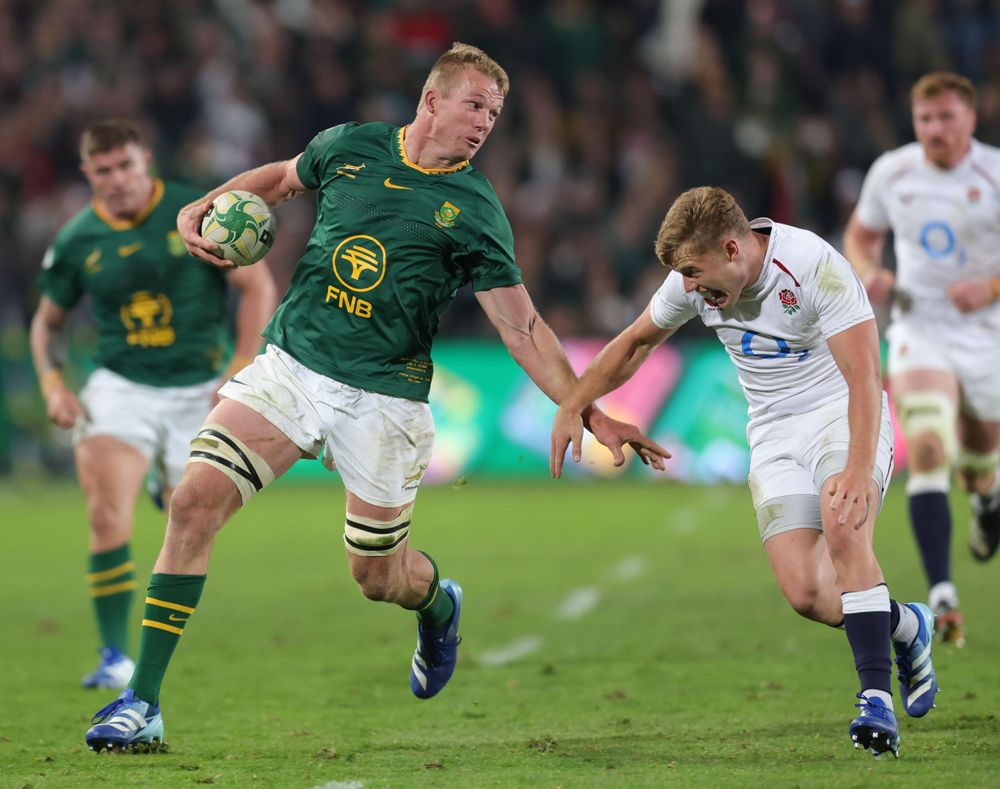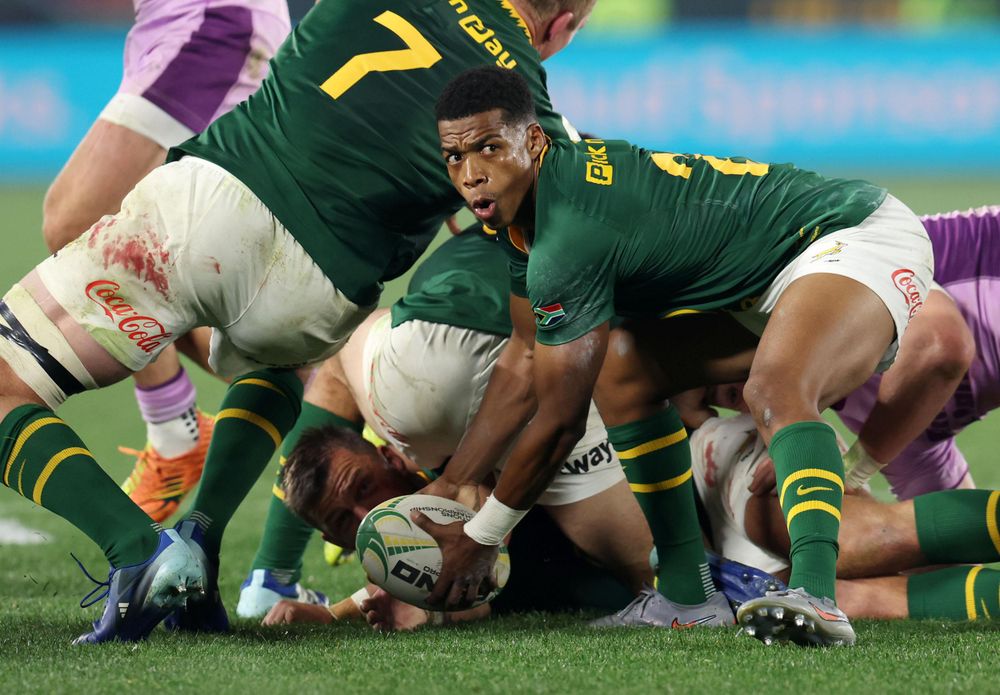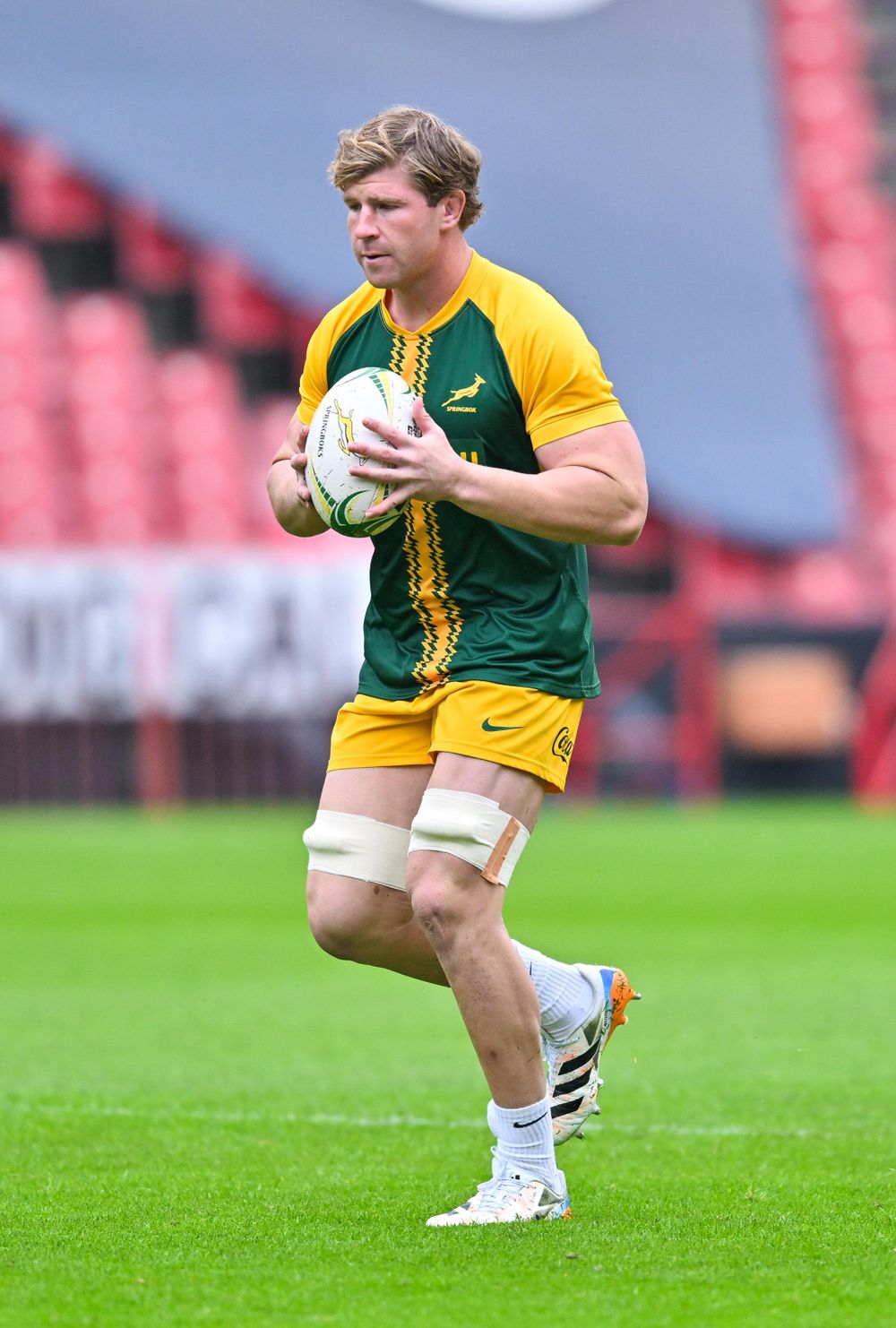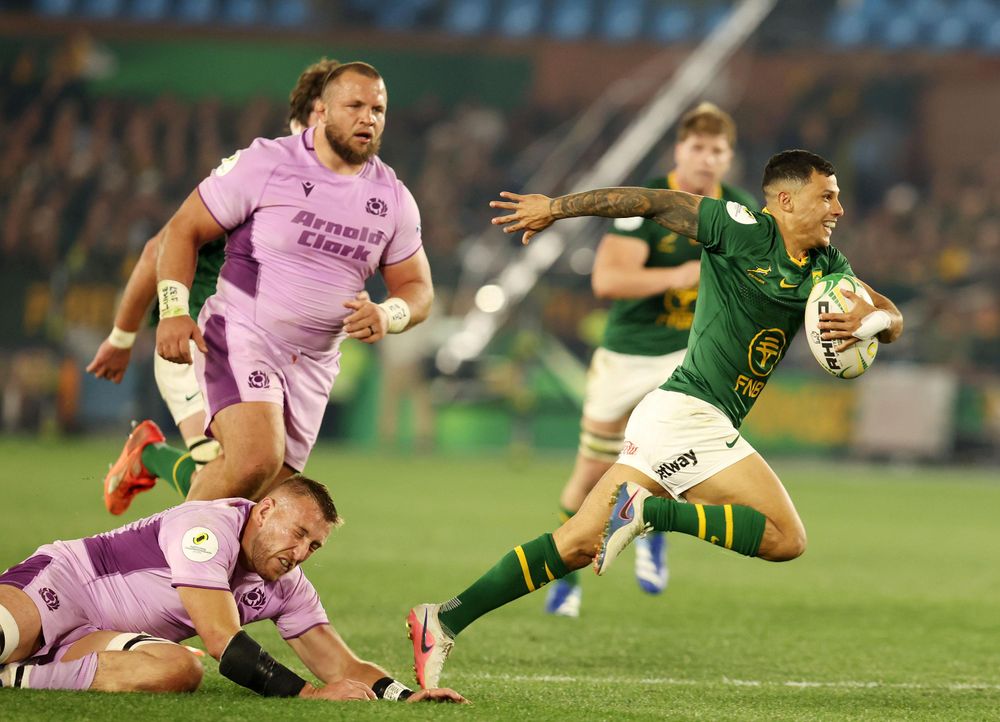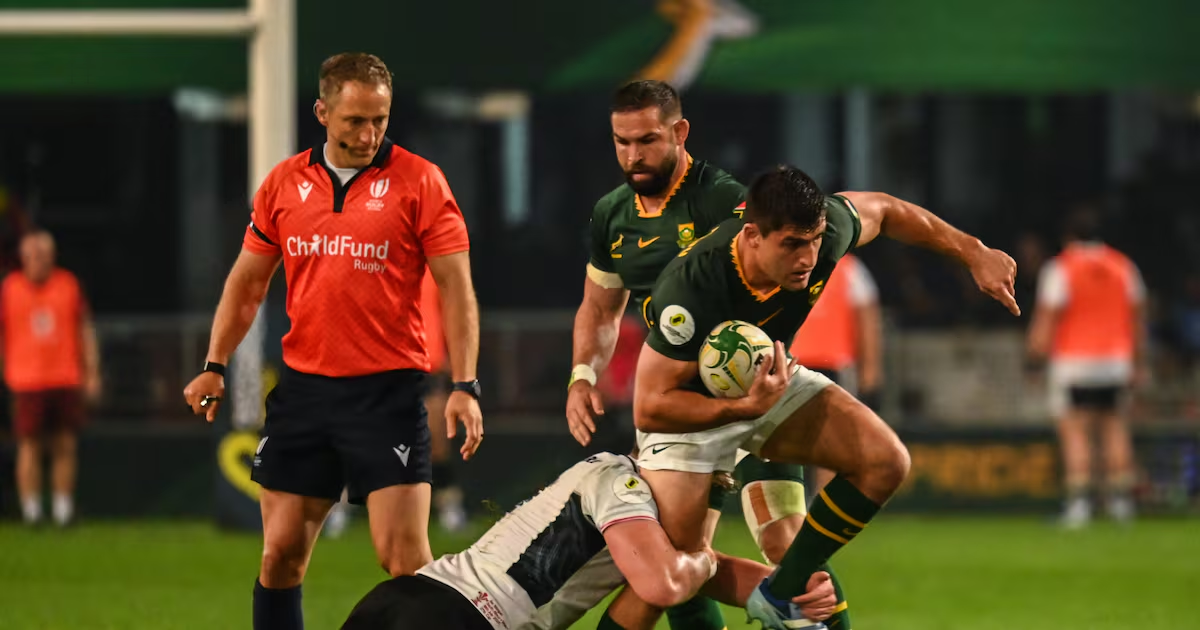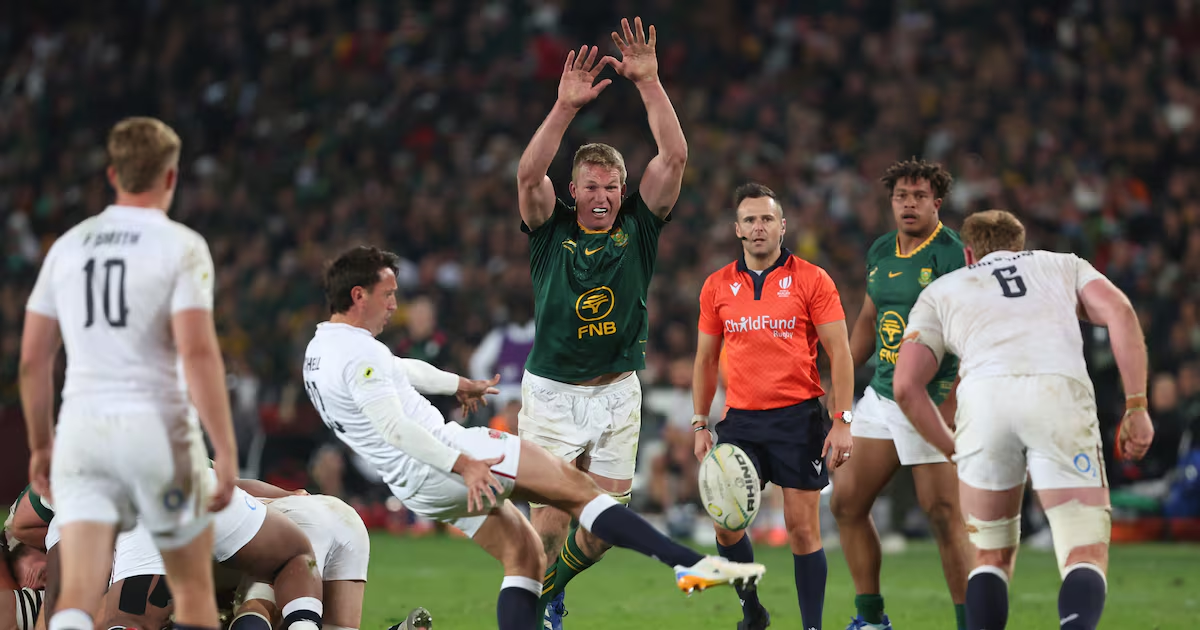
During the long periods of the Loftus game where Scotland were posing a serious threat to the severely stretched Springboks in their second Nations Championship clash on Saturday, a headline was forming in my head. It featured the words “so what?”.As in “we lost, so what?” For this was a day when the result was way less important to Rassie Erasmus and his long-term mission of having all bases covered at next year’s Rugby World Cup in Australia than what he stood to learn from a game where he did the rugby equivalent of throwing his eager-to-learn new swimmers in at the deep end.There was concern from Bok fans before the game. I got several messages pointing out potential weaknesses in the team and expressing concern. My response to everyone was that while I didn’t expect the Boks to lose, if they did, it wouldn’t matter. In fact, in one of them I suggested it was maybe the perfect time for a wake-up call if one was needed.The necessary wake-up call did come through the stress that the Scots put the Boks under with their all-court running game. That’s something which, by the way, is similar to what the All Blacks will be planning to throw at the Boks next month — but maybe even a bit superior to the Kiwis in the sense that the Scots have a settled game while the All Blacks are reinventing under a new coach.Yet a Bok team that featured 10 changes from the one that beat England by 24 points the week before and which underwent a radical reshuffle in the second half when several backline players shifted to positions they are less used to, and at a stage of the game where the pressure was acute, won 42-28. They also scored six tries against a team that beat England and France comprehensively in the Six Nations and which hammered Argentina in Argentina seven days earlier.The long travel that Gregor Townsend’s team had to go through to get from Cordoba to Pretoria was the reason I predicted a more sizable winning margin. There was a suspicion we might not see the best of Scotland. But we did. They brought their A game.They played like what they are, which is a team in the top five in the World Rugby rankings and a team that is growing. And yet the Boks won by 14 points, and it would have been more if it were not for the concentration lapse that gifted the Scots break opportunities and two tries that brought them momentarily back into it after they had been trailing by 21 points late in the game.The method behind Erasmus’ selections is easy to understand. While England fielded virtually the same team against Fiji on Saturday as it did in Johannesburg, and New Zealand did likewise against Italy, the Boks have used the last two games to build depth and, just as importantly, ensure the players in the squad are properly managed.England won well against Fiji in what was supposedly Fiji’s home game (Liverpool is most emphatically not in Fiji) but will now have to travel to Argentina for a much tougher assignment with the same players if they are to go full strength, which surely they must against the Pumas.We can predict what England and, to a lesser extent, the All Blacks will do when it comes to their selection approach, but we can’t say it about the Boks because Erasmus has built enough depth to be able to beat the fifth-best team in the world with what was close to a second-string team.The Loftus game was the equivalent fixture, in terms of placement in the season, to the one that a second-string Bok side lost to Wales in Bloemfontein in 2022. They got their lessons in defeat back then and went on to win the World Cup the following year. That they didn’t have to lose to learn against a stronger team than that Welsh team is a measurement of Bok growth.
GAVIN RICH | Erasmus’ bold selection gamble is already paying dividends for the Springboks
Scotland test underlined the value of building depth ahead of Australia 2027
670 words~3 min read