Commentary
By allowing fans to see what others are saying about football in their own words, AI has removed the language barrier and democratised the conversation, says Gearoid Reidy for Bloomberg Opinion.
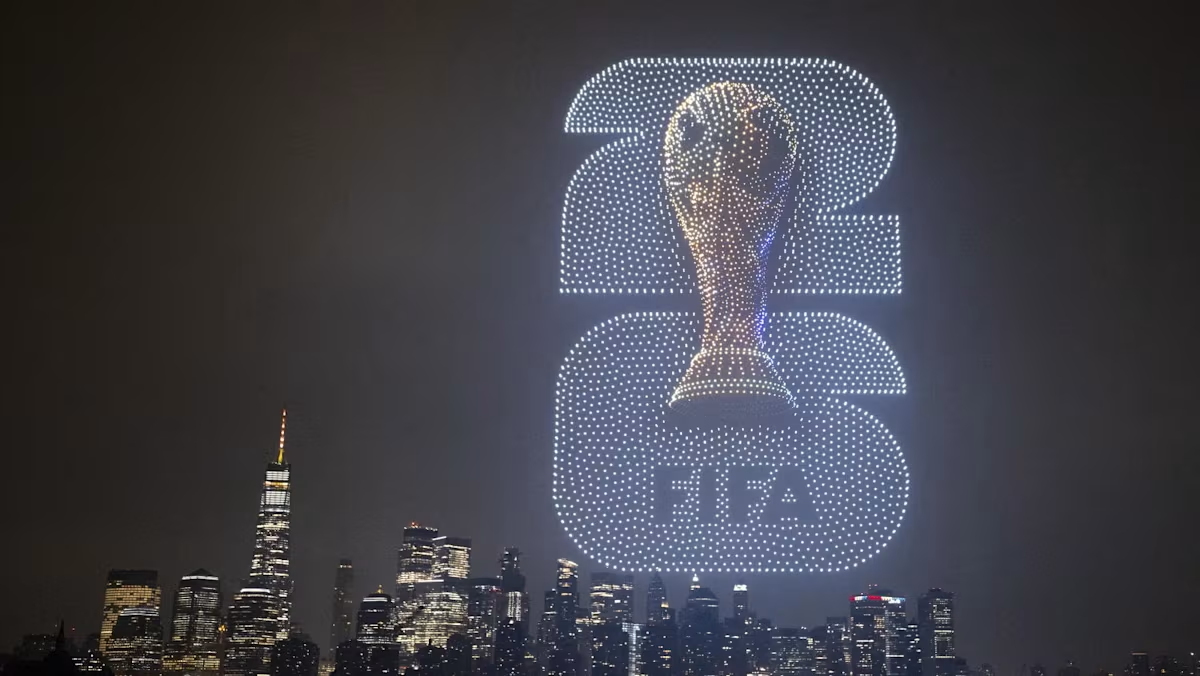
A FIFA World Cup Trophy visual is displayed against the Manhattan skyline during the FIFA Drone show in New York/New Jersey at Liberty State Park on Jul 15, 2026 in Jersey City, New Jersey. (Photo: AFP/David Ramos/Getty Images)
19 Jul 2026 06:00AM
TOKYO: Following Argentina’s controversial come-from-behind World Cup victory against Egypt, a match the losing team said was “fixed”, one wit on social media summed up the mood.“Not even the British Museum stole so much from Egypt as FIFA did,” said user Intrapiernoso in a tweet seen by over 6 million people. It was arguably the best zinger of a tournament that has had dozens of them.Except the original was not in English. What they actually wrote was, “Ni el Museo Britanico le robo tanto a Egipto, como la FIFA”. I don’t speak Spanish and while it doesn’t take a genius to work out what “el Museo Brianico” means, the act of puzzling over the unfamiliar grammar robs the remark of its wit.But now, thanks to the automated, LLM-generated translations and algorithmic boosts of social media, I can read it in my native language. It’s also been shared by users speaking Persian, Arabic and Korean, for whom el Museo Britanico might be harder to grasp.