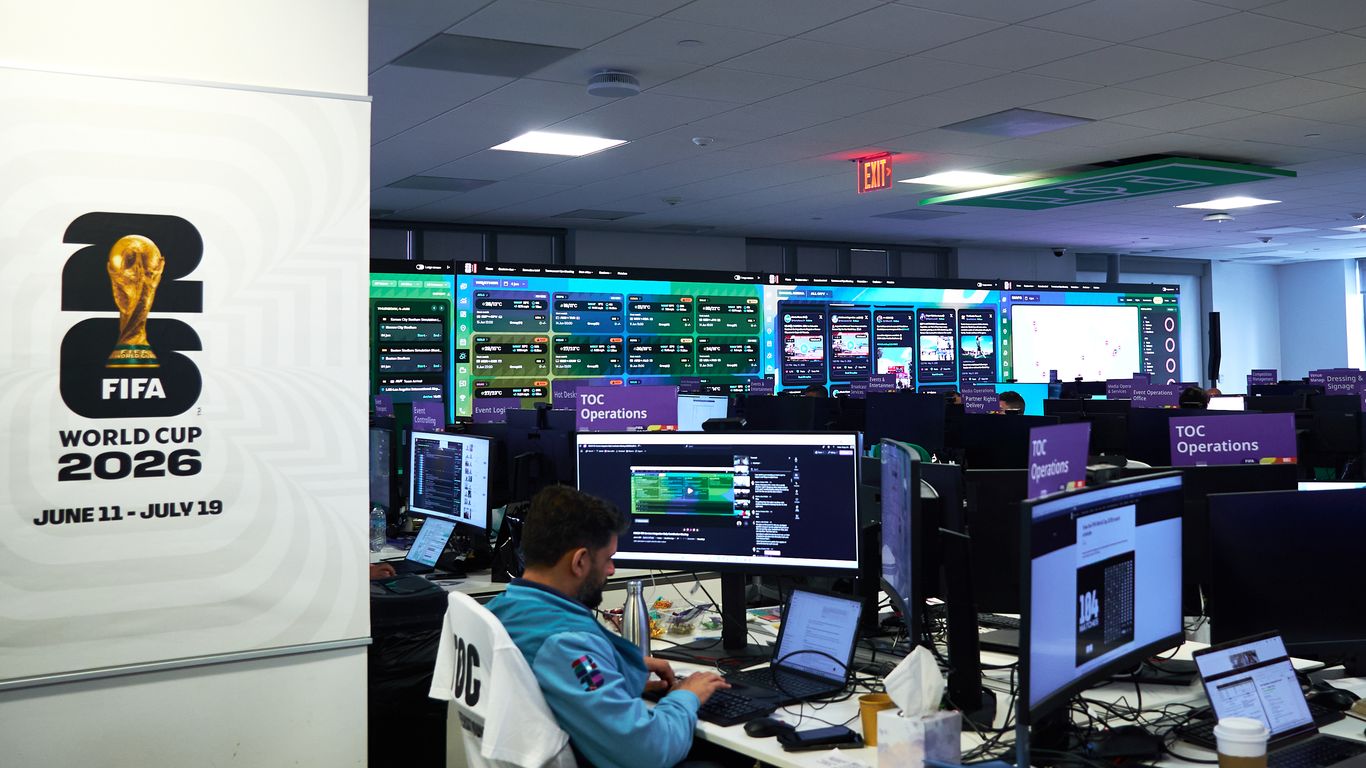
FIFA's Technology Operations Center. Image: LenovoAI helped power this year's World Cup by smoothing out the referee's-eye-view camera angle and giving all 48 teams equal access to detailed game analytics.Why it matters: Like recent Olympics in Milan and Paris, the World Cup offered a high-profile test of whether AI can improve sports without getting in the way.The World Cup also gave Lenovo a global showcase for the enterprise AI systems it hopes to sell to other businesses.Driving the news: Lenovo, which is both a high-profile sponsor and an official technology partner for the World Cup, helped manage several new AI-powered technologies during the tournament.Referee View lets TV viewers see key moments from a small camera mounted on the referee. AI can help smooth bodycam footage — which is naturally jerky — especially when the referee is running, turning and dealing with changing light conditions.Lenovo says its AI stabilization technology analyzes the camera feed frame by frame, reducing jitter by upwards of 50% and smoothing the video by up to 70% while keeping it in full HD with about three seconds of latency.It's a real-world case of showing off both bodycam stabilization and AI work on-device, David Rabin, CMO of Lenovo's Solutions and Services Group, told Axios.Between the lines: Lenovo is also helping FIFA ensure that AI-based analytics are made available to all the teams, rather than leaving the deepest insights to the countries with the biggest technical and financial resources.FIFA AI Pro is a generative AI knowledge assistant built for FIFA that gives coaches, players and analysts access to FIFA data, video, graphics and match metrics.Teams can use the system to ask questions about how opponents have fared against a particular defensive style, what formations might work best or which video clips illustrate a tactical pattern, Rabin said."AI has basically turned into a collaborative assistant," Rabin said.Yes, but: FIFA says Football AI Pro can be used before and after matches for analysis, but not during live play.When to allow AI use during gameplay has emerged as a significant issue in elite sports. Last week, Major League Baseball ruled that teams could no longer use chatbots on league-issued iPads during games after some teams were using AI for game-related coaching decisions.Zoom in: Lenovo has also built an intelligent command center for FIFA's operations.Rabin described it as "air traffic control for the World Cup," aggregating data across systems such as ticketing, food and beverage, staffing, security and parking.The idea is to spot problems as they emerge — for example, a long line at one gate or concession stand — and redirect people or resources before the issue gets worse.Zoom out: For Lenovo, the World Cup isn't just about putting its logo on the biggest sporting event on the planet.Rabin said Lenovo prefers to describe the deal as a "technology integration partnership," rather than a sponsorship."Sponsorship basically means I'm paying a ton of money to put my logo" on something, Rabin said. "A tech integration partnership is I may be engaging in a sponsorship, but I'm doing it because I'm able to tell a story."The company is using FIFA as a case study for other industries, from factories that need real-time video analysis to venues that need to manage crowd flow, food lines, parking and security.What we're watching: Lenovo and FIFA expect to do more on the fan-experience side as AI tools mature.Rabin said that will likely mean more personalization, including content, statistics, camera angles and highlights tailored to how different fans want to watch.He said sports organizations increasingly talk about fan experience in terms of loyalty and revenue: "How do you keep fans engaged and loyal, and how do you open up new revenue streams?"
How AI took the field at the World Cup
FIFA and Lenovo are testing how much AI sports can absorb.
613 words~3 min read