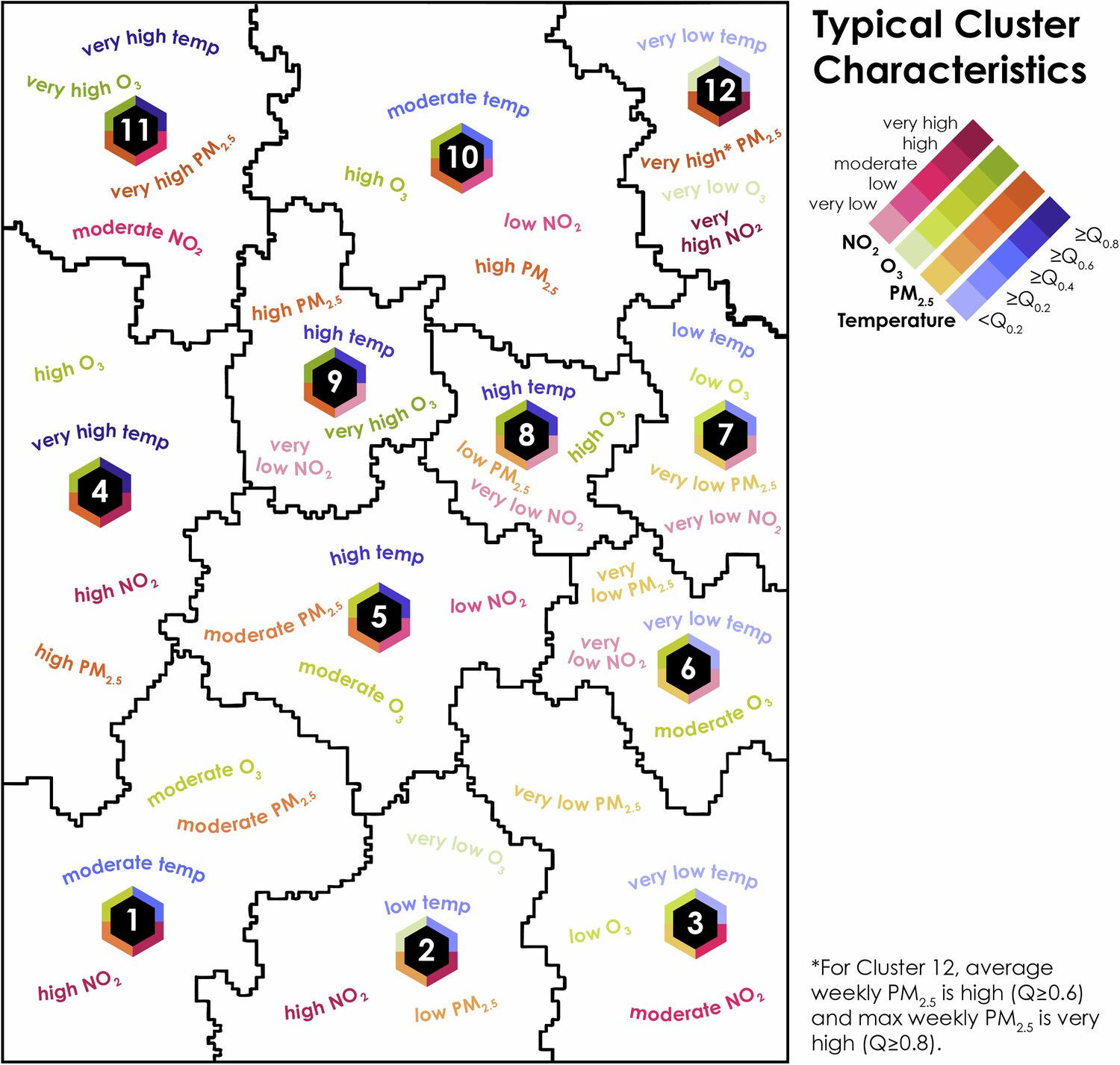
Typical cluster characters, determined by comparing the average of each cluster’s pollutant concentrations to the entire distribution (very low, low, moderate, high, very high). Cluster 10 had the strongest relationship to preterm birth. Credit: Journal of Exposure Science & Environmental Epidemiology (2026). DOI: 10.1038/s41370-026-00933-z
Pregnancy puts higher oxygen demand on the body, so expectant mothers breathe significantly more air over the course of a day. When air quality is bad, they're also breathing in more harmful pollutants.
Many studies have linked individual air pollutants, such as fine particulate matter (PM2.5) or ozone, to early preterm birth—delivery before 34 weeks' gestation, when infants face higher risks of health complications. But those studies don't reflect the reality that people are often exposed to mixtures of pollutants simultaneously.
In a new University of Utah study published in the Journal of Exposure Science & Environmental Epidemiology, of 44,874 first-time mothers in Utah, researchers found that exposure to even moderate levels of multiple air pollutants may increase the risk of preterm birth when experienced together—especially during critical stages of pregnancy.