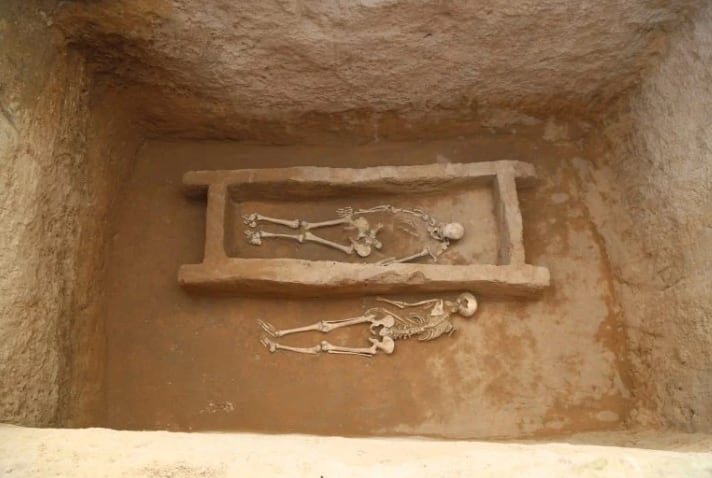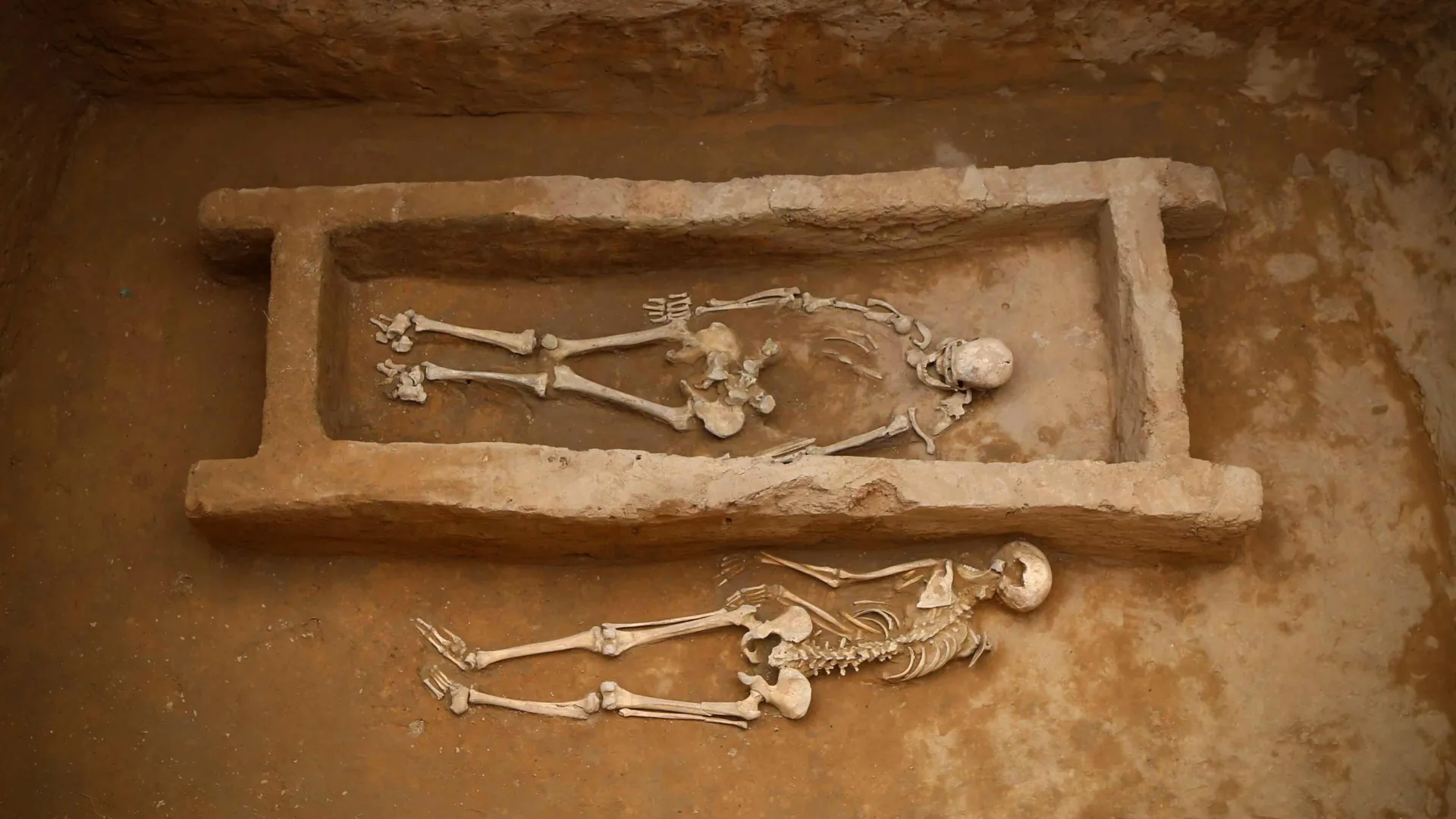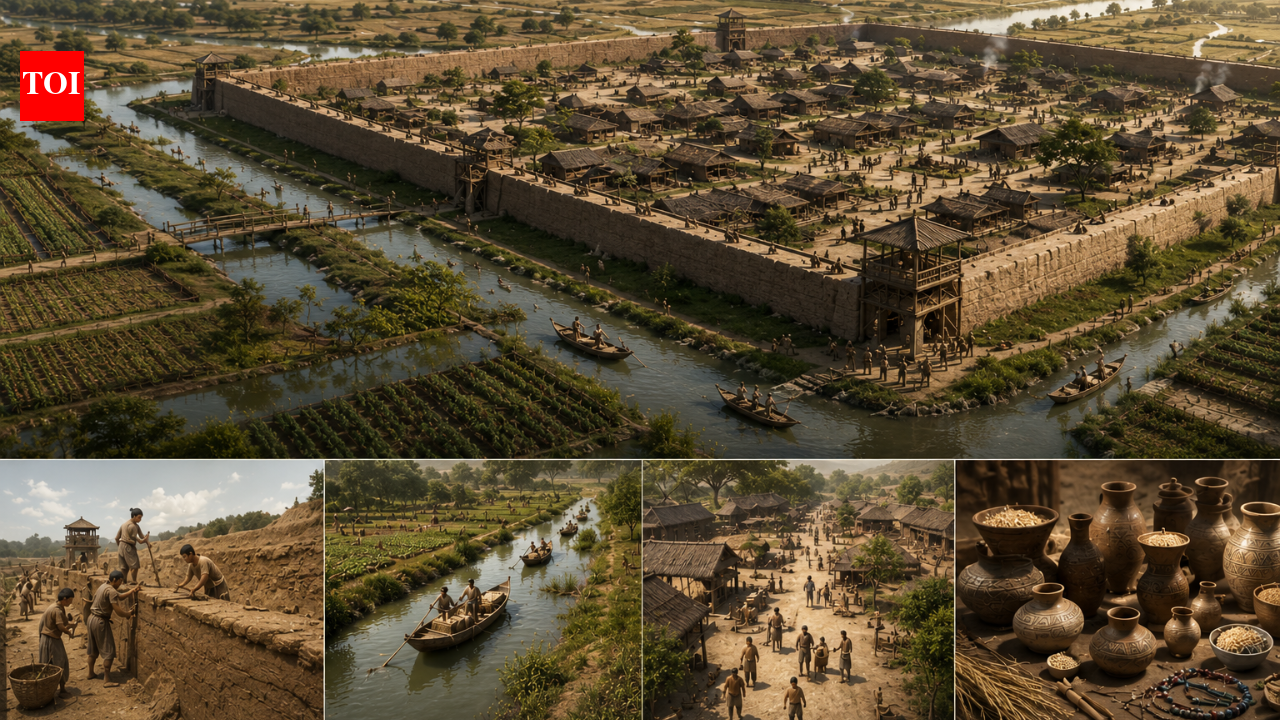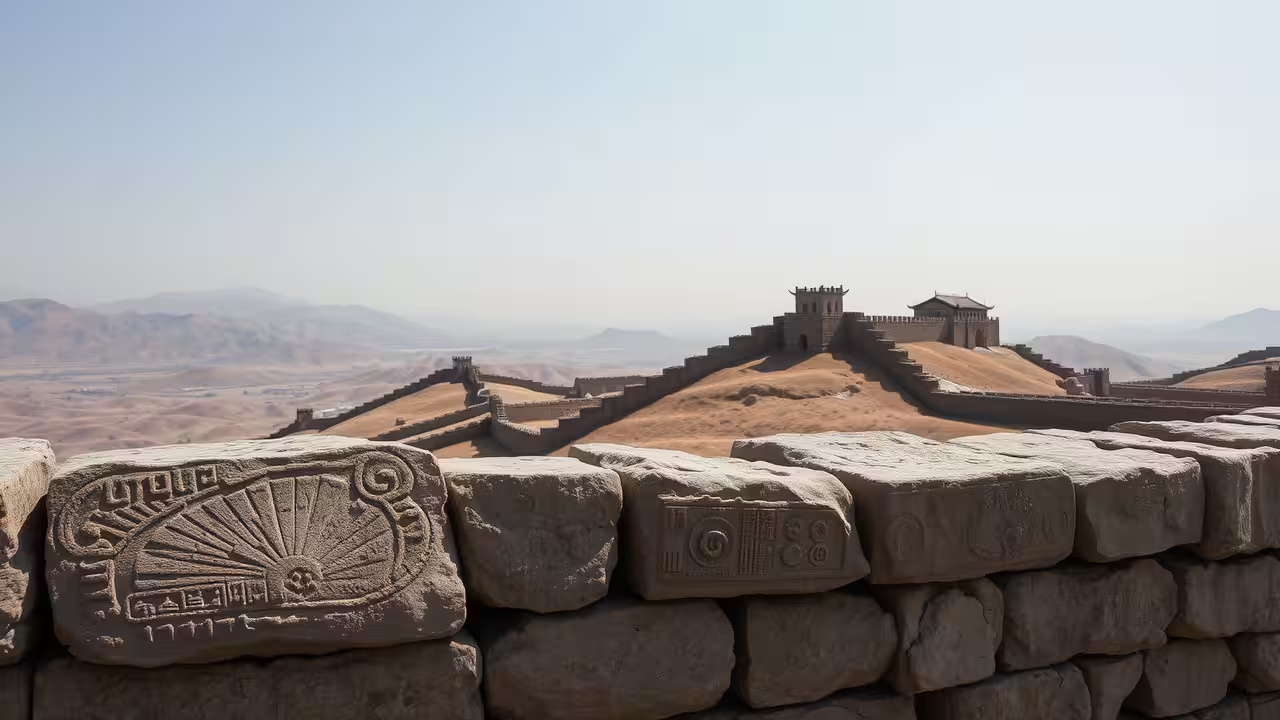
I stand before the monumental stone walls of Shimao, a testament to ancient ingenuity against an arid landscape.For decades, archaeologists have puzzled over one of China's most impressive and mysterious prehistoric sites, a massive stone-walled settlement called Shimao, built in northern Shaanxi Province roughly 4,300 years ago. The site covers about four square kilometres and shows clear signs of a socially stratified society, distinct functional zones, elaborate ritual structures and evidence of large-scale human sacrifice, yet exactly who built Shimao and where they came from had remained largely unresolved using archaeology alone. A new study drawing on thirteen years of ancient DNA research has now provided the first direct genetic evidence answering that question, while also uncovering a far more specific and unexpected pattern in exactly who was chosen for sacrifice at the site.Why Shimao has puzzled archaeologists for so longShimao sits at the junction of the Loess Plateau and the Mu Us Desert and is considered one of the largest prehistoric cities anywhere in China, exhibiting what researchers describe as clear early state characteristics, an intricate defensive wall system, diverse ritual remains and high-status artefacts pointing toward a genuinely sophisticated society. According to Global Times' coverage of the findings, the city's broader cultural sphere stretched across more than 200,000 square kilometres, yet scholars had long debated where its population actually originated and how its society was organised, questions that archaeological evidence like pottery styles and burial goods alone could not definitively settle.How researchers finally traced Shimao's genetic originsTo answer this question, a team led by Professor Qiaomei Fu of the Institute of Vertebrate Palaeontology and Paleoanthropology at the Chinese Academy of Sciences, working with the Shaanxi Provincial Academy of Archaeology, spent thirteen years conducting large-scale, high-resolution nuclear genome analysis. According to the study published in the journal Nature, the researchers generated genome wide data from 169 ancient individuals recovered from Shimao and surrounding sites across Shaanxi and Shanxi provinces, comparing this newly generated genetic data against previously published ancient DNA from other Chinese populations. The results showed that Shimao's people were predominantly descended from local groups that had already been living in the region roughly a thousand years earlier, tracing back specifically to Yangshao culture farmers who had worked the Loess Plateau long before Shimao itself was built, while also revealing genetic ties connecting Shimao to populations further south.What the DNA revealed about how Shimao families were organisedBeyond simply tracing population origins, the sheer scale of the genetic sampling allowed researchers to reconstruct something far more granular: actual family relationships within Shimao society. According to a Chinese Academy of Sciences account of the study, the genetic analysis reconstructed family pedigrees spanning up to four generations within Shimao society, uncovering a social hierarchy organised around patrilineal descent and patrilocal residence, meaning family lineage was traced through the male line, and women typically moved to live with their husband's family after marriage. This level of detail marked what researchers described as the first global genetic study of a site featuring large-scale human sacrifice and burial practices analysed to this degree of family-level resolution.Why the genetic evidence overturned assumptions about who was sacrificedPerhaps the most striking result to come out of the study concerned the identity of Shimao's sacrificial victims, a question earlier archaeological interpretations had gotten wrong. According to the Chinese Academy of Sciences, the research challenged long-held assumptions about the gender of sacrificial victims found at Shimao's East Gate, since prior hypotheses had suggested female individuals dominated these sacrifices, but the genetic evidence instead showed that nine out of ten burials examined at the site were actually male. The study identified a clear, sex specific pattern running through the site, with male sacrifices concentrated specifically at the East Gate while female sacrificial remains were instead associated with elite cemeteries such as Huangchengtai and Hanjiagedan, suggesting Shimao's sacrificial practices followed a deliberate, gendered logic tied to different locations and social contexts across the settlement rather than a single uniform pattern.Why this level of genetic detail had never been achieved beforeReaching these conclusions required real technical innovation, since ancient DNA recovered from prehistoric human remains is often poorly preserved and difficult to work with reliably. According to Global Times, the research team developed specialised capture methods and automated protocols specifically to improve efficiency and reduce contamination when working with these poorly preserved specimens, alongside data models incorporating multiple dimensions of archaeological information rather than relying on genetic data in isolation. Fu described the challenge of deciphering kinship at a site this large as requiring the integration of genomic data with archaeological evidence, from burial styles to grave goods, using genuinely complex modelling approaches to make sense of results at this scale.What Shimao's genetic story adds to the wider picture of early Chinese civilisationTaken together, the findings help settle a debate that had persisted among scholars for years regarding Shimao's population origins, while also opening a genuinely new window into how political and ritual authority may have been organised in one of northern China's earliest large scale urban societies. Researchers involved in the study have framed the results as the first direct genetic evidence available for exploring how early political authority took shape in this part of China, revealing the interconnected cultural, biological and economic forces that gave a site like Shimao its distinctive shape. For a civilisation that thrived for roughly five centuries before being abandoned, ancient DNA has finally offered answers that stone walls, pottery and burial goods alone were never quite able to provide.
China’s mysterious 4,300-year-old Shimao civilisation hid a secret about its people that ancient DNA has finally revealed
For decades, archaeologists have puzzled over one of China's most impressive and mysterious prehistoric sites, a massive stone-walled settlement called Shimao, built in northern Shaanxi Province roughly 4,300 years ago. The site covers about four square kilometres and shows clear signs of a socially stratified society, distinct functional zones, elaborate ritual structures and evidence of large-scale human sacrifice, yet exactly who built Shimao and where they came from had remained largely unresolved using archaeology alone.
914 words~4 min read