Academia
While Indonesia's macroeconomic growth may appear reassuring on paper, it would do well to take a close look at the country's current trajectory in parallel with Chile's experience since 2019 to avoid creating an increasingly fragile middle class.
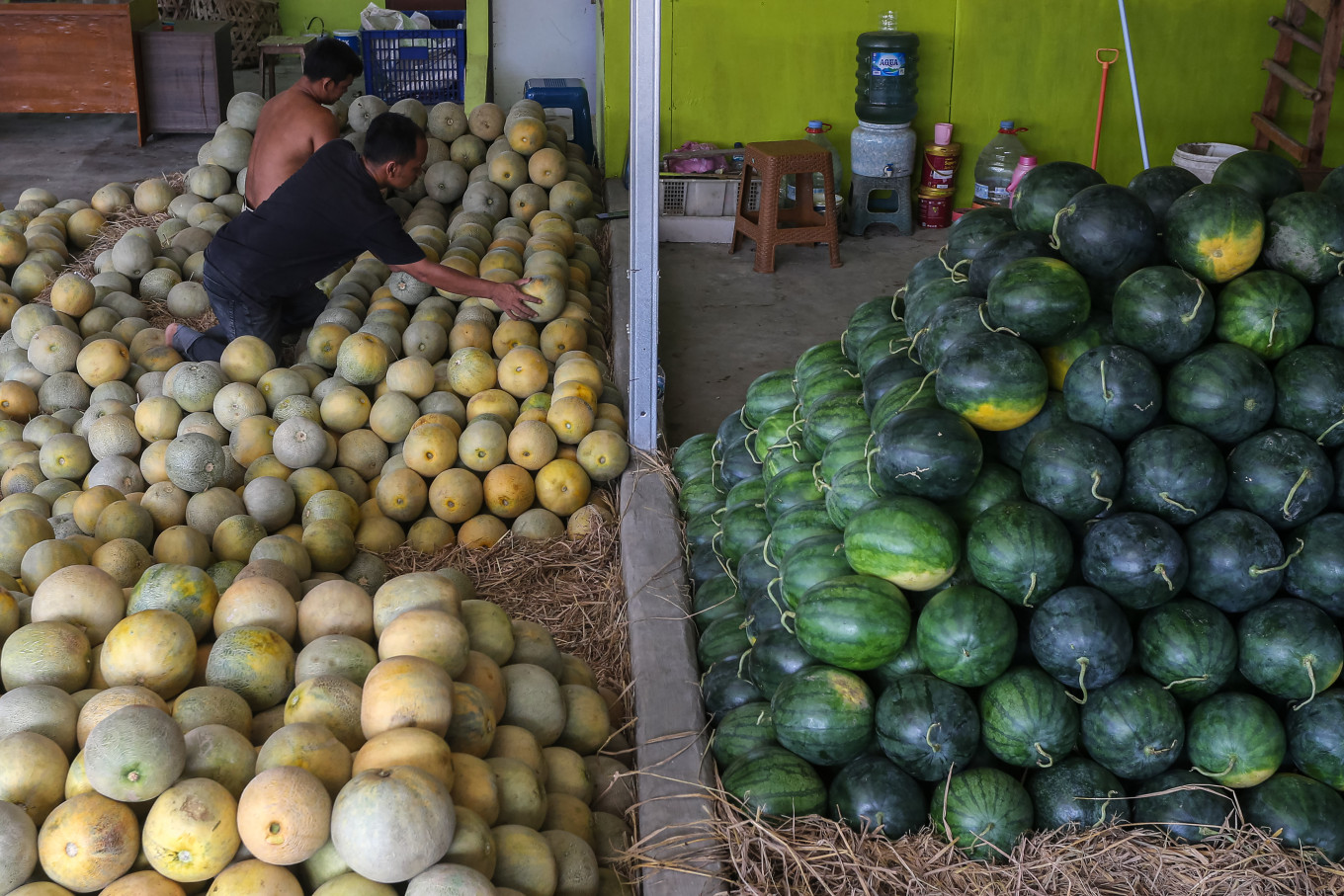
Workers arrange melons on Oct. 3, 2025, at Rau Market in Serang, Banten. (Antara/Angga Budhiyanto)
By the middle of 2026, Indonesia’s economy still looked reassuring on paper. Statistics Indonesia (BPS) reported first-quarter growth of 5.61 percent, while June inflation stood at a manageable 3.34 percent. Yet a contrasting set of numbers soon arrived to cloud the horizon. The manufacturing Purchasing Managers’ Index (PMI) contracted from 50.0 in May to 46.9 in June, while Bank Indonesia’s July consumer survey showed confidence slipping from 120.9 to 117.8.These data do not point to an impending crisis; far from it. However, it should not be waved away. An economy can remain structurally stable even as individual families begin to feel less secure, and that psychological gap fundamentally alters how people spend, borrow and plan for the future.
The middle class lives entirely within this gap. Most households in this bracket earn too much to qualify for government assistance, yet remain just one job loss, major illness or school tuition away from financial distress. While they may appear comfortable from the outside, their household balance sheets often tell a far more fragile story.