Academia
Indonesia’s economic future hinges on the "Five Es", Energy, Exports, E-commerce, Equity and Employment, but structural vulnerabilities and capital flight threaten to stall its momentum. To escape the middle-income trap and unlock its massive demographic dividend, the nation must pivot from legacy economic models toward genuine sustainability, robust market governance, and job-ready education.
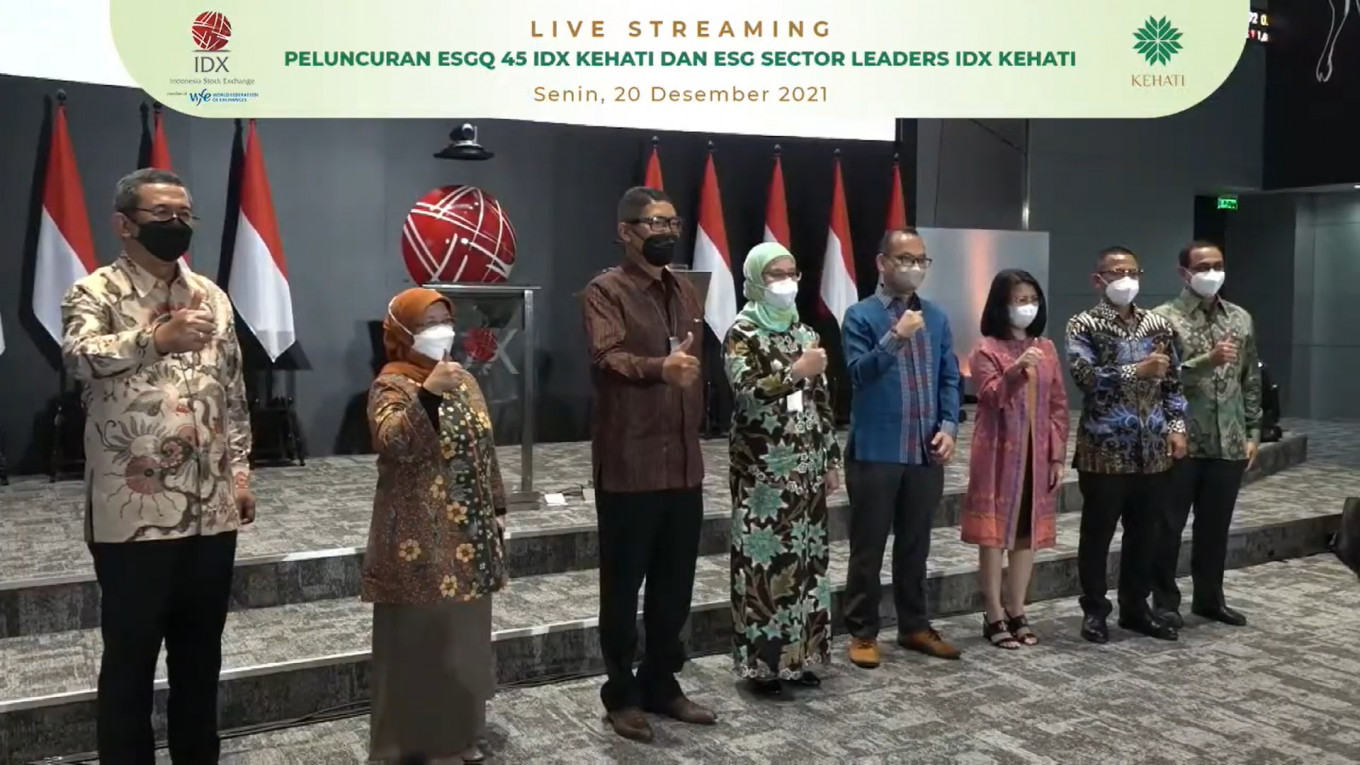
Indonesia Stock Exchange (IDX) president director Inarno Djajadi (third left) and Kehati Foundation executive director Riki Frindos (third right) during the launch of ESG Sector Leaders IDX KEHATI and ESG Quality 45 IDX KEHATI index at the IDX building on Dec. 20, 2021. (Indonesian Stock Exchange (IDX) YouTube channel/-)
Even if governments successfully align their policies toward energy security, export performance, and an equitable e-commerce ecosystem that protects local industries and small and medium-sized enterprises (SMEs), and that remains a significant caveat, they invariably face a steep uphill battle for financing.Historically, traditional channels of finance have been rigidly dictated by borrowing tenure and structural complexity. Development institutions have traditionally bankrolled long-term infrastructure projects like railways, highways, airports, and power plants. Conversely, commercial banks have catered to short- to medium-term, straightforward operational needs, such as trade finance, capital expenditure imports, factory expansions and overdrafts to bridge cash-flow mismatches.