In its latest report titled “Indonesia Economic Prospects” published in June, the World Bank highlighted that the country’s decreasing medium- and high-skilled employment has further eroded the supply of jobs capable of supporting middle-class livelihoods.
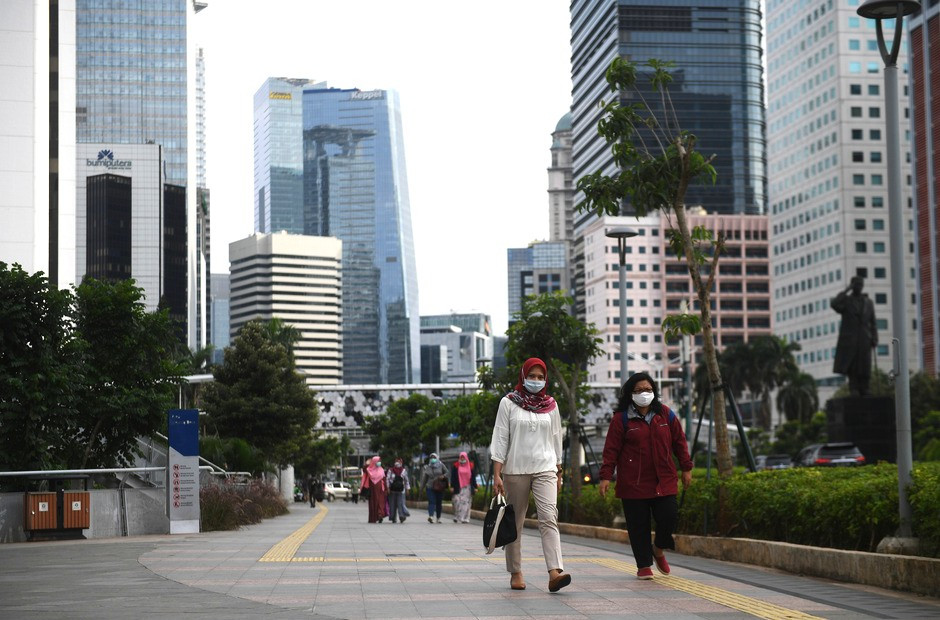
Office workers stroll on the sidewalk of Central Jakarta’s thoroughfare Jl Sudirman on April 16, 2020. (Antara/Akbar Nugroho Gumay)
Middle- and high-skill jobs in Indonesia have steadily disappeared in recent years as the country struggles to create better-paying employment amid weak hiring demand, according to a recent World Bank report. The trend has fueled rising educated unemployment while putting downward pressure on wages for middle- and upper-income workers.Analysts warn that the shift signals Indonesia risks being trapped in lower-value segments of global supply chains that rely heavily on low-skilled labor, while higher-skilled, higher-paying jobs are increasingly captured by competing countries.
In its latest report titled “Indonesia Economic Prospects” published in June, the World Bank highlighted that the country’s decreasing medium- and high-skilled employment has further eroded the supply of jobs capable of supporting middle-class livelihoods.