view more
Osaka, Japan - A research team led by the University of Osaka, working with The National Institute of Advanced Industrial Science and Technology (AIST), RIKEN, and the Institute of Science Tokyo has uncovered a fundamental mechanism behind superionic conduction, in which ions move rapidly through a solid while its crystalline framework remains intact. Using a simple physical model, the researchers connected “sublattice melting” with cooperative and spatially heterogeneous ion transport. The findings offer a unified explanation for superionic conduction and could help guide the design of next-generation solid-state batteries.
Superionic conductors are solid materials in which certain ions move almost as freely as they do in a liquid, making them attractive for solid-state batteries. They have traditionally been studied on a material-by-material basis since real materials often possess complex crystal structures and chemical compositions. This has made it difficult to identify the essential physical mechanism underlying superionic conduction, independent of any single material’s chemistry.
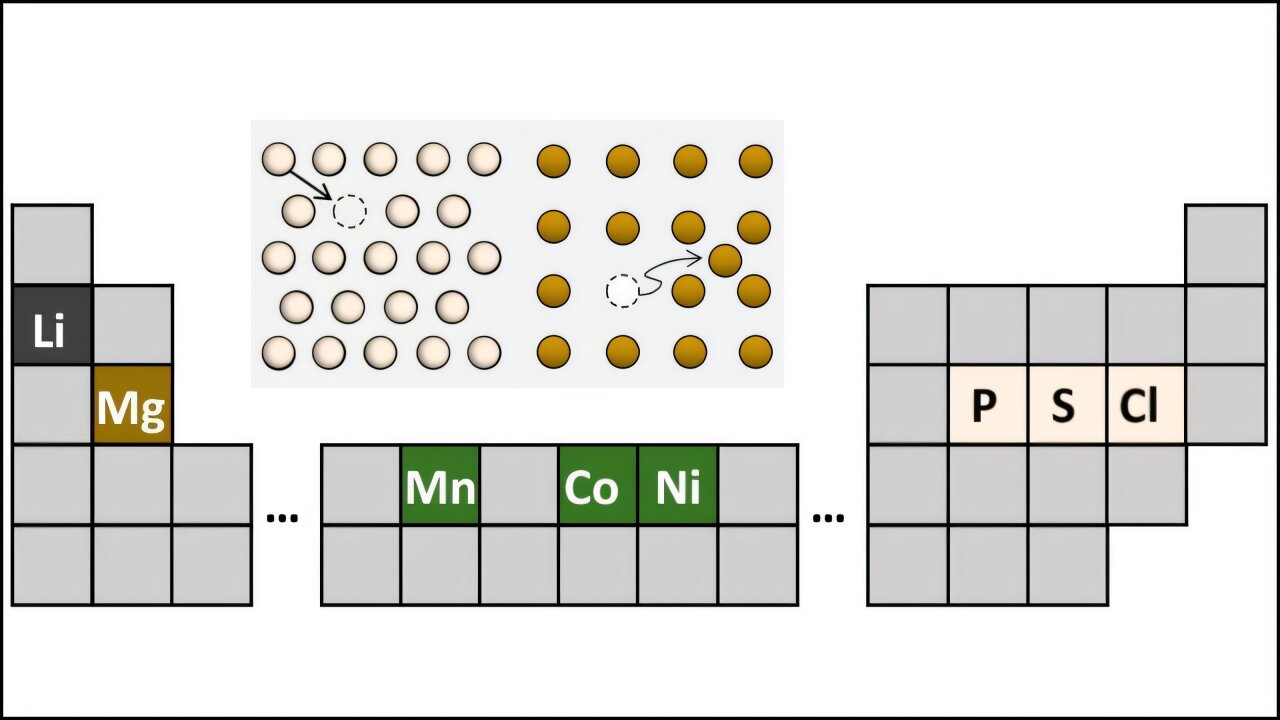
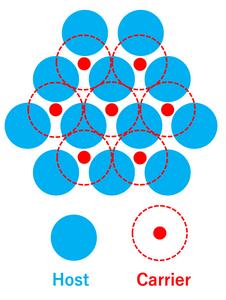
The team constructed a chemically neutral model containing a rigid lattice of host particles and smaller mobile carrier particles. It retained only the interactions considered essential for superionic conduction: strong, short-range repulsion that stabilizes the host framework and softer, longer-range interactions between carriers.