Very high levels of plasma phosphorylated tau 217 (p-tau217), a marker of amyloid burden in the brain, predicted future risk of cognitive impairment among older adults who were initially unimpaired, a multicohort study suggested.
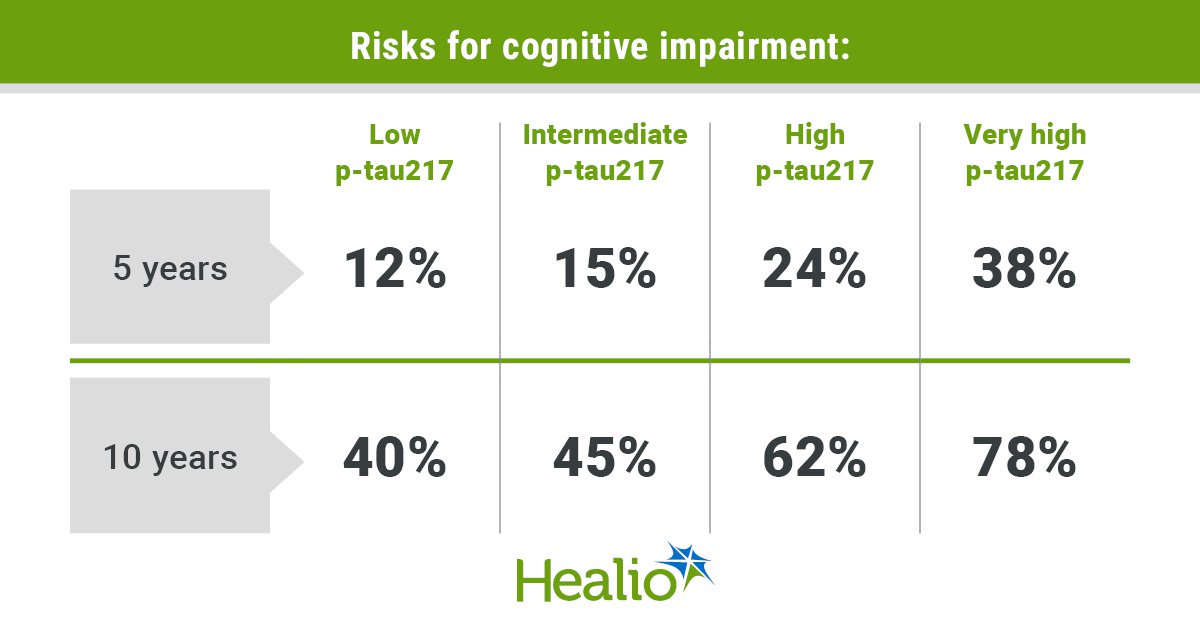
Using different plasma assays and definitions of cognitive impairment across six cohorts, a "consistent pattern" emerged: those with very high p-tau217 had an estimated 38% risk of cognitive impairment over 5 years and an estimated 78% risk over 10 years, reported Rachel Buckley, PhD, of Mass General Brigham in Boston, at the Alzheimer's Association International Conference. The findings were published simultaneously in JAMA.
P-tau217 provided predictive information beyond amyloid PET, suggesting it may capture aspects of Alzheimer's disease biology not explained by amyloid plaques alone, Buckley said.
Elevated p-tau217 was associated with faster cognitive decline in latent Preclinical Alzheimer Cognitive Composite (PACC) scores, she noted. The 5-year annualized decline for the very high p-tau217 group was -0.07 latent PACC units/year, compared with 0.03 units/year in the low p-tau217 group.
"These findings should not yet be interpreted as support for routine screening in asymptomatic individuals as plasma p-tau217 is not recommended for testing in cognitively unimpaired older adults," Buckley said.