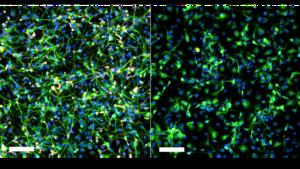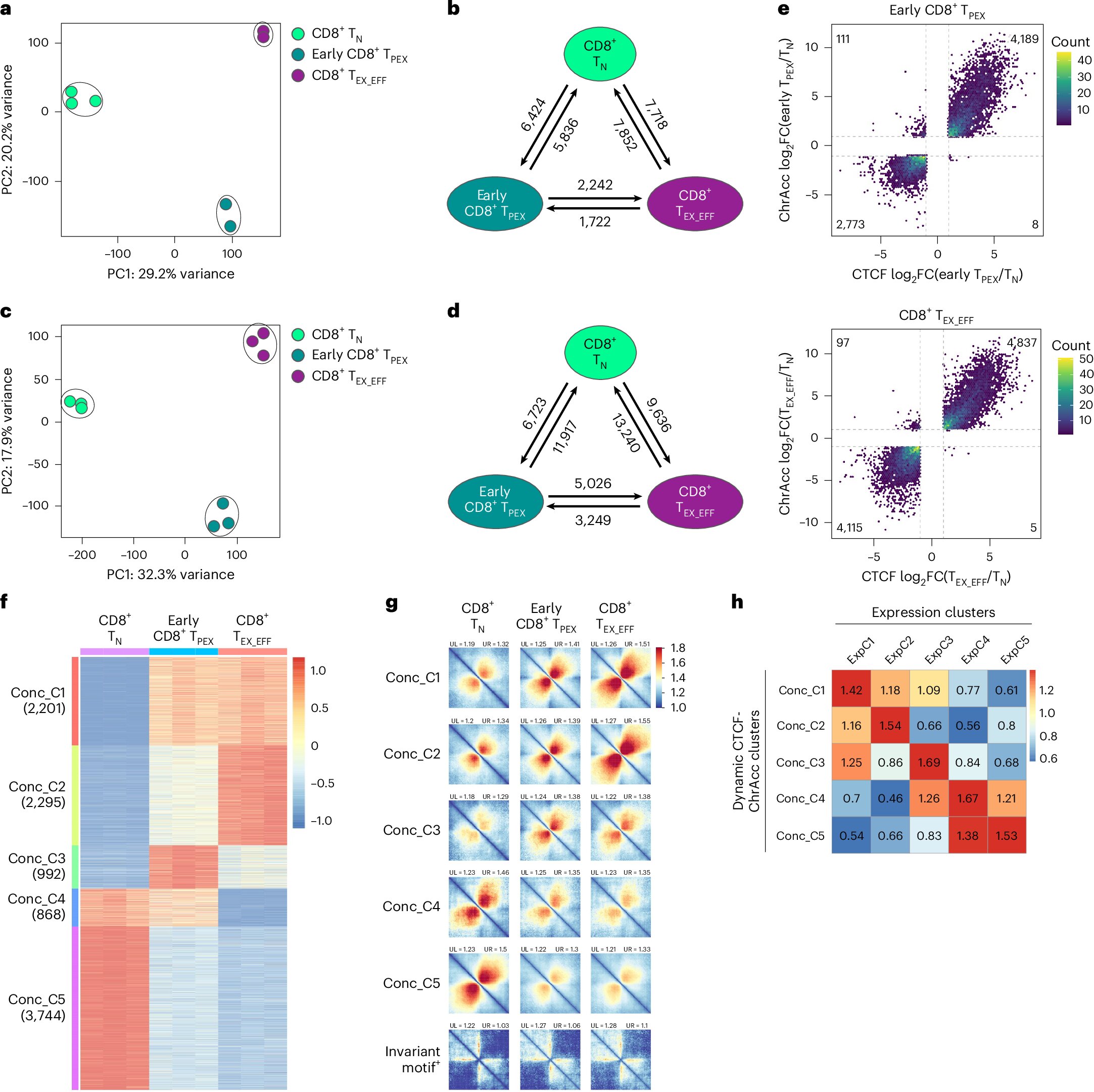
CTCF is redistributed and concordantly affects ChrAcc and ChrInt during early CD8+ TEX cell differentiation. Credit: Nature Immunology (2026). DOI: 10.1038/s41590-026-02585-5
Chronic and viral infections can literally exhaust certain key cells in the immune system from a constant barrage of attacks. But a new pair of papers by scientists at the Hackensack Meridian Center for Discovery and Innovation (CDI) points to a way to understand how this exhaustion happens at a molecular level—and how medicine might be able to leverage this knowledge into future treatments. The two papers appear back-to-back in the latest issue of the peer-reviewed journal Nature Immunology.
"Piece by piece, we are unraveling the complex interactions that tie together these immune-system responses," said Hai-Hui (Howard) Xue, M.D., Ph.D., member of the CDI, professor of medical sciences at the Hackensack Meridian School of Medicine, a member of Georgetown University's Lombardi Comprehensive Cancer Center, and senior author on both papers. "We believe we are on track to understand this fundamental process better than ever before—and hopefully save lives in the future because of it."
The two papers in the journal complement each other's findings.