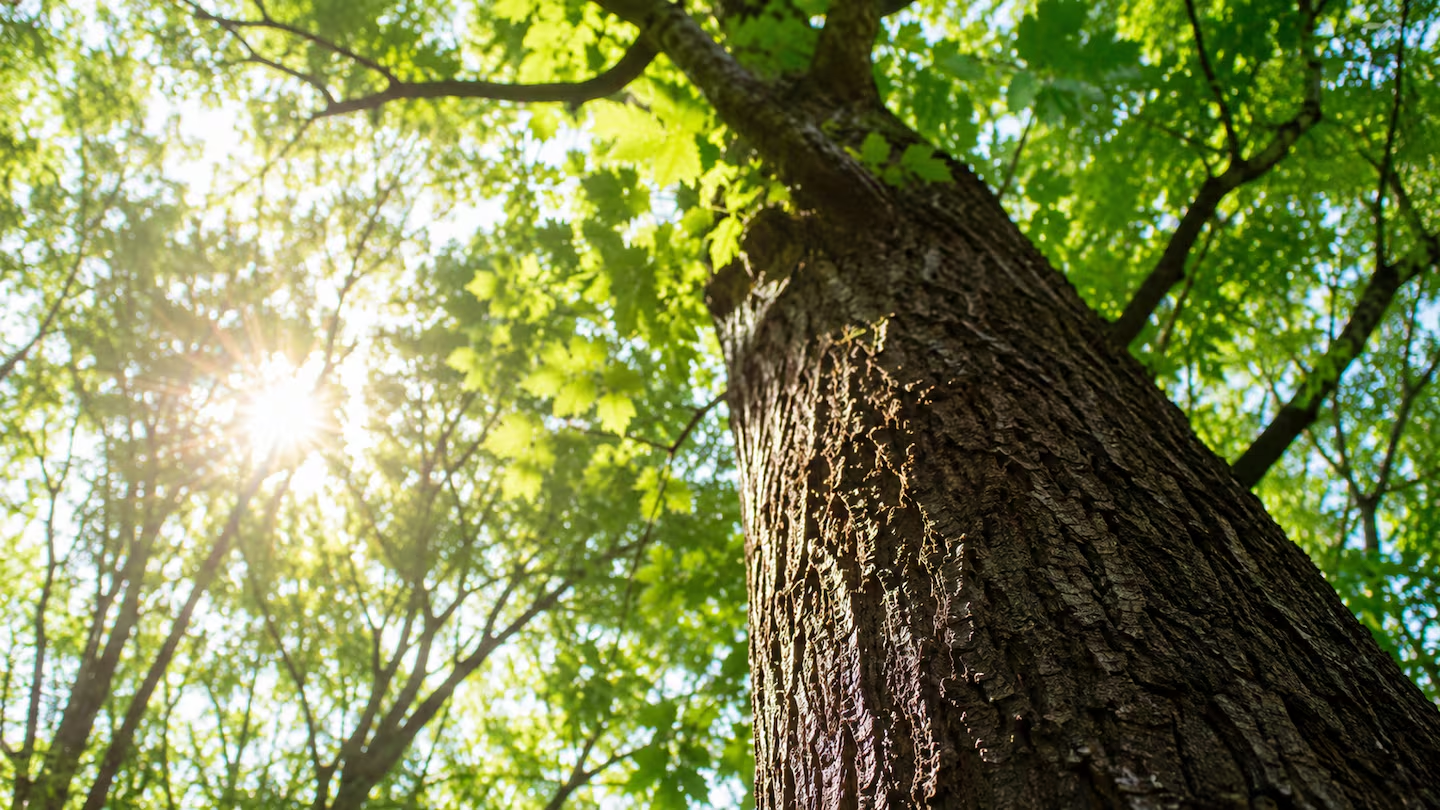
Trees do not necessarily keep growing for as long as they keep photosynthesizing, according to a new study published in Science Advances. Researchers found that oak trees continue absorbing carbon dioxide well after their annual growth has ended, suggesting forests may store less carbon in wood than many climate models currently predict.
The discovery challenges a long standing assumption that higher rates of photosynthesis naturally lead to greater tree growth. If trees continue taking in carbon without turning much of it into new wood, less carbon may remain locked away over the long term.
Trees Keep Capturing Carbon After Growth Stops
Forests play a major role in slowing climate change because trees remove carbon dioxide (CO2) from the atmosphere and store much of it in their trunks, branches, and roots. Scientists have generally expected that rising atmospheric CO2 levels would boost photosynthesis, leading to faster growth and increased long term carbon storage.
The new findings suggest the relationship is more complicated. While trees may continue absorbing additional carbon, much of it does not necessarily become new wood. Instead, that carbon may be used to produce leaves, fuel short lived metabolic processes, or serve other functions, reducing the amount of carbon stored in forests compared with previous expectations.