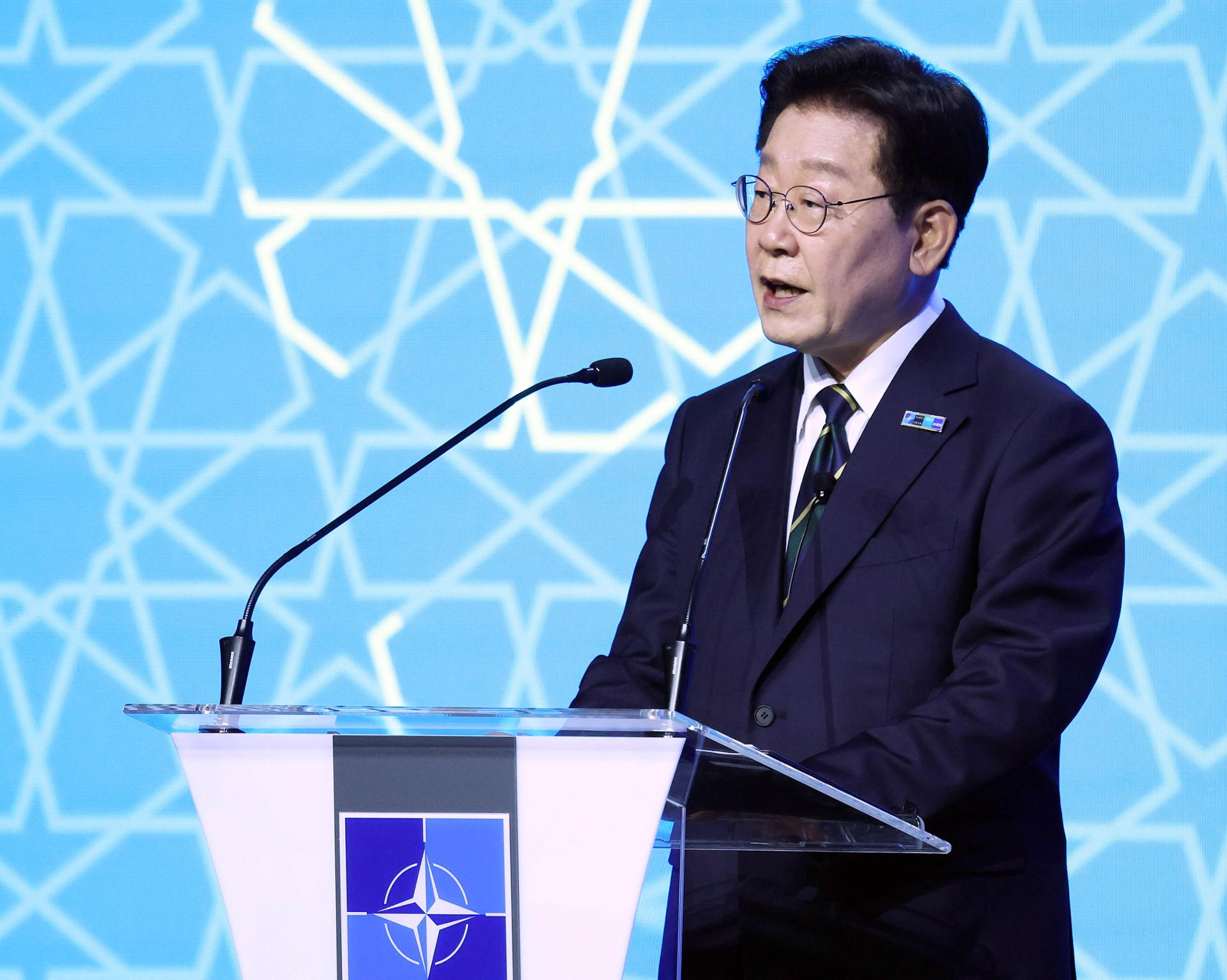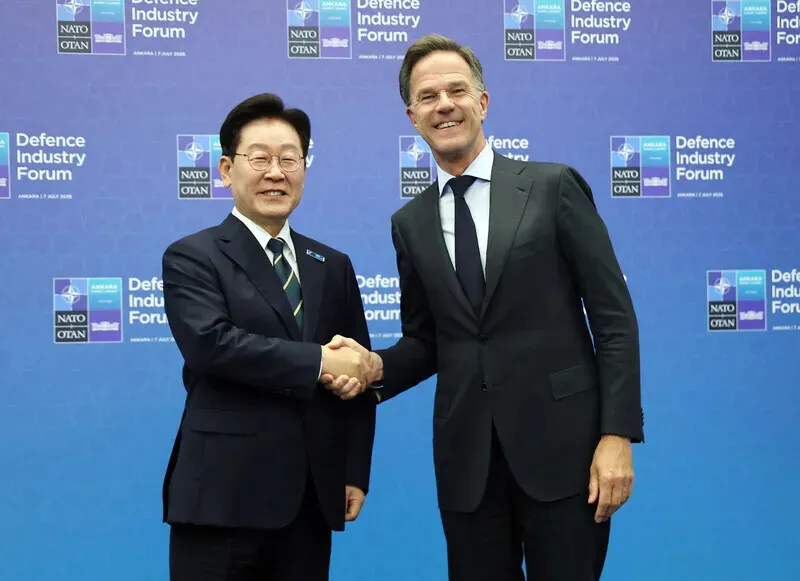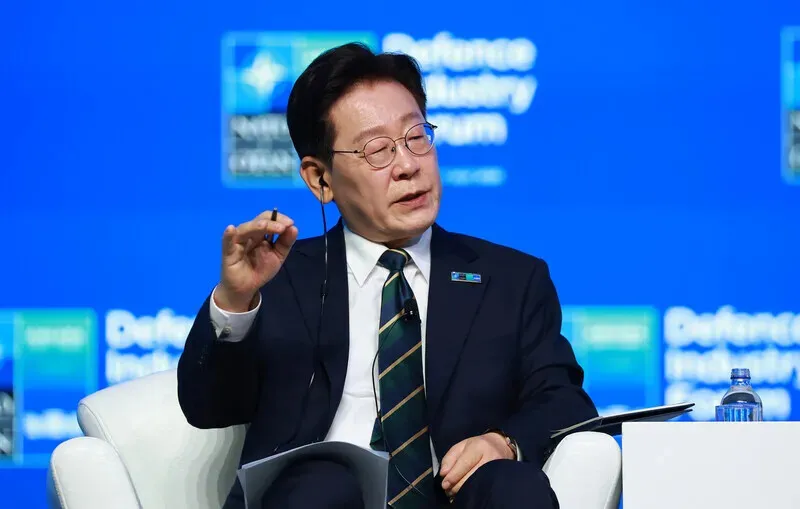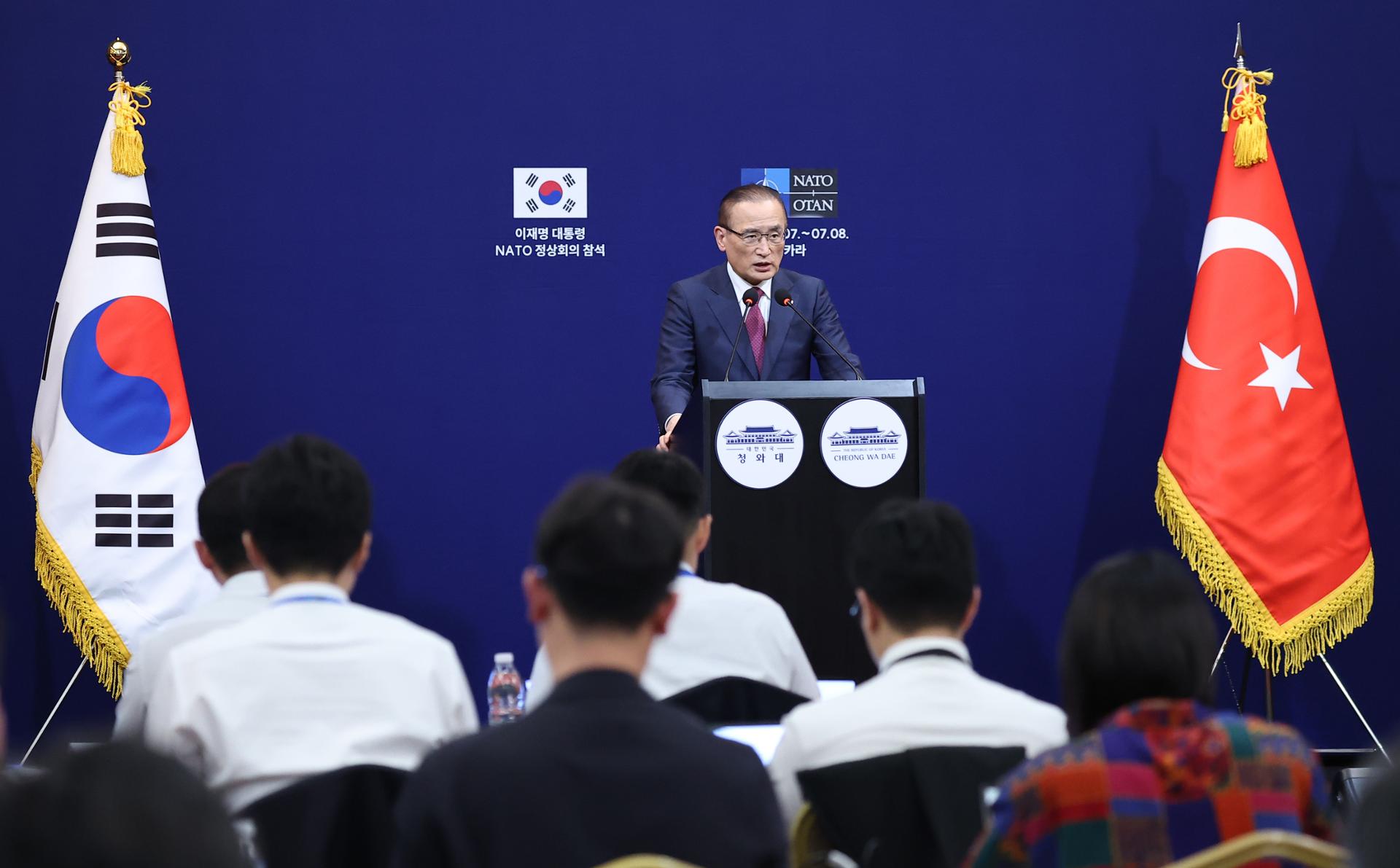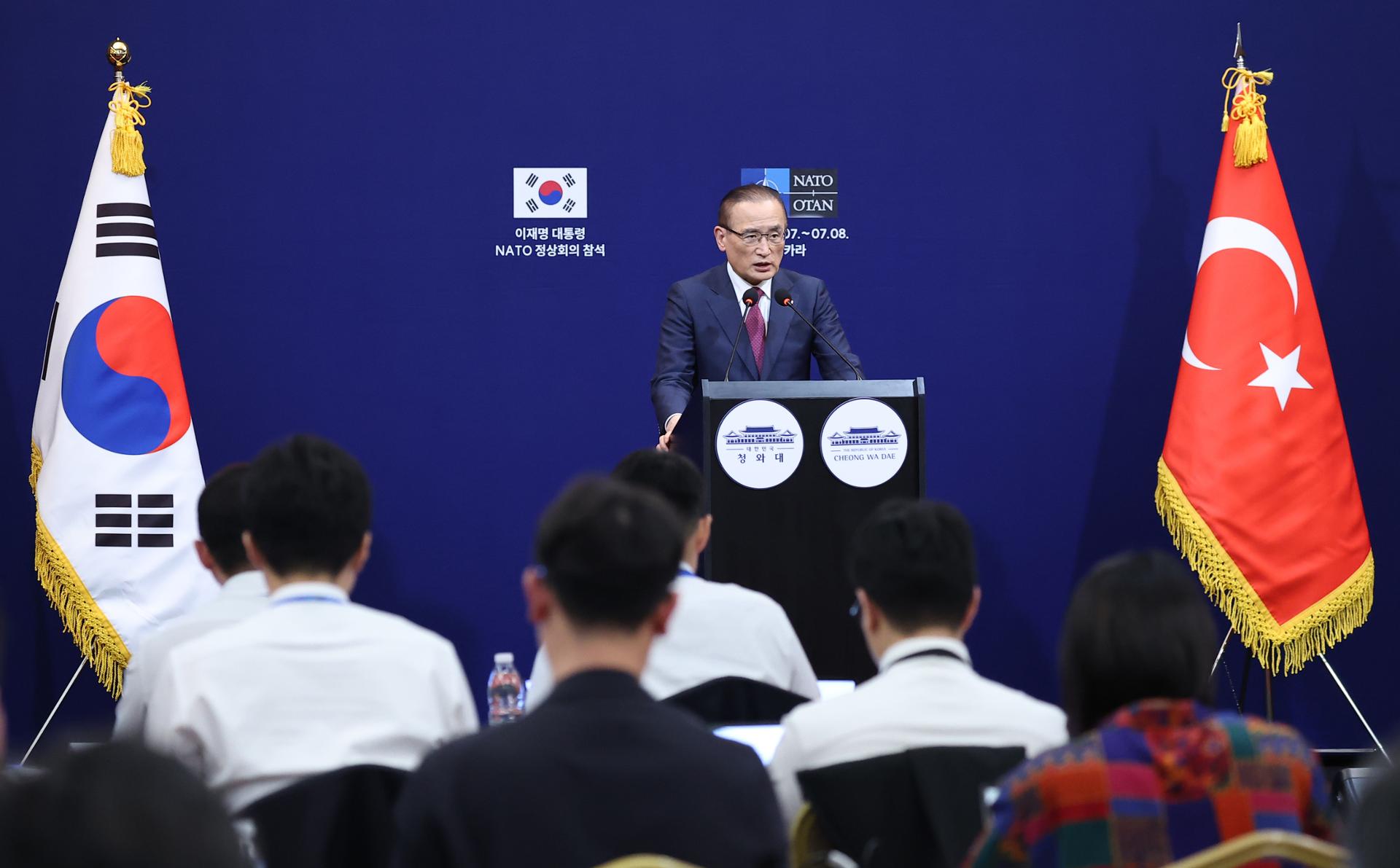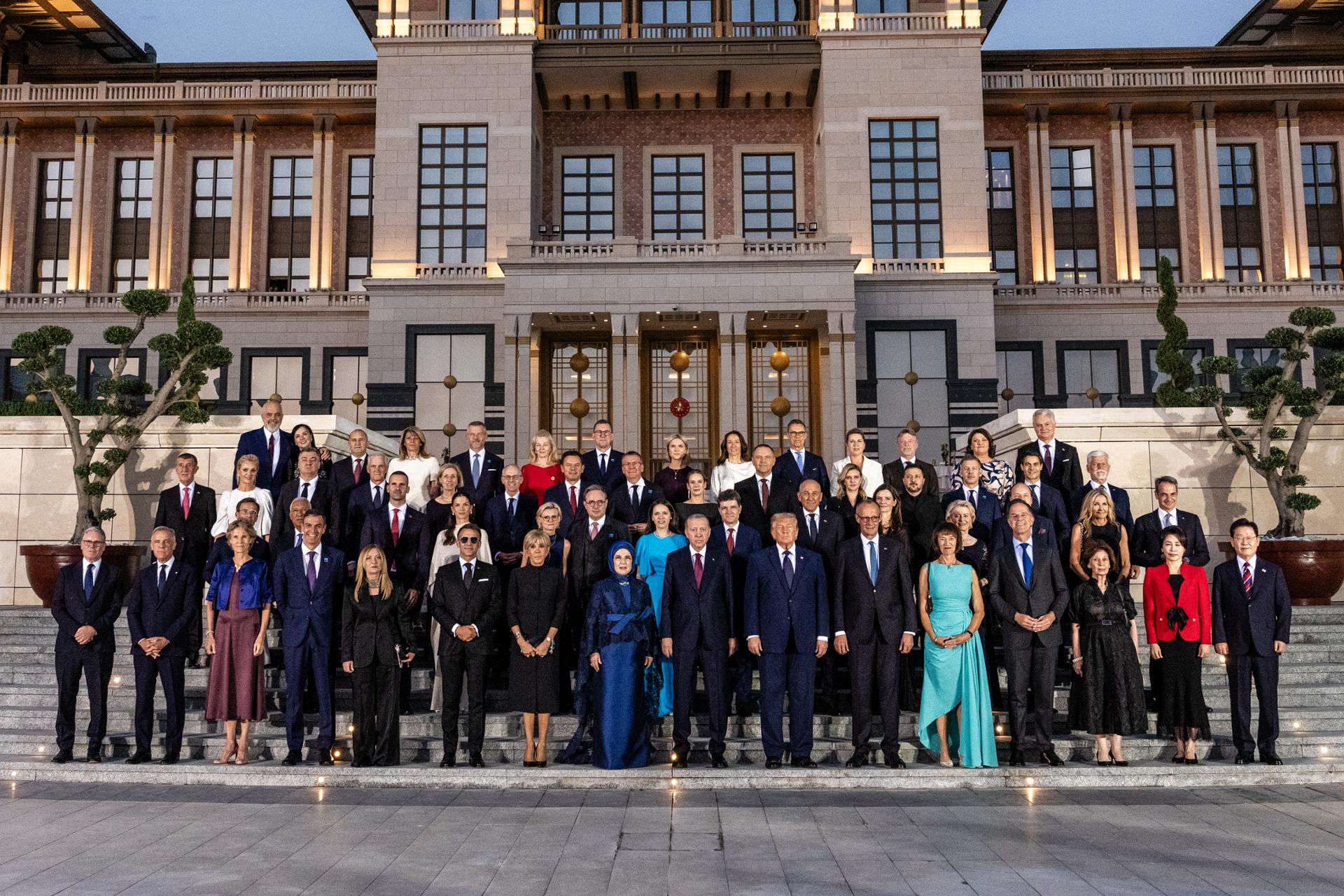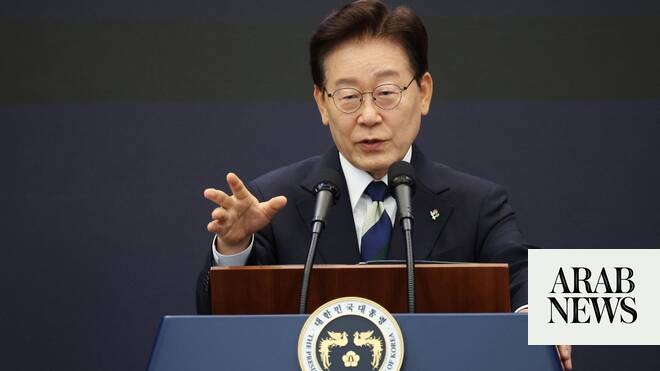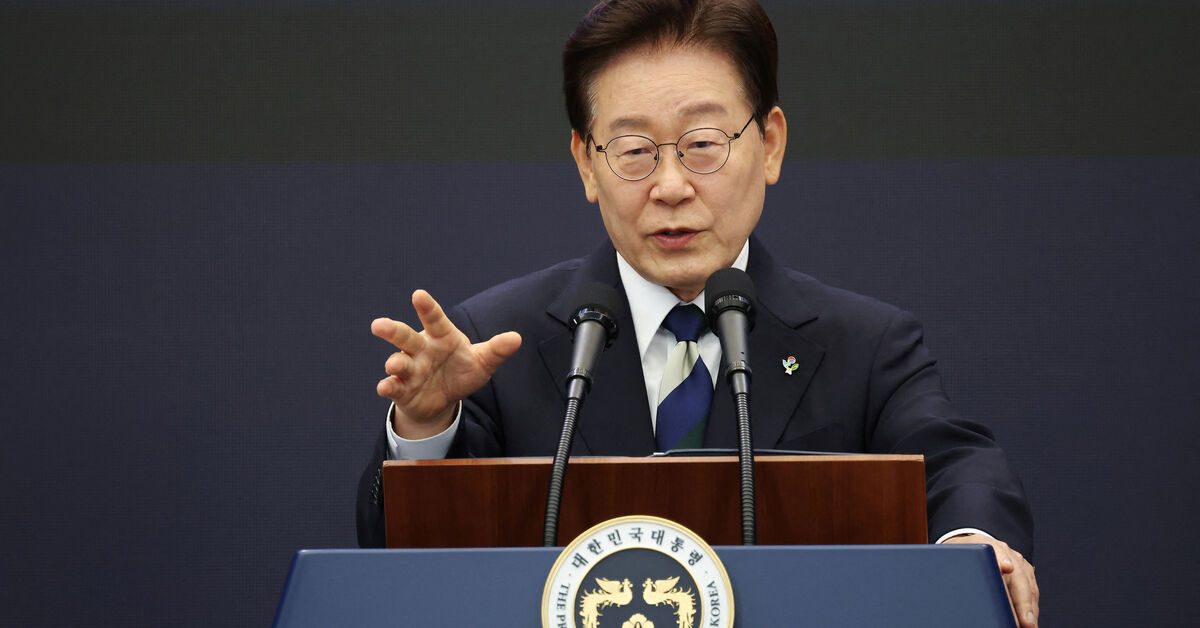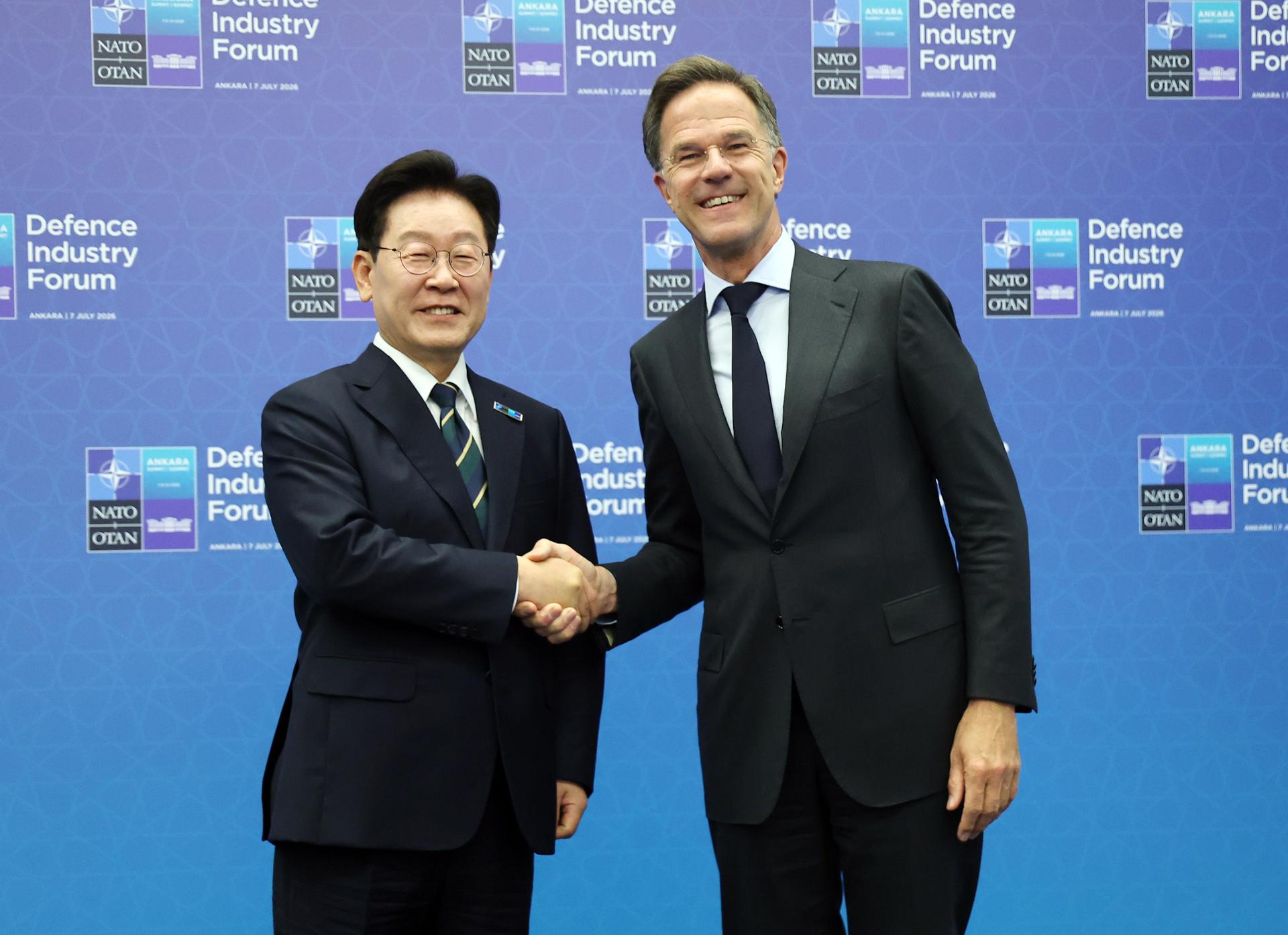
New procurement pact will alllow Korean firms to move beyond bilateral deals into NATO’s collective defense market President Lee Jae Myung answers a question from an attendee during the NATO Defense Industry Forum at the Ankara Convention Center in Turkey on Tuesday. (Yonhap) ANKARA, Turkey — President Lee Jae Myung left his first NATO summit with both a vision and a vehicle to advance it: a proposal to move South Korea beyond the role of an arms exporter toward deeper defense industrial cooperation with the alliance, and the launch of negotiations on an agreement that would help make that shift possible.At the summit in Ankara, Lee called for South Korea and NATO to move toward joint development, production and operation of weapons systems through a “Korea-NATO Defense Industry Partnership 2.0.”At the same time, Lee secured the launch of negotiations on a procurement framework agreement with NATO that could expand Korean firms’ access to alliance-wide procurement and defense cooperation programs outside of deals with individual NATO member states.Lee's attendance came as NATO members move to raise defense spending and strengthen military capabilities after agreeing to increase defense and security-related spending to 5 percent of gross domestic product by 2035.At the same time, member states seek to strengthen Europe's defense industrial base and keep more production within NATO. This creates both opportunities and challenges for outside suppliers.The challenge for South Korean firms was underscored this week when Canada selected a German consortium over a Korean bidder for its submarine project, highlighting the growing importance of deeper institutional ties with NATO partners.During his keynote speech at the NATO Summit Defense Industry Forum, the NATO summit's main event held Tuesday, Lee shared a vision for defense cooperation between Korea and NATO to “build together for a safer world.”“I propose that we elevate our current defense cooperation, focused mainly on weapons system transactions, to a 'Korea-NATO Defense Industry Partnership 2.0,' which will involve jointly researching, producing and operating those systems,” Lee said.“The security capabilities of both sides will be greatly strengthened when NATO’s decades of know-how are combined with the reliable production capacity and proven technological prowess of the Republic of Korea — a trusted partner,” Lee added, referring to South Korea by its official name.Lee underlined that durable defense-industrial cooperation cannot rest on technological capability alone, but must be built on shared values and trust.Describing South Korea and NATO as “partners united by the shared values of democracy, freedom and peace,” Lee said trust was as essential as production capacity and technological strength in forging lasting defense partnerships.“The Republic of Korea has everything needed to earn such trust,” he said. President Lee Jae Myung delivers a keynote speech at the NATO Summit Defense Industry Forum at the Ankara Convention Center in Turkey on Tuesday. (Yonhap) Toward NATO-wide procurementLee’s vision did not remain a rhetorical proposal. It was translated into more concrete defense-industrial agenda items during his one-on-one meeting with NATO Secretary-General Mark Rutte on Tuesday.Lee and Rutte “agreed that building stable supply chains would strengthen the security of both sides.”The two sides also “agreed to work toward aligning standards between their weapons systems and enhancing interoperability,” the presidential office said in a press statement Wednesday.South Korean officials have argued that access to NATO standardization information is critical for Korean defense firms. Korean companies could then tailor their weapons systems to alliance requirements, improving their ability to participate in joint research and co-production projects and compete for procurement contracts across NATO member states and Europe.Another key outcome of the summit was an agreement between Seoul and NATO to begin negotiations on a procurement framework agreement during Lee’s meeting with Rutte.Until now, South Korean defense companies have largely pursued cooperation through bilateral arrangements with individual NATO member states. However, the agreement would establish the foundation for South Korea’s participation in NATO’s joint procurement and defense-industrial cooperation mechanisms.National Security Adviser Wi Sung-lac said the agreement would help Seoul “secure a foothold for entering the world’s largest defense market and building a robust defense supply chain with NATO.”“Once the agreement is concluded, it will provide the institutional basis for Korean companies to participate in NATO’s joint procurement market, which is estimated at about 15 trillion won ($9.9 billion) annually,” Wi said.The procurement framework agreement sets out the legal and administrative procedures governing defense procurement, logistics support and defense-industrial cooperation between NATO and partner countries, including cooperation with the NATO Support and Procurement Agency.Australia signed a similar agreement with NATO Support and Procurement Organization in 2025. President Lee Jae Myung speaks with NATO Secretary-General Mark Rutte during a photo session ahead of a meeting between the NATO chief and the Indo-Pacific Four (IP4) at the Ankara Convention Center in Türkiye on Monday. Also pictured are (from left) New Zealand Defense Minister Chris Penk, Lee, Rutte, Japanese Foreign Minister Toshimitsu Motegi, Japanese Defense Minister Shinjiro Koizumi and Australian Defense Industry Minister Pat Conroy. (Yonhap) From observer to participantCheong Wa Dae on Wednesday additionally explained that the “agreement is also necessary for South Korea to become a full participant in NATO’s multinational cooperation projects,” in which Seoul currently participates only as an observer.NATO's 32 multinational cooperation projects bring together multiple allies to jointly develop, procure and operate defense capabilities considered critical to the alliance.South Korea currently participates as an observer in four NATO multinational cooperation projects. On Tuesday, it joined a new initiative focused on securing critical defense raw materials and diversifying supply chains for strategic minerals used in advanced weapons production.Seoul has also participated since 2025 in NATO programs aimed at standardizing ammunition and expanding joint procurement, while joining the alliance's Starlift project earlier this year to support shared space-launch capabilities among allies and partners.For Seoul, gaining full access to such programs is increasingly seen as a pathway to deeper integration into NATO's defense industrial ecosystem.“Participation in the munitions and defense raw materials projects will strengthen interoperability between South Korean and NATO weapons systems, broadening the foundation for Korean companies to enter the NATO defense market while also helping secure more stable procurement channels for our military supplies,” Wi said.“Participation in the space-related project is expected to expand opportunities for South Korea to make timely space launches when needed by utilizing space infrastructure operated by NATO allies.”Wi also highlighted South Korea's participation in NATO's space cooperation network, known as SPACENET, saying it would expand opportunities for Korean aerospace companies to participate in information-sharing, technological cooperation and NATO-led space programs. President Lee Jae Myung and first lady Kim Hea Kyung pose for a photo with other leaders and spouses during an official welcome dinner hosted by Turkish President Recep Tayyip Erdogan and first lady Emine Erdogan at the presidential palace in Ankara on Tuesday. (NATO via Yonhap) Learning from Ukraine warThe summit had "established a foundation for strengthening our capabilities to respond to future warfare through participation in NATO's innovation ecosystem," said Wi.NATO, he added, has accumulated extensive operational experience from the war in Ukraine and has become a key platform for testing and integrating emerging technologies such as drones and artificial intelligence."As a result, cooperation with NATO provides the most effective channel for our military and companies to gain access to battlefield-tested technologies and operational know-how, helping strengthen our capabilities to respond to future warfare."Wi said Seoul is pursuing opportunities for Korean firms to participate in NATO Innovation Ranges, where emerging technologies are tested and validated for military use, creating potential pathways into NATO procurement and co-development projects.The preparations for the summit and Lee's engagements throughout the two-day gathering underscored a shift in how NATO views South Korea, according to Wi.“NATO allies no longer see South Korea simply as an external partner,” Wi said. “They increasingly regard us as a trusted collaborator that can help strengthen both their security and industrial base.”
Lee envisions Korea-NATO 2.0: From arms sales to building together
ANKARA, Turkey — President Lee Jae Myung left his first NATO summit with both a vision and a vehicle to advance it: a proposal to move South Korea beyond the ro
1,293 words~6 min read