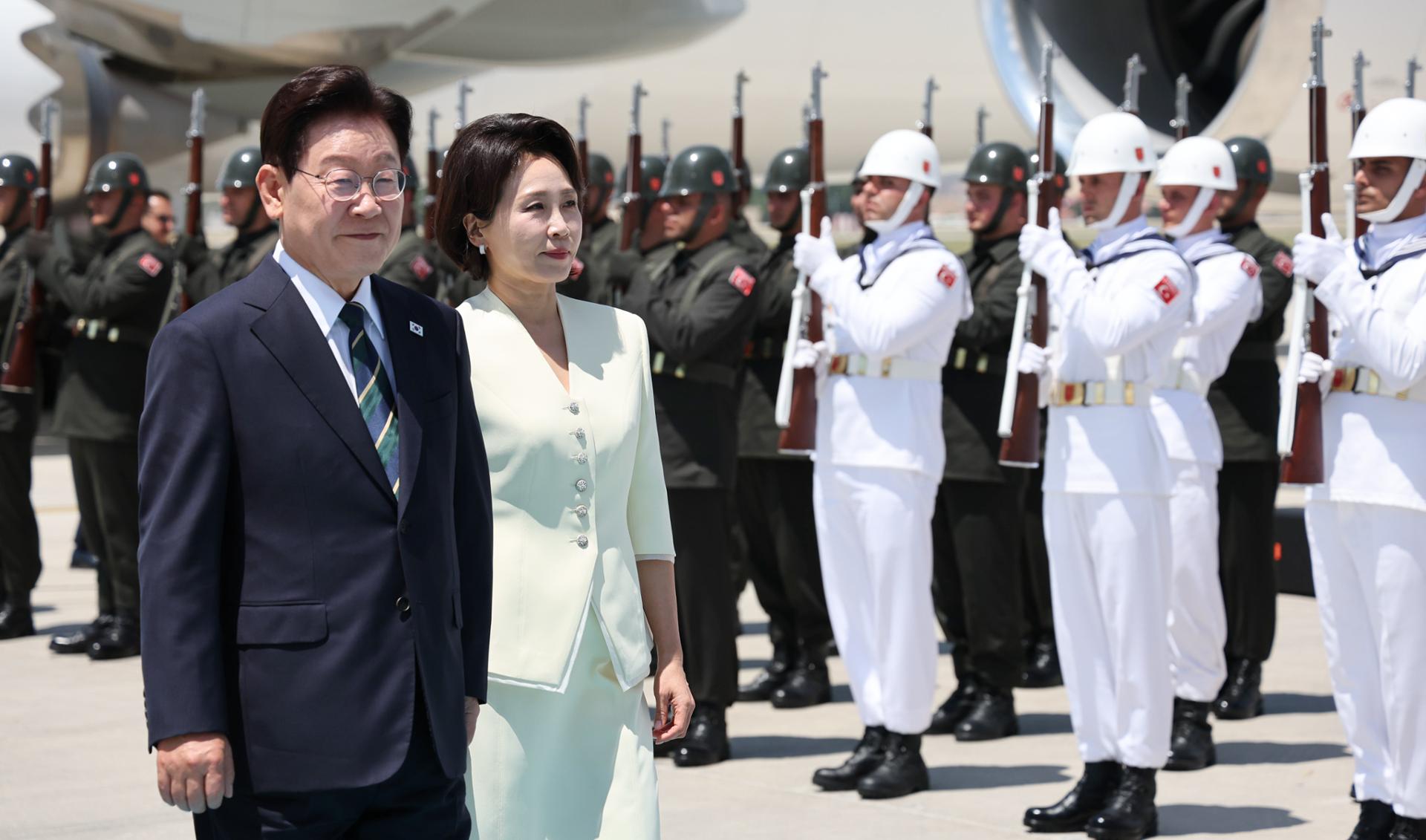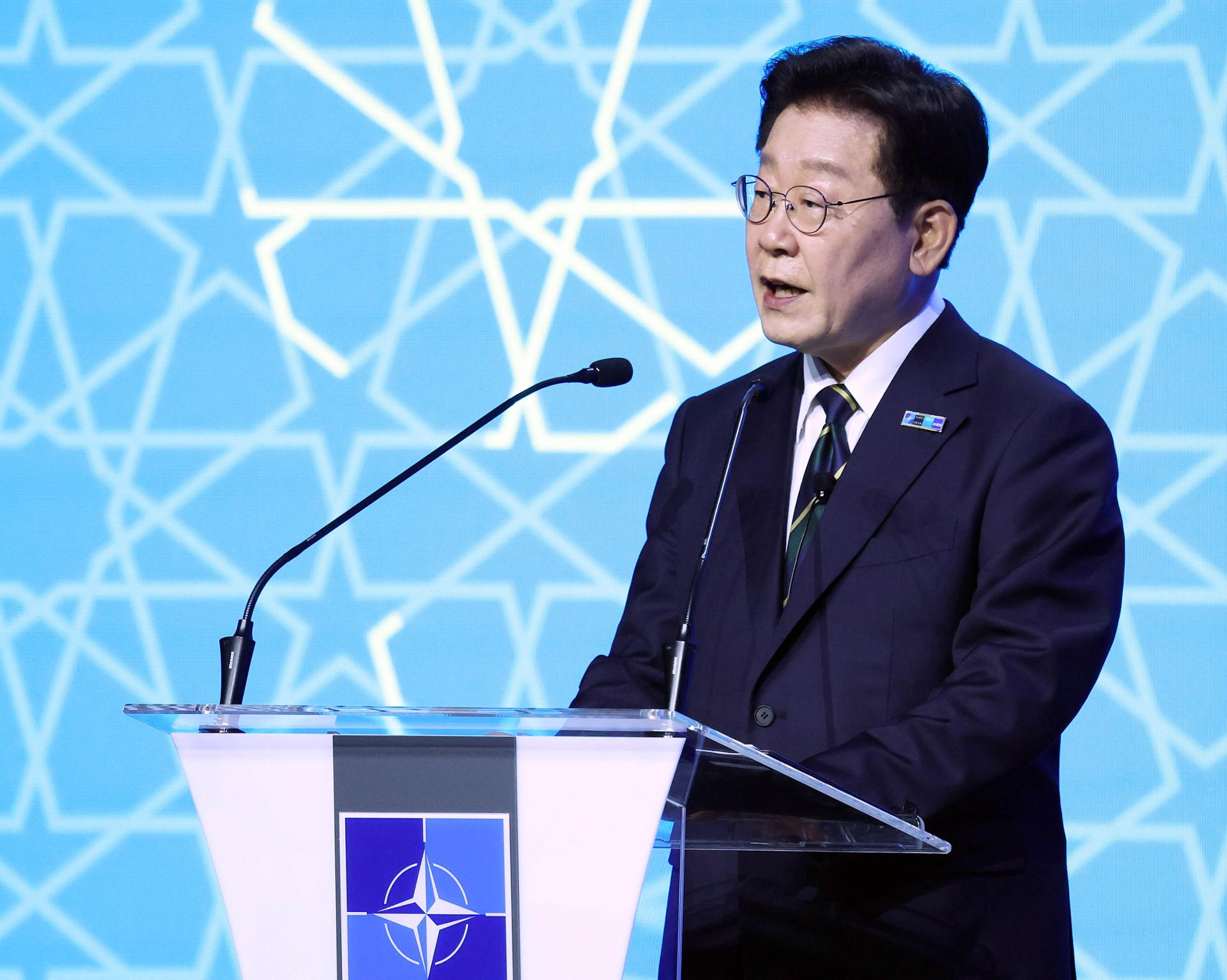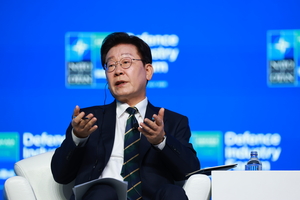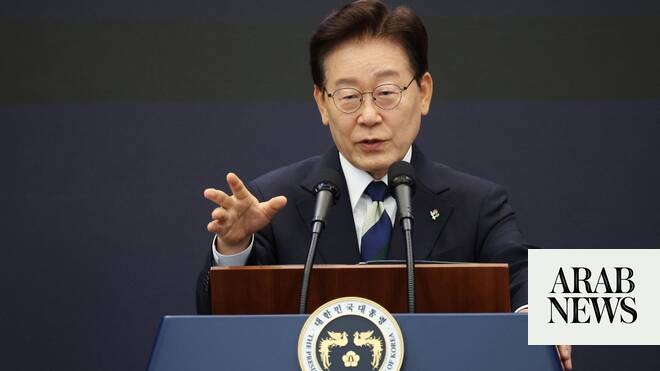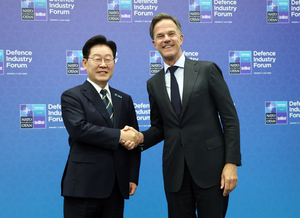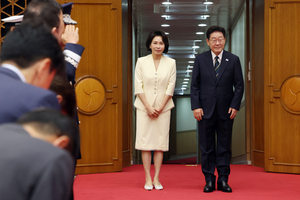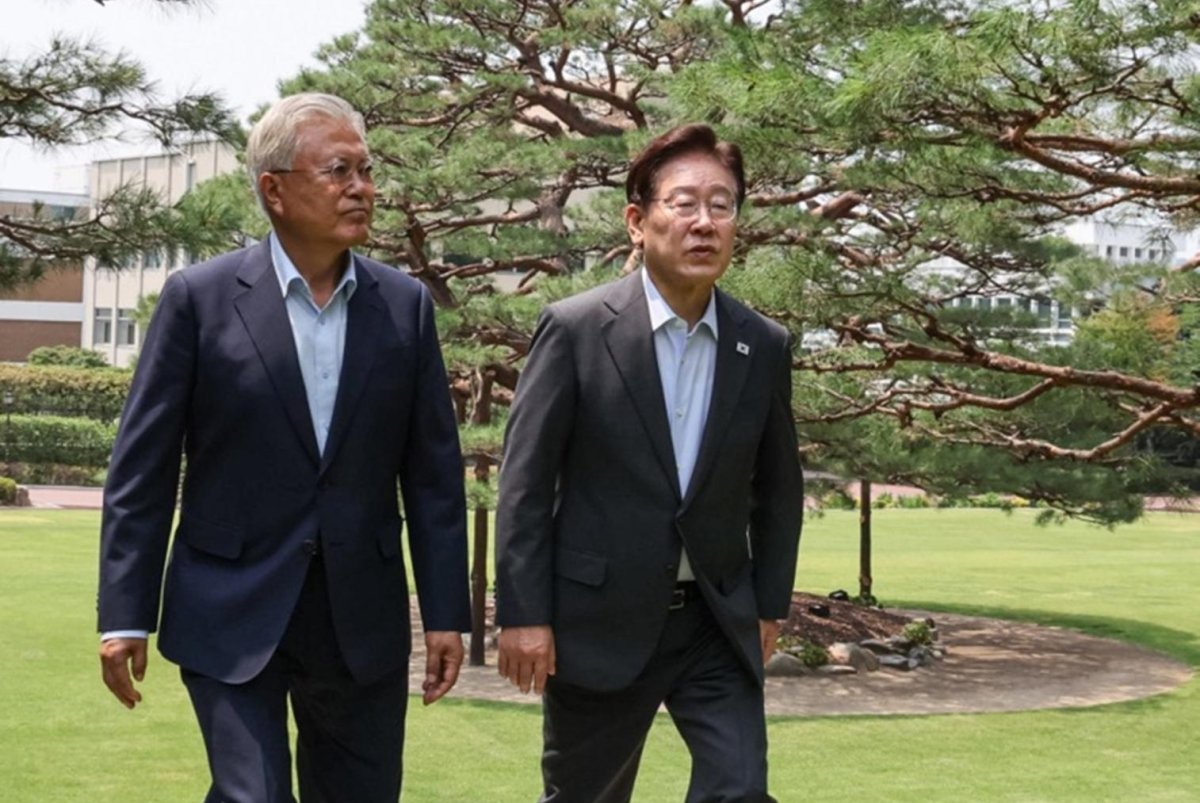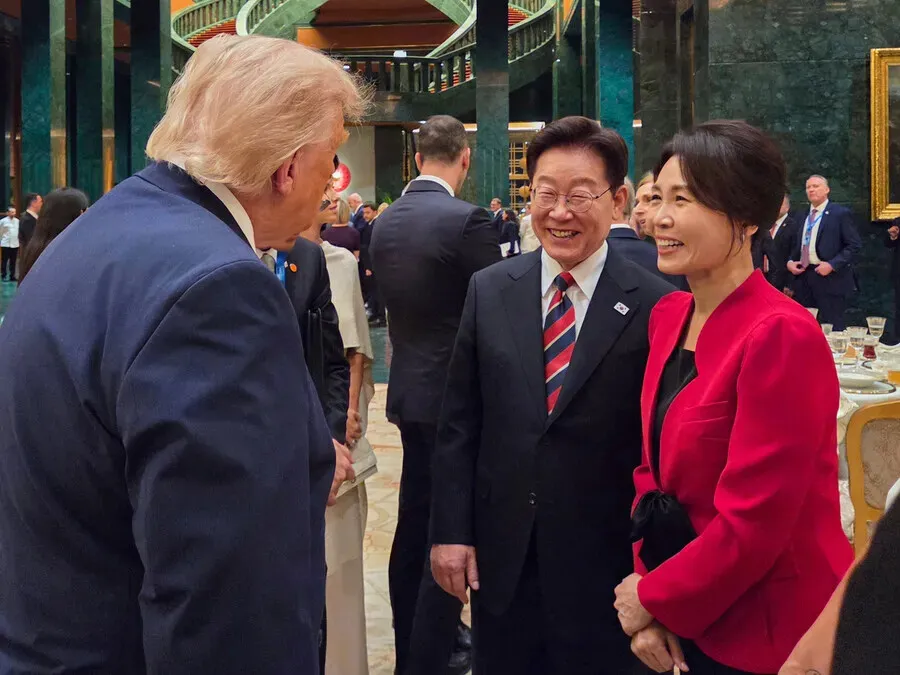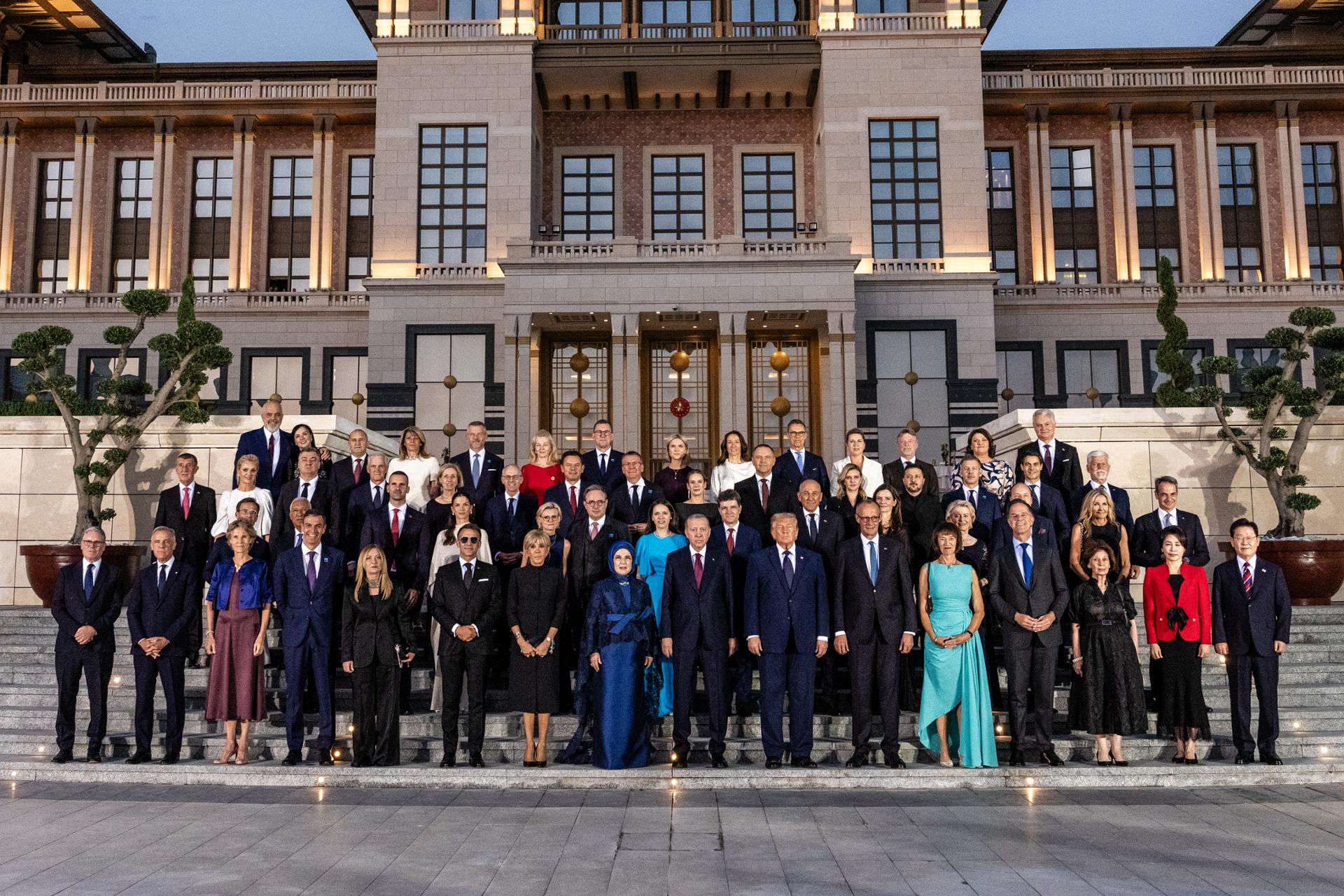
President Lee Jae Myung and first lady Kim Hye-kyung, second right, join other leaders and their spouses for a commemorative photo during an official welcome banquet hosted by Turkish President Recep Tayyip Erdogan, center, and first lady Emine Erdogan at the presidential palace in Ankara, Sunday (local time). Courtesy of NATO President Lee Jae Myung's participation in the NATO Summit Defense Industry Forum in Ankara carries particular significance. Rather than limiting cooperation to conventional arms exports, Lee proposed the "Korea-NATO Defense Industry Partnership 2.0," calling for joint research, production and operation of advanced weapons systems. He highlighted Korea's proven ability to maintain uninterrupted defense supplies while protecting sensitive technologies, arguing that resilient supply chains have become as vital to deterrence as military hardware itself.Even more importantly, Seoul and NATO agreed to launch negotiations on a Basic Procurement Agreement. If concluded, the agreement would establish the institutional foundation for Korean firms to participate in NATO's common procurement market, estimated to be worth around 15 trillion won ($9.95 billion) annually. Korea's participation in multinational NATO projects has also expanded beyond ammunition cooperation to include defense materials and space-related initiatives, while discussions on standardizing military specifications promise to improve interoperability and facilitate greater access to European defense markets.These developments should be welcomed. NATO members collectively account for nearly half of global defense spending and represent one of the world's largest and most technologically advanced defense markets. As Europe accelerates efforts to strengthen its own defense industrial base through joint procurement programs and deeper intra-alliance cooperation, countries outside the alliance inevitably face higher barriers to entry. Closer institutional cooperation with NATO is therefore not a matter of political symbolism but of economic necessity and long-term strategic planning.Hanwha Ocean's unsuccessful bid to participate in Canada's submarine project shows an enduring reality of the global defense market: Strategic alliances often outweigh technological excellence. Canada's selection of Germany's TKMS as the preferred bidder underlines the platform's full interoperability with NATO and the broader strategic benefits of integrating Canadian industries into the European defense supply chain. For Korea, whose defense products have earned international recognition for quality, reliability and rapid delivery, the lesson is unmistakable. In today's increasingly fragmented security environment, competitiveness depends not only on superior technology but also on trusted strategic partnerships.The Canada case demonstrates that simply offering world-class products is no longer sufficient. Korean defense companies must deepen partnerships through joint development, local production, technology collaboration and participation in multinational supply chains. Standardizing systems with NATO members will also enhance interoperability, making Korean defense equipment more attractive to alliance partners while strengthening the competitiveness of domestic industries in future procurement programs.At the same time, expanding defense ties with NATO should not be interpreted as abandoning Korea's balanced diplomacy. Seoul has consistently maintained that cooperation with NATO does not constitute membership in the alliance but rather reflects practical collaboration with like-minded partners. This distinction is important.Russia remains an influential regional power whose relationship with Korea extends beyond security issues to trade, diplomacy and the broader stability of Northeast Asia. Although bilateral ties have deteriorated considerably in recent years amid the war in Ukraine, unnecessarily framing Korea's closer engagement with NATO as directed against Moscow would only narrow Seoul's diplomatic options. Strategic partnerships need not become zero-sum choices.Korea should therefore continue to emphasize that its cooperation with NATO is intended to enhance defense industrial innovation, technological collaboration and supply chain resilience rather than military confrontation with any specific country. Clear communication, diplomatic transparency and sustained dialogue with all major stakeholders — including Russia where possible — will help minimize misunderstandings while preserving room for future engagement.This nuanced approach is consistent with Korea's broader national interests. As a middle power dependent on open trade and stable international relations, Korea benefits from expanding partnerships without becoming trapped in rigid geopolitical blocs. It can strengthen cooperation with NATO members while continuing to pursue pragmatic diplomacy with neighboring powers whenever opportunities arise.The world is entering an era in which advanced technologies, industrial capacity and trusted partnerships increasingly determine national security. Korea has already demonstrated that its defense industry belongs among the world's leading exporters. The next stage is to translate its technological excellence into enduring strategic networks.Closer cooperation with NATO should serve precisely that purpose. By institutionalizing defense partnerships, participating in joint innovation, harmonizing standards and cultivating diversified diplomatic channels, Korea can strengthen both its security and its global competitiveness. Pursued with confidence and careful diplomatic balance, expanded ties with NATO will become not a source of unnecessary confrontation but a cornerstone of Korea's long-term strategic future.
[ED] Expanded ties with NATO require strategic balance - The Korea Times
President Lee Jae Myung's participation in the NATO Summit Defense Industry Forum in Ankara carries particular significance. Rather than limiting c...
756 words~3 min read