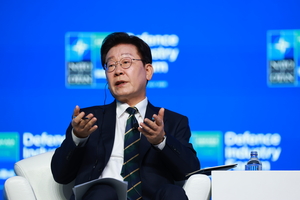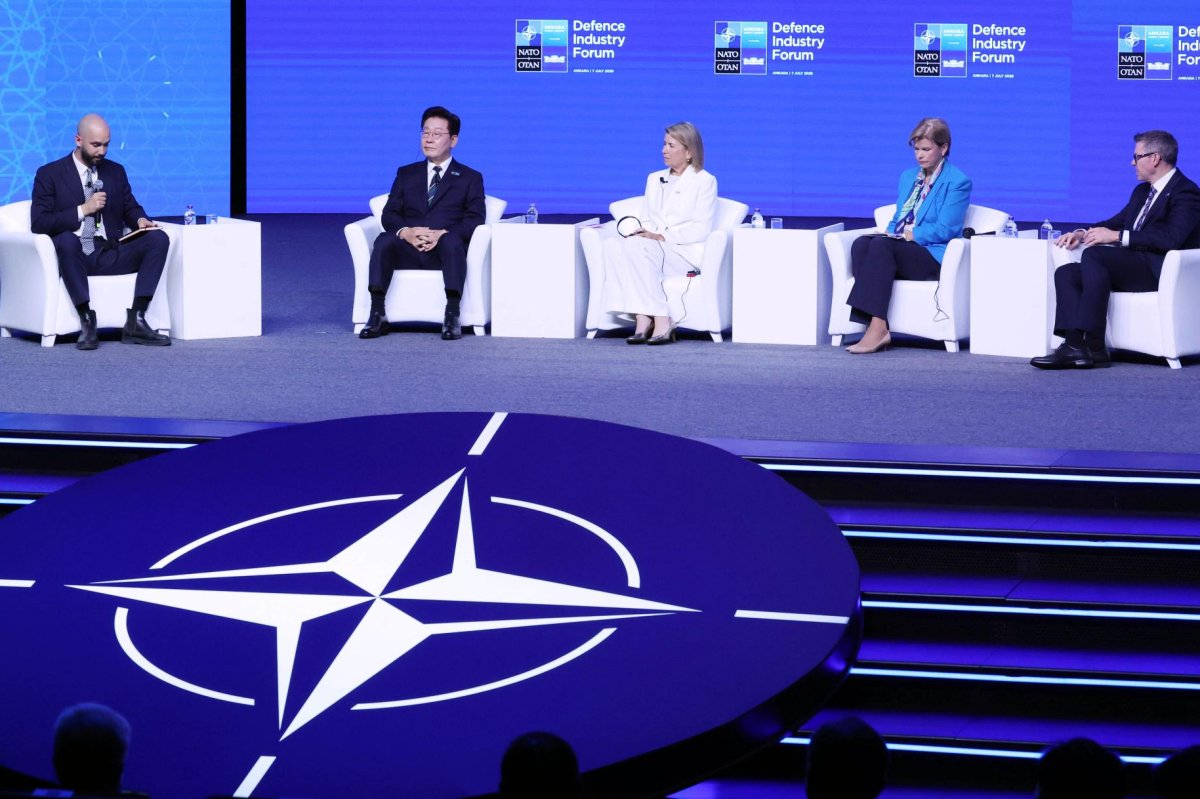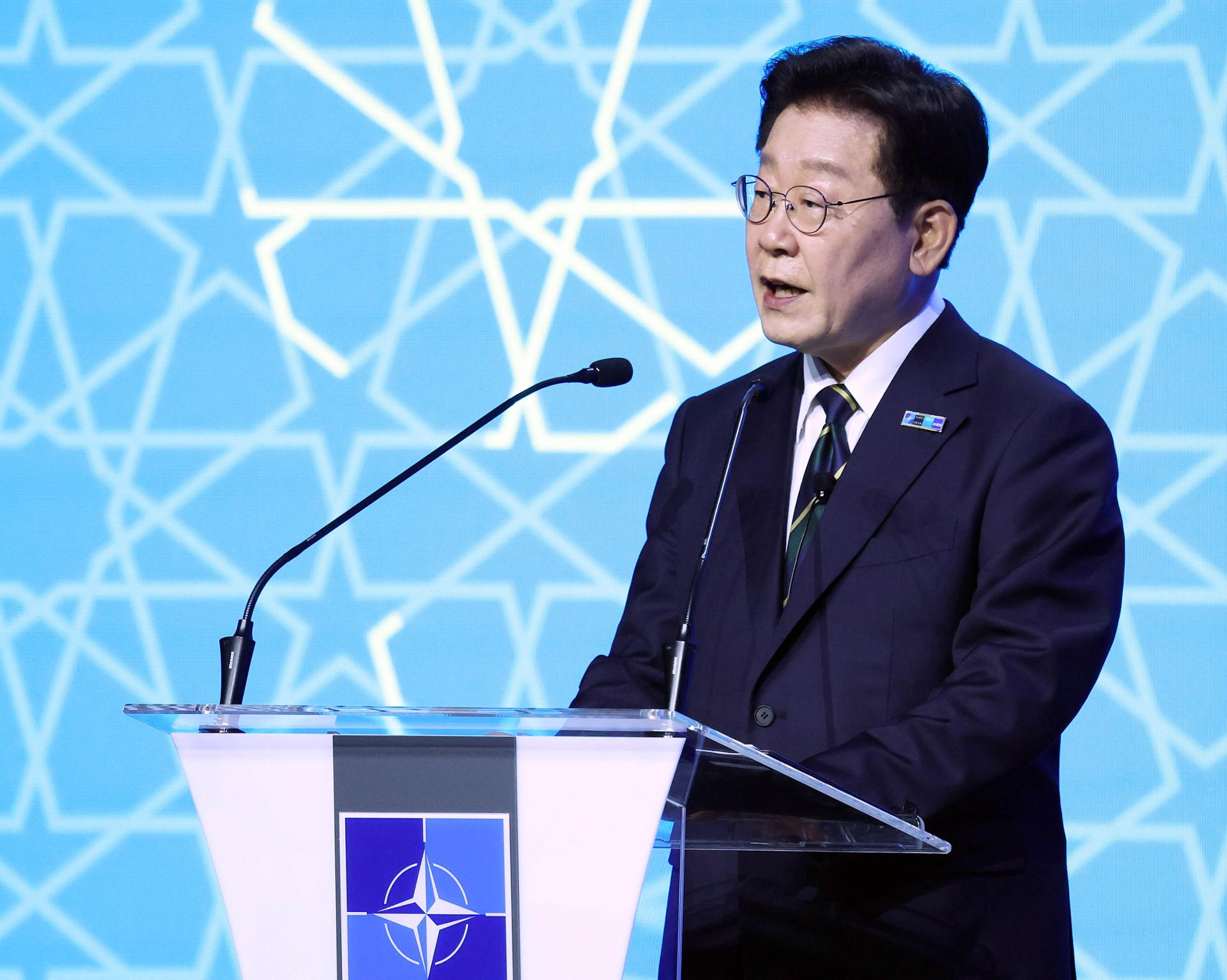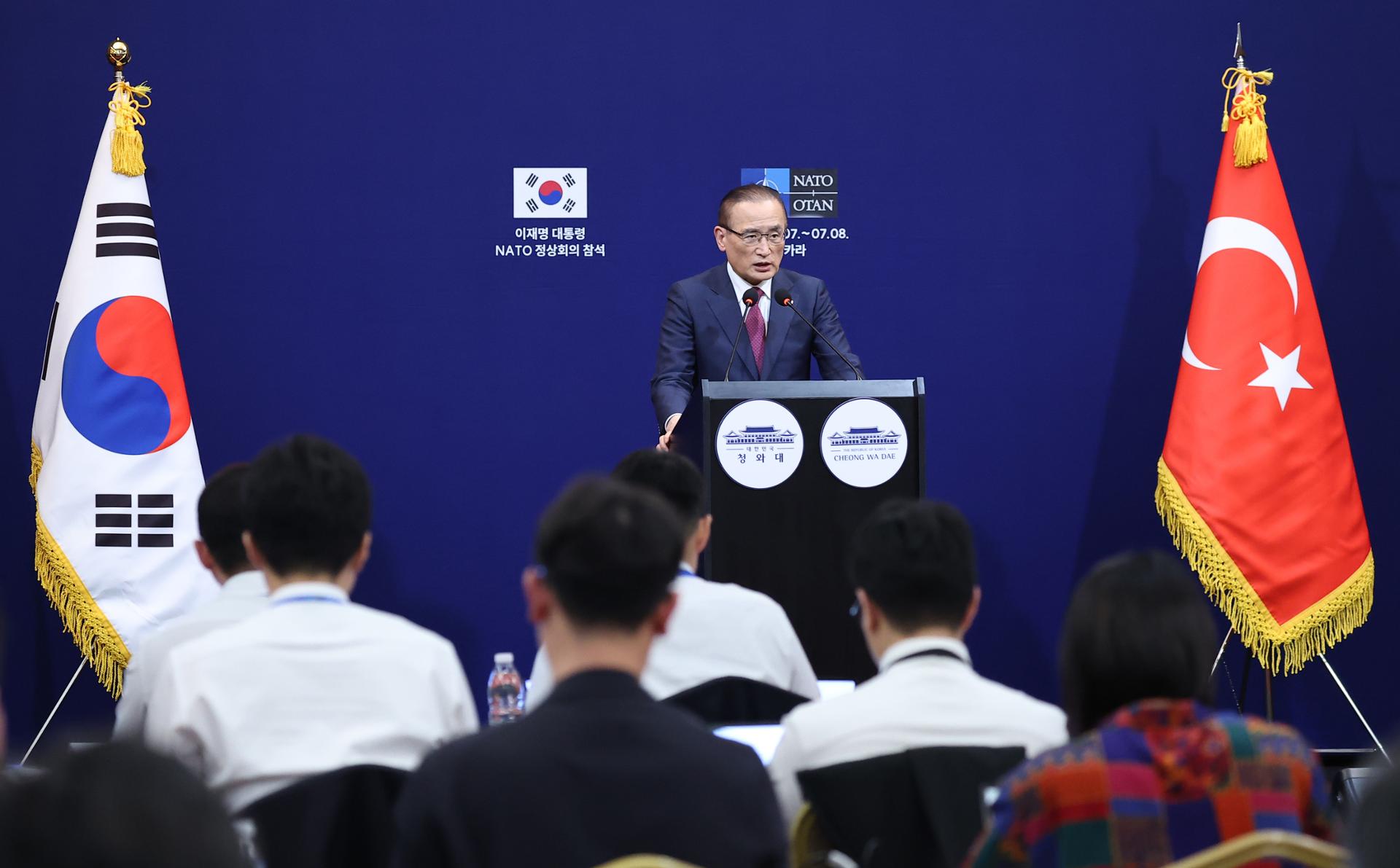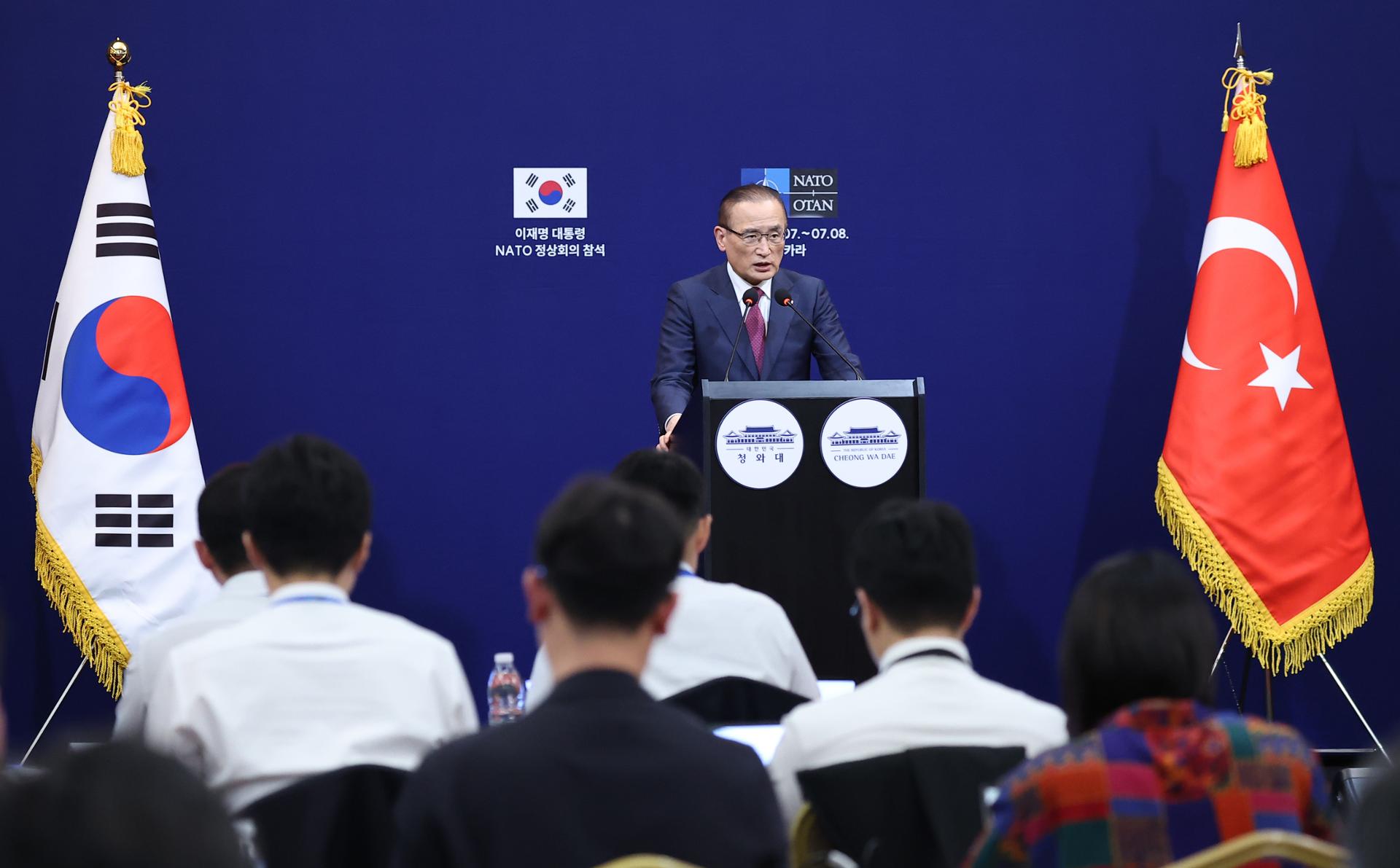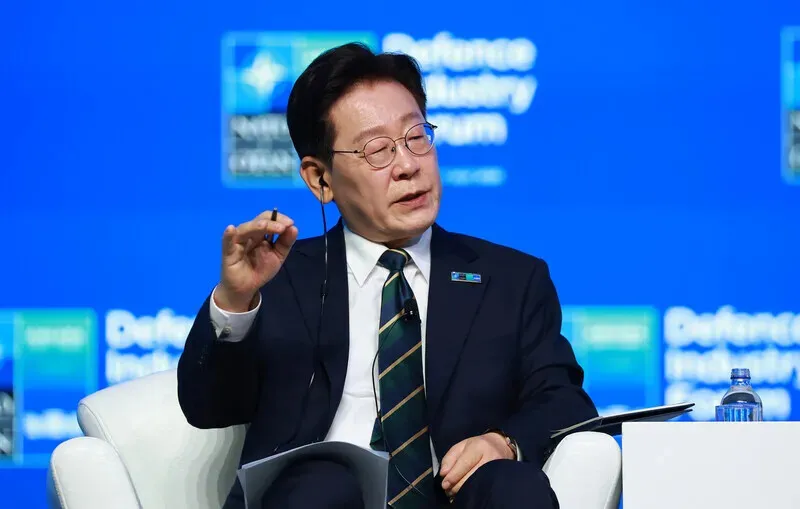
President Lee Jae Myung of South Korea answers questions during a panel at the NATO Defense Industry Forum in Ankara, Turkey, on July 7, 2026. (Yonhap)
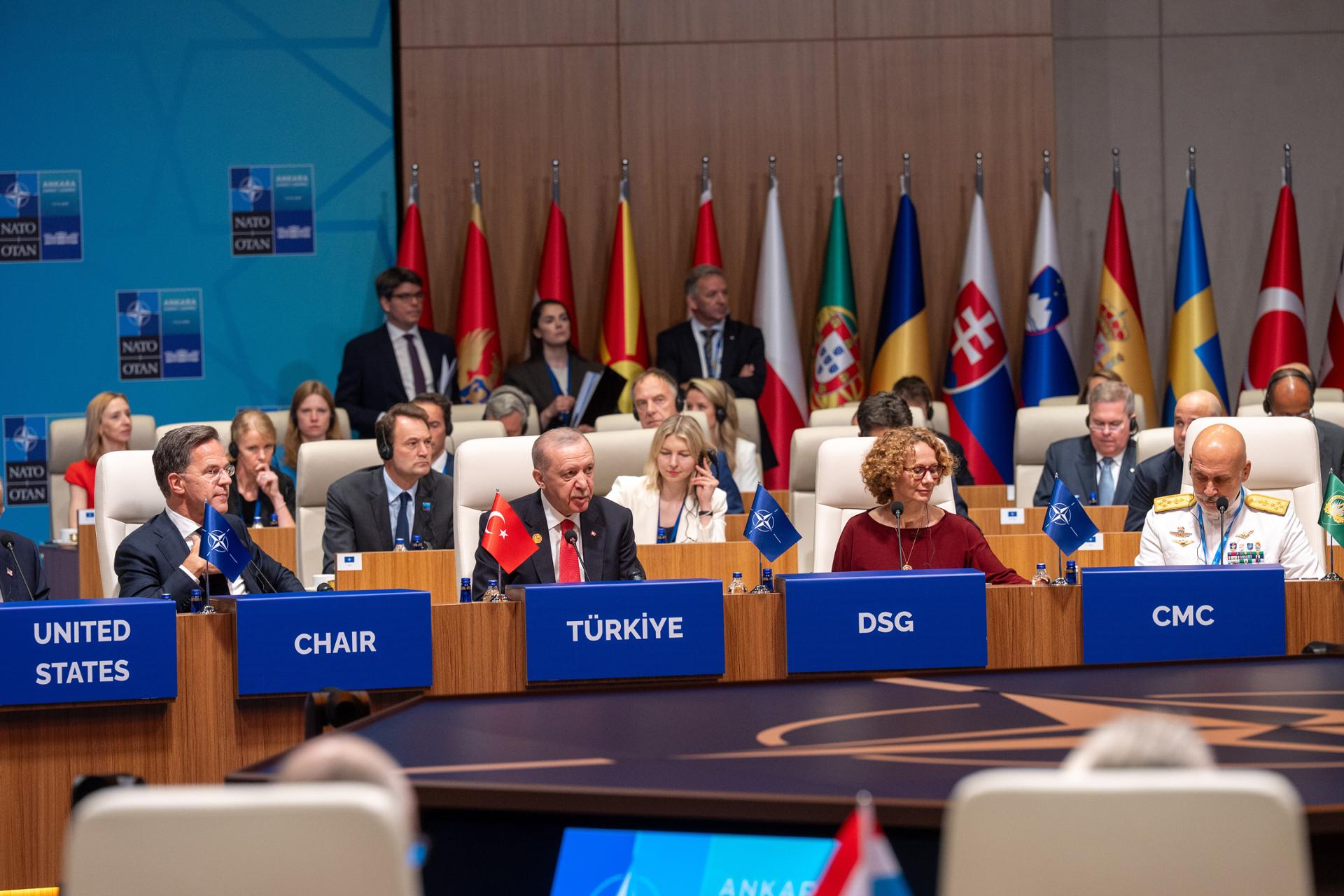
While attending a NATO summit on Tuesday, President Lee Jae Myung suggested upgrading South Korea’s relationship with the alliance to that of a “defense industry partnership 2.0,” with both sides taking part in developing, producing and operating advanced weapons.In effect, the head of state himself declared a clear intention of using the defense industry as a framework for boosting military cooperation with NATO.But for South Korea, peace and stability on the Korean Peninsula are of greater importance than diplomacy based on the manufacturing and sale of more weapons to European countries. Lee would do well to more clearly explain to the Korean public whether he has fully considered the geopolitical risks his proposal could entail for the peninsula.The Blue House explained that while attending a NATO Summit Defense Industry Forum in Ankara on Tuesday, Lee proposed a “partnership 2.0” framework that would “go beyond mere weapon transactions to increase the level of cooperation through joint research, joint production and joint operation.”That would transform South Korea’s relationship with NATO from its current approach of transactions involving all-purpose weapons such as tanks and self-propelled artillery into a deeper strategic relationship of jointly producing and using advanced weapons such as submersibles, anti-aircraft missiles and fighter aircraft. In effect, it would turn that relationship into something nearly on par with an alliance.Apart from any questions of whether NATO would agree to this, the decision carries unavoidable side effects.Shortly after the outbreak of the war in Ukraine, NATO declared in June 2022 that Russia was the “most significant and direct threat” to Allies’ security.This is a situation where a stronger relationship with NATO is very likely to mean an antagonistic one with Russia. But South Korea needs amicable communication with Russia to resolve the North Korean nuclear issue.Indeed, a look back at history shows Russia to have always had a decisive impact on the Korean Peninsula’s fate. We see examples of this in the peninsula’s division, the Korean War, and the end of the Cold War. North Korea’s treatment as a nuclear state only really began after Pyongyang and Moscow restored their alliance in June 2024.Responding to these concerns, Blue House National Security Office chief Wi Sung-lac said Wednesday that Seoul “does not expect relationships with China and Russia to change significantly.”The announcement that Lee would be attending the NATO summit came on July 3. Many saw it as unexpected, given that it came at a time when the leaders of other members of the Indo-Pacific Four — including Japan — had all declined to attend.This may have been around the same time that the Blue House received word that Canada, which is pursuing its roughly US$39.1 billion patrol submarine procurement project, was leaning toward a provider from Germany — a fellow NATO member — rather than a South Korean one.While Seoul’s concerns are understandable, weapon sales are a highly significant political act that can make the difference between a friend and an enemy. Approaching things solely in terms of economics could end up backfiring enormously.Please direct questions or comments to [english@hani.co.kr]