Ji Da-gyum
For over a decade, I’ve navigated the complexities of North Korean affairs, security, and foreign policy from both Seoul and Washington, D.C. As the National Desk Political Team Lead, I track the pulse of geopolitics, closely following developments from the Unification Ministry and the Foreign Ministry. My mornings start with Rodong Sinmun—North Korea’s state mouthpiece—before diving into the day’s headlines from Seoul and Washington.
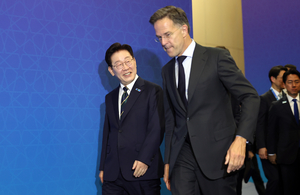
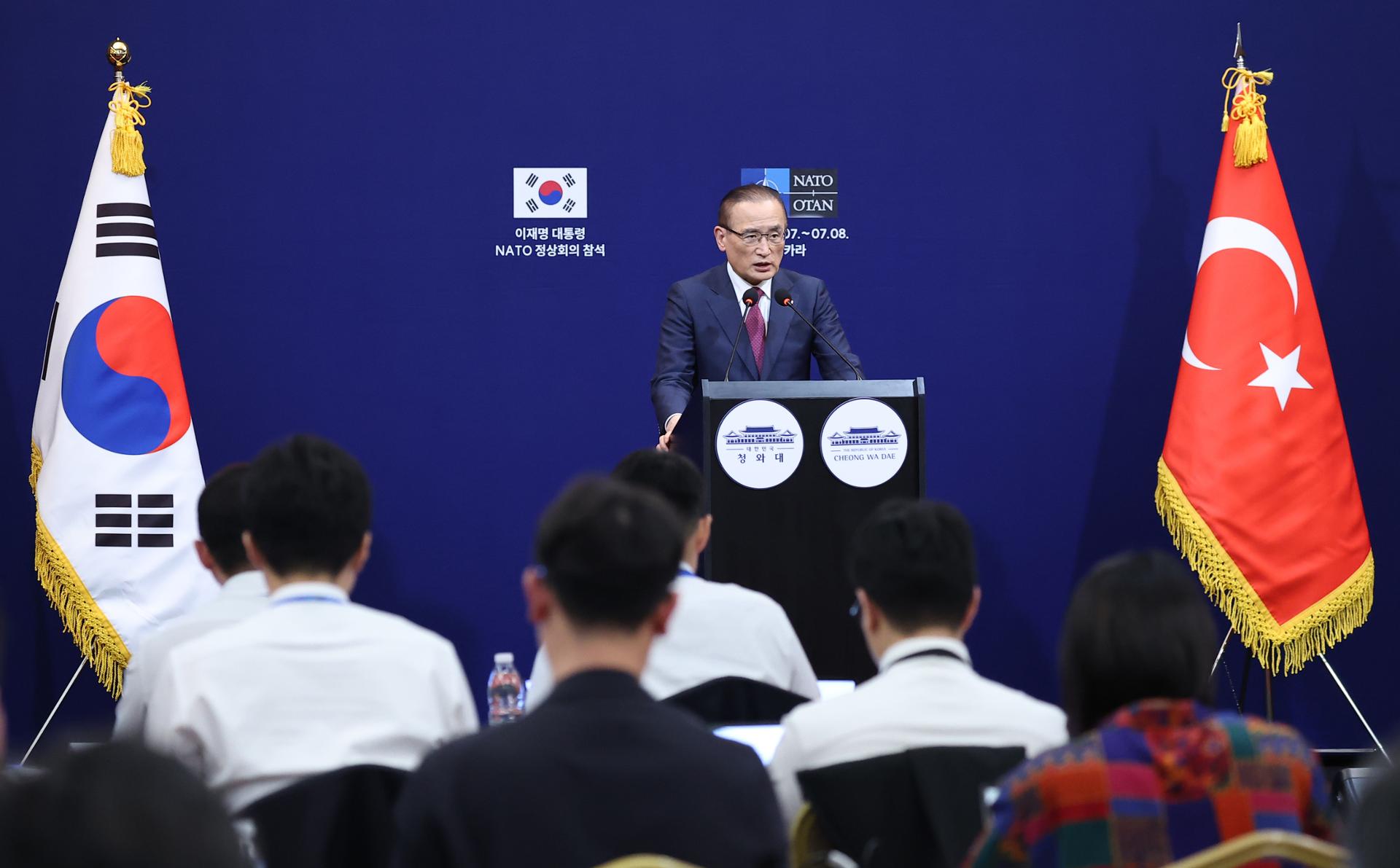
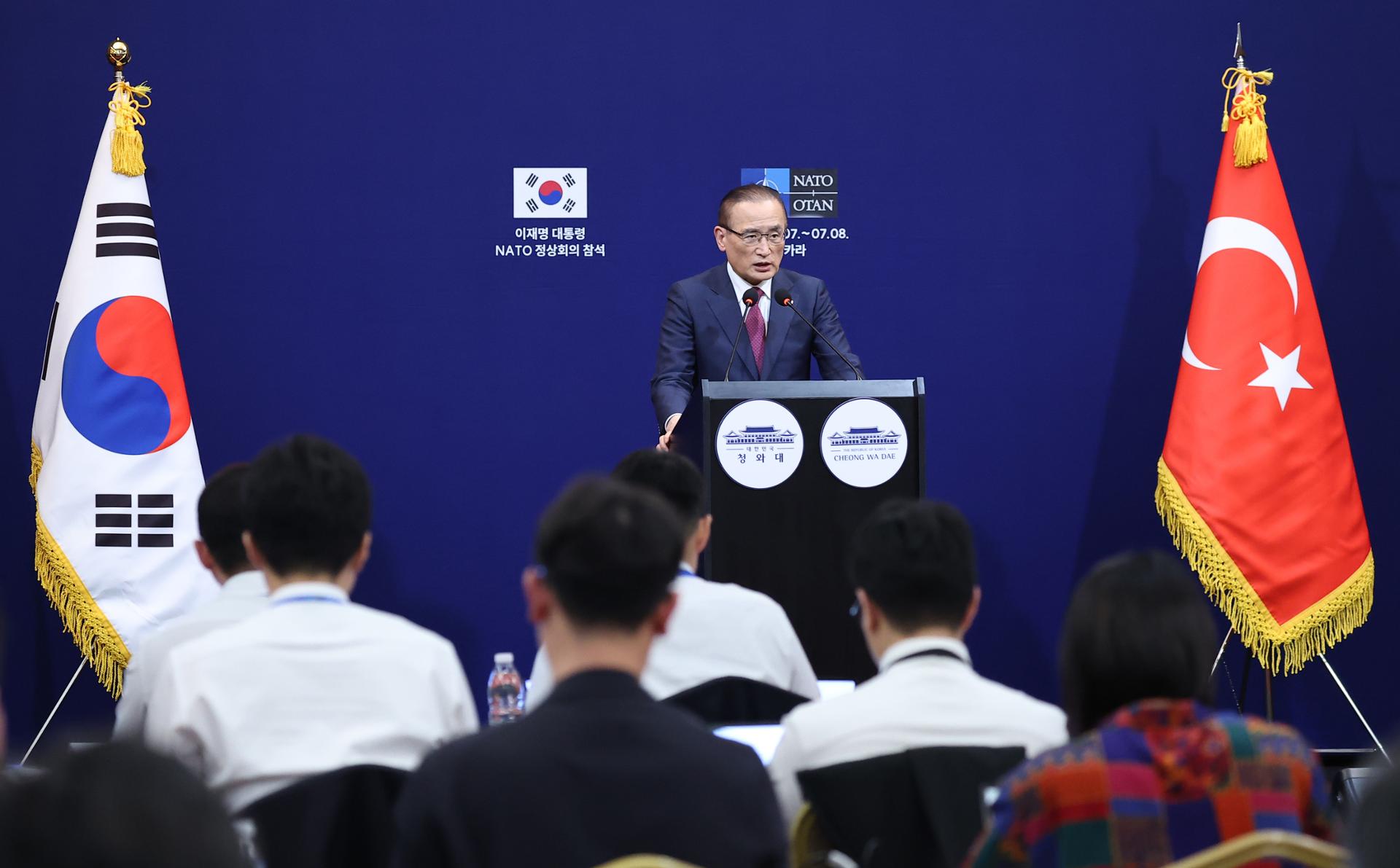
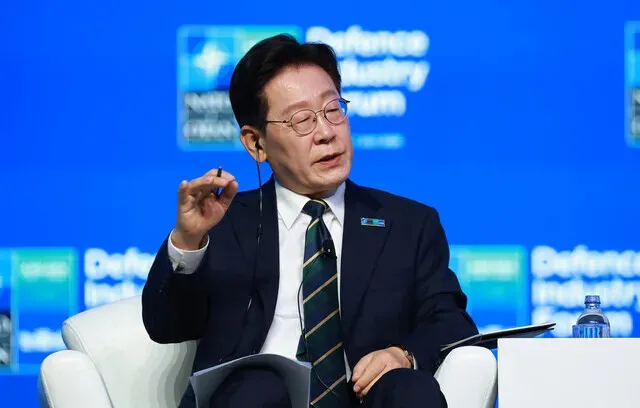
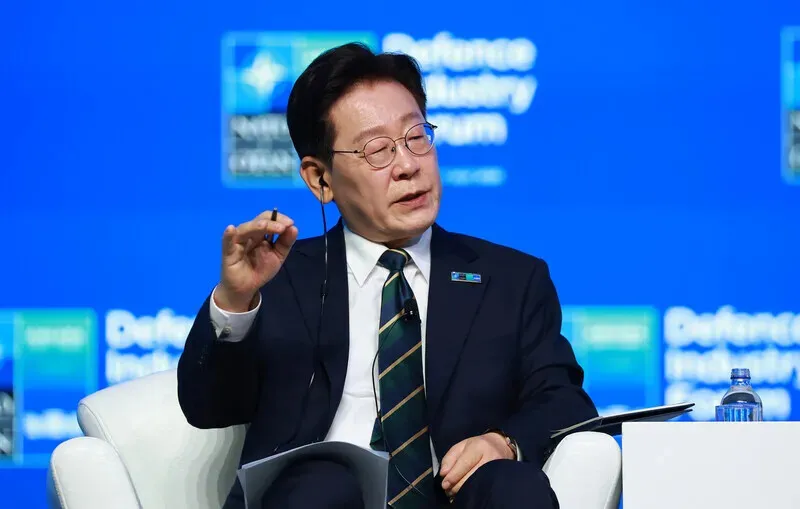
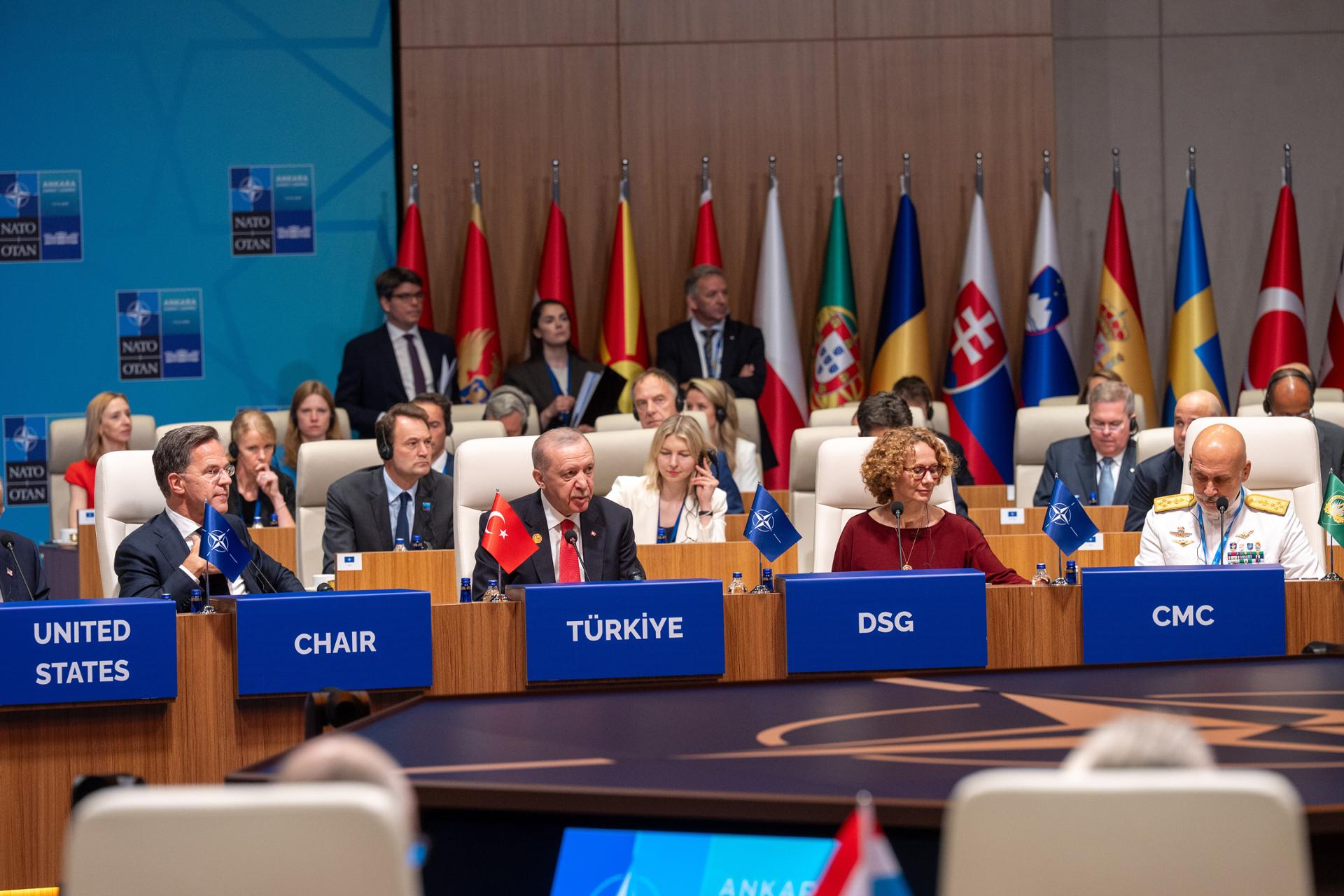
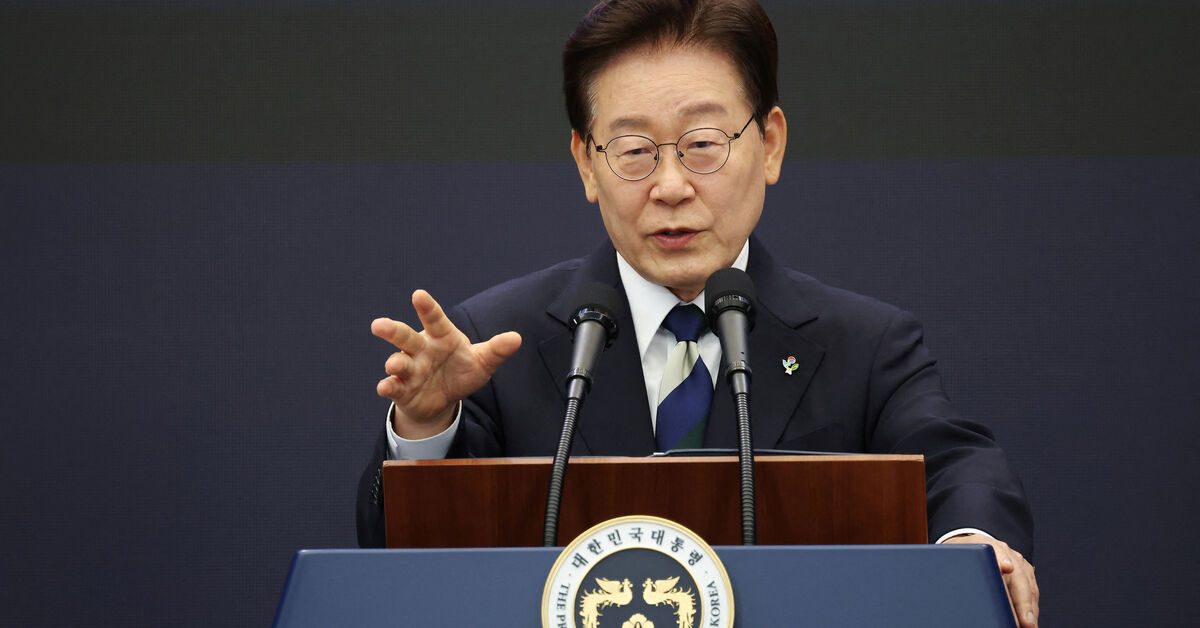
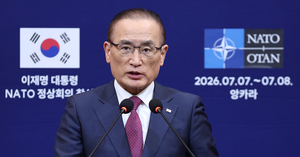
At NATO summit, Korean gov.t pledges $100 million for Ukraine while maintaining no-lethal-arms policy National Security Adviser Wi Sung-lac briefs South Korean reporters on President Lee Jae Myung’s NATO summit schedule at the Korean press center in Ankara, Turkey on Tuesday. (Yohhap) ANKARA, Turkey — South Korea opened a path into NATO’s joint defense procurement market after Seoul and the alliance agreed Tuesday to begin negotiations on a procurement framework agreement, Cheong Wa Dae said.National Security Adviser Wi Sung-lac said Seoul and NATO formalized the launch of negotiations following President Lee Jae Myung’s meeting with NATO Secretary General Mark Rutte on the sidelines of the NATO summit in Ankara.Wi said the agreement would help Seoul “secure a foothold for entering the world’s largest NATO defense market and building a robust defense supply chain with NATO.”The procurement framework agreement is designed to comprehensively set out the legal and administrative procedures governing logistics and defense industry cooperation, as well as procurement contracts, between NATO and its partner countries.“Once the agreement is concluded, it will provide the institutional basis for Korean companies to participate in NATO’s joint procurement market, which is estimated at 15 trillion won ($9.9 billion) annually,” Wi added.A senior Cheong Wa Dae official further explained that, once in place, the agreement would allow South Korea to “gain access to a market where joint procurement is conducted with all NATO member states.”“That is why the agreement is intended to lay the institutional foundation needed for cooperation in procurement and logistics support,” the official said, speaking on condition of anonymity. “For us, it can be described as a useful and necessary agreement.”The official said Korean companies have so far pursued defense cooperation mainly through bilateral channels with individual countries.“But if a procurement agreement is established with NATO as a whole, it would expand the channels through which Korean firms can jointly procure with NATO member states and participate in broader defense industry cooperation frameworks,” the official said.“We are seeking to move as quickly as possible,” the official added, while noting that Seoul has not set a specific timeline for concluding the procurement framework agreement.Wi futher expaiended South Korea would join NATO’s Defense Critical Raw Materials Initiative as an observer under the alliance’s multinational cooperation programs, through which member states jointly develop military equipment, materiel and capabilities.The initiative brings together 12 NATO allies to strengthen the resilience of defense supply chains by coordinating the acquisition, storage, transportation and management of critical raw materials, components and recycled products essential to defense production.The move expands Seoul’s participation beyond the ammunition and space-related multinational projects in which it already holds observer status.“South Korea’s participation in NATO’s multinational cooperation projects, launched at last year’s Hague summit, has expanded into a new field within a year,” Wi said. “It demonstrates that Korea-NATO defense cooperation is steadily taking root and broadening rather than remaining a one-off initiative.”Expanding NATO innovation tiesWi described South Korea's participation in NATO's innovation ecosystem as one of the key outcomes of Lee's attendance at the summit, saying it had laid the groundwork for strengthening the country's capabilities for future warfare.“We have established a foundation for strengthening our capabilities to respond to future warfare through participation in NATO’s innovation ecosystem,” Wi said.Drawing on operational experience from the war in Ukraine, NATO has emerged as a key hub for testing and integrating advanced technologies such as drones and artificial intelligence, according to Wi.“Such cooperation with NATO is the most reliable channel through which our military and companies can gain access to proven operational experience and technologies and strengthen their capabilities to respond to future warfare,” he said.As part of that effort, Seoul is seeking opportunities for Korean firms to participate in NATO Innovation Ranges, which evaluate and validate civilian technologies for military applications.“Through this process, our companies will gain firsthand experience of how advanced technologies are actually employed on the battlefield, and technologies validated at NATO’s innovation ranges will be able to seek participation in NATO procurement and joint development programs,” Wi said.South Korea is also pursuing greater involvement in NATO’s space cooperation network, known as SpaceNet, which links space-related entities and companies across allied countries.The initiative is expected to expand opportunities for Korean firms to engage in information-sharing, technological cooperation and NATO-led space programs, according to Wi.Ukraine aid without lethal armsWi further said South Korea had pledged $100 million in comprehensive assistance to Ukraine, “demonstrating South Korea’s commitment to international peace and security through concrete action.”Lee described the package as an expansion of Seoul’s ongoing support for Ukraine, which has included humanitarian assistance and other forms of aid since the outbreak of the war.“South Korea will continue to work together with the international community as a responsible global actor so that this devastating war can end as soon as possible and peace can be restored,” Wi said.Asked whether South Korea would consider joining NATO’s Prioritized Ukraine Requirements List or provide lethal weapons indirectly, the unnamed Cheong Wa Dae official said Seoul’s position on military assistance to Ukraine remains unchanged.“Our position on support for Ukraine remains unchanged. We do not provide lethal weapons, and we are preparing assistance in a range of other areas,” the official said.“The specific components of the package are still being reviewed, but South Korea will continue to provide assistance in areas other than lethal weapons.”Reflecting on Lee’s participation in the summit, Wi said one of the clearest takeaways was NATO’s evolving perception of South Korea.“NATO allies no longer view South Korea simply as an extra-regional partner,” he said. “They increasingly see South Korea as a trusted partner capable of strengthening both their security and industrial base.”