Story audio is generated using AI
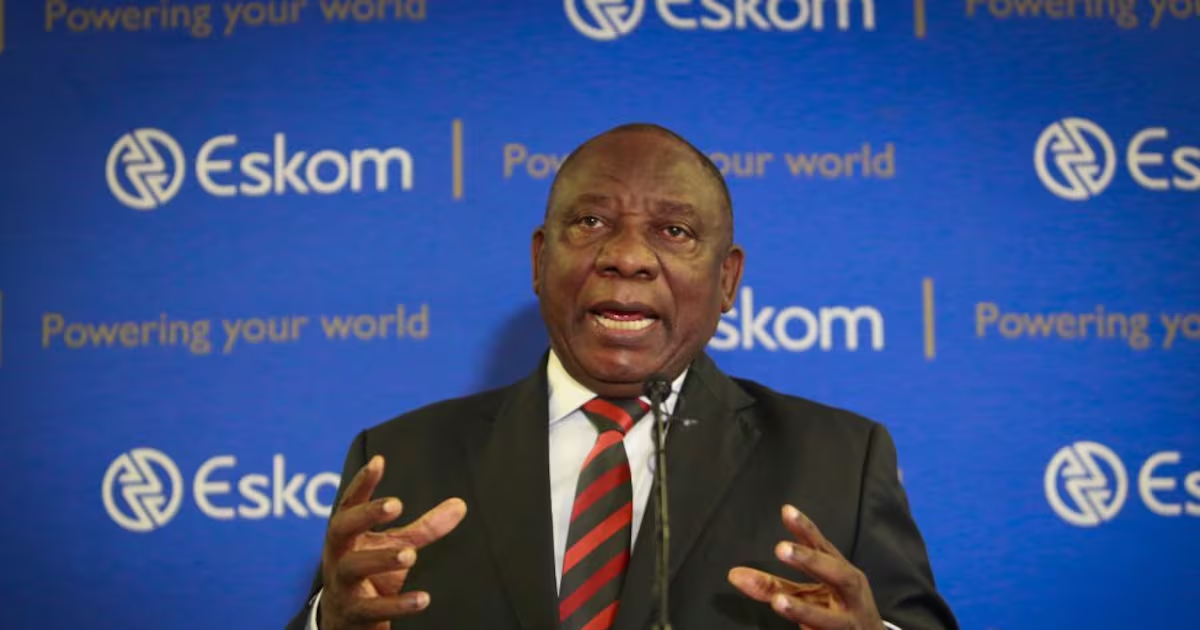
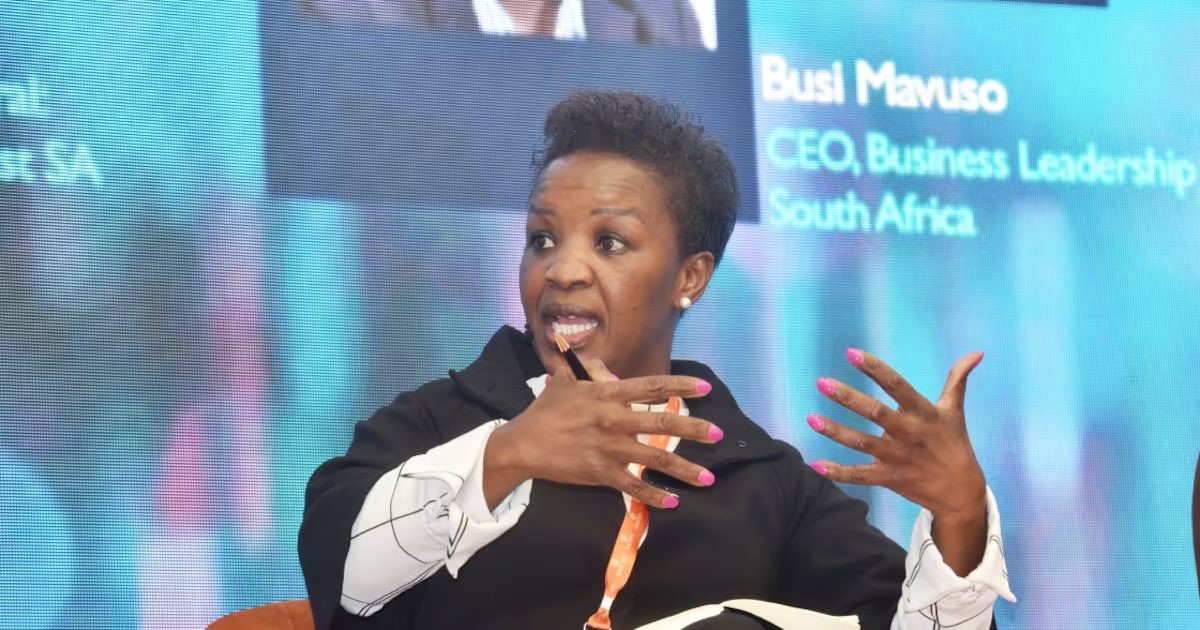
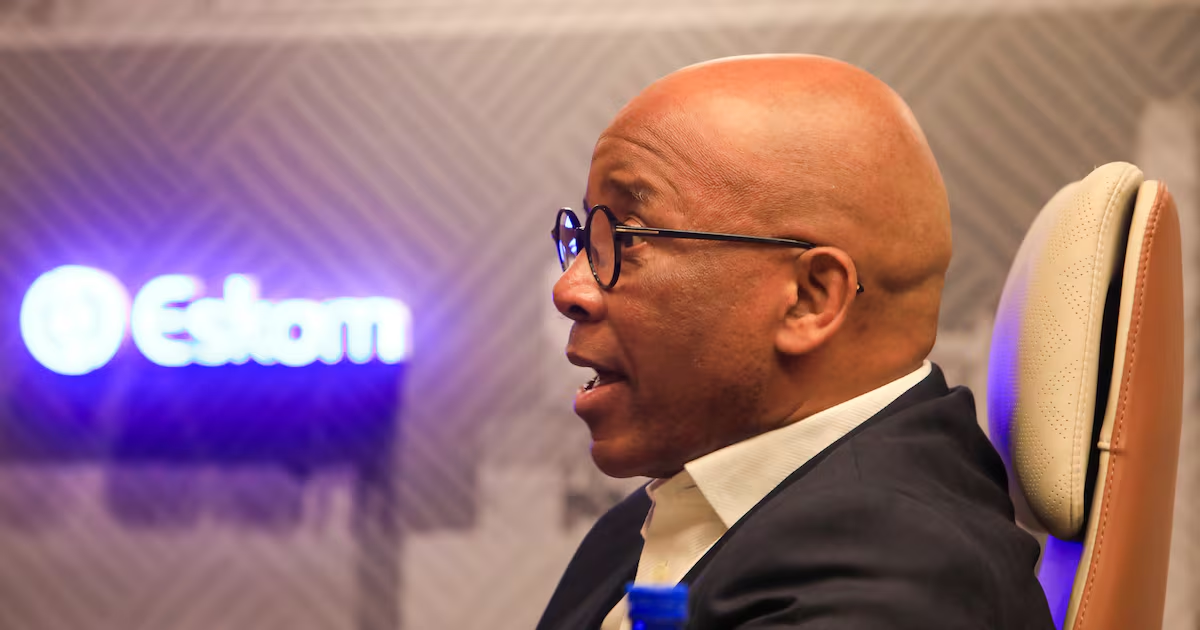
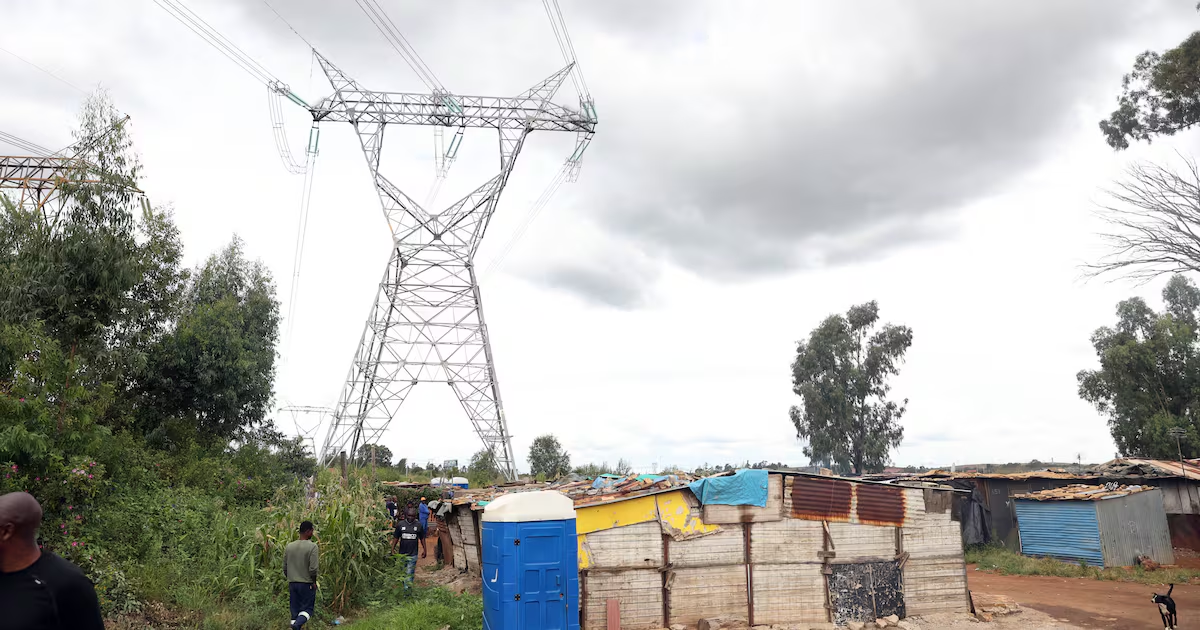
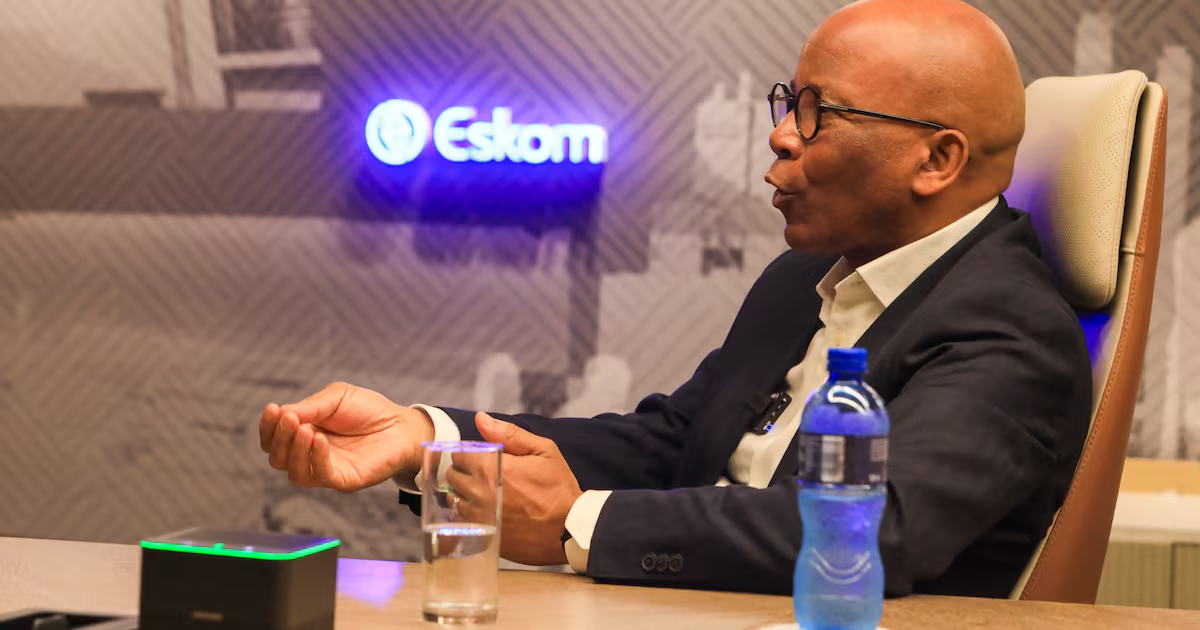
The future of Eskom’s transmission assets has pitted one of the country’s largest business formations against the utility’s top brass as President Cyril Ramaphosa weighs recommendations of the presidential task team he appointed to oversee the process.The task team is said on June 30 2026 to have handed over the report on how Eskom’s break-up should unfold.While the country waits for the president to shed more light on what the future holds for Eskom’s transmission assets, a war of words has broken out between Business Leadership South Africa (BLSA) and Eskom’s chair, Mteto Nyati.BLSA CEO Busisiwe Mavuso used her weekly newsletter to challenge the assertion by Nyati that pressure was being brought to bear on the political class by BLSA and Business Unity South Africa to have the transmission assets leave Eskom’s bosom.Mavuso, in the letter, said Nyati was looking to reinvent the wheel of a decision taken by the president long ago that Eskom’s transmission assets would be housed under an independent entity as part of its historic breakup. “We are not asking for anything beyond what Eskom’s own shareholder has already made clear is public policy. We are asking that Eskom stick with that policy and implement the unbundling without further delay,” Mavuso said.“Business remains committed to Eskom’s success. We have said so consistently, including on the utility’s genuine operational turnaround under CEO Dan Marokane. But that support cannot extend to accepting a rewriting of settled policy, still less a suggestion that our motives require justifying.“Our positions have been published consistently and argued openly. They are available for anyone to scrutinise. And we will continue to advocate for the full liberalisation of the electricity market.”Eskom in June issued a request for proposal looking to hire consultants to assess the funding implications and credit considerations which the move to separate the NTSCA will have on the group — which is expected to shell out more than R300bn in capital expenditure by 2030.The move to do a deep-dive financial impact assessment comes four months after Ramaphosa discarded the utility’s revised unbundling strategy that would have seen it establish a fully independent transmission system operator while retaining transmission assets within the company.The plan, approved by electricity & energy minister Kgosientsho Ramokgopa, failed to find favour with the president after an uproar led by the business community. Instead, the president established a dedicated presidential task team to oversee the process. There are concerns among some in Eskom’s corridors that the establishment of the independent transmission system operator (TSO), which will own the National Transmission Company of South Africa (NTCSA) assets, will undermine the financial viability of Eskom.The NTCSA has a mammoth, capital-intensive task of building 14,000km of new high-voltage transmission lines over the next decade to accommodate new renewable generation and stabilise the national grid — at a cost estimated at R440bn.Eskom, in its market-sounding exercise, said the consultants’ work will focus on supporting Eskom’s treasury department in assessing and managing the funding and credit-related implications arising from the NTCSA transaction.“Eskom is progressing the separation of the NTCSA, which will have an impact on the group’s funding structure, debt profile, and lender arrangements. The transaction requires detailed assessment of funding implications, lender engagement and credit considerations,” the group said in its request for proposal.“The adviser will assist in evaluating funding structures, analysing debt and liquidity impacts, engaging with lenders and other capital providers, assessing credit rating implications and developing appropriate financial models and valuation analyses strictly for the purposes of informing funding decisions, debt capacity and credit risk management.”