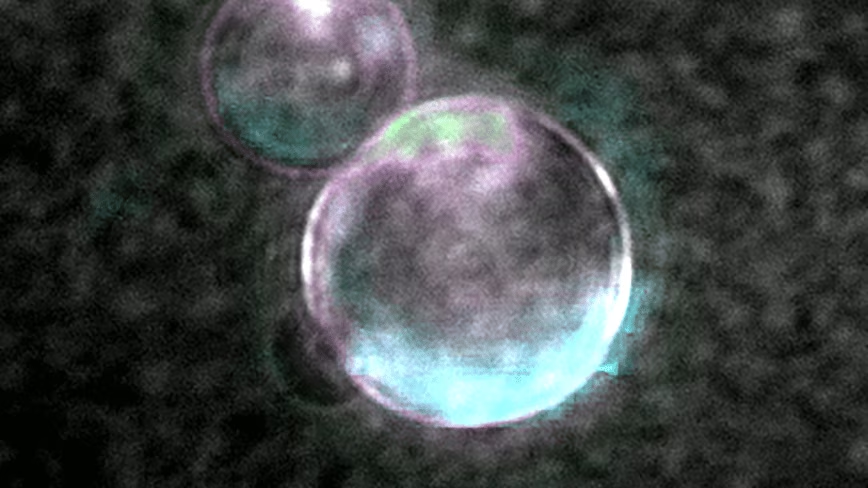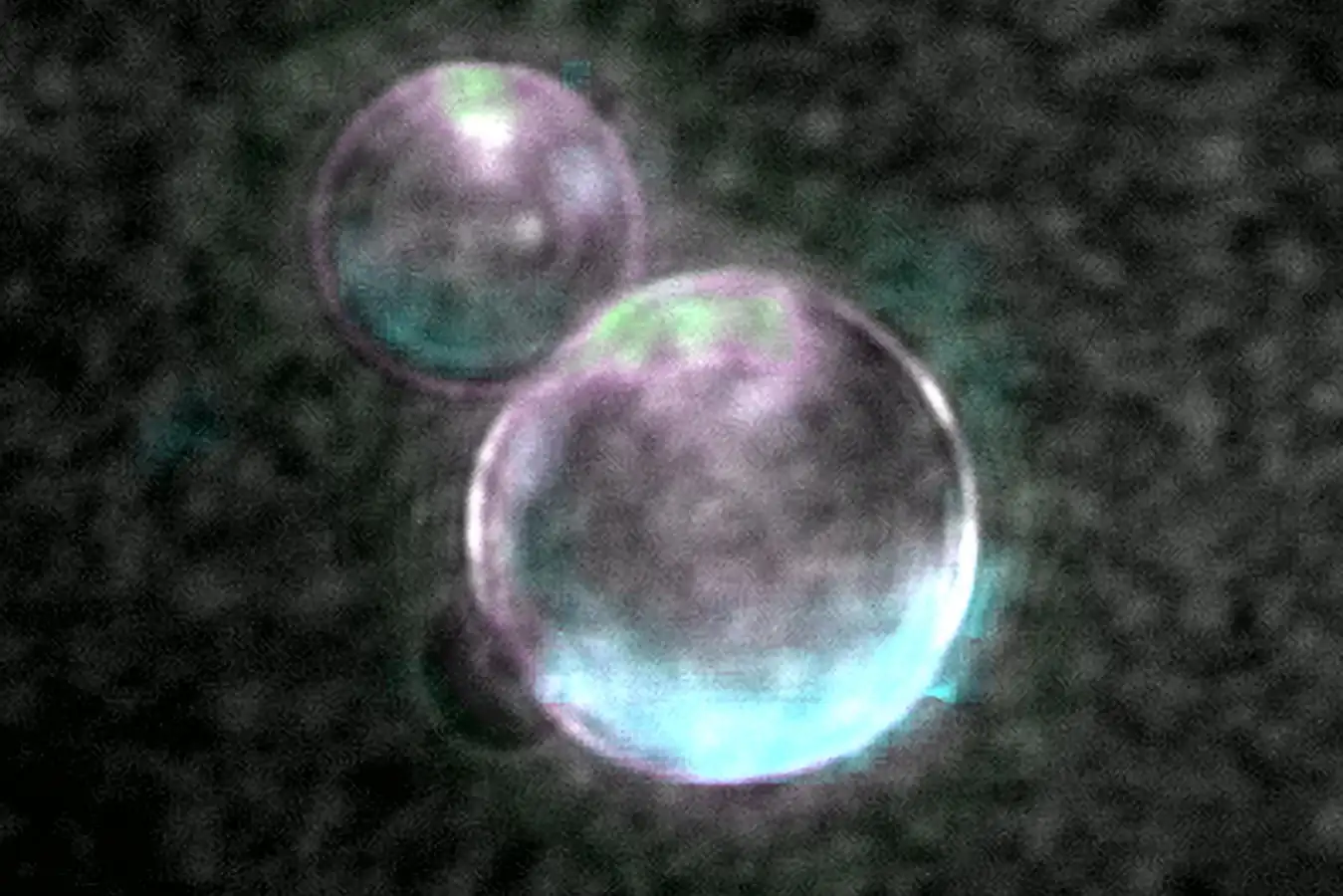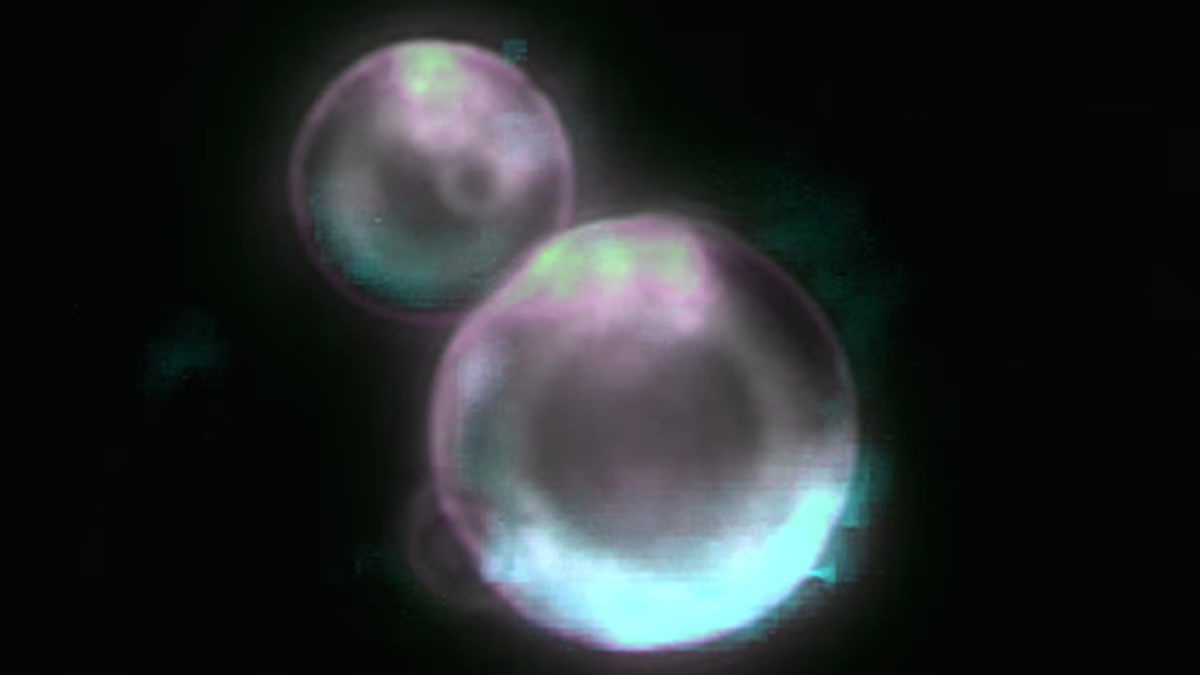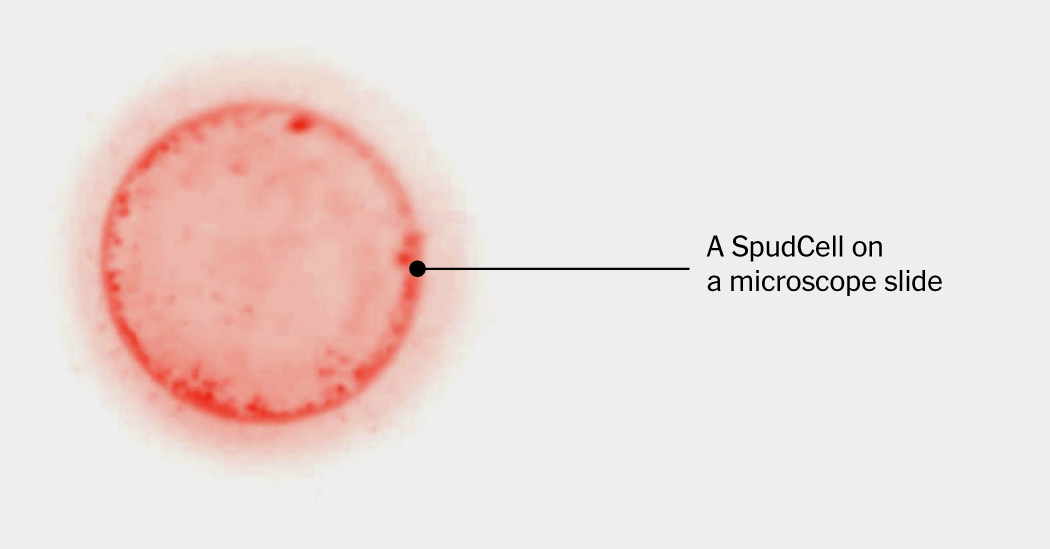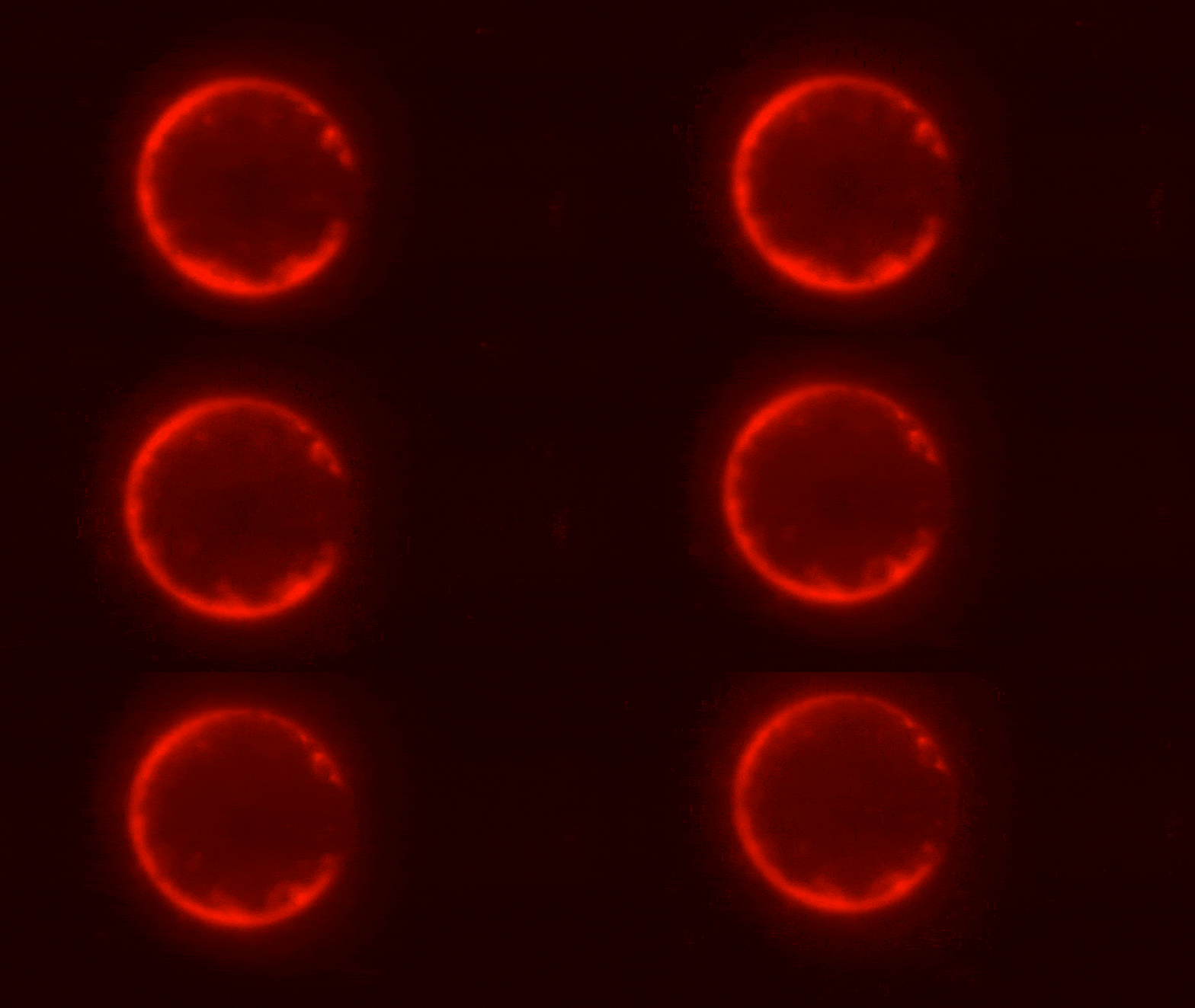
A video of SpudCell - a synthetic cell assembled entirely from non-living
chemical components - containing both a genome and the metabolic machinery to read
it. The red membrane is stained with lipid dye. (Orion Venero/Adamala Lab)
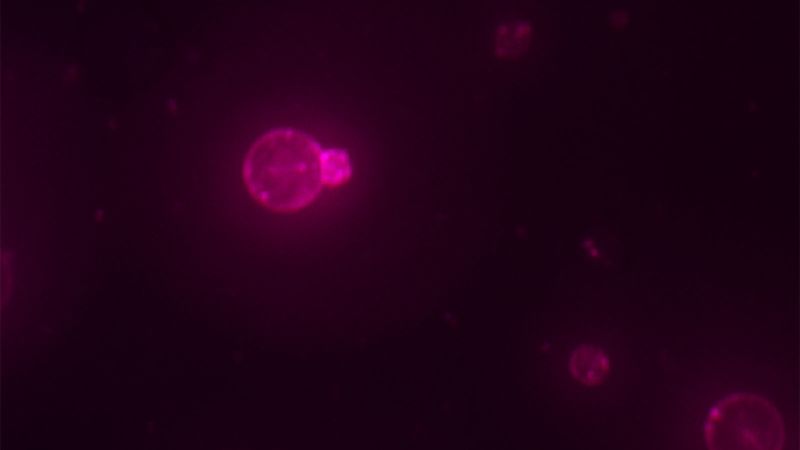
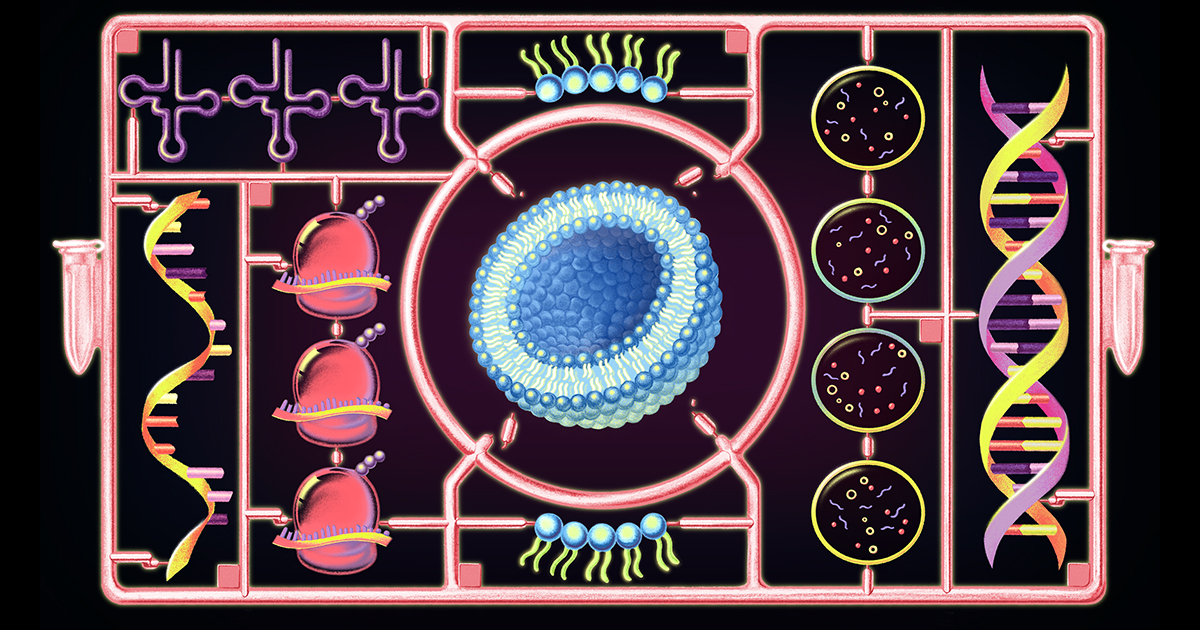
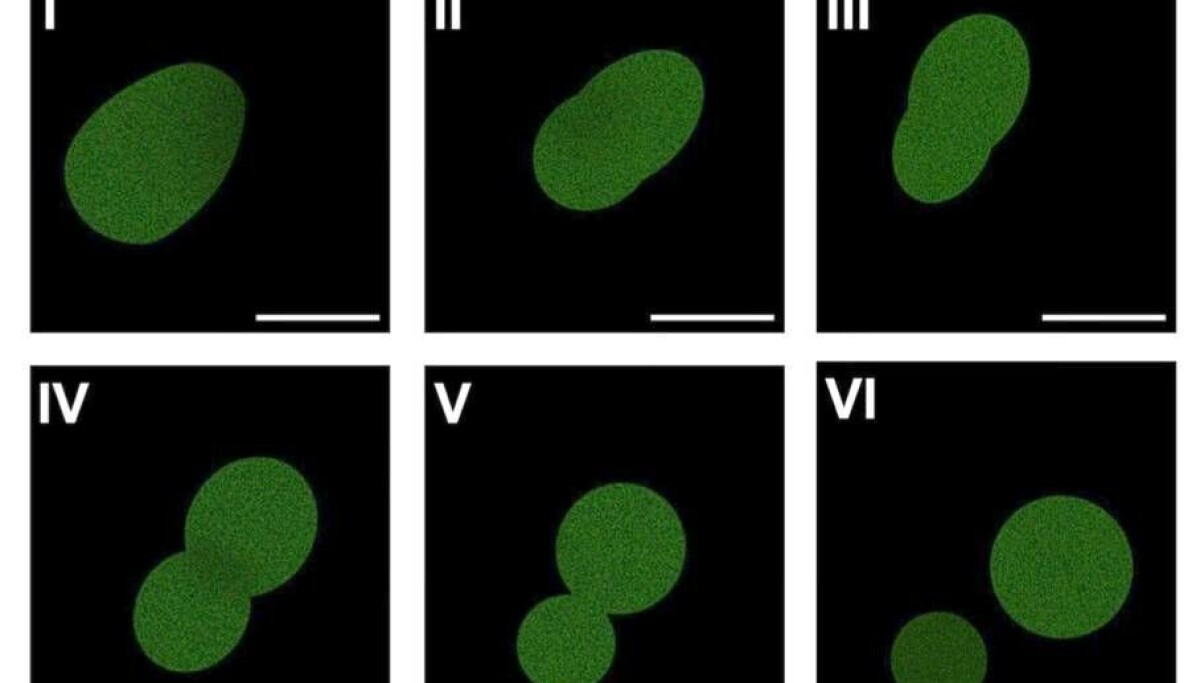
Scientists from the University of Minnesota say they have created the first-ever synthetic cell built entirely from scratch, and seen it go through an entire 'life' cycle – including reproduction."This is likely the most exciting project I've ever worked on," says synthetic biologist Kate Adamala, a co-lead on the project. "We've replicated in chemistry what only used to be possible in biology: the complete set of behaviors of a cell. It proves that the most fundamental functions of life, like growth and replication, do not need a mysterious magical spark."A super-resolution image of SpudCell's liposomes with an encapsulated genome and active protein expression. SpudCell is the first synthetic cell system built from non-living components to complete a full cell cycle. (Orion Venero/Adamala Lab)The project is called SpudCell, and it has a genome of just 90 kilobase pairs (kbp). For comparison, the human genome is about 3 million kpb, and biologists previously assumed that a living cell would require at least 113 kpb of genetic data to function properly.According to Adamala and her colleagues, SpudCell appears to stretch these limits, though their research is yet to be formally published and has not been peer-reviewed.Fluorescent microscopy of SpudCell, a synthetic cell assembled entirely from non-living chemical components, undergoing division. (Kate Adamala/Adamala Lab)But it has been shared on the website of a new nonprofit bioengineering institution Adamala has helped found, Biotic.According to Science magazine, SpudCell has met some hurdles in publication: apparently one reviewer at Cell, a prestigious science journal, said the project was not real biology.