Quality Stock Arts/Shutterstock
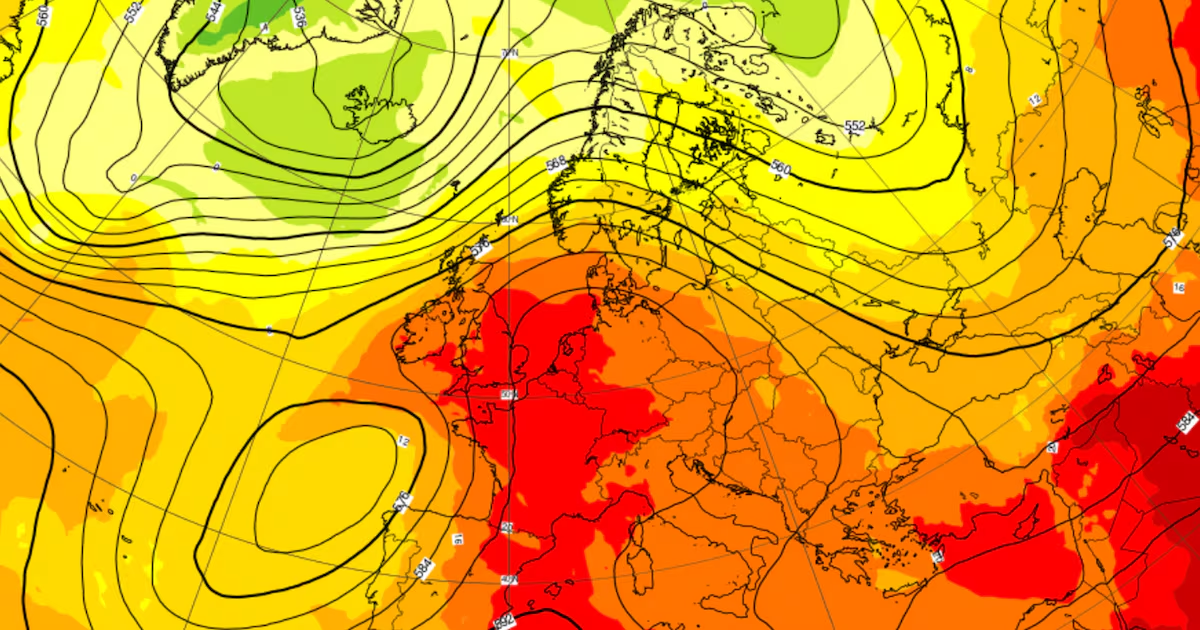
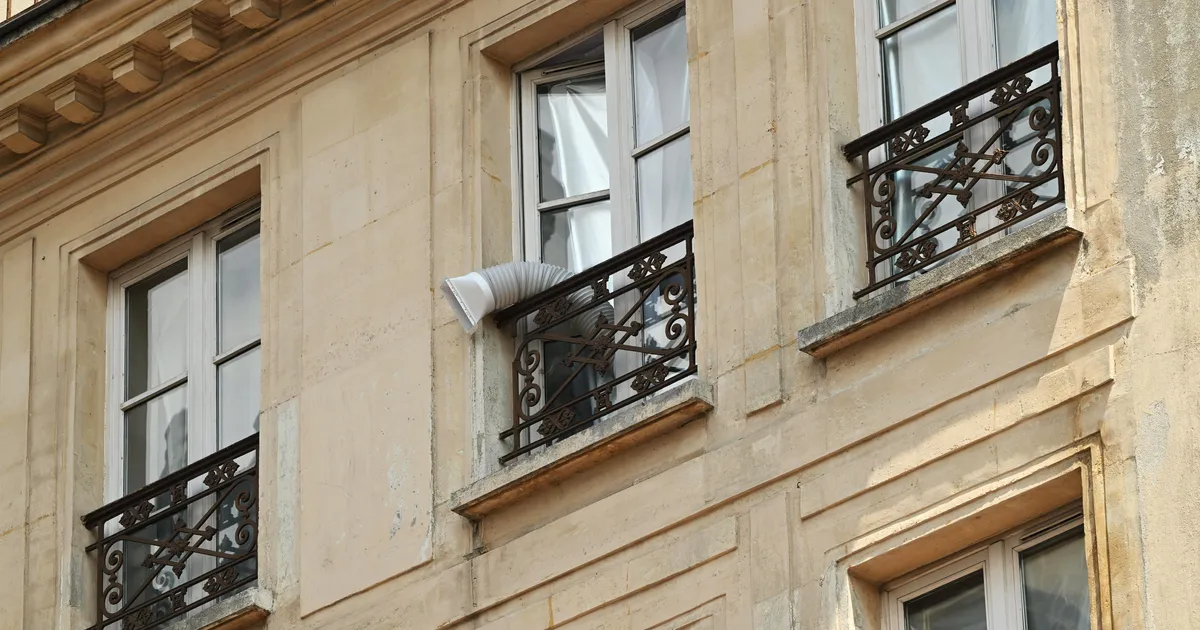
Europe is warming faster than almost any other part of the planet. Western Europe experienced its worst heat wave ever recorded last week, something that would be impossible without climate change. The World Health Organization pointed to more than 1,300 excess deaths linked to Europe's extreme heat since Jun. 21. This week, Eastern Europe is grappling with its own punishing heat dome. Better access to air conditioning (AC) is often viewed as the obvious solution. Running ACs will save lives this summer, particularly for the most vulnerable members of society, in schools, hospitals and care homes. And yet, AC is still considered a luxury, even in the highest-income EU countries. While 90% of US homes have AC, only 20% of homes in Europe and 5% of homes in the UK do. In Germany, that figure is closer to 3%.With 92% of English homes at risk of overheating in a heat wave by 2050, the Climate Change Committee is right to call for a rapid expansion of cooling. But should the answer to rising heat across Europe be hundreds of millions of new ACs that drive up electricity demand and use refrigerants with high global warming potential? That could lock in higher bills, increase blackouts and contribute to further warming — addressing one crisis while fueling another.A Building Stock Under PressureThis demand crisis would unfold partly because buildings on the continent were constructed for a climate that no longer exists. Nearly 75% of the EU’s building stock is energy inefficient, and the European Environment Agency estimates that in several European countries, 9%-20% of people may already be affected by overheating in their buildings. The UK, for example, has an even older housing stock, with roughly one in six homes built before 1900, when average temperatures were much cooler.But now, as heat waves become longer and more intense, the share of energy used for cooling is expected to grow to 9% of total energy used in Europe’s buildings in 2050 — up from only 2% in 2012. The sharpest increase is expected in countries already facing serious summer peaks, including France, Italy and Spain.And as demand grows, cooling efficiency will matter even more, particularly as AC systems are asked to both reduce temperatures and remove humidity. While not in the tropics, in the UK and many parts of Europe, humid heat events that can harm health are becoming more frequent. A field study by RMI and partners in hot-humid India found that the most common ACs sold today can consume 30% more energy when controlling temperature and humidity together, spiking costs and straining power grids.Fortunately, cooling can take many forms and is not limited to installing more AC. First, we can cool cities and buildings by using low-tech and cost-effective solutions like exterior shades, cool roofs and natural ventilation. Second, we can make the cooling technologies used in our homes, schools and workplaces far more efficient, delivering greater comfort with less energy. And lastly, we can power any new cooling demand with cleaner electricity and ensure the technologies themselves use low-emissions refrigerants.Europe has a rare opportunity to lead the future of cooling. It combines deep pools of capital, world-class innovators and the regulatory tools needed to turn promising technologies into widespread solutions.The Potential of Passive TechnologiesIf the EU and UK hope to meet their ambitious net-zero emissions targets, they will need to focus their heat adaptation efforts on scaling affordable and efficient passive design measures — or those that cool without electricity — to mitigate urban heat and reduce heat gain inside the buildings while expanding access to efficient cooling technologies that deliver immediate comfort. For example, cool roof coatings, efficient building envelopes, solar shading and proper ventilation would reduce the need for AC, while improving comfort and making cooling more affordable and accessible.Some emerging passive cooling solutions, such as passive daytime radiative cooling (PDRC) coatings, show significant promise. They resemble cool roofs but can provide considerably greater cooling benefits thanks to their unique physics. At scale, they could play an important role in cooling cities while providing a critical layer of resilience during extreme heat events, particularly when power outages leave conventional cooling systems unavailable. UK’s Emissiv and Spain’s Cooling Photonics are racing to bring PDRC technology to the European market, advancing paints and films, respectively, with the potential to slash cooling energy consumption by 20%.A Growing Toolkit for a Hotter WorldEmerging technologies need investment and availability at scale. Despite their enormous potential to cut energy use and emissions, many cooling innovations remain underfunded. Encouragingly, Europe’s innovators and venture capital are beginning to help bring a new generation of more efficient cooling technologies to market.For example, London-headquartered 2150 VC invested in Blue Frontier, a US-based start-up whose AC system integrates energy storage and claims up to 90% lower energy use. Adapt[us] Capital recently backed Temperate, a UK radiative-cooling company that uses a fraction of the electricity of conventional AC and no refrigerant gases. University of Cambridge spin-out Barocal recently raised $10 million in 2026 to develop solid-state, refrigerant-free heating and cooling. Germany’s Magnotherm is developing magnetic, refrigerant-free cooling technology. No single technology will solve the challenge of rising heat, but these innovations show that cooling can be delivered in far more ways than conventional AC alone.Governments Have a Crucial Role to PlayHeat mitigation is most effective when regulatory action is matched by market incentives that accelerate the adoption of new solutions. The revised Energy Performance of Buildings Directive (EPBD) already points in this direction by prioritizing measures that improve the performance of buildings rather than adding more AC. But as the EPBD is transposed into national laws throughout European countries, policymakers and buyers need to understand which solutions deliver the greatest impact.Scaling next-generation innovations will also require updating performance standards and labels so that buyers can fairly compare emerging passive strategies to conventional options and differentiate efficient technologies designed for real-world conditions. Without modern standards that reflect today’s climate realities, many high-efficiency technologies cannot fully demonstrate their performance or value in the market.At the same time, governments, businesses and other large buyers should also use their purchasing power to create demand for more efficient cooling technologies and heat-mitigation measures — giving suppliers the confidence to scale up production and bring down costs. This would accelerate the deployment of solutions that deliver better cooling, keep people comfortable, ease pressure on power grids, lower energy bills and cut emissions.Done right, Europe can build not only a future that is resilient to heat, but an economy that can thrive in a hotter world.The Path ForwardExtreme heat is the deadliest climate hazard. We need to prepare for it in the same way we do for floods, wildfires and other natural disasters. As cooling demand rises across Europe, the solution is not simply more AC. As noted by RMI, the solution is multifold: build resilience through measures such as urban greening and reflective materials, expand access to affordable thermal comfort through smarter building design, and deploy highly efficient cooling technologies that prioritize comfort delivery while cutting energy use and emissions.Additionally, leaders across governments, nongovernmental organizations, industries and communities must tackle both the demand and supply sides of the cooling equation, helping to shape markets for solutions that improve people’s safety and comfort without overtaxing the grid or increasing emissions.By reducing heat in our cities and buildings, deploying efficient cooling where needed and backing innovations that can help communities avoid the worst impacts of climate change, Europe can do more than adapt to a hotter world. It can lead the way in building one that remains safe, prosperous and livable.Lindsay Rasmussen is a manager at global clean energy transition nonprofit RMI, where she leads research on building-sector innovation and programs to scale-up promising technologies. Ankit Kalanki is a principal at RMI, leading global initiatives to accelerate next-generation cooling technologies and strengthen adaptation to extreme heat. The views expressed in this article are those of the authors.