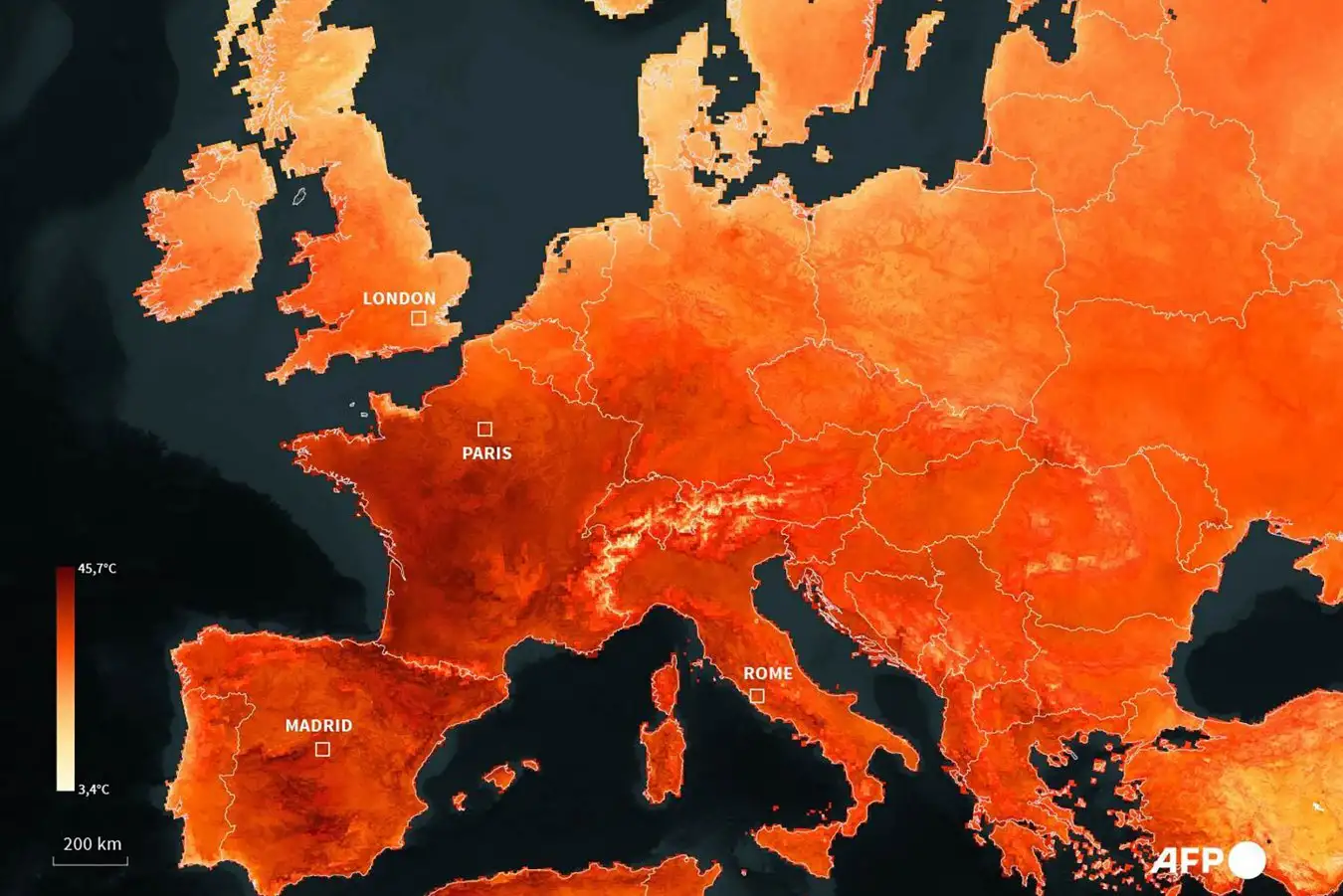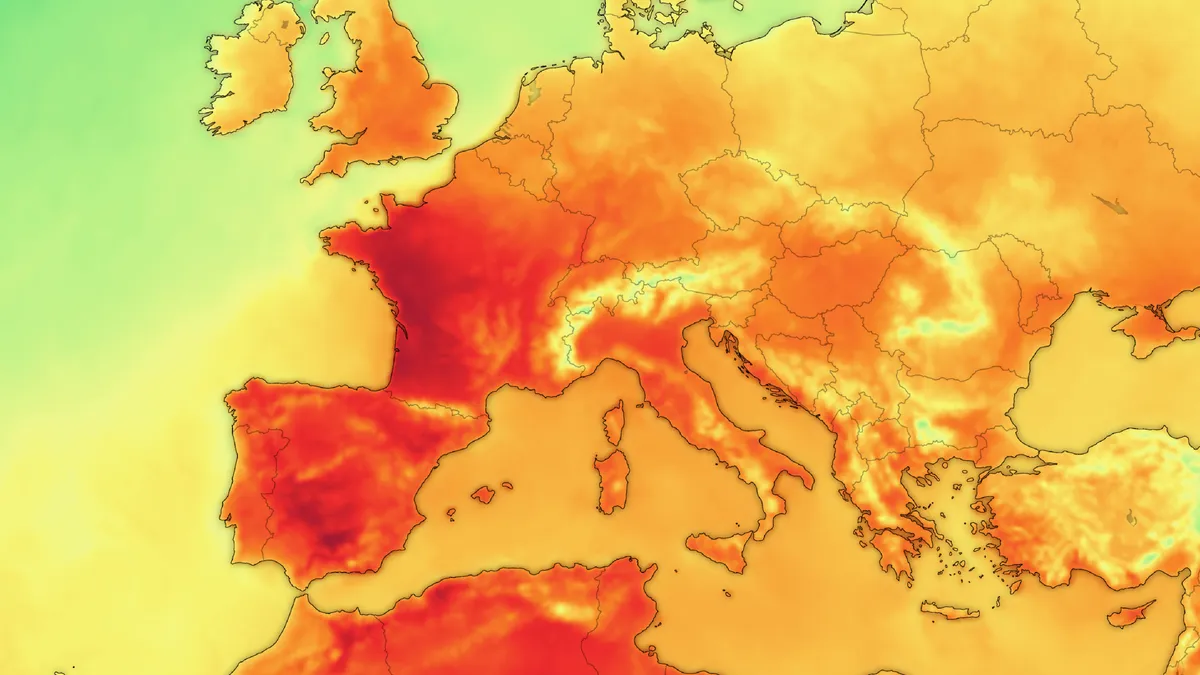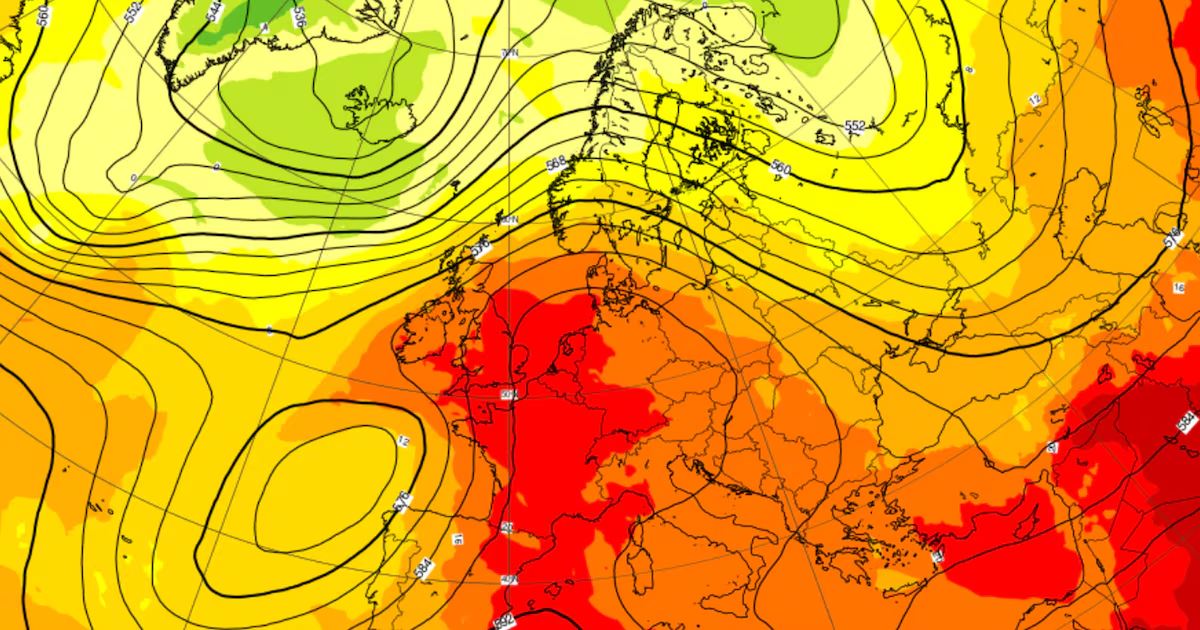
A heat dome of extremely hot air is sitting over western Europe resulting in the most severe high temperatures on record. Source: European Centre for Medium-Range Weather Forecasts Fri Jun 26 2026 - 16:51The heatwave scorching western Europe this week is the most severe and widespread on record and is being driven by global warming driven by fossil fuel use, scientists have said.Almost half of Europe’s 850 largest cities are enduring their worst heat stress, a combination of temperature and humidity, they found.The analysis by scientists from the consortium World Weather Attribution (WWA) shows how rapidly extreme heat is worsening as carbon pollution piles up in the atmosphere.The conditions are being caused by a so-called heat dome over Europe. This is a slow-moving area of high pressure and is restricting air from rising higher into the atmosphere, trapping heat closer to Earth’s surface.Trapping air close to the ground limits the creation of clouds which allows prolonged direct sunlight to increase the heat.Although Ireland is not under the heat dome, temperatures reached a high of 32.1 degrees in Athenry, Co Galway, on Thursday and the country is officially experiencing a heatwave, which Met Éireann defines as five successive days with temperatures in excess of 25 degrees.In summer 2022, more than 60,000 people died due to heat in Europe.The statistical analysis needed to assess the impact of the current heatwave will take time to complete. Nonetheless, the heatwave is certain to exact a heavy toll and is disrupting lives and livelihoods.United Nations (UN) climate change executive secretary Simon Stiell said there would be worse to come.“Europe’s savage heatwave has the fingerprints of the climate crisis all over it – it’s the latest price to pay for fossil fuel pollution baking our planet. Schools closing, the vulnerable dying, economies sweating: this is what the climate crisis looks like in practice and it’s just getting started,” he said.“Until humanity stops burning colossal amounts of coal, oil and gas, extreme heat will keep getting worse and other climate impacts – from mega-droughts, floods, wildfires and storms – will keep hammering every economy and population harder each year.”UN secretary general António Guterres warned this week that the world “cannot outrun climate change. Its impacts are already here”.The heatwave over much of western Europe has pushed temperatures well above 35 degrees for more than 100 million people and has triggered weather warnings in more than 20 countries.Europe is particularly affected as it is the fastest-warming continent, according to the European Union’s Copernicus climate change monitoring service, and it is warming at more than twice the global average. The service has warned of “increasing frequency and intensity of heatwaves” in Europe“As Europe’s climate continues to warm, heatwaves are projected to occur earlier and later in the year beyond summer,” according to Copernicus.Peter Thorne, director of the Irish Climate Analysis and Research Units, said this was in part due to climate change’s impact on the Arctic region.With ice caps “melting rapidly”, the reflective surface of the northernmost part of the planet was disappearing, he said, and being replaced with land and sea that absorbed radiation more easily. This extreme weather “is hugely concerning” for Thorne.“Undoubtedly, this is proof of human-induced climate change at work. This is our new reality and it’s not going anywhere,” he said. “The worst thing is it’s not getting any better than this,” he said, noting heatwaves were now expected to occur “with increasing frequency”.Met Éireann meteorologist Holly O’Neill said “the unusually warm weather this week is, in part, a result of heatwave conditions over in Europe, with a plume of warm air being moved in from the Continent that’s causing our temperatures to soar as well”. - Additional reporting by ReutersSource: Institute for Environmental Analytics IN THIS SECTION
European heatwave in graphics: Why are temperatures rising faster in Europe?
Continent is particularly affected as it is fastest-warming one, says EU’s Copernicus climate monitor
624 words~3 min read