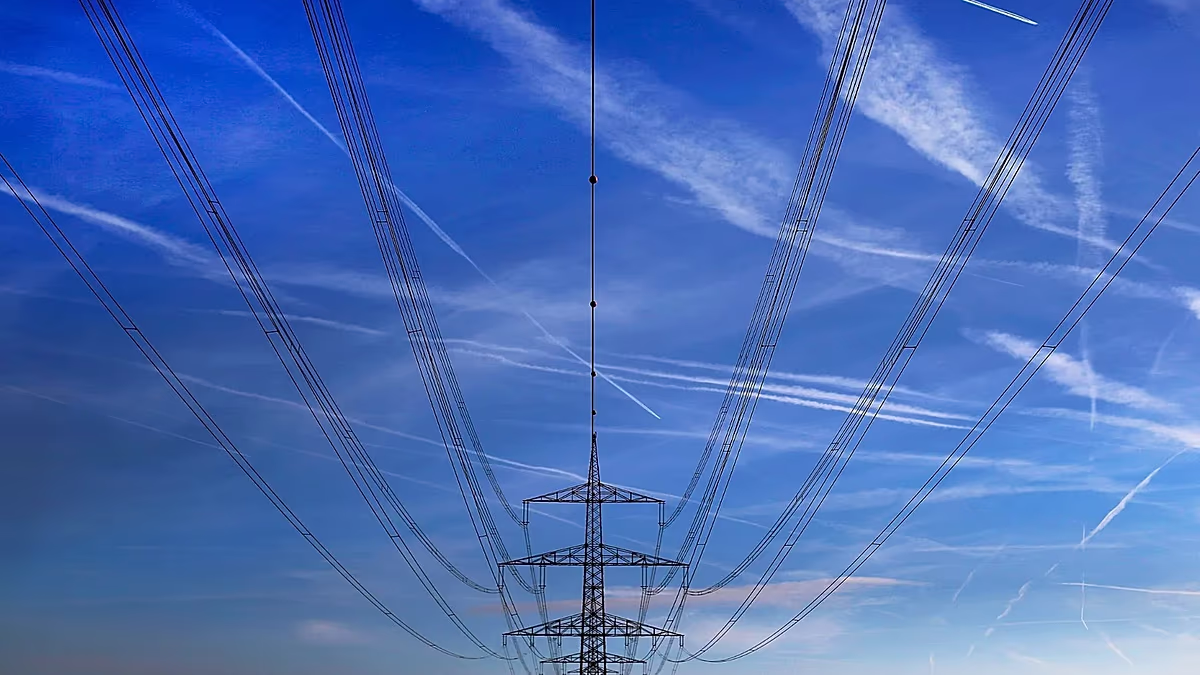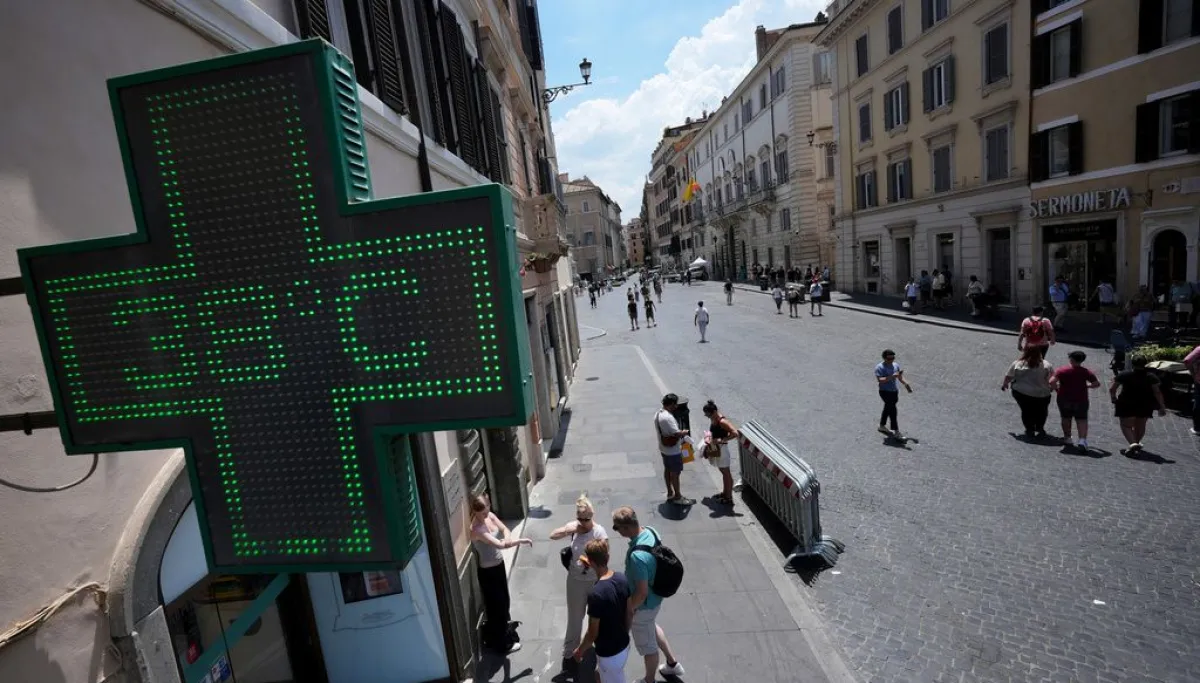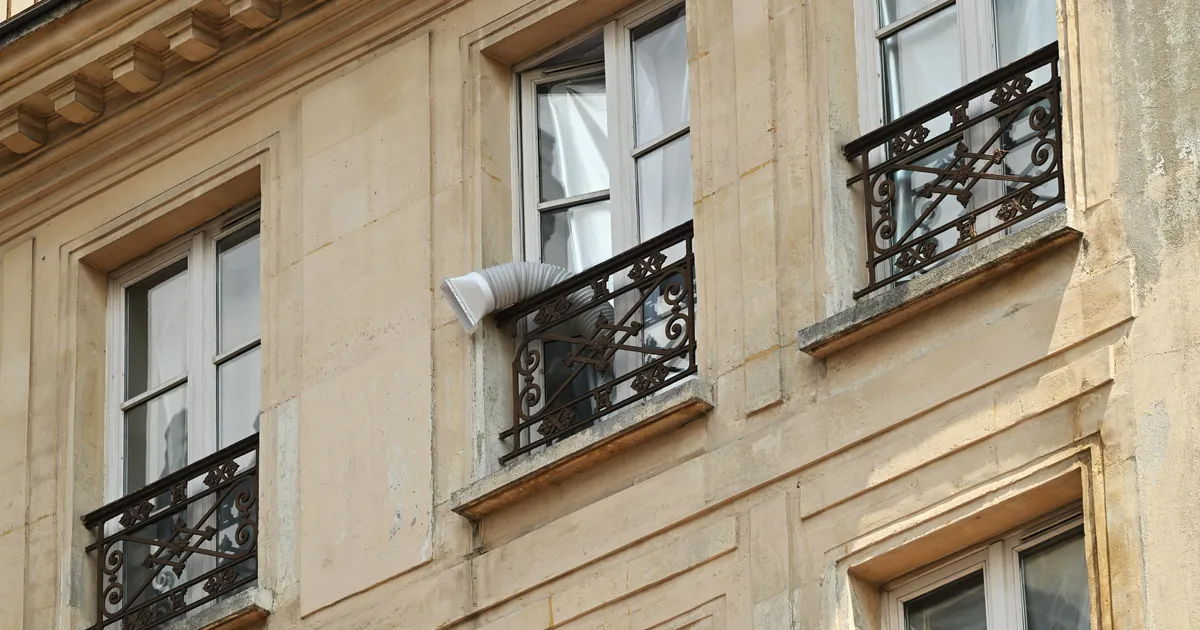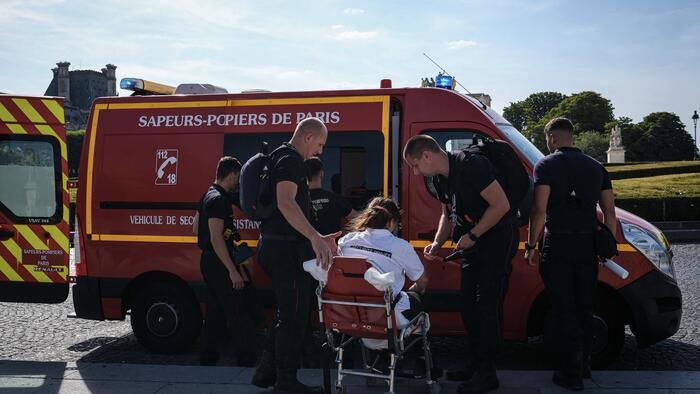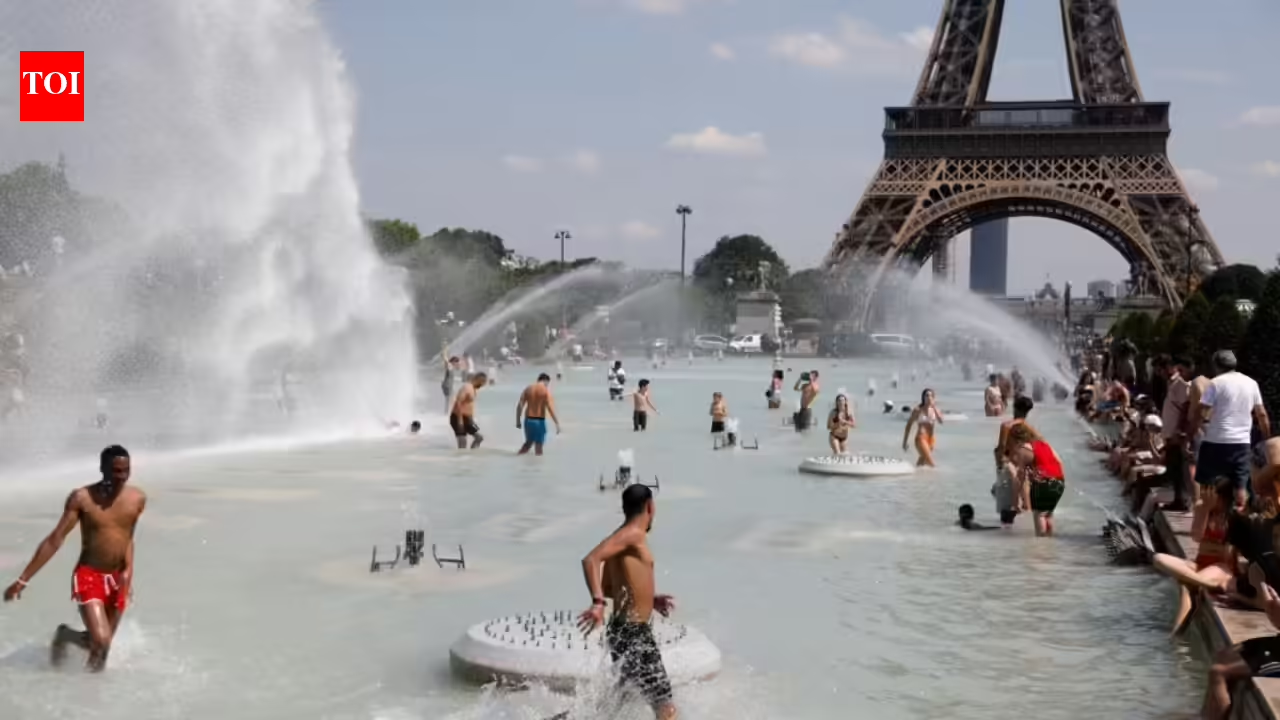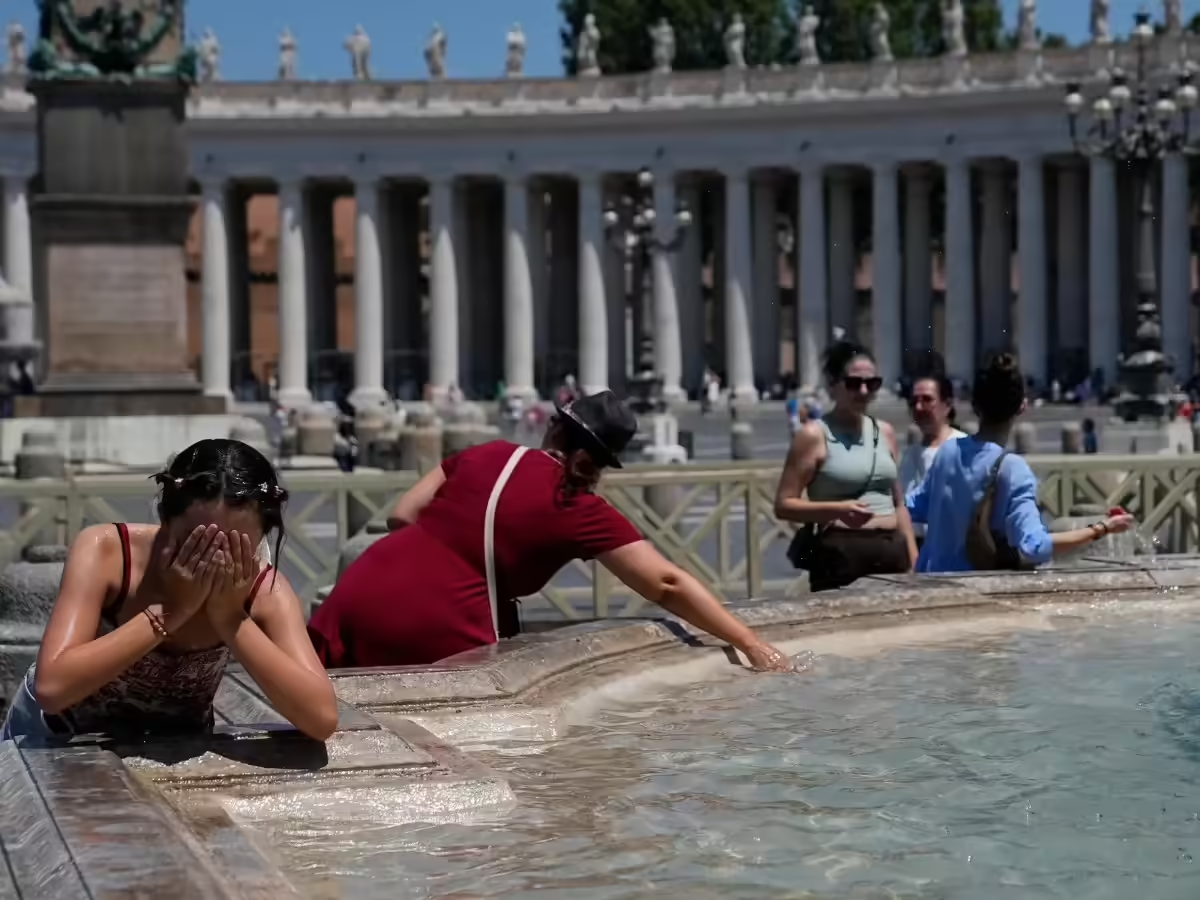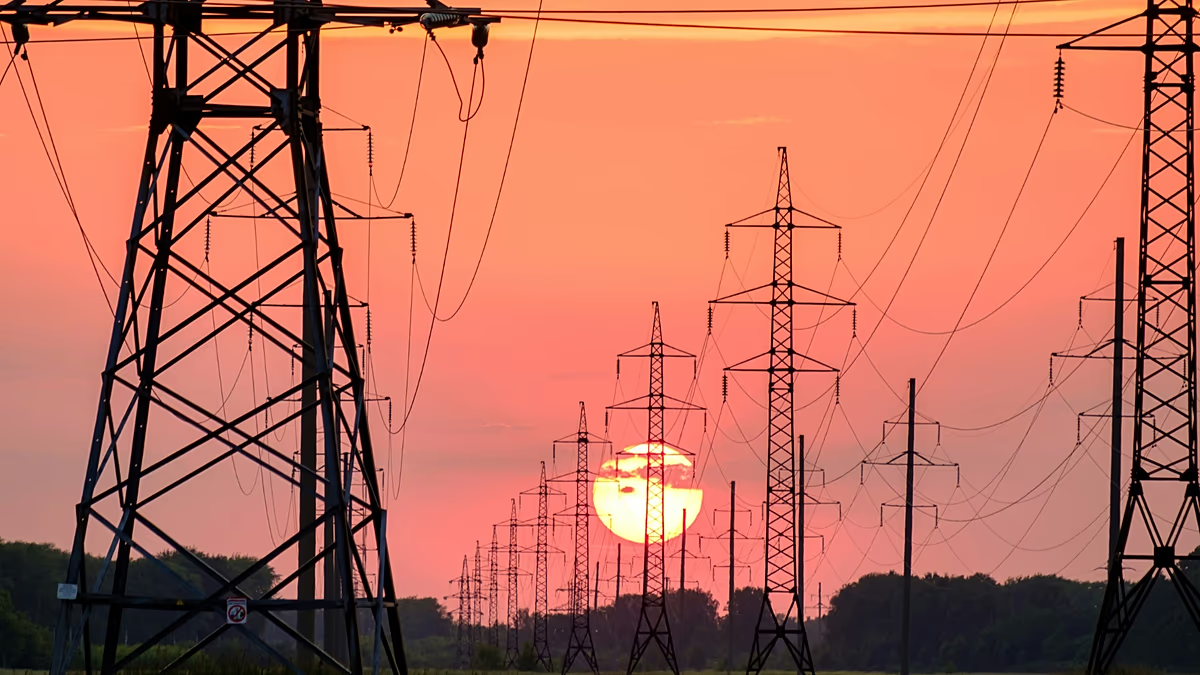
As temperatures climbed past 40°C across large parts of Europe this summer, air conditioners flew off store shelves. Demand surged in France, Germany, Britain and Spain, prompting Asian manufacturers to ramp up supplies to a continent that has traditionally relied far less on cooling than North America or parts of Asia. Even Indian AC makers have spotted an opportunity in Europe. Yet the heatwave has exposed a reality that cannot be fixed with buying merely ACs. Europe is discovering that its homes, hospitals, railways, roads and power systems were built for a climate that no longer exists. The challenge now is not simply how to cool buildings. It is how to redesign an entire society that was engineered to keep people warm.Europe was built for winterEurope’s infrastructure reflects centuries of adaptation to cold weather rather than extreme heat. Apartments become unbearable after only a few hours of sunshine. The problem is not merely the absence of air conditioning. Many buildings were deliberately designed to retain heat through thick walls, insulation and relatively limited ventilation. Those features made sense when the greatest threat was winter cold. They become liabilities when temperatures remain above 35°C for days. Reuters reported that experts are increasingly warning that cooling systems alone cannot compensate for building designs that trap heat. Instead, cities will need external shading, better ventilation, reflective materials and passive cooling techniques.Also read | Built for cold, battered by heat, summer is bringing Europe to its kneesEurope needs wide-ranging preparedness and adjustments for extreme heat. Adaptation requires much more than installing AC units. Cities such as Paris have expanded tree planting and urban cooling programmes, but much of the housing stock remains poorly suited for hotter summers. The debate is shifting from emergency response to long-term redesign.The railway network begins to show strainHeat is also testing infrastructure that Europeans rarely associate with climate risk. Tram tracks in Germany buckled under extreme temperatures during the heatwave. Such incidents may appear isolated, but they highlight a broader engineering challenge. Rail lines, signalling systems and rolling stock were designed around historical temperature ranges. When those assumptions no longer hold, disruptions become more frequent. This is not merely a maintenance issue. It raises questions about future design standards. Engineers may have to adopt different alloys, revised expansion tolerances and more resilient track systems. What was once considered an exceptional weather event increasingly looks like a condition transport networks must routinely withstand.Roads and public infrastructure are reaching their limitsHeatwaves are exposing vulnerabilities beneath Europe’s roads as well. There was damage to highways in Germany during the latest heatwave. Road surfaces that perform adequately under moderate conditions can soften, crack or deform when subjected to prolonged extreme heat. These failures create safety risks and increase maintenance costs. For decades, European infrastructure planning focused heavily on frost resistance, snow management and winter durability. Future road projects may require different paving materials, revised construction standards and more intensive heat testing. What engineers once treated as occasional anomalies increasingly need to be incorporated into routine design assumptions.Hospitals need cooling tooPerhaps the most alarming consequences have appeared inside healthcare systems. According to reports, many hospitals were forced to cancel operations because facilities lacked adequate cooling. As per experts, thousands of surgeries could be disrupted during the hottest days. The problem extends beyond patient comfort. Medical equipment often operates within strict temperature limits. MRI scanners, cooling units and IT systems reportedly struggled or failed during extreme heat. There were overcrowded wards, exhausted staff and deteriorating working conditions. Hospitals were designed around assumptions that no longer match current summer temperatures. A new generation of healthcare infrastructure may require comprehensive cooling systems, redesigned ventilation and greater resilience for sensitive equipment. Cooling a hospital is not equivalent to cooling an apartment. It involves safeguarding operating theatres, imaging equipment, pharmacies and emergency departments simultaneously. That demands major investment in infrastructure, not simply more consumer appliances.The electricity grid can't carry the entire burdenAir conditioning creates another challenge. The more Europeans buy cooling systems, the more electricity they consume. Manufacturers are experiencing a sharp rise in European demand. But widespread adoption of air conditioning can place enormous pressure on power systems during heatwaves, precisely when demand peaks. In some countries, heat is already testing grid reliability. Emergency outages were reported amid soaring temperatures and surging electricity demand.Also read | In Graphics: Europe searches for ACs in soaring heatIf cooling becomes the primary response strategy, Europe will need larger grids, additional generation capacity and stronger transmission networks. The alternative is to reduce cooling demand through better building design so that less electricity is required in the first place. That is why architects and climate specialists increasingly emphasise shade, insulation adapted for summer conditions and urban greening alongside mechanical cooling.Nuclear power faces a new realityEven Europe's low-carbon electricity sources are not immune. Hungary's Paks nuclear power plant reduced output due to the high temperature of the Danube River that it uses as a coolant. Authorities had to relax regulations affecting the Paks nuclear plant during the heatwave to maintain energy output. Across Europe, heat is creating new questions about the availability and temperature of cooling water used by power stations. For decades, energy planners focused on fuel supplies and generating capacity. Increasingly, they must also consider whether power stations can operate efficiently during prolonged periods of extreme heat. Climate adaptation is becoming an energy-security issue.Schools, workplaces and public spacesHeat is changing the way societies function day to day. Across Europe, schools have shortened hours, public authorities have opened cooling centres and governments have issued increasingly urgent warnings for vulnerable populations. Hungary activated more than 2,000 cooling centres during the latest heatwave. Some governments have restricted outdoor work during the hottest parts of the day. These measures reveal a broader challenge. Schools, offices, transit stations and public buildings were largely designed around a temperate climate. Retrofitting them will require investments in ventilation, shading, landscaping and emergency cooling infrastructure. The question is no longer whether Europe occasionally experiences heatwaves. It is whether public institutions can function normally during them.It's all about adaptationOne reason these debates are becoming urgent is that scientists increasingly view such heatwaves as part of a longer trend rather than isolated events. Experts have described the current heatwave as effectively impossible without human-driven climate change. Nearly half of Europe's largest cities are experiencing record levels of heat stress. Temperatures are rising rapidly across the continent compared with historical norms. That changes the policy conversation. Air conditioners remain useful and, in some cases, essential. They save lives during extreme heat. But they do not prevent tracks from buckling, roads from deforming, MRI scanners from failing or power systems from straining under peak demand. They cannot transform apartment blocks designed to trap winter warmth or hospitals built without modern cooling requirements. The lesson emerging from this summer's heatwave is that Europe is confronting an architectural, engineering and institutional challenge. The continent spent generations learning how to survive the cold. Now it must learn how to live with heat. Air conditioners may help people get through the next hot summer. The harder task is rebuilding the systems around them for the decades that follow.
Europe can’t just air-condition its way out of the heatwave meltdown
Europe's infrastructure, built for cold, is struggling with record heatwaves. From buckling train tracks and melting roads to hospitals cancelling surgeries and strained power grids, the continent faces a profound challenge. While air conditioners offer immediate relief, experts warn that a long-term redesign of buildings and systems is crucial to adapt to a warming climate and ensure societal resilience.
1,189 words~5 min read