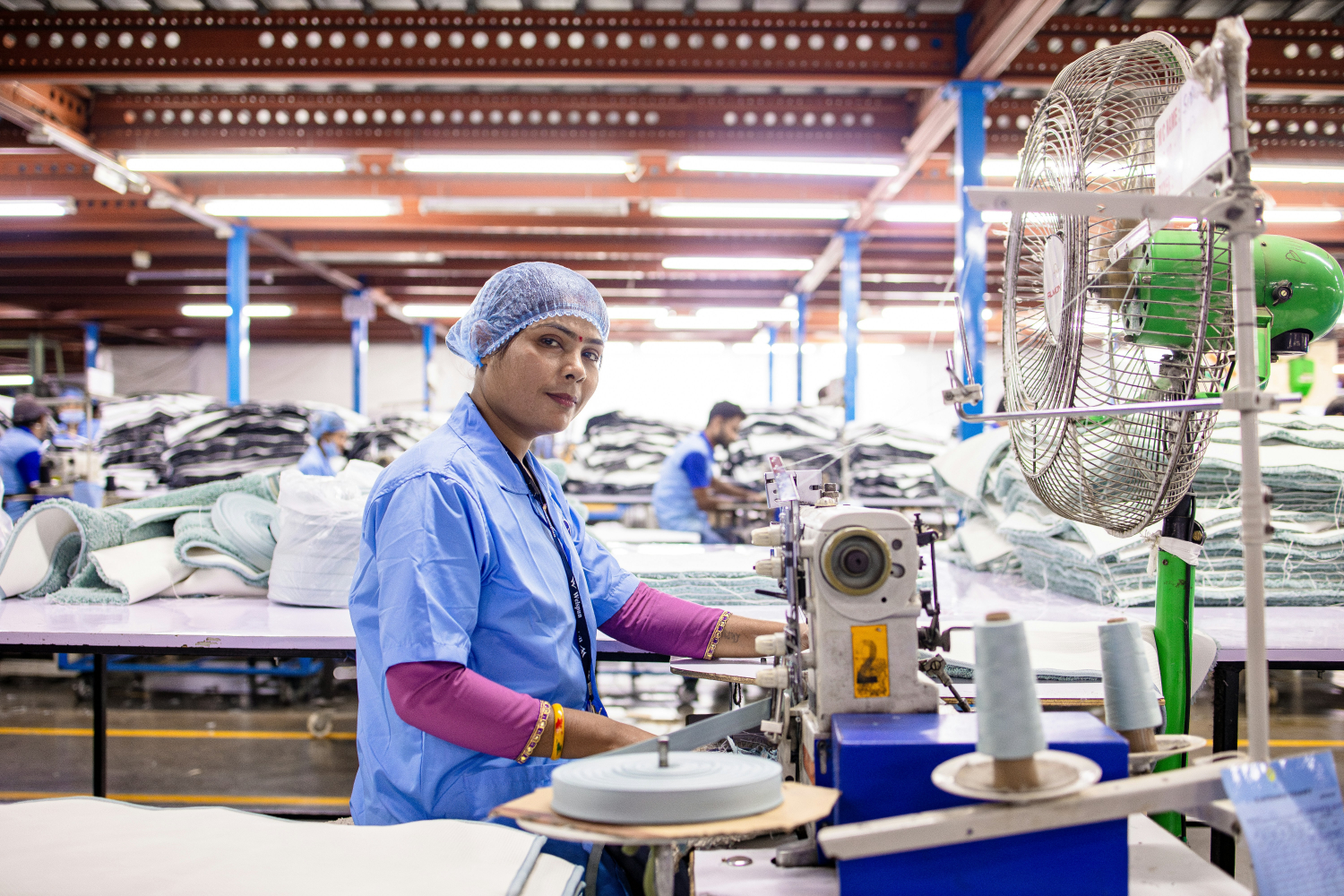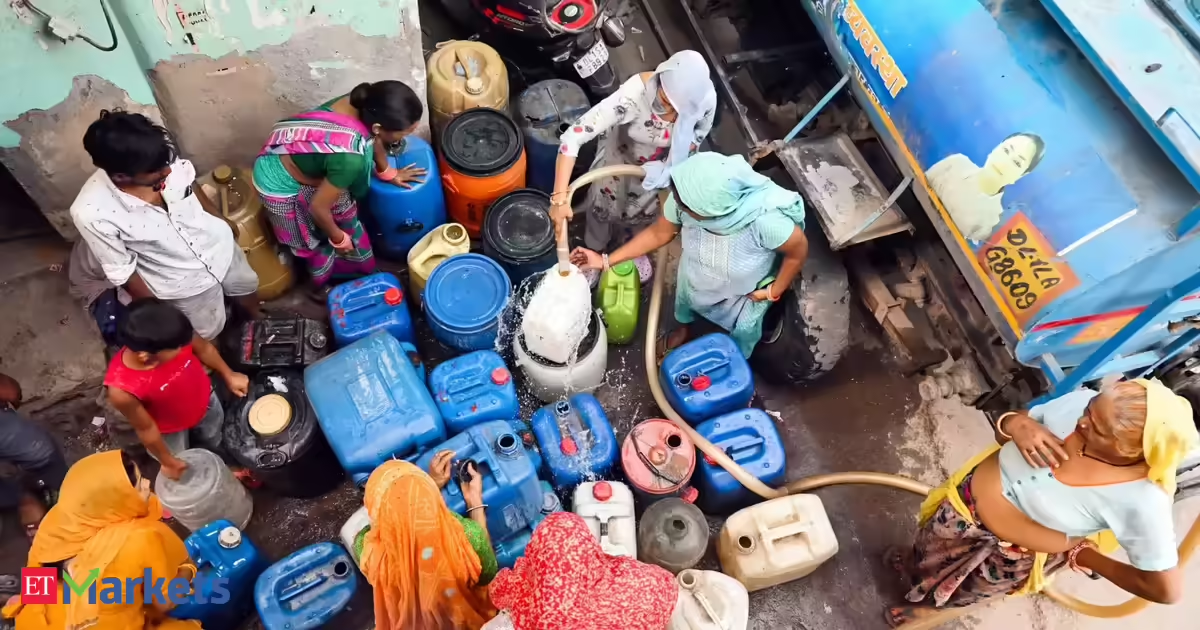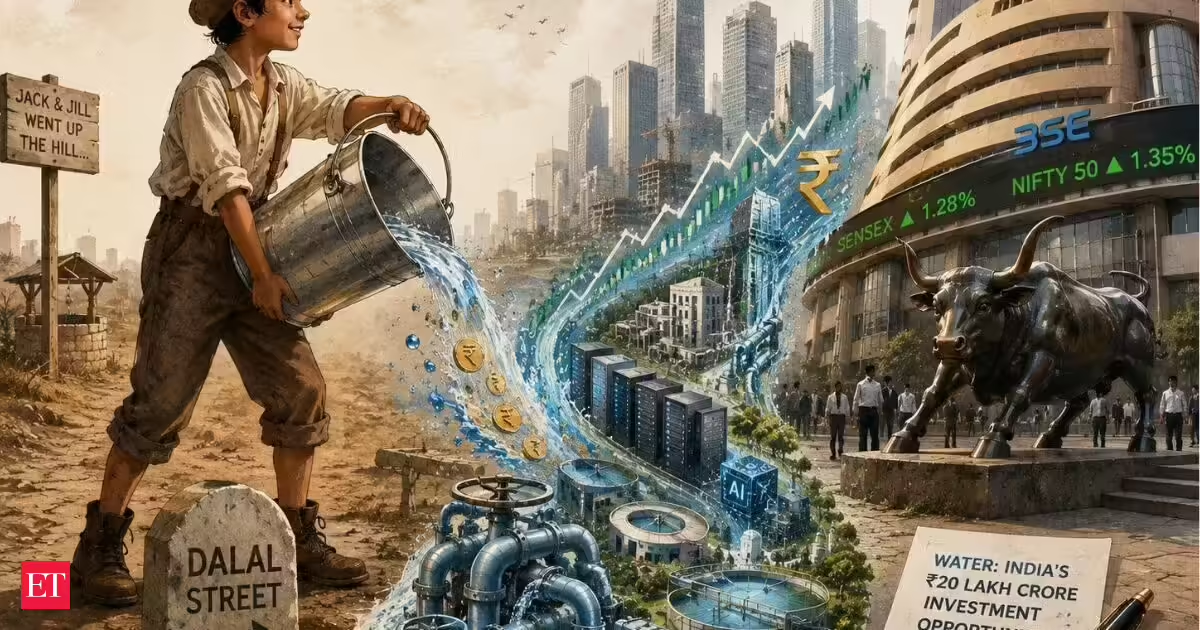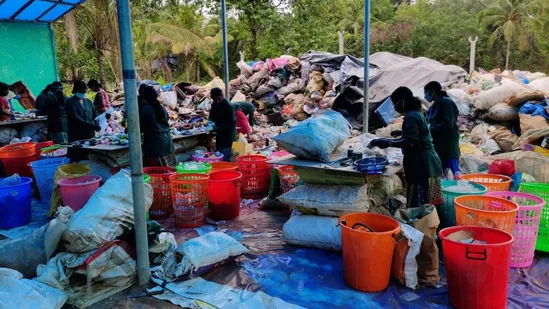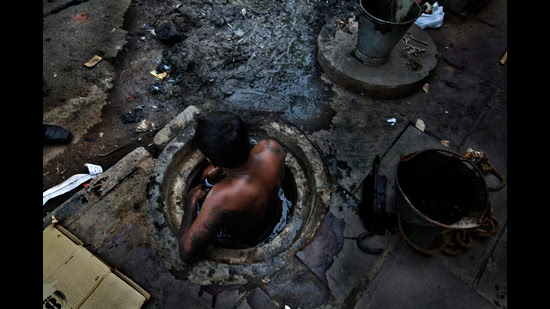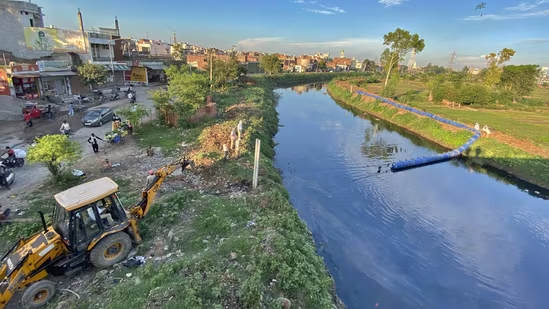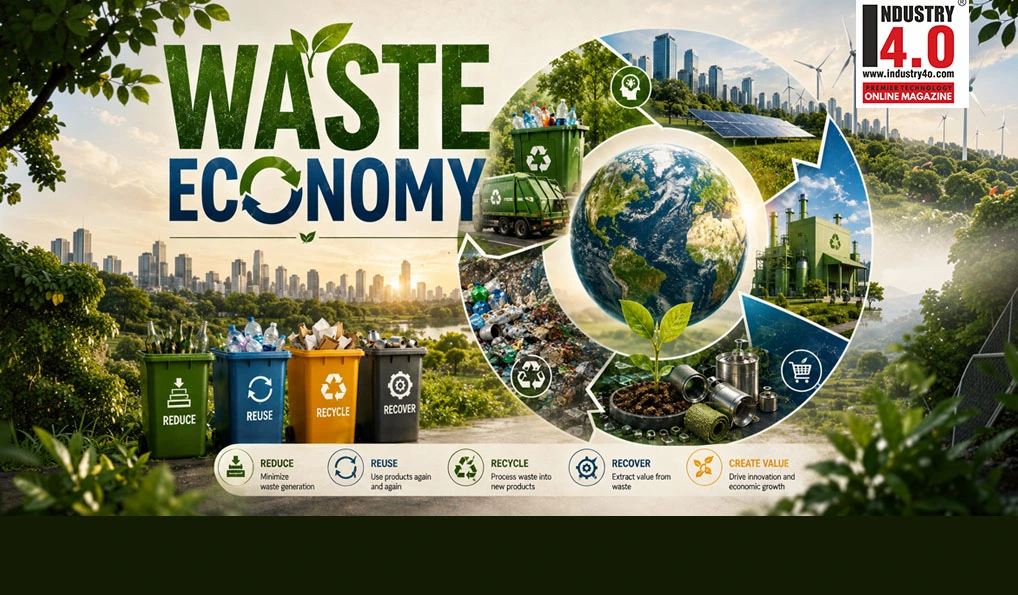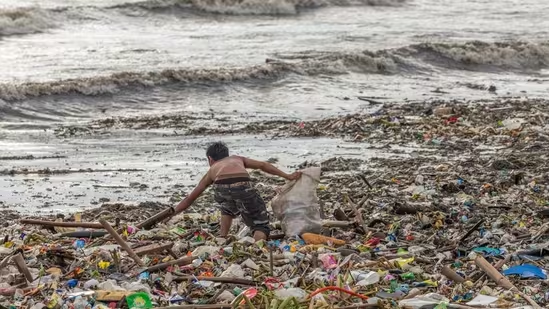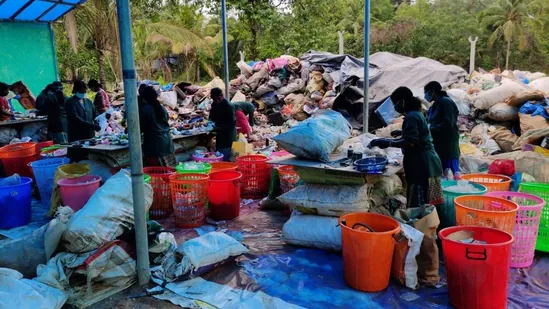
India is approaching an inflection point. We are building the industrial economy of the twenty-first century--expanding manufacturing, deepening strategic sectors, urbanising at extraordinary pace. The choices we make now about how we treat water, manage waste, and recover resources will determine not just our environmental outcomes, but the long-term competitiveness of Indian industry on the global stage. I believe circularity is not a constraint on ambition--it is the engine of it. Nature has always understood this. Every output becomes an input; nothing is wasted. The question for India’s industrial leaders today is whether we have the vision to build our economy on the same principle. Circular Economy (HT PHOTO)India's industrial footprint is expanding, aligned with the Make-in-India vision. Industrial processes are generating significant hazardous waste, requiring responsible treatment and recovery. Every year, more than 35,000 industries produce seven million tonnes that must be treated; a figure that will grow as the manufacturing base deepens. Aligned with the government's vision of domestic leadership in seven strategic and frontier sectors including semiconductors and electronics components, biopharmaceuticals and medical devices, chemicals and rare earths, and textiles and apparel, each a significant producer of complex waste streams, the need to process and recover waste will increase alongside national ambition. The safe transport and treatment of hazardous waste will be central to balancing national ambition with environmental responsibility, requiring the accelerated buildout of essential infrastructure. Here, India can learn from industrialised economies that manage many times the volumes of hazardous waste generated domestically as these countries have built robust supporting ecosystems, including certified logistics networks to transport waste, and advanced processing capabilities that safely separate and recover reusable components at scale.The buildout of such infrastructure is gaining momentum domestically. From an operator’s perspective, the challenge underpinning resource recovery is not conceptual as the technologies are already proven. The challenge pertains to scaling technologies reliably across diverse industrial conditions while maintaining efficiency, safety, and continuity of service. Across domestic industrial clusters, advanced systems are already enabling water reuse, improving material recovery, and reducing dependency on disposal-led models. Increasingly, organic waste is being converted into energy, supporting India’s broader transition toward more efficient and resilient resource systems.These efforts are tied together through integrated resource management, where waste, water, and energy are not treated as siloed systems but as interconnected value streams. This approach creates an economy-wide transformation, unlocking significant economic opportunities. Research indicates that this integrated, circular economy transition could unlock hundreds of billions of dollars in annual economic value domestically by mid-century, generating millions of jobs across recovery, remanufacturing, and resource-efficient industries.Meanwhile, in conversations with industrial leaders across sectors, resource security is becoming a recurring concern. Access to water, responsible waste treatment, and reliable environmental infrastructure are being viewed as operational necessities rather than sustainability ambitions.Decades old trade patterns are shifting, prompting India to bolster its commitment self-reliance. Water-intensive industries like paper and pulp, iron and steel, and textiles are expanding. Simultaneously, the ambition to become self-reliant in semiconductors and advanced pharmaceuticals will significantly increase water demand, requiring advanced management expertise and solutions, especially the ability to generate and process ultra-pure water. Meanwhile, by 2030, approximately 40% of Indians, or 560 million people will live in urban areas. India is home to 18% of the world’s population but has only 4% of its water resources. Per-capita water availability has halved over the past 50 years, and over 600 million people face water stress, a challenge being intensified by the climate crisis and increasingly erratic weather patterns.Yet with the adoption of new technologies, India’s low water resources needn’t be an obstacle to industrial advancement or equitable supply to homes. Until recently, the concept of a continuous 24-hour supply was considered unachievable. Sustainable water management solutions, built on modern frameworks, including digital solutions like AI and robotics, and reductions in non-revenue water--the water produced by utilities that goes unaccounted for before reaching consumers--have made this a reality in Nagpur. The model is replicable and should be scaled across the country. Notably, treated wastewater is also becoming a significant resource. For cities absorbing millions of new residents and for industries operating in water-stressed regions, water circularity is not a secondary consideration, but the foundation of long-term urban and industrial resilience. Industries across pharmaceuticals, chemicals, steel, and food processing are increasingly adopting water circularity practices, recovering and reusing water within their processes. Looking ahead, cities that integrate water reuse into infrastructure planning will be better positioned to grow sustainably, strengthening climate resilience and serving residents reliably for decades.The solutions required to manage industrial waste responsibly and use water intelligently already exist, as do the systems that support them. With learnings from economies that have already navigated this path, India has a significant advantage, allowing its transition to resource recovery and circularity to be faster and better informed than those preceding it. These lessons can also serve as the blueprint for the expansion of value-based industry, supported by circularity and resource-recovery leading to increased job opportunities and faster economic growth. I hear this directly in conversations with industrial leaders: sustainability is no longer a reporting obligation — it is a commercial necessity. As ESG standards tighten in advanced markets and global supply chains demand higher environmental performance, Indian manufacturers who have embedded circularity into their operations will carry a decisive competitive advantage.India has a rare opportunity: To industrialise at scale without repeating the resource mistakes of those who came before us. At Veolia, we have seen what is possible when circular principles are embedded from the start — industries that are cleaner, more resilient, and more attractive to global partners. The nations and companies that lead the next era of manufacturing will not be those with the cheapest inputs, but those with the most intelligent systems. I am convinced that India can be that leader. The foundation is already being built. Now is the time to accelerate.(The views expressed are personal)This article is authored by Guillaume Dourdin, CEO, India, Veolia.
Waste, water and wealth: Why circularity is an urgent economic bet
This article is authored by Guillaume Dourdin, CEO, India, Veolia.
989 words~4 min read