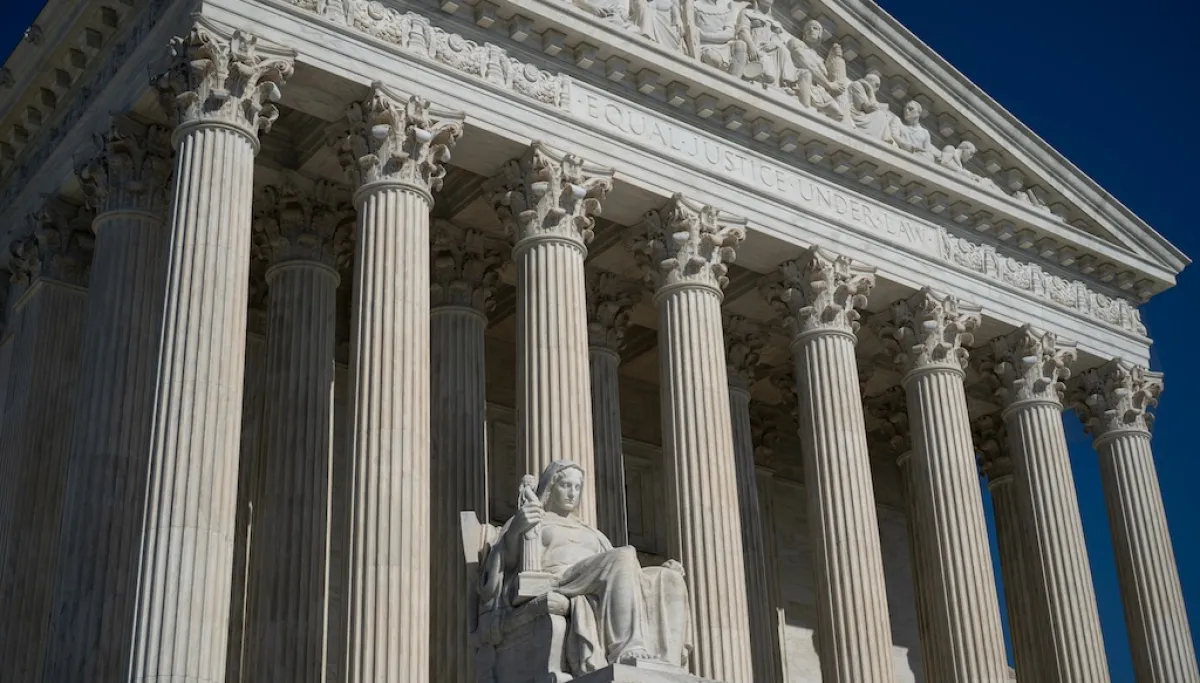
Supreme Court rules constitutional privacy protections apply to geofence warrants
The U.S. Supreme Court today ruled that law enforcement’s use of warrants to collect large amounts of cellphone location data requires privacy protections under the Fourth Amendment.
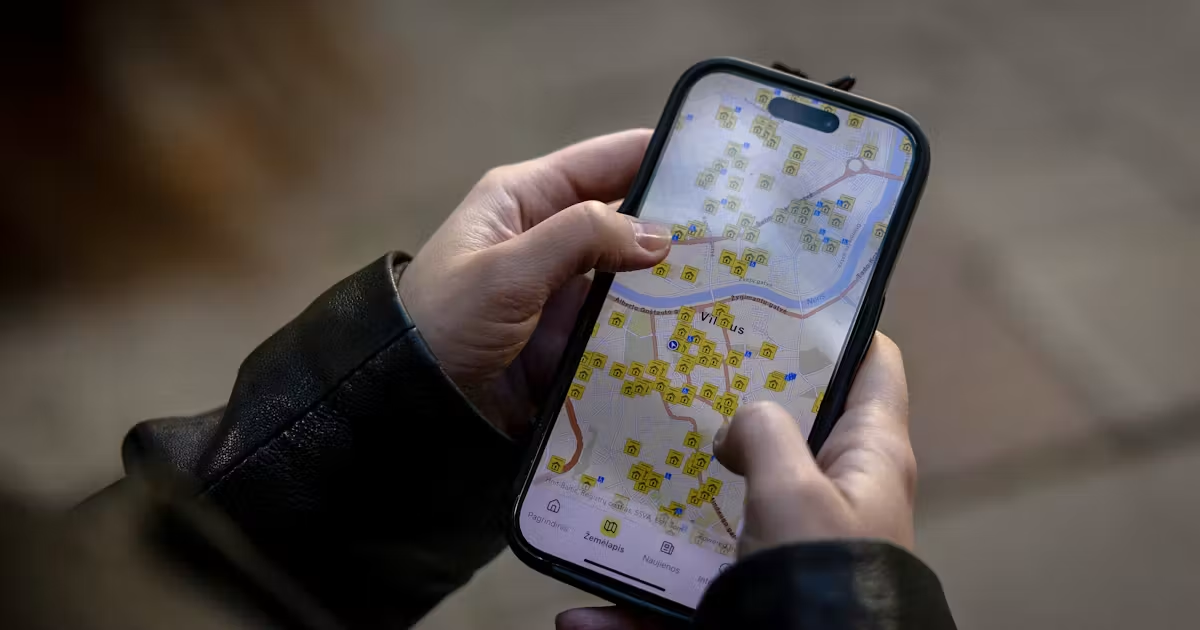
The case centered on a bank robbery, where prosecutors relied in part on cellphone location data obtained from Google LLC through a “geofence warrant.” Unlike traditional warrants aimed at a specific suspect, geofence warrants allow law enforcement to collect information on all cellphone users who were near a crime scene.
The armed robber had fled with around $195,000 from a bank in Richmond, Virginia. Law enforcement used a geofence warrant to a track a man named Okello Chatrie. Chatrie had before opted in to Google’s location history feature, thereby tracking his location every few minutes.
The data showed that Chatrie had been near the bank, the Call Federal Credit Union in Midlothian, at the time of the crime. When police searched his home, they discovered about $100,000 in cash. After pleading guilty, Chatrie received 12 years in prison.