Story audio is generated using AI
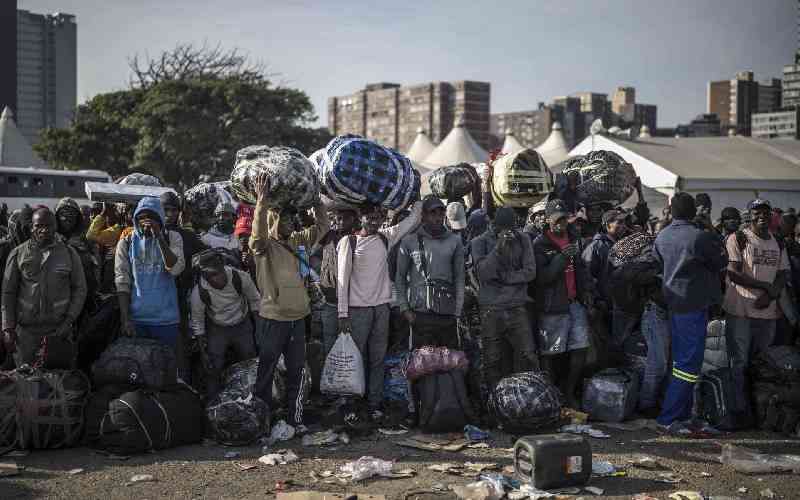
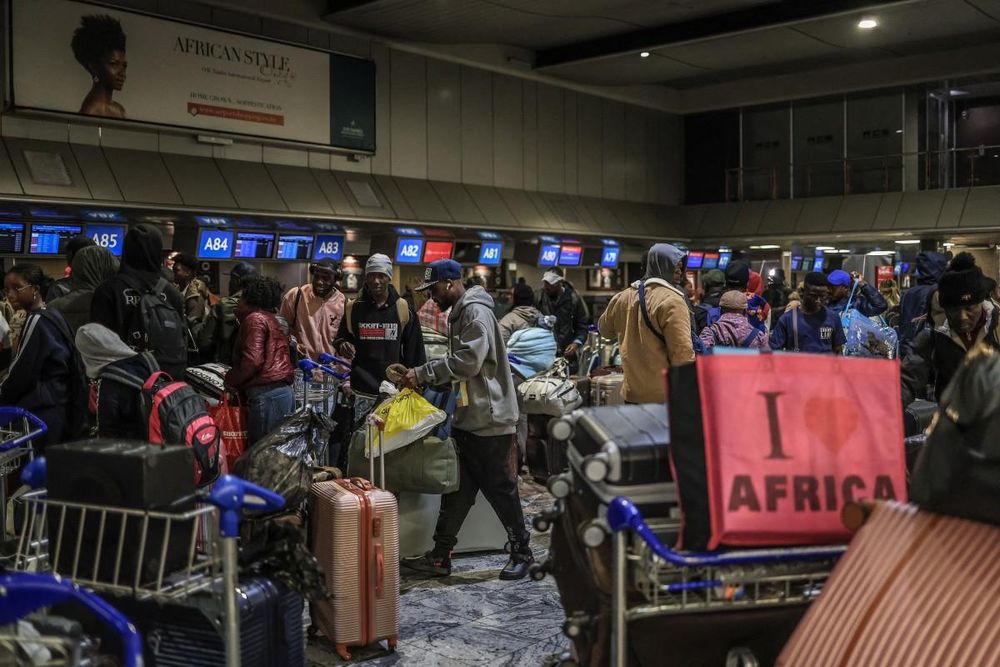
As hundreds of Ghanaians return home and thousands of Malawians seek repatriation from South Africa, a familiar question has resurfaced: if migrants leave, will jobs finally become available for South Africans? The question reflects a deeper frustration. South Africa’s unemployment rate is among the highest in the world, and for millions of people economic opportunity feels increasingly scarce. In that environment, it is easy to conclude fewer competitors must mean more opportunities for those who remain.However, South Africa has already conducted the experiment that many people now propose. Over the past three decades, hundreds of thousands of South Africans have emigrated to Australia, the UK, New Zealand, Canada and the US. More recently, many Zimbabweans who once migrated to South Africa have moved onwards to the UK, Ireland, Australia and Canada. If reducing the number of people automatically created jobs, South Africa should already have experienced a significant decline in unemployment. Instead, unemployment remains among the highest in the world.The problem with blaming migration for unemployment is that South Africa has tested the theory, and the theory failed. A country that mistakes a growth crisis for a migration crisis risks solving neither.Economists refer to the belief that employment is fixed as the “lump of labour fallacy”. It is the assumption that when one person leaves, another automatically takes their place. The idea sounds plausible, but economies do not function like queues. Workers are consumers, taxpayers, entrepreneurs, investors and creators of demand. When a nurse emigrates, the economy loses more than a worker. It loses a taxpayer, a customer, a renter and a skilled professional. When an entrepreneur leaves, the economy loses not only labour but, potentially, future investment and employment opportunities. People do not merely fill jobs; they also create demand for them.Zimbabwe offers perhaps the clearest illustration of this reality. Over the past quarter of a century, millions of Zimbabweans have left their country in search of opportunities abroad. If fewer people automatically produced prosperity, Zimbabwe should today be experiencing labour shortages and near-full employment. Instead, unemployment and informality are widespread because people who leave an economy also stop buying goods, paying rent, opening businesses, investing and creating opportunities for others. Zimbabwe lost workers, but it also lost consumers, taxpayers, entrepreneurs and investors.The same logic helps explain why migration remains such a contentious issue in South Africa. For many citizens, the debate is not encountered through economic theory but through everyday competition. It is visible in township businesses, construction sites, informal transport networks and street markets. A migrant-owned shop may compete with a South African-owned shop. Informal traders compete for customers. Casual workers compete for contracts. These experiences are real and should not be dismissed.Recent comments by Wits University economist Justin Visagie provide an important perspective. According to Visagie, foreigners account for only about 4% of formal employment in South Africa, while their presence is concentrated much more heavily in the informal economy. This statistic does not suggest migration has no consequences. It does, however, raise an important question. If foreigners occupy only a small share of formal jobs, how can they plausibly explain a national unemployment crisis affecting millions of South Africans?None of this means concerns about migration should be dismissed. Communities experiencing pressure on housing, public services, informal trading opportunities and local labour markets are responding to real challenges. The mistake is not recognising these pressures. The mistake is assuming migration alone can explain an unemployment crisis affecting millions of South Africans.Competition determines who gets a slice of the pie. Growth determines how large the pie becomes.A township may have fewer traders tomorrow than it has today. But if household incomes remain stagnant, businesses struggle to expand and economic activity remains weak, the total amount of opportunity may barely change. South Africa’s migration debate often assumes jobs are a fixed resource waiting to be redistributed. In reality, jobs are the product of economic activity. Businesses create jobs when they invest. Entrepreneurs create jobs when they expand. Economies create jobs when they grow.One way to understand South Africa’s predicament is to imagine the labour market as an escalator. When the escalator is moving, people advance because businesses expand, investment increases and opportunities multiply. When it is broken, progress slows regardless of how many people step off.South Africa’s challenge is not primarily that too many people are standing on the escalator. It is that the escalator has been moving too slowly for too long. Weak economic growth, inadequate investment, infrastructure constraints, energy shortages, logistics bottlenecks and policy uncertainty have all limited the economy’s ability to generate jobs. Migration may affect competition within the economy, but growth determines how many opportunities exist in the first place.History offers useful lessons. Countries that successfully reduced unemployment generally did not do so by shrinking their populations. They did so by expanding productive activity. Ireland transformed itself from a country associated with emigration into one of Europe’s most dynamic economies. South Korea achieved rapid employment growth through industrialisation and exports. Singapore built prosperity through competitiveness, investment and skills development. In each case, prosperity emerged because the economy expanded faster than the demand for jobs.Many of the South Africans marching against migration are responding to genuine economic pain. Communities facing unemployment, stagnant incomes and shrinking opportunities are not imagining their difficulties. The frustration is real, but the question is whether that frustration is being directed at the right target.If South Africa’s unemployment crisis were primarily a migration problem, the solution would be relatively straightforward: reduce migration and employment should improve. However, the country’s own experience suggests otherwise.What if South Africa’s central challenge is not the number of people competing for opportunities, but the number of opportunities being created?If that is the case, then the most important questions are not about deportation targets or repatriation numbers. They are about investment, entrepreneurship, infrastructure, education, energy security and economic growth. How many factories are being built? How many businesses are expanding? How many young people are acquiring marketable skills? How many investors see South Africa as a place worth committing capital?These questions may be less emotionally satisfying than debates about migration. They are also far more likely to determine whether unemployment falls. Every hour spent debating who should leave is an hour not spent addressing why investment remains weak, why businesses are not expanding, why infrastructure is failing and why economic growth remains too low to absorb new entrants into the labour market.Many South Africans understandably fear there is not enough opportunity to go around. But history offers a warning. Societies rarely become prosperous by fighting over a shrinking pie. They become prosperous by baking a larger one.South Africa’s unemployment crisis will not be solved at the border. It will be solved in factories, businesses, classrooms, ports, power stations and investment decisions. A country that mistakes a growth crisis for a migration crisis risks solving neither.The future of South Africa will not be determined by who leaves. It will be determined by what the country builds.Dr Mugova is a lecturer in finance at Birmingham City University. His research focuses on labour markets, financial inclusion, economic development and public policy.Business Day