Story audio is generated using AI
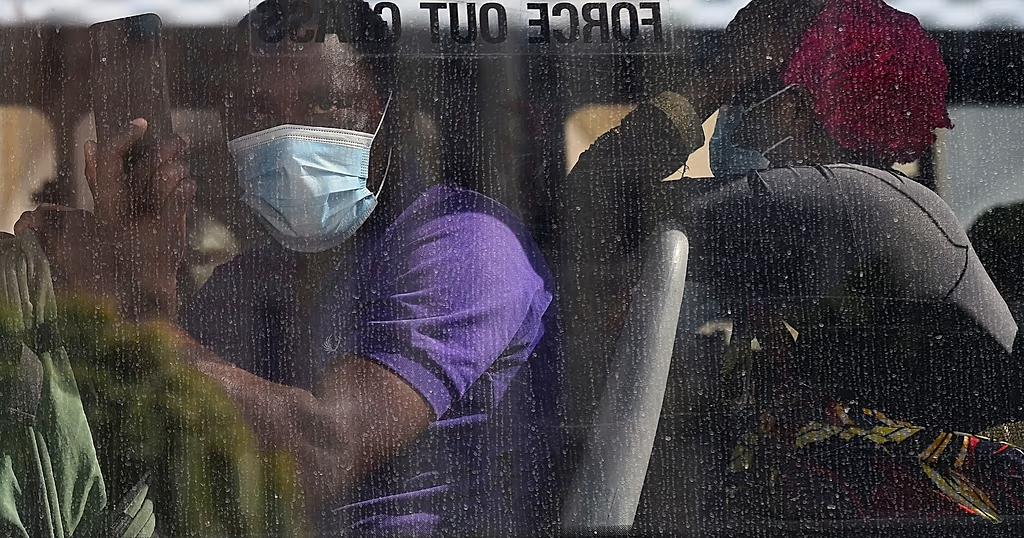
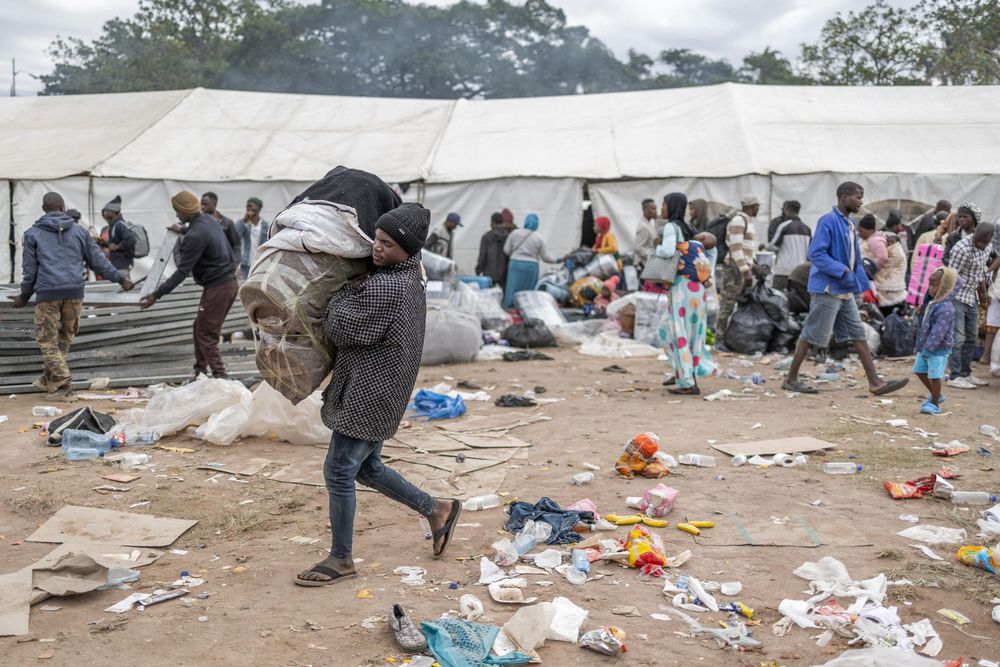
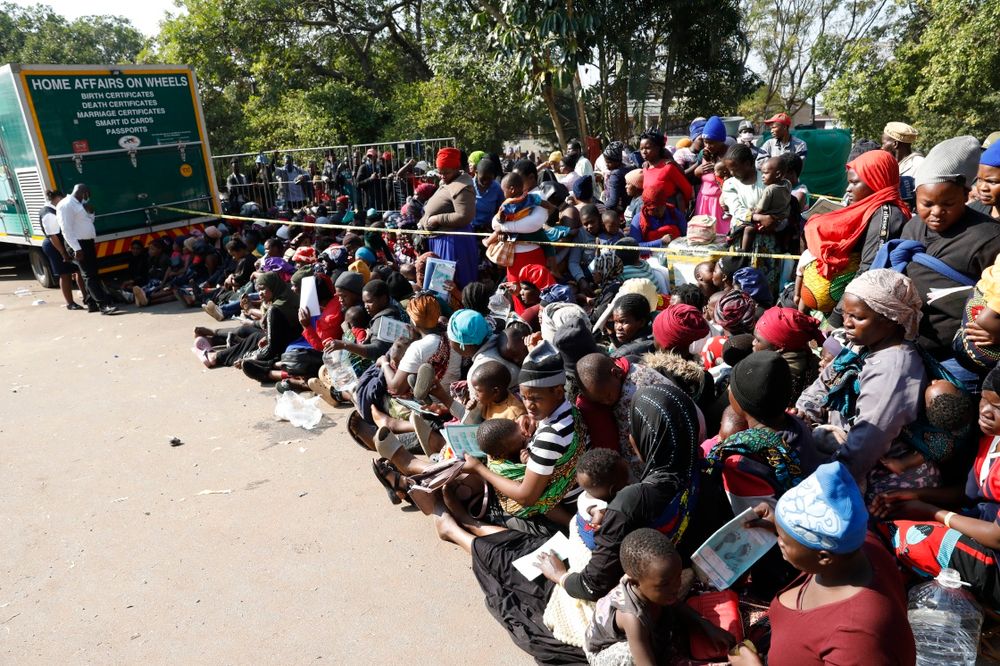
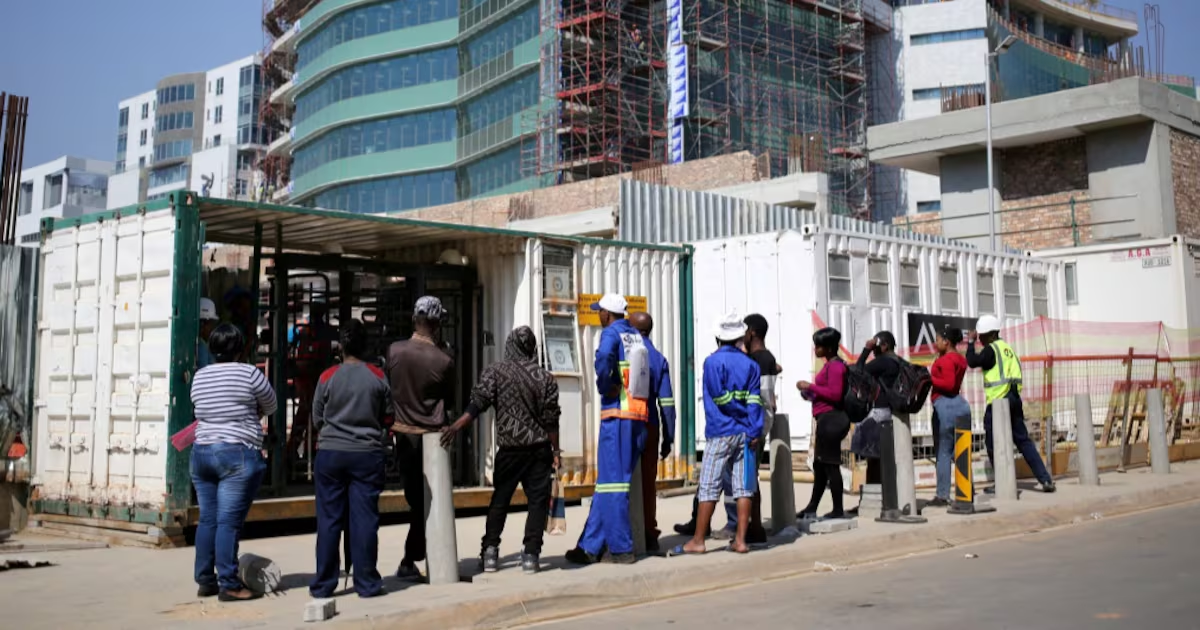
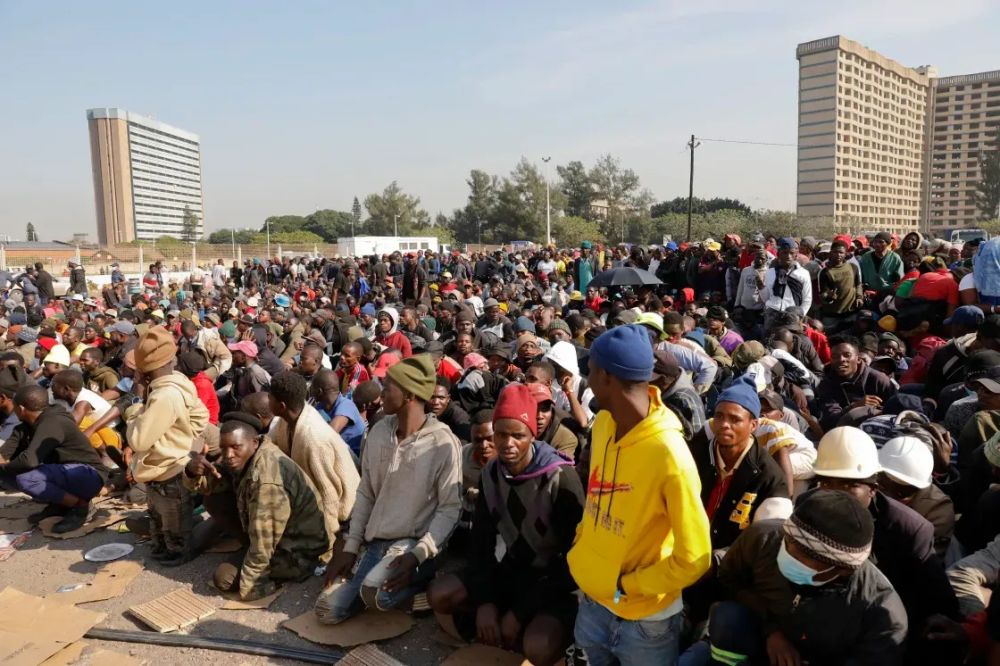
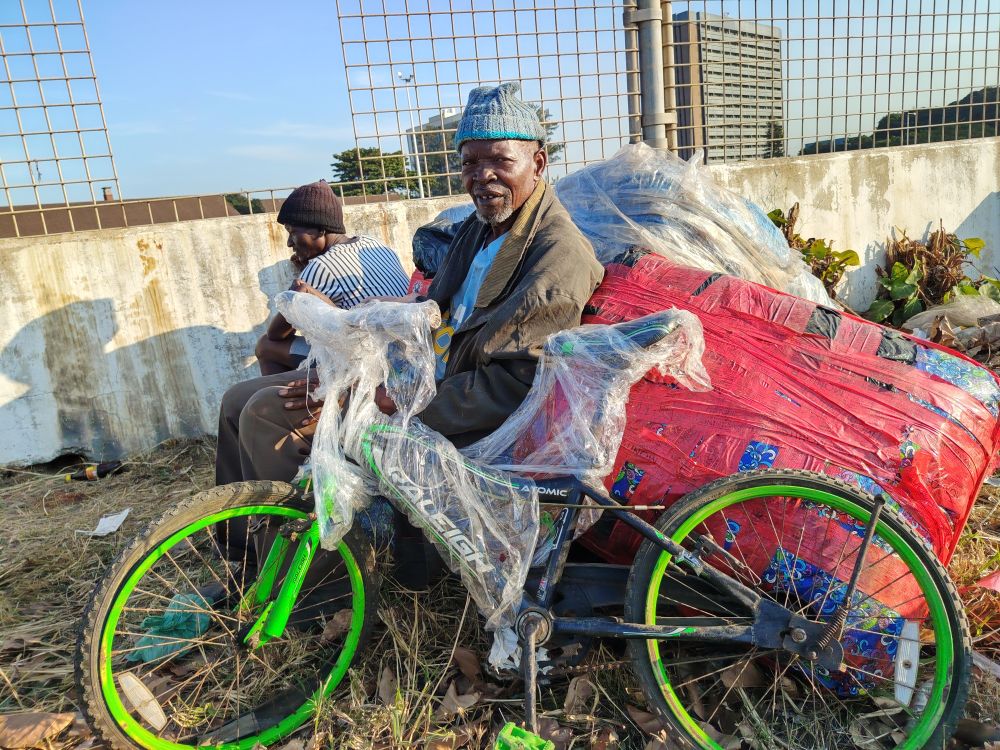
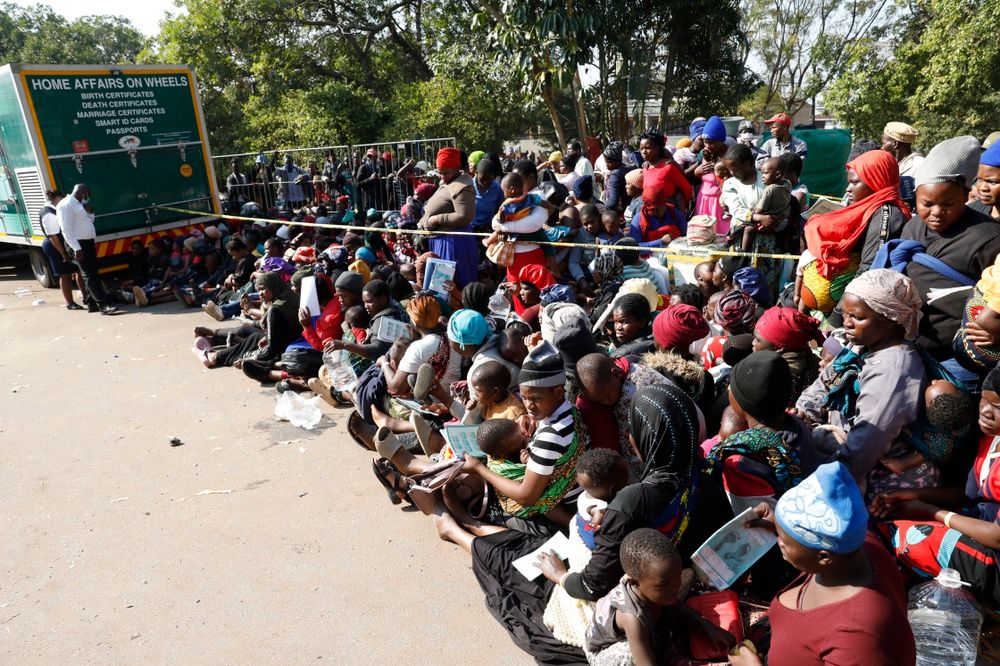
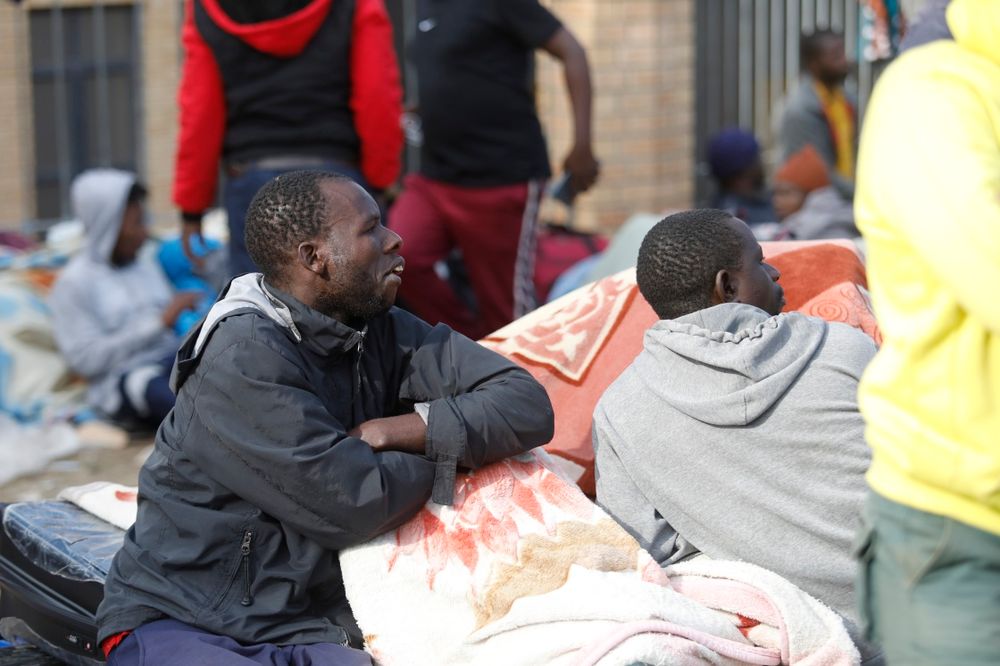
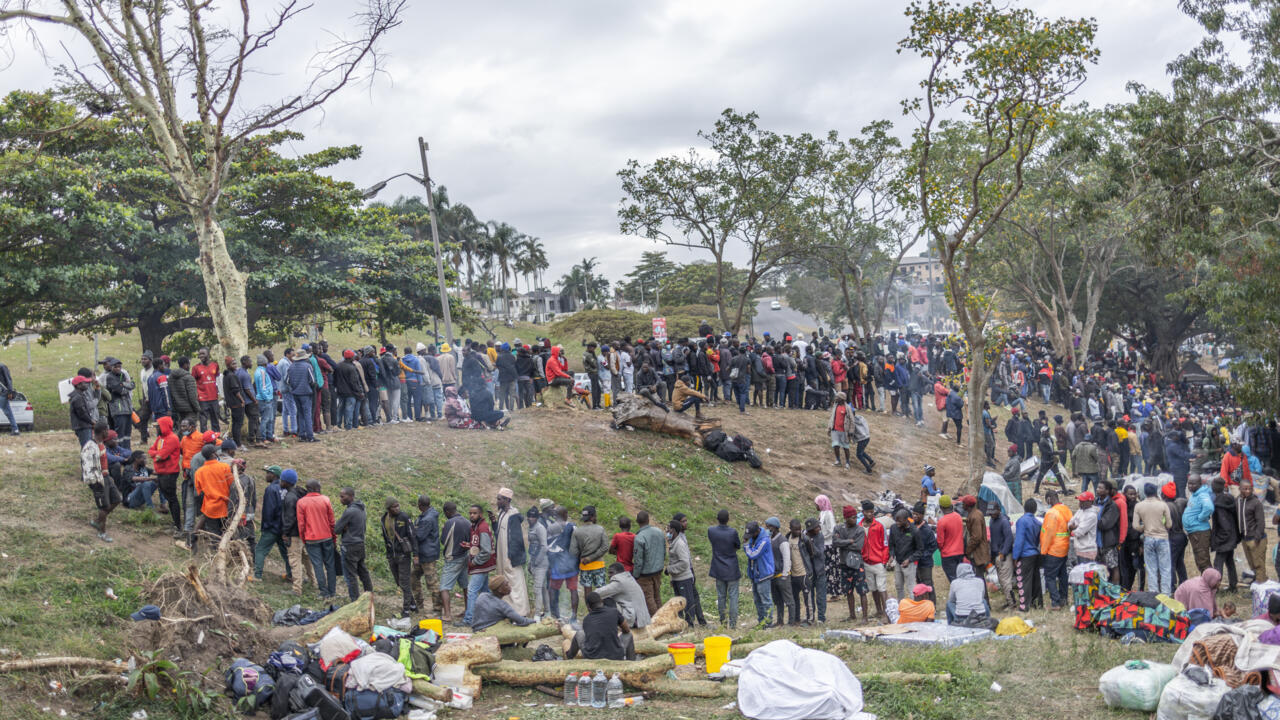
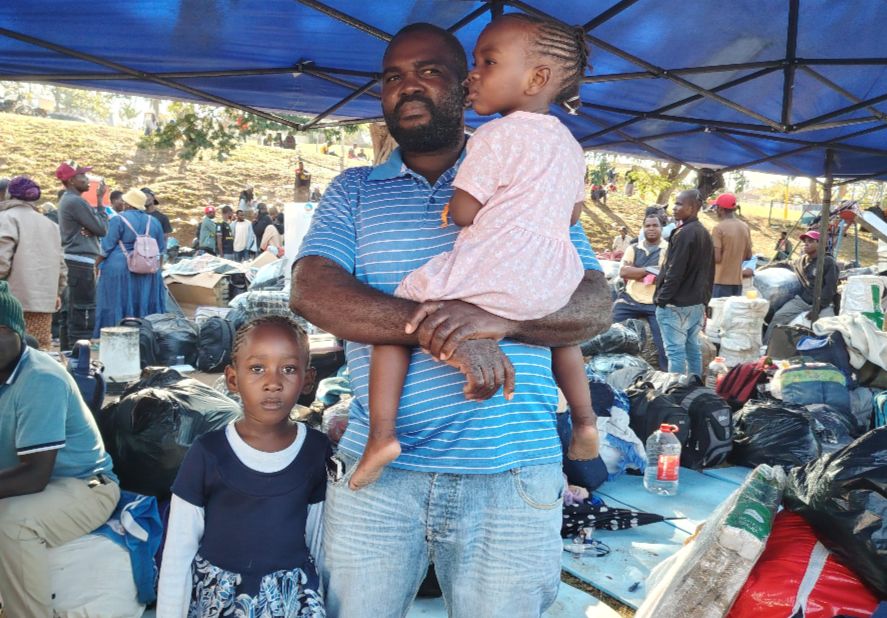
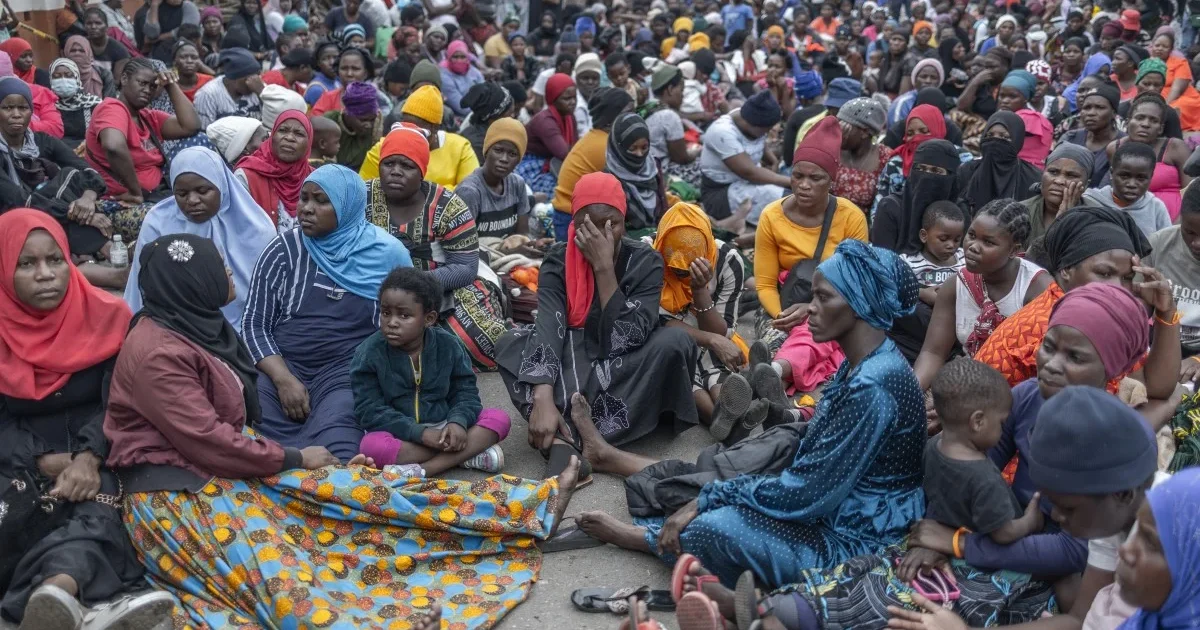
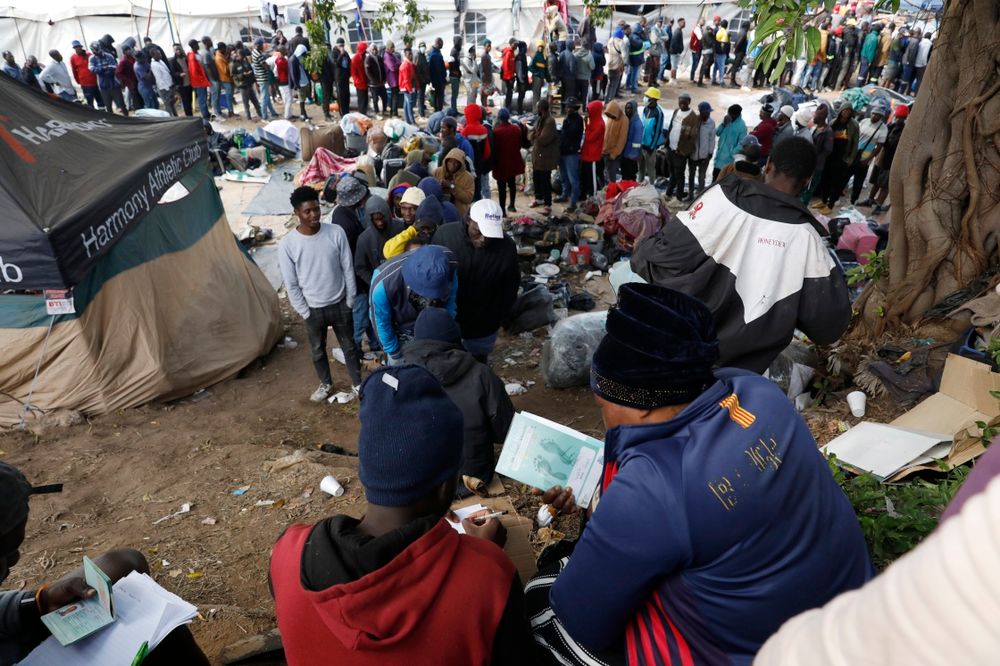
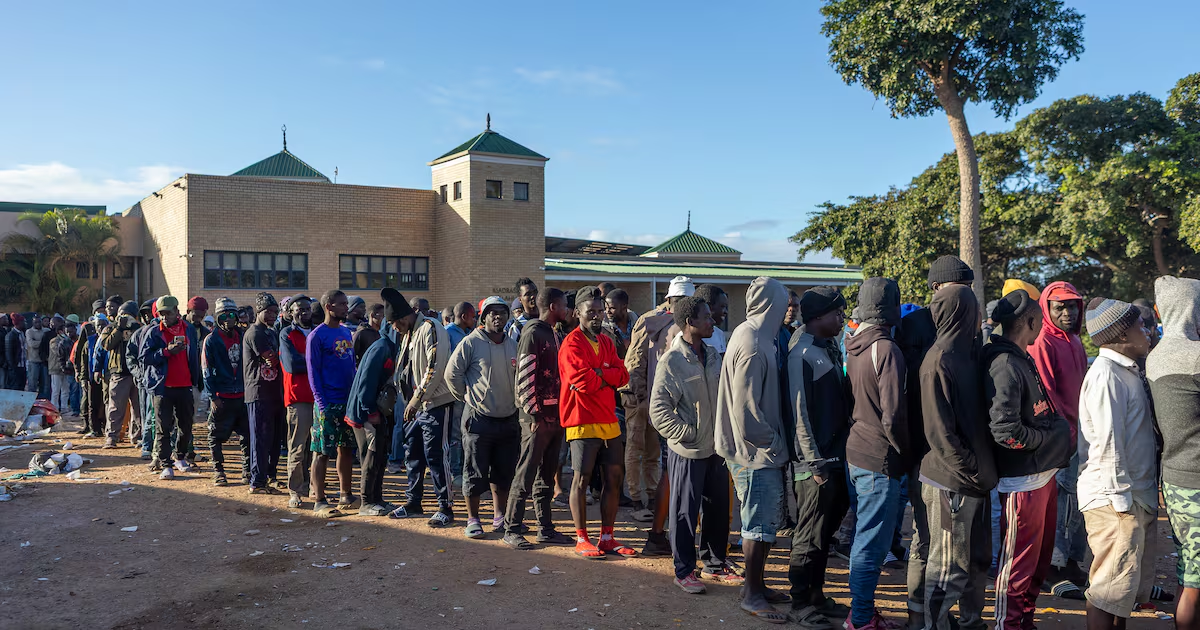
There is a photograph circulating online of Malawian nationals sleeping outside with their belongings while waiting to be repatriated. Reports indicate that women have given birth while waiting at temporary facilities in Durban. It is a heartbreaking image because it captures the tragedy of this moment in South Africa: vulnerable people have arrived in a country of vulnerable people. People fleeing insecurity have sought refuge in a nation that is itself struggling with insecurity. People searching for dignity have arrived in a society where many are still searching for dignity themselves.In many African traditions, humanity is relational. Our wellbeing is bound up with the wellbeing of others. Yet Ubuntu also demands honesty. We cannot deny another person’s humanity, nor can we ignore the suffering within our own communities.And perhaps that is what makes this moment so difficult. Two truths can exist simultaneously. Refugees and migrants deserve dignity and humanity. South Africans are tired, frightened and hurting. People fleeing hardship deserve empathy, and communities overwhelmed by unemployment, crime and failing public services deserve to have their fears and frustrations heard.South Africa’s economic crisis is no longer an abstraction. It is visible in the graduate who cannot find work, the professional piecing together multiple jobs to survive and the doctor, engineer, accountant or teacher whose skills remain underutilised.Beyond unemployment lies another layer of exhaustion. Communities are living with violent crime, deteriorating public services and deepening inequality. Drug abuse is stealing the futures of young people. Women and children live under the shadow of gender-based violence and sexual assault.There is a growing sense that too many crises have become normal and that too little changes. Too many people feel abandoned by institutions that were meant to protect them and excluded from an economy that was meant to expand opportunity. There is a widening gap between what democracy promised and what many people experience in their daily lives.We have been robbed, not only by criminals but by systems that have too often failed to fulfil their obligations to the people they serve. Poor service delivery has become a lived reality in many communities. Auditor-general reports have repeatedly documented governance failures, weak financial controls and irregular expenditure across municipalities. Time and again, reports emerge of public funds lost to fraud and corruption.There is a growing sense that too many crises have become normal and that too little changes. Too many people feel abandoned by institutions that were meant to protect them and excluded from an economy that was meant to expand opportunity. People are not responding only to migration. They are responding to years of accumulated insecurity, neglect and broken promises. They are responding to the experience of feeling unseen and unheard in a country where many are themselves fighting for survival.When a society is hurting, fear often searches for somewhere to land.Perhaps our anger has been misdirected. Refugees and migrants did not engineer an economy in which even doctors and teachers struggle to find meaningful employment. These are, in large part, failures of governance, accountability and political leadership.This is not to suggest that immigration management does not matter. It does. Every state has the right to regulate its borders and enforce its laws. Communities also have the right to demand safety and accountability.The tragedy is that vulnerable South Africans and migrants are competing for opportunities, services and dignity in a society that is struggling to provide them.This is partly why movements such as March and March have found support in some communities. To acknowledge this is not to endorse xenophobia or collective punishment. It is to recognise that social tensions do not emerge in a vacuum.People do not leave their countries on a whim. Refugees and migrants often arrive in South Africa because circumstances elsewhere have become unbearable. Yet there is another uncomfortable truth in our immigration debates. In South Africa’s public imagination, immigration increasingly wears the face of the poor African migrant. Yet the migrant landscape is more complex than this. It includes wealthy investors, retirees, digital nomads and commercial communities, including foreign-owned trading centres such as Dragon City and China Mall.People do not leave their countries on a whim. Refugees and migrants often arrive in South Africa because circumstances elsewhere have become unbearable. Public anger often settles on the visible poor while overlooking less visible forms of migration shaped by wealth, mobility and privilege. It is easier to notice the person selling goods on a pavement than the trader operating from a wholesale complex. It is easier to blame individuals than to confront the failures of governance, inequality and economic exclusion.This is not an argument for ignoring immigration laws or public concerns about national capacity. Every state has both the right and the responsibility to manage its borders and uphold the rule of law. However, principles lose their moral force when they are applied selectively. If our concern is truly the rule of law, then the law should apply equally. If our concern is national capacity, then that concern cannot depend on whether a foreigner is poor or wealthy, African or non-African.The reality is that some foreign nationals have committed crimes, just as some South Africans have committed crimes. Yet crime cannot be reduced to nationality, nor can groups of people be judged by the actions of a few. Collective blame has never produced justice.As Africans, we often invoke Ubuntu. We say, Umuntu ngumuntu ngabantu — a person is a person through other people. But perhaps moments such as these reveal that we understand only part of Ubuntu.Ubuntu does not ask us to ignore our suffering. It does not require unemployed South Africans to pretend that they are not struggling. It does not demand silence in the face of crime or failing public services.Equally, Ubuntu does not permit us to strip others of their humanity because they are foreign nationals. The Malawian mother waiting for repatriation and the unemployed South African graduate are not adversaries. They are both casualties of a society in which vulnerability is competing with vulnerability.Perhaps the deepest challenge of Ubuntu is not loving people when there is abundance. It is recognising one another’s humanity when there is scarcity and fear.World Refugee Day, which was on Saturday, therefore asks something difficult of us. Can we hold space for the humanity of those who have arrived seeking refuge while remaining honest about the pain of those who feel abandoned in the country they call home? The answer cannot be dehumanisation. Nor can it be the dismissal of legitimate fears and frustrations. It must be a renewed commitment to justice, accountability and human dignity.South Africans have every right to be angry. But our anger should be directed towards confronting the conditions that have left millions of citizens and migrants alike searching for the same things: safety, opportunity and dignity.• Nkamoheleng Mosese is a traditional healer, indigenous knowledge researcher and social justice practitioner.Business Day