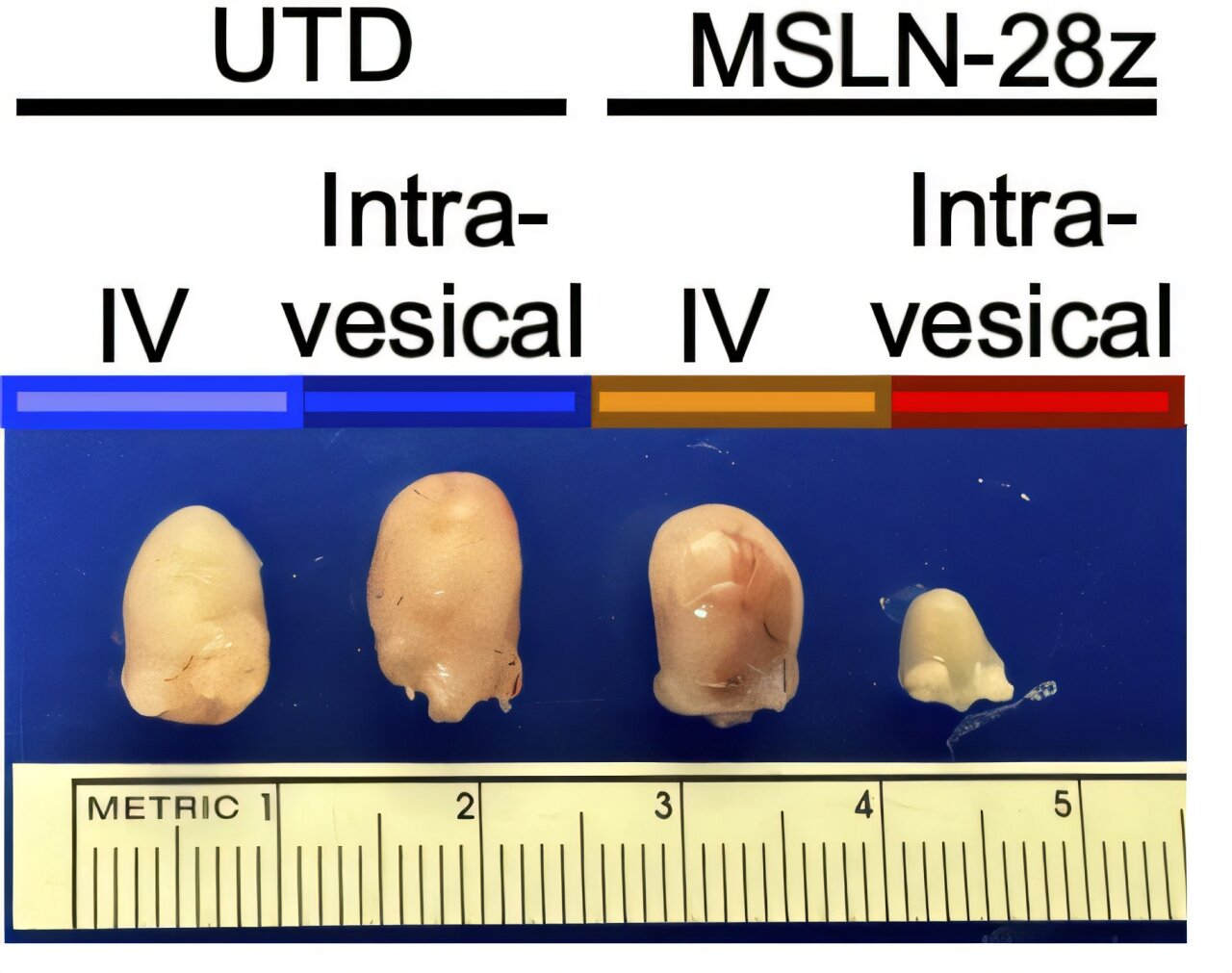
Bladder tumor size is greatly reduced when CAR T cells targeting MUC16 are delivered directly to the bladder via a catheter (right). Credit: 2026 Abrahimi et al. Journal of Experimental Medicine. https://doi.org/10.1084/jem.20250699
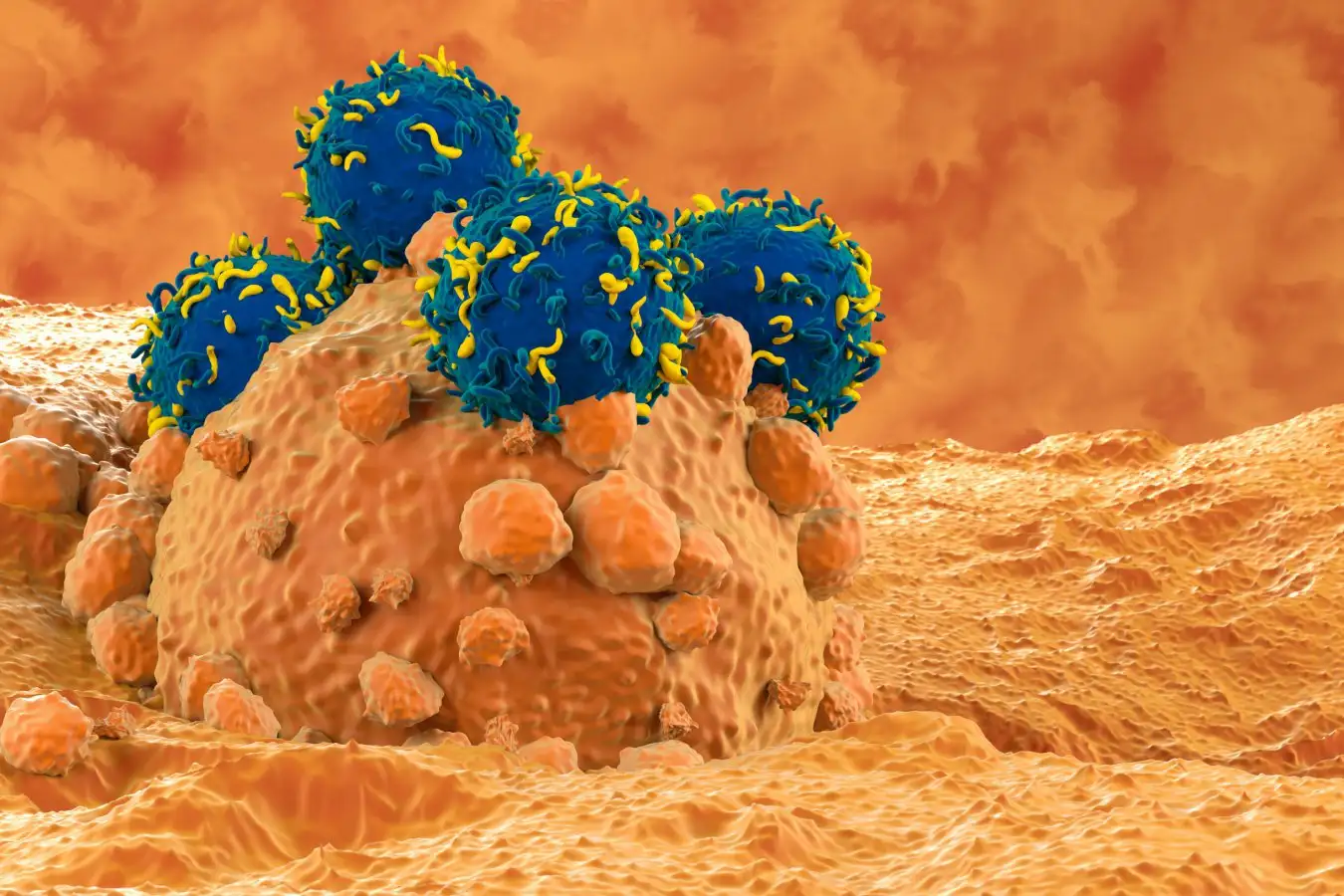
Researchers at Weill Cornell Medicine, Cedars-Sinai Medical Center and Roswell Park Comprehensive Cancer Center have developed genetically engineered CAR T cells that specifically target and kill bladder cancer cells. The study, published in the Journal of Experimental Medicine (JEM), demonstrates that direct delivery of these CAR T cells via a catheter can control bladder tumors in mice, raising hopes that a similar approach may be effective in humans.
Approximately 600,000 new cases of bladder cancer are diagnosed worldwide each year, including about 80,000 cases in the U.S. alone. Treatment generally involves surgical removal of the tumor followed by chemotherapy or immunotherapy. But these approaches are associated with high recurrence and progression rates, often necessitating complete removal of the bladder, a life-altering procedure that can lead to significant complications.
"For patients facing high-risk bladder cancer, options have historically been limited, highly morbid and life-altering. This reality has driven a critical, renewed interest in developing effective bladder-sparing approaches," says Parwiz Abrahimi, first author of the study, which was carried out at Weill Cornell Medicine in New York, and currently a urologic oncologist at Cedars-Sinai Medical Center in Los Angeles.