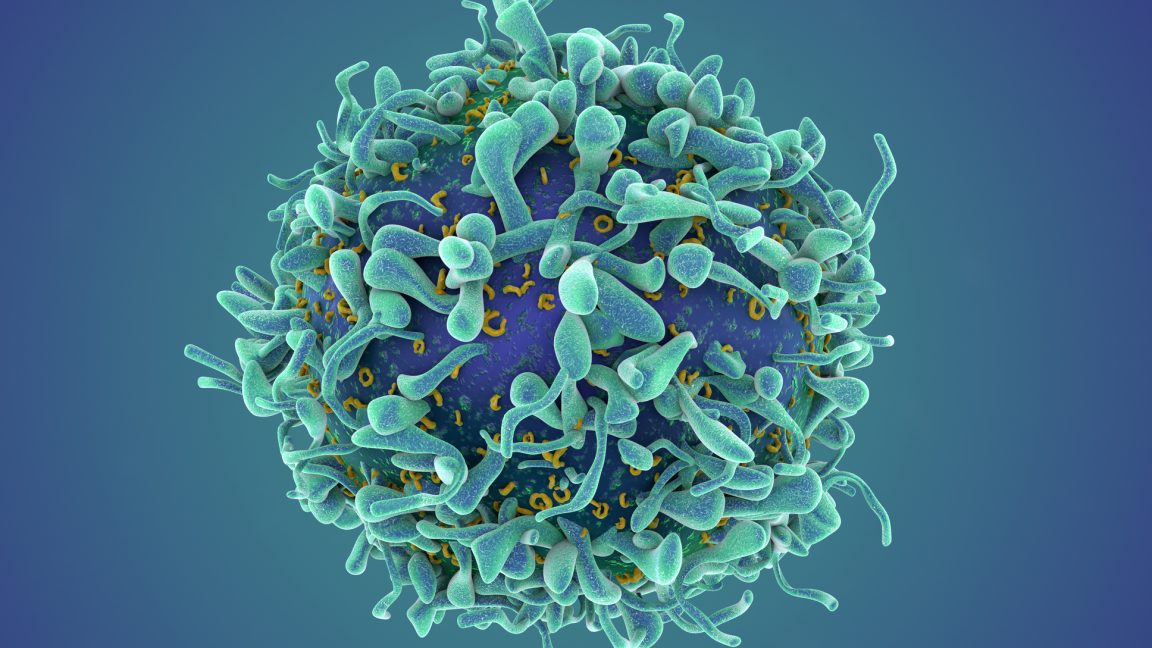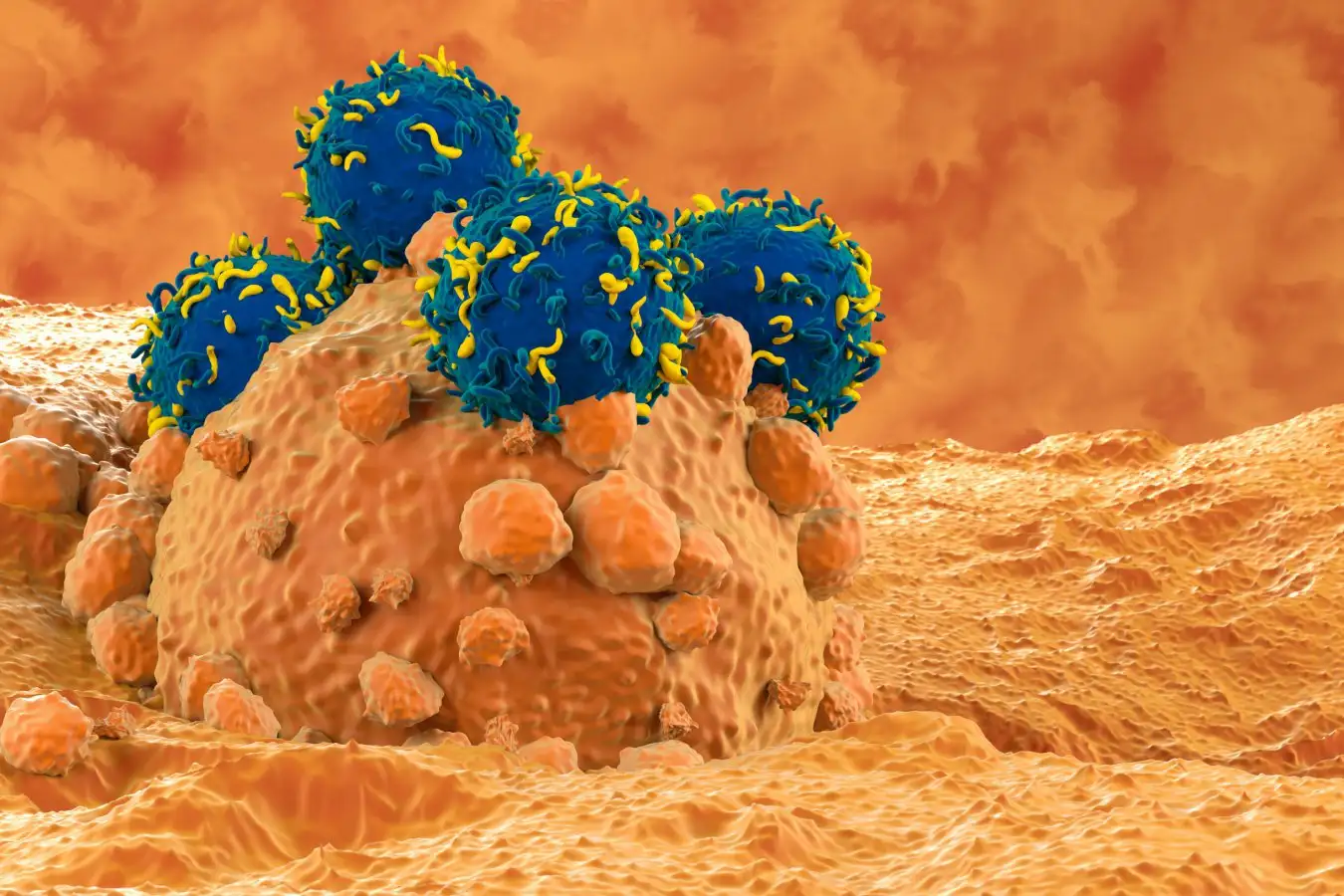
An illustration of CAR T-cell therapy treating melanoma, a form of skin cancerNemes Laszlo/Shutterstock
A therapy that has revolutionised how we treat blood and skin cancers could become even more effective. Making cancer cells stiffer bolstered the effects of immunotherapy, when the immune system is manipulated to kill off tumours, in mice with the most serious form of skin cancer. The impressive results have scientists optimistic that a similar approach could improve survival rates in people being treated with immunotherapies like CAR T-cell therapy.
“It’s a completely new concept,” says Yi Sui at Queen Mary University of London, who wasn’t involved in the research. “It’s really tackling a medical problem from a physical point of view. I think it’s highly promising.”
Cancer cells are often softer than healthy cells. This could be a problem, because T-cells – a part of the immune system with cancer-killing potential – can sense the stiffness of their surroundings.
“We were very curious about whether the softness of cancer cells may help them evade the immune system, and how T-cells’ mechanical sensing may influence their response to cancer,” says Li Tang at the Swiss Federal Technology Institute of Lausanne in Switzerland, who presented the research on 11 May at the Biophysical immunoengineering: from insight to clinical application conference in London.