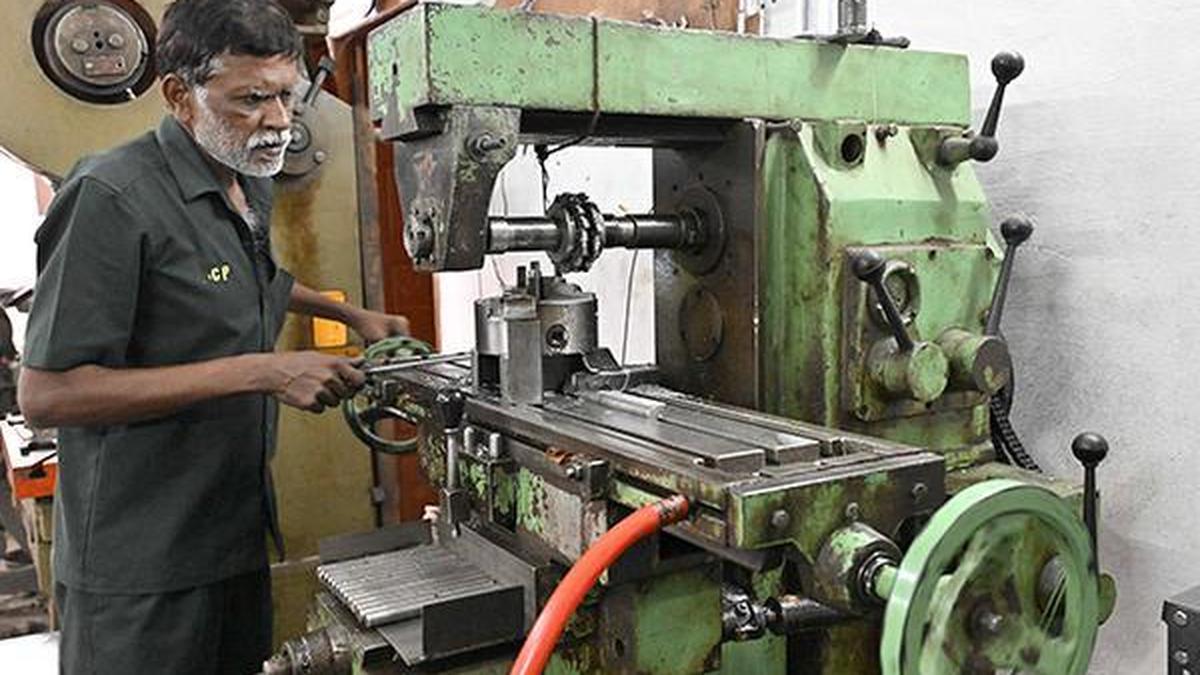
One of the most important economic stories of the past decade has been the expansion of opportunity for India’s MSMEs.MSMEA decade ago, many small businesses were constrained by geography. Their customers were local, their supply chains fragmented and their growth prospects often shaped by limitations in market access, infrastructure and connectivity. Today, that picture looks very different. The introduction of GST, the establishment of robust digital public infrastructure, the strengthening of logistics networks and the continued growth of e-commerce have fundamentally changed the operating environment for MSMEs. Together, these developments have helped formalise India’s enterprise ecosystem and democratise market access for businesses and entrepreneurs. This transformation did not happen by accident. It was enabled by a sustained policy focus on formalisation, financial inclusion, digital infrastructure and connectivity over the past decade, which has expanded opportunity for millions of entrepreneurs across the country. As a result, the MSME landscape in India today is markedly different from what it was a decade ago. Many of the traditional barriers that small businesses once faced have been reduced. MSMEs can now serve not just their immediate neighbourhoods but customers across the country. We are seeing far more broad-based participation in economic growth, irrespective of geography. Having come this far, it is now time to focus on the next phase of the journey: enhancing capability, productivity and competitiveness through technology adoption, easier access to growth capital and greater global readiness. According to data published on the government’s Udyam dashboard, India now has more than 8.68 crore registrations across the Udyam and Udyam Assist platforms. MSMEs account for approximately 30% of India’s GDP, more than a third of manufacturing output and nearly half of exports. Their contribution to India’s growth story is both significant and growing. Equally important is the fact that growth is becoming more inclusive and geographically distributed. Small entrepreneurs, women-led businesses, self-help groups, Farmer Producer Organisations and artisans/weavers are increasingly able to participate in the formal economy and access larger markets. The pan-India reach enabled by digital commerce means that India’s growth story is no longer concentrated in a few urban centres but is increasingly being driven from districts, clusters and communities across the country. This trend is reflected in Bain & Company’s How India Shops Online 2026 report, which estimates that India’s online shopper base has grown to nearly 300 million shoppers. Tier-2 and smaller cities accounted for nearly 65% of new shoppers added over 2024–25 and contributed around half of all incremental e-retail orders in 2025. Bharat is increasingly becoming a major driver of India’s digital economy. The next challenge is competitiveness. Having enabled market access over the past decade, we must now focus on strengthening the capabilities that allow MSMEs to compete and grow sustainably. This includes product development, pricing, branding, customer experience, inventory management, demand forecasting and supply-chain efficiency. Artificial Intelligence (AI) can play a powerful role in this transition. Just as digital payments and e-commerce expanded access, AI has the potential to expand capability. It can help MSMEs build stronger product catalogues, generate customer insights, forecast demand, improve inventory management and enhance customer engagement. Perhaps most importantly, AI helps level the playing field by making capabilities that were once available only to large enterprises accessible to smaller businesses as well. Just as digital public infrastructure helped democratise access to markets, payments and financial services over the past decade, India now has an opportunity to democratise access to AI-powered capabilities for small businesses. Achieving this at scale will require collaboration between government, technology providers, industry platforms and educational institutions so that MSMEs across the country can effectively leverage AI to improve productivity and competitiveness. Supporting and accelerating digital adoption should, therefore, remain a priority for both MSMEs and the broader ecosystem that supports them. Digital commerce is also helping prepare MSMEs for the next frontier: Global markets. Online marketplaces, quick-commerce platforms and direct-to-consumer channels offer Indian businesses a simple and cost-effective way of reaching customers at scale. Research by ICRIER has found a positive correlation between digitalisation and export readiness among MSMEs. E-commerce platforms can further support businesses through cross-border logistics, regulatory compliance, quality certifications and market intelligence, helping local brands expand beyond India. Competitiveness also requires capital. When it comes to MSMEs, credit should be viewed not merely as working capital but as growth capital. Businesses need resources to invest in technology, product development, packaging, talent and market expansion. The challenge is not simply increasing the supply of credit, but ensuring that financial products are aligned to the realities of small businesses. Cash-flow-based lending, invoice discounting, embedded finance and data-driven credit assessment can all play an important role in addressing this gap. The digital infrastructure India has built over the past decade creates an opportunity to do much more. By intelligently linking registration data, payments history, GST records and marketplace performance, we can make access to formal credit easier, faster and more responsive to the needs of entrepreneurs. Achieving this will require collaboration across the ecosystem. Governments, technology platforms, logistics providers, financial institutions and industry associations all have an important role to play. Policymakers can continue simplifying processes and reducing friction. Industry can support technology adoption, capability building and market access. Financial institutions can develop products better suited to the growth aspirations of MSMEs. The first chapter of India’s MSME story was about access. The next chapter must be about capability, competitiveness and global ambition. If India is to become a developed economy, millions of small businesses will need to become more productive, more innovative and more globally connected. Their success is not merely a sectoral objective. It is central to India’s growth story and to the realisation of our collective Viksit Bharat aspirations. (The views expressed are personal)This article is authored by Rajneesh Kumar, senior vice president and chief corporate affairs officer, Flipkart Group.
The next chapter of India’s MSME story
This article is authored by Rajneesh Kumar, senior vice president and chief corporate affairs officer, Flipkart Group.
967 words~4 min read