MSMEs: Transitioning from resilience to scale
| Photo Credit:
Siva SaravananS
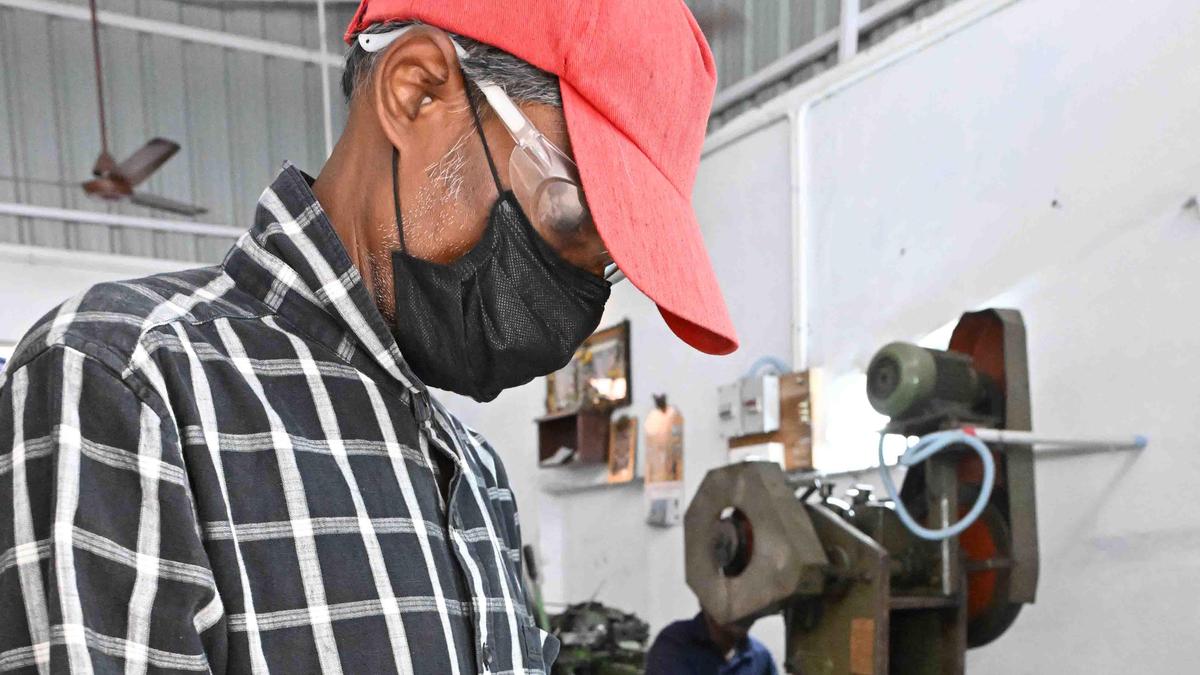
India’s MSMEs have long been defined by their resilience. The next phase of their journey must be defined by scale.Over the past few years, from the pandemic to disruptions in global supply chains and across key trade corridors, including those in West Asia, small businesses have repeatedly adapted to changing conditions, diversified markets and embraced digital tools. In doing so, they have underlined an important truth: resilience may have defined the last decade, but scale must define the next.According to the Economic Survey 2025–26, MSMEs are a cornerstone of India’s economy, contributing 31.1 per cent to GDP, accounting for 48.58 per cent of exports, and generating 35.4 per cent of manufacturing output. With over 7.47 crore enterprises employing nearly 32.8 crore people, the sector is India’s second-largest source of employment after agriculture. Yet, despite their scale and importance, too few enterprises make the transition from micro businesses to sustainable, mid-sized companies. India’s next phase of growth will depend on changing that.Building the missing middleIndia does not suffer from a shortage of entrepreneurship. It suffers from a shortage of scale. While the country has millions of micro enterprises, relatively few grow into the mid-sized businesses that create quality jobs, strengthen exports and drive productivity.Many enterprises struggle to survive their early years and never realise their full potential. Their journey can be strengthened through better access to advisory support, mentoring, formalisation pathways and growth capital. Seller financing, in particular, deserves greater attention. Access to timely liquidity often determines whether an enterprise can fulfil larger orders, navigate elongated payment cycles and scale sustainably.The objective should not simply be to create more MSMEs, but to enable more MSMEs to become enduring institutions.The next frontier for digital infrastructureIndia’s digital public infrastructure has transformed identity and payments. The next opportunity lies in extending the same spirit of innovation to commerce and credit. Platforms such as TReDS have improved invoice financing and brought greater transparency. But as India’s MSME ecosystem becomes more diverse and supply chains more fragmented, the need for complementary frameworks is becoming increasingly evident.Seller financing deserves particular focus. While invoice financing has gained momentum, expanding access to working capital for sellers can help enterprises manage cash flows, fulfil larger orders and scale more sustainably. Specialised B2B ecosystems can further reduce friction and improve efficiency, complementing broad-based digital infrastructure and enabling businesses to transact and grow more seamlessly.The next chapter of India’s digital infrastructure story should focus on making commerce easier, strengthening market linkages and broadening access to capital.AI as a force multiplierArtificial intelligence has the potential to become a force multiplier for small businesses. From inventory management and forecasting to customer engagement and compliance, AI can help improve productivity without requiring large investments. The real opportunity lies in making these capabilities affordable and accessible beyond metropolitan India. India’s AI story will remain incomplete if productivity gains remain concentrated among a few.Unlocking an untapped growth engineWomen-owned enterprises represent one of India’s biggest untapped growth opportunities. According to government data, women account for over one-fifth of MSMEs registered on the Udyam platform. Yet access to capital, networks and markets remains uneven.Expanding their participation is an economic imperative that can strengthen employment and local economies. A broader and more inclusive entrepreneurial base will ultimately make India’s growth story more resilient.Beyond survivalAs global supply chains continue to diversify, India has an opportunity to emerge as a stronger manufacturing and export hub. According to the Economic Survey 2025-26, India currently accounts for an estimated 2.9 per cent of global manufacturing value added and 1.8 per cent of global merchandise exports, highlighting the significant headroom available to deepen its participation in global value chains.But that opportunity cannot rest solely on large corporations. It will depend on whether millions of small businesses are able to become bigger businesses.For decades, India’s MSME story has been one of entrepreneurship and resilience. The next decade must be about scale. Because India’s ambition should not be measured by how many small businesses it creates, but by how many of them become globally competitive, job-creating mid-sized enterprises.That is how India will build not just more MSMEs, but bigger, stronger and more globally competitive ones.The writer is the Co-founder and CEO of Indifi TechnologiesPublished on June 25, 2026