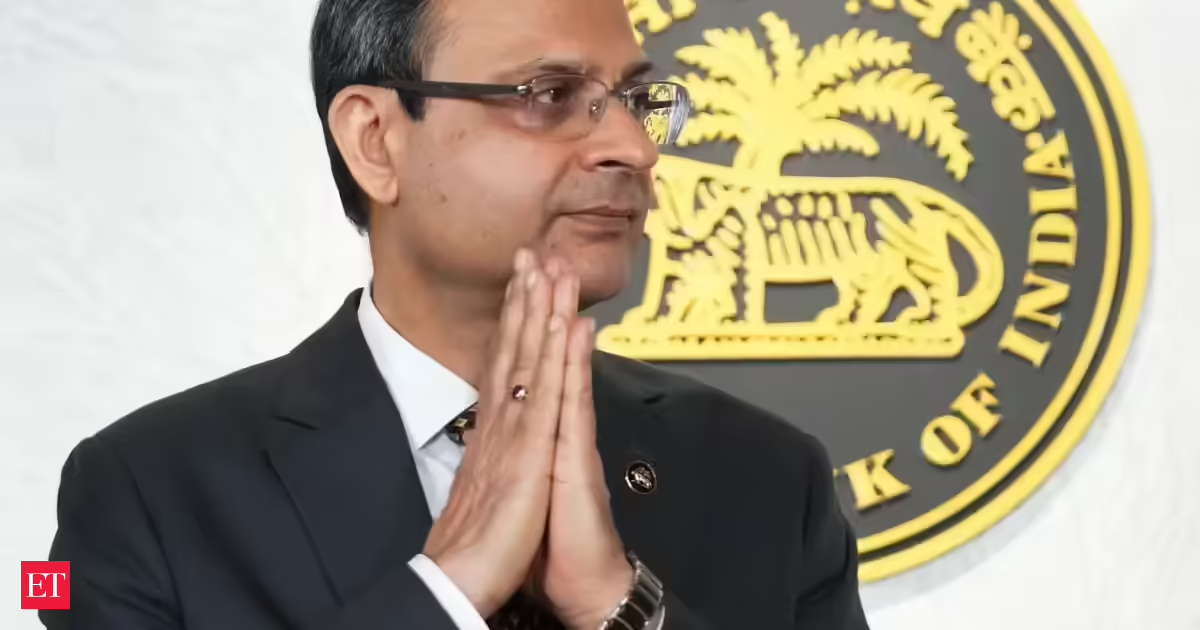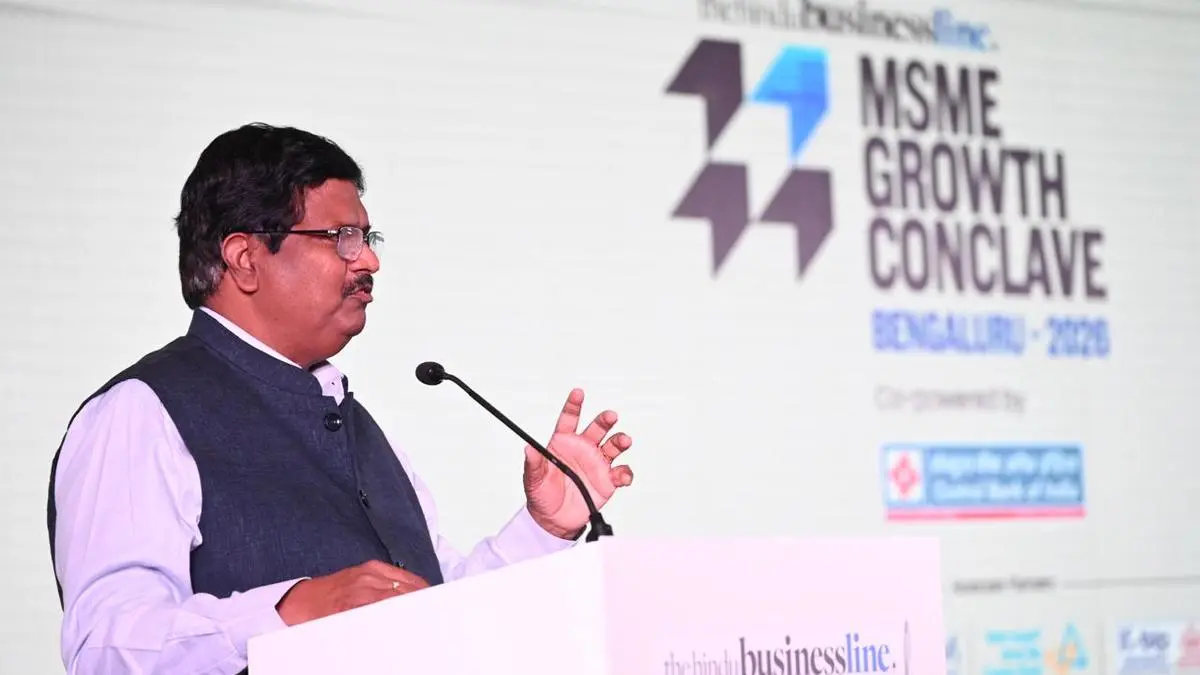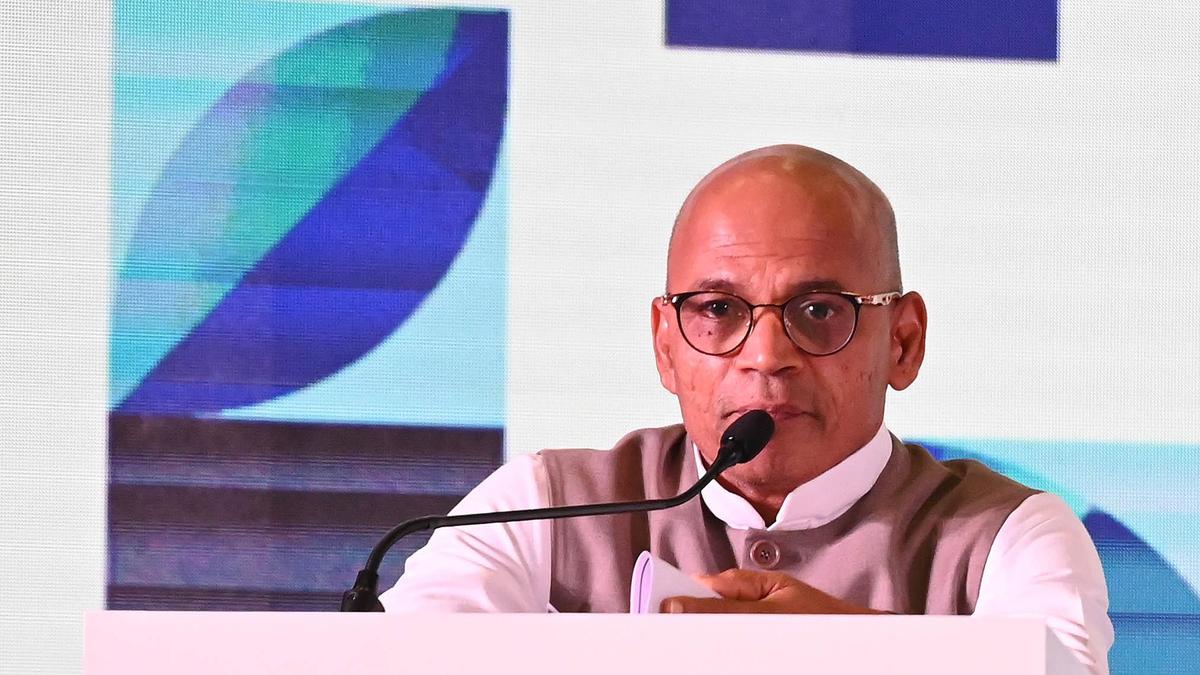
Sharanaprakash Rudrappa Patil, Karnataka Minister for Medical Education and Skill Development, at the Hindu Businessline MSME Growth Conclave
| Photo Credit:
India’s micro, small and medium enterprises (MSMEs) will play a decisive role in determining whether the country achieves its ambition of becoming a developed economy by 2047, with policymakers and industry leaders calling for a stronger focus on innovation, design, talent and technology adoption at the fifth edition of The Hindu businessline MSME Growth Conclave.Across discussions spanning manufacturing, electronics, skilling and entrepreneurship, a common theme emerged: India can no longer rely solely on low-cost production and must move up the value chain.Design shiftSetting the tone for the conclave, Karnataka Minister for Medical Education and Skill Development Dr Sharan Prakash Patil urged businesses to think beyond manufacturing. “We should move from ‘Made in India’ to ‘Designed, Engineered and Owned in India’,” he said, adding that India’s MSMEs would determine whether the country becomes a global innovation hub or merely the world’s factory floor.Addressing the forum, BV Naidu, Chairman of the Karnataka Digital Economy Mission (KDEM), said India is on track to become a $32 trillion economy by 2047, but warned that achieving developed nation status would require a substantial rise in per capita income. He argued that MSMEs would play an even greater role than large enterprises in driving economic growth because of their agility and ability to innovate.Naidu also highlighted the growing importance of the digital economy, noting that Karnataka’s digital sector contributes between 35 per cent and 40 per cent of the State’s economy. He said government support in areas such as market access, infrastructure, financing and talent development would be crucial, particularly as smaller firms grapple with the rapid adoption of AI.IP focusThat sentiment echoed through the electronics manufacturing panel, where speakers argued that India should focus on building IP and specialised capabilities rather than attempting to replicate China’s manufacturing model.“If anyone thinks we can compete with China by being cheaper, it is not the game,” said Sachin Dhruva Naik, founder and chief executive of Cuzor Labs. Sonam Motwani, founder and chief executive of Karkhana.io, noted that India still has a long way to go before matching China’s manufacturing scale, while emphasising the need to build strengths in niche sectors and proprietary technologies.Ashok Chandak, president of IESA and SEMI India, said opportunities in electronics manufacturing are expanding rapidly across sectors ranging from telecom and industrial equipment to automotive and defence. “Make in India is already done. Got to go beyond, that is, design in India, build in India, secure in India and get trusted worldwide,” he said.Talent and productivity emerged as another key concern. Industry leaders highlighted the widening gap between academic curricula and industry requirements and stressed the need for closer collaboration between educational institutions and businesses. Several speakers also pointed to artificial intelligence as a force multiplier that could help MSMEs improve productivity without significantly increasing costs.“I think it’s very important to have the people strategy or the people design, from where you’re going to get people, what skills are required, and companies need to go down and collaborate with institutions,” said Nitin Dave, CEO, Staffing Solution, Quess Corp.However, on an optimistic note, Milky Mist chairman and Managing Director Satish Kumar urged entrepreneurs to think bigger. “Most of the time entrepreneurs are underestimating India. It is an enormous opportunity,” he said.The overarching takeaway from the conclave was that India’s MSMEs have a historic opportunity ahead of them — but success will depend on their ability to innovate, embrace technology and move up the value chain.The Associate Partners for the conclave are Bank of Baroda, Tally, Punjab National Bank, SSVM Institutions, Canara Bank, Kerala Bureau of Industrial Promotion (K-BIP), Karnataka Bank, Karnataka Power Corporation Ltd, Department of Industries – Government of Bihar, Indian Overseas Bank, Mysore Sales International Ltd and Karnataka Cooperative Milk Producers’ Federation Limited.The Luxury Realty Partner is Puravankara and the education partner is Presidency University, while the SUV partner is Mahindra.The State partner is the RAMP Programme (supported by the Government of India and the World Bank, and implemented by the Government of Karnataka).Published on June 25, 2026