MSMEs: Vital cog in the manufacturing sector
| Photo Credit:
Siva SaravananS
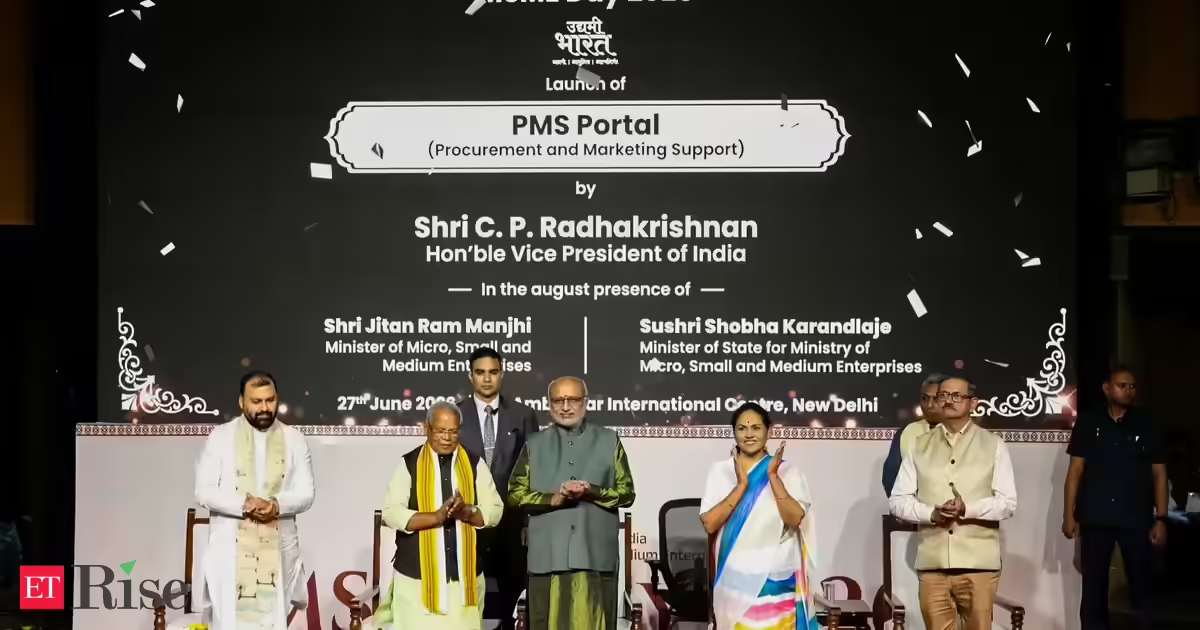
The week commencing on June 27th is significant for both Micro, Small and Medium Enterprises (MSMEs) and for cooperatives as India observes MSME Day on June 27th and the week marks six years since the setting up of Ministry of Cooperation. The time has come to recognize these two vital sectors that have quietly powered inclusive growth for decades –MSMEs and cooperatives. Rooted in local enterprise and community participation, both generate livelihoods, foster self-reliance, and strengthen rural and semi-urban economies. Together, they offer a commanding framework for realizing the vision of Viksit Bharat@2047 through broad-based, maintainable and people-centric development.Cooperatives: The Community MSMEsThe history of India’s cooperative movement illustrates the power of collective entrepreneurship. What began with the Cooperative Credit Societies Act of 1904 as an effort to address rural credit constraints evolved into a key pillar of post-Independence development policy. Over time, cooperatives built enduring business institutions viz. Amul in dairy, IFFCO and KRIBHCO in fertilizers and NAFED in agri-marketing, proving that community-owned enterprises can achieve scale and commercial success. Their ability to adapt to economic liberalisation in the 1990s further demonstrated that cooperative values and market competitiveness are mutually inclusive.The MSME database points to significant untapped potential for collective enterprises. Among 8.79 crore registered MSMEs are 50,557 cooperative entities and more than 5.46 lakh self-help groups. Bringing these institutions into the mainstream of MSME policy through tailored support and scheme convergence can unlock new avenues for employment, enterprise growth and local value creation.Ensuring Inclusive GrowthMSMEs have long been the backbone of India’s economy, evolving from the handloom, khadi and village industries championed during the freedom movement and Gram Swaraj. Post-Independence, successive policy interventions—from the Second Five-Year Plan, Small Industries Development Organization (SIDO), National Small Industries Corporation (NSIC), Small Industries Development Bank of India (SIDBI) and District Industries Centres (DICs) to the MSME Development Act, 2006 and reforms in 2020 and 2025 – strengthened the sector’s competitiveness. Revising MSME definitions on April 1, 2025, greatly expanded the sector’s reach. The new criteria adjust for inflation and ensure businesses no longer artificially stunt their growth out of fear of losing regulatory benefits.Besides subsequent budgetary push, MSMEs have been supported by a robust institutional framework comprising schemes viz. Prime Minister Employment Generation Programme, the Credit Guarantee Scheme for Micro and Small Enterprises, Self Reliant India Fund, Green Investment and Financing for Transformation, Scheme for Promotion and Investment in Circular Economy , Zero Defect Zero Defect, Technology Centres, Procurement and Marketing Support Scheme and initiatives such as Udyam Registration. These aimed at improving access to finance, technology, markets and entrepreneurship opportunities, adherence to quality standards, besides easing doing business and focussing on evolving situations related to sustainability.PM Vishwakarma & Community CollectivesLaunched in September 2023, the PM Vishwakarma Scheme seeks to strengthen the livelihoods of micro-entrepreneurs working as traditional artisans by combining heritage preservation with modern enterprise support. Covering carpenters, potters, blacksmiths, tailors, masons goldsmiths and other artisans, the scheme provides skill development, credit and market linkages. Its impact can be amplified through cluster-based cooperative models that promote collective action, economies of scale and stronger integration with value chains.Cooperatives can help Vishwakarma beneficiaries transform individual skills into sustainable enterprises by pooling resources and leveraging the scheme’s support for finance, branding, quality certification and e-commerce. Beyond improving marketaccess and profitability, they can provide end-to-end business services, including technology adoption, skill upgradation, export facilitation and shared infrastructure, enabling artisans to move up the value chain and contribute to grassroots industrialisation.The rightful implementation strategy, however, involves identifying, mobilising and nurturing PM Vishwakarma beneficiaries, conducting awareness programmes on the advantages of cooperative enterprise, and facilitating the registration of district-level cooperatives. Equally important is establishing a robust monitoring and feedback mechanism to assess performance, ensure accountability and continuously improve services, outcomes and member participation.The next phase of India’s growth story must be built on institutions which are both economically viable and socially inclusive. Cooperative MSMEs embody this balance by combining the dynamism of enterprise with the strength of collective ownership. Supported by progressive MSME policies and initiatives such as PM Vishwakarma, they can transform traditional livelihoods into sustainable businesses, deepen industrialisation at the grassroots and contribute meaningfully to the vision of Viksit Bharat@2047.To unlock the full potential of MSMEs, we must prioritise enterprise formalisation, regulatory simplification, targeted support for underserved entrepreneurs, expanded equity financing, and wider access to technology, digital platforms and public procurement opportunities. Together, these measures can strengthen competitiveness, improve market access and accelerate inclusive growth.Dev is the Chairman and Tripathy is the Joint Secretary in Economic Advisory Council to the Prime Minister. Views expressed are personalPublished on June 27, 2026