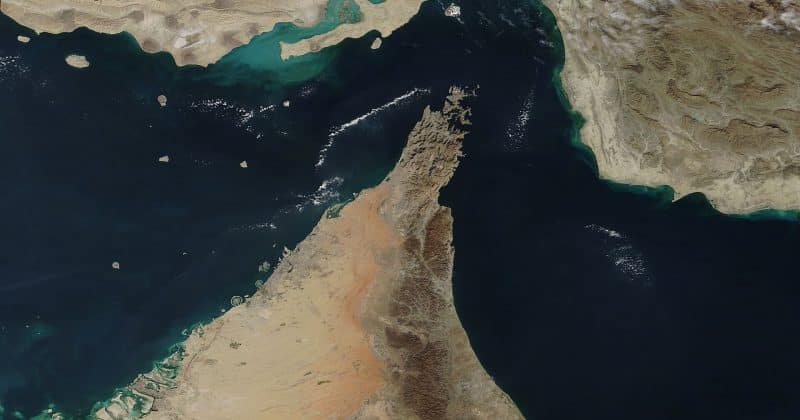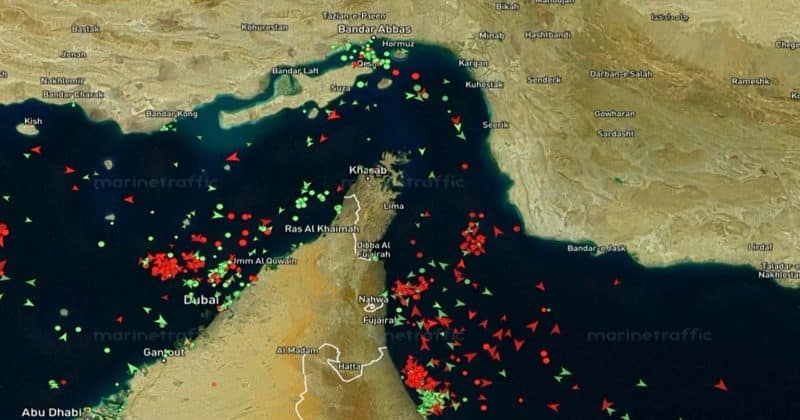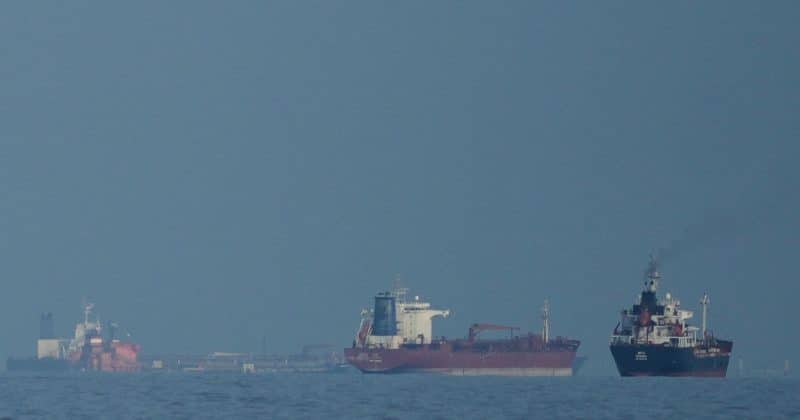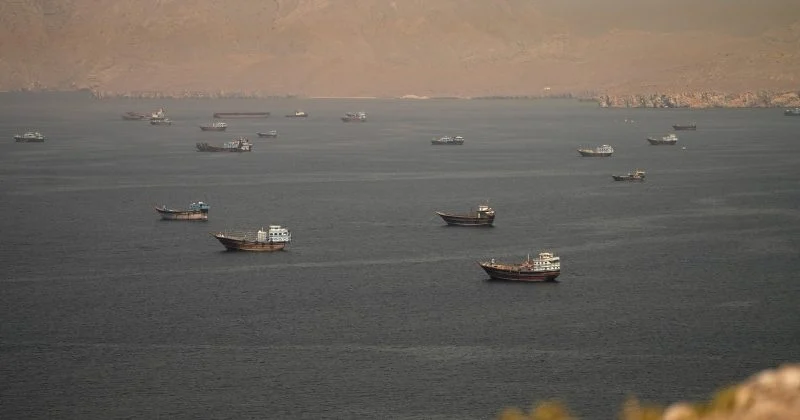
The Strait of Hormuz is about 21 miles wide at its narrowest point. Nearly 20% of the world’s oil flows through it. Iran has decided that passage now comes with a Bitcoin invoice.
Starting in early April 2026, Iran began enforcing a roughly $1-per-barrel toll on oil tankers transiting the strait, demanding payment in Bitcoin specifically to avoid the kind of paper trail that international sanctions enforcement relies on. Hamid Hosseini, spokesperson for Iran’s Oil, Gas and Petrochemical Products Exporters’ Union, confirmed the payment scheme, lending it an unusual degree of official acknowledgment for what is essentially a sanctions-evasion operation run through a geopolitical chokepoint.
The Islamic Revolutionary Guard Corps had reportedly been collecting similar fees through intermediaries as early as April 1, 2026, charging around $1 per barrel for escorted passage. By April 8, during a brief ceasefire window with the US, the toll became more formalized, with the Exporters’ Union involved alongside the IRGC.
Why Bitcoin, and why now
Iran’s digital asset infrastructure, reportedly valued at $7.8 billion, has been quietly expanding for years precisely with this kind of utility in mind. A crypto toll on oil tankers is not a random experiment. It is the practical application of an infrastructure Iran has been building under the assumption that sanctions are a permanent feature of its economic landscape, not a temporary inconvenience.